 Print This Post
Clinical trials require willing participants to be included in the trials. This may sound like a simple and easy task but many years of trial involvement has illuminated that this is one of the hardest parts of clinical trials – finding the right people to participate. I will illustrate some of the challenges and best practices in successful trial recruitment.
One thing is clear in clinical trials – The quicker we can recruit to the trials the sooner the results are known and the faster the results are translated into treatments. This is true for all clinical trials. But when it comes to dementia trials there are a myriad of hurdles to overcome when trying to recruit participants.
Do you have the right participants for the trial? The clinical research protocol will be highly prescriptive about which participants are required for each trial – they will likely have an age range such as between 50 and 90. They will likely have set characteristics of the intended population such as memory scores or level of dementia, ie Mini Mental State Examination (MMSE) of below 24 or between 22 and 28 or whatever the population to be included in each of the clinical trials are. They may have stipulations for more in-depth characterisation such as the type of dementia i.e. Alzheimer Disease confirmed by scan, or level of dementia confirmed by the Clinical Dementia Rating (CDR) assessment.
The more prescriptive the inclusion criteria, the harder it becomes to find participants who fit the desired characteristics to be included in the trial.
This leads to a funnel effect of recruitment. For some trials, we would pre-screen say 100 people to find the desired characteristics in 5 of those 100. This is acknowledged by the pharmaceutical companies, who make provision that to find the intended population, there will have to be many people screened but it is a challenge in recruitment to trials. Likening recruitment to a funnel starting wide at the top (your 100 potential participants ) to the narrow or small amount actually suitable for the trial in question.
In the UK, to help in recruitment, we have tools such as Join Dementia Research (JDR) or Scotland’s Permission to Contact whereby people are already signed up and registered to be approached about trials in their area. This works well if the people signing up have dementia or memory impairment which is well characterised. It doesn’t work so well if there are many people signing up who do not have memory problems at all. This requires a large number to be registered to reach the required numbers to be initially approached for a dementia clinical trial, although having ‘healthy volunteers’ is useful for some trials.
We need to be able to get the word out to people who may want to be part of clinical trials and this is where the private organisations are very successful, as they have advertising budgets which their NHS or academic colleagues can only dream about. We can negotiate with the sponsor company to be able to have newspaper adverts, or advertise via GP surgeries, which can assist recruitment.
In Scotland, we have found that the most successful targeted recruitment strategy is to recruit via the NHS memory clinics as they have up-to-date information and access to the potential study participants. We have found that the most successful targeted recruiters are the staff who have a clinical role as well as a research role and are therefore thinking about potential research participants while carrying out their clinical role. The memory clinics are not always geared up to talk to people about research and when the clinicians are not actively involved in research some may see this as onerous and just something else they have to do on a busy clinic day. A useful best practice tool is to include information about research at clinics, as this may help to remind people, both staff and attendees, that research is an option for them.
We use the recruitment tools already mentioned – JDR, Permission To Contact (PTC) and any other tools available to us such as advertising a trial or social media if allowed. The advantage we have found with PTC is that we have already permission to screen medical records and this allows us to be very targeted in our invitations to attend for a pre-screening visit of someone who is interested in being part of a clinical trial – we are able to invite only those who meet the strict inclusion criteria and therefore do not raise false hope or expectation for those who do not meet the criteria.
In England, the advent of the NHS App feature which will allow patients to sign up for clinical trials, which was announced in June 2025 by the Department of Health and Care may be a game changer – we will have to wait and see if it is. Also, there are plans to eventually integrate NIHR Be Part of Research with the NHS App and this is a very hopeful development. We will all be watching closely because if this encourages and enables targeted recruitment and speeds up trials, everyone is a winner! From the participants involved in a potentially successful trial, to the pharmaceutical industry having results from trials translated into treatments more quickly, to the clinicians who can access new treatments in their patient populations.
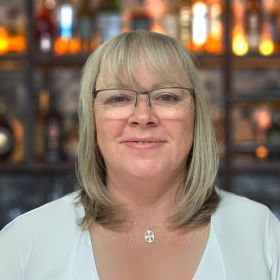
Dr Emma Law
Author
Dr Emma Law is Strategic Manager for the The Neuroprogressive and Dementia Network in Scotland. Emma has 13 years experience as a Clinical Trails Network Manager and over 35 years experience as a Nurse, many of which were spent in the delivery of Clinical Research Trials. Emma completed her PhD and is passionate about giving people living with dementia and their carers access to participate in research.

 Dementia Researcher
 Dr Chloe Fawns-Ritchie
 Dr Yvonne Couch
 Dr Clíona Farrell
 Beccy Owen
 Rahul Sidhu