 Print This Post
Forty years into an academic career, I feel like a dinosaur these days, not helped by a recent comment where I was referred to as a Grandfather in the field of Dementia research. Though it wasn’t always the case: one fact I always like to tell folk is that though I am known for my dementia research, I don’t have a single qualification in it…
I started as a general biologist when I went to the University of Edinburgh. The Scottish system has always had the advantage of being a 4 year degree, so in my first year I did Biology, Chemistry, Physics and Mathematics. In that first year, I learnt a wide range of science, which unknown to me at the time, was to later help my career. As I progressed through the years, I became increasingly interested in Biochemistry and Molecular Biology (purists would say these are different subjects but they are not: it’s just Chemistry on different types of molecules), this led me into the Microbiology world because even then, I was interested in research that could be translated (something that I got from my Father’s side of the family who were farmers). After Edinburgh off I went to Cambridge for my PhD in Biochemistry to study the structure of a sugar/proton pump in E. coli (I’m old enough that I still put the organism’s name in italics). This time was where I learnt my underpinning skills, no kits, no pre-bought material, everything made from scratch, and first principles. Even though this was the late 1980s – early 1990s I probably made ~200 different cloned plasmids in my PhD.
Three gambles that shaped an academic career
Next was my first gamble. I decided to move fields, because I realised I could apply my skills to a different and newly developing field. I applied for my first postdoctoral in Bristol to work on identifying the modification of a receptor for a neurotrophic factor, which causes nerve cells to grow and keep them alive. This was a bold move and the reason why I was given the job was, though I knew nothing about the subject, I had skills on how to handle and manipulate DNA. Cue 6 years where we discovered how this receptor worked and kept nerve cells alive.
Then came gamble number two. My wife, Danielle (now a rather famous vet), was asked to set up the new Feline Medicine clinic in Edinburgh (her dream job). Therefore, I took another postdoctoral position in Edinburgh where the group worked on how myelin sticks to nerve cells. The text-book findings from this two year postdoctoral position led to my own independent position here in St Andrews.
When you start as an independent investigator, after the initial excitement, there comes that moment of realisation of well I better get some money. So in those early years I just wrote, and wrote, and wrote grants, whilst trying to also teach on subjects that I knew nothing about. I was lucky as I was supported by collaborators who only would work with me. Early success was great and my ideas in the dementia world started to take shape.
Then cue gamble number three: an email was sent from one of our physicists which essentially said: I can do weird things with lasers, is anyone interested? That single email led to a 20-year collaboration working with a range of photonics experts, where we learnt to bend and shape light; making new ways to optically put genes into cells; and even the development of commercially available microscopes. In all this time, my own group developed more insights into Alzheimer’s disease: biochemically linking mitochondrial and synaptic dysfunction; the discovery of a new gene (which I named after a place I met Danielle); the development of new potential drugs; through to looking at dementia in other non-human species.
What forty years in an academic career taught me
So that is a summary of an ongoing 40 year career, but here are things I have learnt, and not in any particular order:
1) Novel opportunities. When I started, the advice I was given by my bosses was focus on one area, don’t spread yourself too thinly. I disagree, explore all science and the unexpected. We can now see the rise of AI in research, is starting to lead to a homogenisation of the types of research that are being performed. Sadly, many papers are becoming inter-changeable with each other, the same technique, the same approach. You may have to do this sort of science to pay the bills but always make space for the left-field experiment.
2) Collaborations. Both partners need to be comfortable in their own subject and don’t enter it worrying who is working for who. There will be times one side leads, but that is OK. If someone starts off the conversation with essentially the premise of what’s in it for them, then walk away. Science is bigger than one person’s ego.
3) Pooling initiatives in Scotland have been an incredible success. The premise of one University helping another is one of the reasons why this small country punches above its weight in science. I was lucky to be involved in such enterprises such as being the Deputy Director of the Scottish Universities Life Sciences Alliance which in its time helped to set up the £150M investment into the European Lead Factory and the £15M National Phenotypic Screening Centre. I also have been involved in the Alzheimer Scotland backed Scottish Dementia Research Consortium, and the Scottish Funding Council backed Brain Health-Alliance Research Challenge which are pools that have been more challenge led (rather than discipline led), trying to tackle dementia whether that be fundamental, clinical or community based research. These pools are a great way of getting involved in big science and have helped to change national policies.
4) You must not see Early Career Researcher as stepping stones. Legacy is about helping the next generation. So far, I have now had 35 PhD students come through my labs, and they have gone onto all sorts of careers. This is important, not all go into science, but they are contributing to Society as a whole. Also remember what it was like to be an ECR, one of the aspects that I have been most proud of is that with fellow like-minded colleagues, we have managed to develop funds of >£1M which we have given away to the next generation of ECRs. That first left field grant can sometimes be the catalyst.
Lastly, you must enjoy science. In your time you may discover something that is truly ground-breaking. This is hard and rare, and many who think they have discovered something fall foul of the Bill Bryson quote:
There are three stages in a scientific discovery: first, people deny that it is true; then they deny that it is important; finally they credit the wrong person. (Bill Bryson & Others)

Professor Frank Gunn-Moore
Author
Professor Frank Gunn-Moore is an academic and researcher in neurodegeneration and dementia research at the University of St Andrews, Scotland. His group has advanced understanding of the early cellular and biochemical mechanisms of Alzheimer’s disease, including links between mitochondrial and synaptic dysfunction, and has pioneered new models including the identification of Alzheimer’s-like pathology in cetaceans. His research has also identified potential therapeutic targets, novel signalling pathways such as FRMD6/Willin in the Hippo pathway, and contributed to patented optical technologies developed with industry. He has published over 150 research papers across biology, chemistry and physics, reflecting the interdisciplinary breadth of his work.
 Dr Chloe Fawns-Ritchie
 Dr Yvonne Couch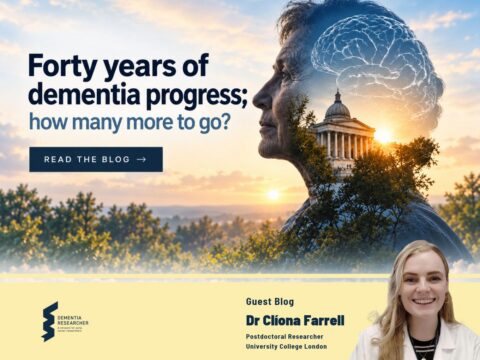
 Dr Clíona Farrell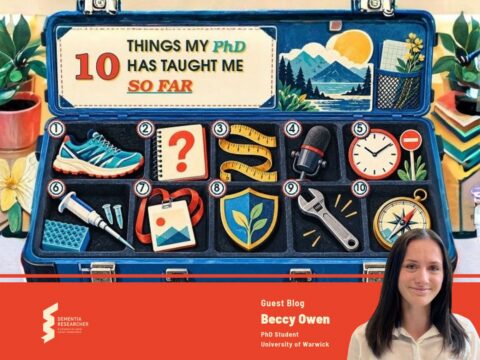
 Beccy Owen
 Rahul Sidhu