
 Print This Post
I am now almost halfway through my PhD (already!). When I first started, I expected the biggest challenge would be the science. What I didn’t expect was that the biggest lessons would not necessarily come from the experiments themselves, but from everything around them. Here are 10 things my PhD has taught me so far.
1. Research is a marathon not a sprint
The transition from undergraduate placements and master’s research to a PhD can feel extremely daunting. Instead of doing a shorter project which has been set out for us, we are trying to answer questions that nobody has asked before, and that change can feel strange at first. If the solution were straightforward, someone would have already discovered it! One of the biggest mindset shifts I had to make was accepting that research isn’t measured in days or weeks. It’s a marathon, not a sprint.
2. It’s okay not to know
When you start a PhD, it can seem like you need to know everything, and that can be quite overwhelming. Something that I have come to terms with is that it is okay not to know. That is the point of research! If we already had the answers, there would be no point in research in the first place.
A PhD isn’t about starting as an independent researcher – it’s about becoming one. You are constantly learning, developing skills, and asking questions to think independently. Becoming an independent researcher is a gradual process, not something that is expected from day 1 – that is what a PhD is all about!
3. Progress isn’t linear
Sometimes you can be generating lots of data, and other times it can feel like you’re making no progress at all. One of the hardest parts of research is to trust the process. Looking back, the weeks of “not getting anywhere” weren’t wasted. Every round of troubleshooting rules out one more thing to get closer to the result. Although sometimes it can feel like you’re not making progress, those small achievements build up until suddenly you realise how far you’ve come. Progress isn’t a straight line, and is full of setbacks, detours, and unexpected breakthroughs.
You don’t need to have all the answers to have something worth contributing.
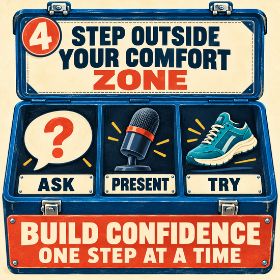
4. Being outside your comfort zone builds confidence
One of the biggest things my PhD has taught me is just how much more confident it has made me – not only as a researcher, but as a person. When I started my PhD almost two years ago, asking questions in meetings, and speaking to experienced researchers felt intimidating. Like many people, I was worried about getting things wrong or not knowing the answer.
When opportunities to present at conferences came along, despite being apprehensive, I took them. I knew I wanted to grow my confidence, and the only way to do that is being outside of my comfort zone. I remember giving a flash talk and a poster presentation at the Midlands Alzheimer’s Research UK conference two weeks into my PhD. Having just started my PhD, I was feeling quite apprehensive. Knowing that dementia research was new to me, I definitely felt out of my depth. Looking back, I am so glad I said yes. It set the tone for my PhD, putting myself forward and not waiting until I felt “ready”. Since then, every presentation, conference, and new opportunity has helped to build my confidence a little more. It is so beneficial to push yourself out of your comfort zone, and you will ultimately be so glad you did it!
I have also realised that this confidence has not just stayed in the lab, it’s changed how I approach challenges in everyday life too. Whether that is speaking to new people, trying something new, or doing something that felt daunting. The confidence I’ve developed as a researcher has carried over into my life outside of academia.
5. Boundaries protect sanity
Since starting my PhD, I have made a conscious effort to create healthier boundaries. Most of the time, I treat my PhD like a 9–5 job, although those hours are not completely fixed. However, if I do work late, I try to make sure I finish that work in the office before closing my laptop and going home. Having that separation between my work and personal life helps me switch off and be more present outside of research.
Setting boundaries has not made me less productive – in fact, I think it has made me feel more productive. Knowing that I have time away from my PhD allows me to return to my work feeling refreshed, motivated, and able to approach challenges with a clearer mind.
6. Learning is more than just reading papers and textbooks
Up until starting a PhD, learning had very much been centred around reading textbooks and passing exams. It had been about learning existing knowledge, rather than using existing knowledge to find something new. While I think that reading research papers is invaluable to grow as a scientist, I have found that gaining hands-on experience alongside this is key for my understanding.
For example, I can spend hours reading about whole-cell patch-clamp electrophysiology and understand all of the fundamental science behind it. However, it wasn’t until I actually carried out the experiments myself that it all clicked into place.
Often, the most valuable learning happens through experience, discussion, and putting yourself in situations where you are exposed to new ideas.
7. A PhD is more than just your project
While our research takes up the majority of our time, and is the main reason we enrolled in PhDs, one of the things my PhD has taught me is that it is far more than just your project alone. A PhD comes with many great opportunities. I have had the opportunity to work as a graduate teaching assistant in both labs and workshops, which has been so rewarding to help students gain their confidence in the lab and grow as scientists. So far, my PhD has taken me to some amazing conferences where I have met some great researchers. It is so important to say yes to these opportunities which come your way during your PhD, they can be really beneficial!
8. Resilience matters as much as intelligence
Everyone who starts a PhD has shown they are intelligent, but the resilience is what sets you apart. The value of a PhD isn’t solely measured by the amount of data you generate, but the resilience, critical thinking, and independence you develop along the way. It teaches you to take the highs with the lows, and to celebrate the successes, without letting the setbacks define you.
9. Science is 80% troubleshooting
Someone recently said to me that science is 80% troubleshooting. Until now, I had never thought of it in that way, but it changed my view of failed experiments. Instead of seeing them as setbacks, I now see them as part of the normal scientific process. Every obstacle teaches you something about your experiment, your methods, or your hypothesis, and each one brings you closer to understanding what’s really happening.
10. You don’t need to have your career figured out
When I started my PhD, I wasn’t 100% sure about what I wanted to do with my career when I finished. I’m still not, and that’s okay! The opportunities that you have throughout your PhD open so many doors, and every new experience helps you to understand what you enjoy. If your plans change – that is a sign you’re learning more about yourself as well as your research.
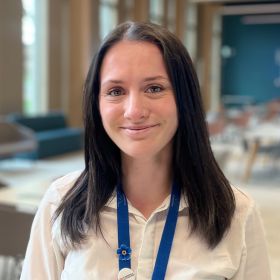
Beccy Owen
Author
Beccy Owen is a PhD Researcher at the University of Warwick, exploring how tau pathology disrupts neuronal ion channels and brain network activity in Alzheimer’s disease. As part of the Midlands Integrative Biosciences Training Programme, her work uses electrophysiology to better understand the molecular drivers of neurodegeneration. Originally from the Welsh countryside, Beccy’s passion for dementia research was shaped during her postgraduate studies and through personal experience with a family member living with the condition. She will be sharing her journey, insights, and lessons learned throughout her PhD here on the blog.


 Dementia Researcher
 Rahul Sidhu
 Dr Yvonne Couch
 Dr Emma Law
 Dr Ajantha Abey