 Print This Post
On the 18th of September, as part of the UCL200 celebrations, UCL Queen Square Institute of Neurology hosted a dementia showcase. To conclude this day, a public screening of the BBC documentary about Carol Jennings’ family, “The Jennings vs Alzheimer’s”, was held at UCL, followed by a panel discussion. What came from that discussion was a mixture of triumph on how far the dementia field has come, the powerful message of how the actions of one person can change everything, and an unwavering look at what’s systemically lacking right now to drive forward progress for people living with dementia.
The documentary follows the story of Carol Jennings, a woman from the Midlands whose astute recognition of young-onset Alzheimer’s disease in her paternal family led to significant breakthroughs in understanding the role of amyloid. Forty years ago in 1986, in response to a call out in the Alzheimer’s Society newsletter from Prof Sir John Hardy requesting families who had a strong history of Alzheimer’s disease, Carol wrote a letter which went on to lead to breakthroughs which changed the field of Alzheimer’s disease forever. What followed was a decades-long story, starting with the discovery of the London mutation in the APP gene in Carol’s family, leading right up to the first disease-modifying therapy for Alzheimer’s disease in 2023, and unfortunately, to Carol’s passing from Alzheimer’s disease not long after, in 2024. Although the documentary highlights the important scientific discoveries, it showcases the impact of dementia on the family unit, the strength to keep living life in the face of adversity, and what hope means for future generations. If you haven’t seen the documentary, I highly encourage you to go and watch it (but be armed with tissues).
Following the screening was an insightful panel discussion, featuring Carol’s husband Stuart Jennings, UCL researchers and clinicians Prof Catherine Mummery and Prof Nick Fox, who all feature in the documentary, as well as Dr Richard Oakley, Associate Director of Research and Innovation at the Alzheimer’s Society. Through the questions posed to the panel, I got a real sense of the public feeling for the dementia field.
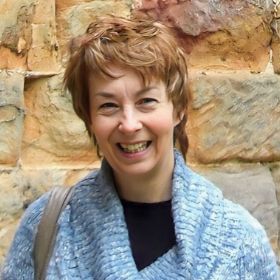
Carol’s letter was the 23rd in the pile of replies Prof Sir John Hardy received. The number stuck: “Family 23” was the BBC’s working title for the documentary.
The audience enquired about hope. How can the panel be so hopeful, when the only approved drugs have such a small effect? The message was quite simple – if this were the final result, that would be rubbish. But this is the beginning, and that is where the optimism comes from. For Alzheimer’s disease alone, 158 drugs are in clinical trials, including some taking place at UCL. Not only that but it is only a matter of time before blood testing is available, simplifying the diagnostic process. Prof Mummery did acknowledge the gap in understanding of the state of the field between researchers and the media – a failing of researchers in communicating, and something that needs serious attention.
Another prevalent theme in the overall discussion was the lack of resources given to dementia from the NHS and government. A question posed to the panel asked what changes they would want to see aside from new drugs. Comparisons were made to the stark difference between the fields of dementia and cancer. Cancer carries far less stigma, and is backed by much funding for rapid diagnosis, support for patients, research and huge public health campaigns. Not only is there significant underfunding in the ability to diagnose people with dementia, but there can be a real lack of adequate systems to support and care for people who do receive a diagnosis. Patients are seen just once, only to return when in a complete crisis. The panellists discussed the phrase learning to “navigate the system” – but stressed that if you have to learn that system to get by, the system is clearly failing!
The panellists also reflected on the stigma that persists in society around dementia. People are reluctant to go to their doctor if they are experiencing changes in memory. Prof Mummery also reflected on an ill-placed sense of protectionism from some neurologists – i.e. what is the point in early diagnosis when there is nothing that can be done for a patient. Although outdated, stigma still exists from many angles. The panel agreed that public health campaigns into raising awareness of dementia as a disease, not a natural part of ageing, and also what you can do to keep your brain healthy, would be of huge benefit. Dr Oakley specifically stressed how early diagnosis and treatment will benefit, but prevention also needs to be a key strategy. He cited that if we could delay the onset of symptoms by five years, we would halve the number of people living with dementia in the UK. It was clear from these conversations that there is a significant gap in resources; lobbying government to fund these areas is key.
This message was backed by Carol’s husband, Stuart, who spoke about Carol’s empowering approach to life. Carol wouldn’t take no for an answer. Her approach was always not to ask why, but to ask what. Not “why me” about her Alzheimer’s disease diagnosis, but to ask “what” the doctors and researchers are going to do about that. Stuart urged the audience and the broader public to challenge their medical professionals, their representatives and anyone who is in a position to enact change. Carol Jennings was one woman who changed the course of an entire field. It only takes the actions of one to make a huge difference. I hope that we can all take that inspiring message and call to action, to continue bettering the lives of those affected by dementia.
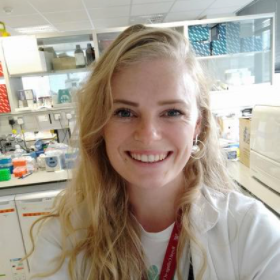
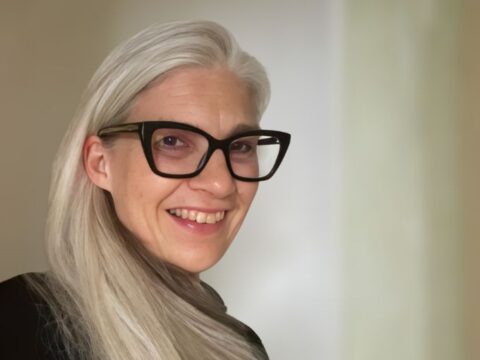
Dr Clíona Farrell
Author
Dr Clíona Farrell is a Postdoctoral Researcher in the UK Dementia Research Institute at University College London. Her work focuses on understanding neuroinflammation in Down syndrome, both prior to, and in response to, Alzheimer’s disease pathology. Originally from Dublin, Ireland, Clíona completed her undergraduate degree in Neuroscience in Trinity College, and then worked as a research assistant in the Royal College of Surgeons studying ALS and Parkinson’s disease. She also knows the secret behind scooping the perfect 99 ice-cream cone.
 Dementia Researcher
 Adam Smith
 Beccy Owen