 Print This Post
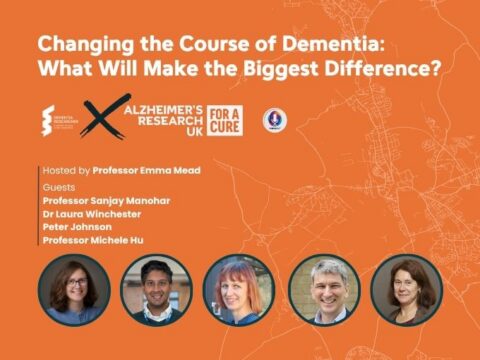
In this special episode, recorded to mark UCL's 200th birthday and released on World Alzheimer's Day, three UCL researchers working at very different ends of UCL dementia research come together to talk about what the university has contributed, and where the field goes next.
Professor Selina Wray hosts, joined by Dr Aygun Badalova, a neuropsychologist working on digital neurorehabilitation at the UCL Queen Square Institute of Neurology, Professor Tammaryn Lashley, Professor of Neuroscience and past president of the British Neuropathological Society, and Professor Andre Altmann, Professor of Biomedical Data Science and AI, who leads the COMBINE Lab.
Their three approaches could hardly be further apart. Aygun works with people living with dementia and a therapy app built around photographs of the people who matter to them. Tammaryn works with donated post-mortem brain tissue and the pathology that no scan can yet see. Andre works with datasets large enough to assemble a disease timeline nobody has lived long enough to observe directly. The conversation moves between all three, taking in why no two brains with the same diagnosis look the same, what blood-based biomarkers can and cannot tell us yet, where non-drug interventions sit alongside the new anti-amyloid treatments, and what it actually takes to hold that breadth of work inside a single institution.
This year's World Alzheimer's Month campaign is built around the idea that the earlier you know, the more you can do, and diagnosis runs through much of the discussion. Along the way there are some UCL landmarks worth knowing about, including the 23rd letter in a pile of replies to an Alzheimer's Society newsletter appeal and what it set in motion, Sea Hero Quest, the Lancet Commission's modifiable risk factors, the tau gene silencing trial, Insight 46, and the UK DRI. The episode closes on what each guest hopes we will find strange about dementia research by the time UCL turns 220.
In this episode:
- What two hundred years of UCL has actually contributed to dementia research, told through three very different kinds of work rather than a roll call
- Why each of the guests has stayed, and what their research would have lost elsewhere, from Queen Square Brain Bank and three thousand characterised brains to the Hawkes Institute sitting alongside the Dementia Research Centre
- How the full pipeline in one institution changes the questions people ask, with cells, tissue and clinic from the same individual, and neurologists now bringing cases to the lab rather than the other way round
- Where UCL has changed the field, including letter number 23 and the Jennings family, Sea Hero Quest, the Lancet Commission risk factors, TREM2, the tau gene silencing trial, Insight 46 and the UK DRI
- Diagnosis as the theme of World Alzheimer's Day, and what still stands in the way, from co-pathologies that no blood test can yet see to deciding who is suited to the new treatments
- What none of this can do inside one building, and why rare dementias, genetic risk and a therapy app all depend on people well beyond UCL
- Why disease modification and support for people living with dementia today are answering different questions, and the case for funding both
- What the guests want to look strange by UCL's 220th birthday, and what they are asking listeners to do now
Professor Selina Wray:
Hello and welcome to the Dementia Researcher Podcast. Today we have a special episode to celebrate UCL's 200th birthday, and we are going to look at the dementia research that is happening here right now, but also the discoveries that have helped shape the field and what needs to come next.
September is World Alzheimer's Month, and this year's international campaign is focused on a simple but urgent message. The earlier you know, the more you can do. Diagnosis matters because it can open the door to treatment, care, support, planning and research. This week, UCL has also brought its dementia community together for the UCL 200 Dementia Research Showcase, looking at the past, present and future through research from across the university, and also through the story of the Jennings family and Alzheimer's research at UCL and UCLH.
Two hundred years is an exceptional reason to celebrate, but there is far too much research at UCL into dementia to fit in one episode. So today we are not going to attempt a roll call, and we are certainly not going to cover everything. What we are going to do is use three very different kinds of work, through our guests today, to tell a bigger story. What has UCL contributed? What do its people and partnerships make possible? And where can dementia research go next?
I'm Selina Wray, I'm a Professor of Molecular Neuroscience at the UCL Queen Square Institute of Neurology, and I've been a very proud member of the UCL community since 2009. My own work uses patient-derived stem cells to study the earliest changes in brain cells from people with genetic forms of Alzheimer's disease and other forms of dementia. Today I will mostly be your host, although I think I'll find it almost impossible to stay entirely out of the science.
I'm really pleased to be joined by three UCL researchers who approach dementia from very different directions. Dr Aygun Badalova is a neuropsychologist and dementia researcher at the UCL Queen Square Institute of Neurology, and her work is focused on digital neurorehabilitation, including Gotcha!, a personalised therapy app designed with people living with dementia to help them retrieve the names of the people who matter to them. Professor Tammaryn Lashley is a Professor of Neuroscience within the Department of Neurodegenerative Disease at the UCL Queen Square Institute of Neurology and past president of the British Neuropathological Society. Her research encompasses the pathological characterisation of post-mortem human brains with different neurodegenerative diseases. And last but not least, Professor Andre Altmann is Professor of Biomedical Data Science and AI at UCL. He leads the COMBINE Lab, which uses machine learning to connect brain imaging, genetics and clinical information, and to identify patterns in disease progression to work towards a more individualised understanding of dementia.
Aygun, Tammaryn and Andre, thank you so much for joining me today.
Professor Tammaryn Lashley:
Hi everyone.
Professor Andre Altmann:
Hi.
Professor Selina Wray:
Three ways into UCL dementia research
Before we start, I'm going to ask you each for a few sentences to describe your bit of UCL dementia research. What are you actually trying to change for the person affected by dementia? Aygun, we'll start with you.
Dr Aygun Badalova:
Thank you. For me it's really about something very simple, helping people with dementia stay connected to the people and the memories that matter to them. In my research we developed and evaluated a personalised digital therapy called Gotcha!, which helps people practise retrieving the names of familiar people, the names of their loved ones, using their own photographs and personalised cues. So rather than focusing only on whether someone's memory is getting worse, we ask what we can do to support the person in the abilities they still have. Ultimately, I want research to translate into something that makes everyday life a little easier, more confident and more meaningful for people living with dementia and their families and carers.
Professor Selina Wray:
A beautiful description, and really clear impact as well. We will come back to discuss that in a bit more detail. Tam, can I come to you next?
Professor Tammaryn Lashley:
Yes, so my group uses post-mortem human brain tissue to look at what has actually gone wrong in people with dementia. To be able to contribute to disease modifying therapies, or eventually a cure, is the goal of the research that we do in my group.
Professor Selina Wray:
Fabulous. And Andre.
Professor Andre Altmann:
What we're trying to do is find out whether we can look at a person's data, from their lifestyle, or from lab tests, or from images that we take through other tests, for instance eye imaging. We want to find out how quickly their symptoms will evolve, and ideally whether there's something we can do to slow the progress down and help them have a better life.
Professor Selina Wray:
Thank you. I think something that will be a running theme throughout our discussion today is the complexity of dementia. As we all know, dementia is an umbrella term, it's not a single disease, and dementia research therefore can't be a single job. Around this virtual table we've got app based work, we've got tissue based work, and we've also got data-intensive work, and each of those will give us something that the others cannot. But there are also opportunities as we work together and influence each other.
Why a forgotten name matters
Aygun, I might come back to you first. Forgetting a familiar person's name sounds like a small symptom, but it can be devastating for people living with dementia and for those caring for them. Can you elaborate a little on why it matters so much, and what Gotcha! is trying to give back?
Dr Aygun Badalova:
A name is much more than a word. It's an identity, a relationship. When you forget somebody's name, particularly somebody you love, or somebody you have known for many years, you can suddenly feel disconnected from that person. We have heard from people living with dementia and their carers that these moments can affect their confidence and cause anxiety. You might recognise someone's face but not be able to retrieve their name, and when you experience that you may avoid starting a conversation, because you are worried about getting it wrong.
That is what interested us about the Gotcha! therapy app. We wanted to take something that sounds like a very small cognitive difficulty and look at the much bigger human impact behind it. So Gotcha! uses photographs of people who are personally meaningful to the person with dementia, and we give structured cues to help them retrieve the name. We are not just training a memory test, we are trying to support communication, confidence and relationships.
Professor Selina Wray:
The app, as I understand it, has been developed in partnership with people living with dementia. What insights have participants given the research team that perhaps wouldn't have been immediately obvious?
Dr Aygun Badalova:
As you nicely mentioned, we developed the app with the help of carers and people living with dementia. We asked them to provide us with a minimum of six to ten people who are family members, or people they have known for a long time and who are very important to them, along with photographs, and the people they interact with every day or from time to time.
We also heard from carers and people living with dementia that when you forget a loved one's name, you know who they are, you know the relationship, you know all the information about that person, but when you want to get the name out of your mouth it is just stuck there. It makes the person with dementia so anxious and worried that they want to stop the communication. As you know, communication is a crucial part of dementia care, with carers and family members. That is why we developed the Gotcha! therapy app, to help people with dementia relearn those names, and we showed that people with dementia can relearn names and can reconnect with their loved ones.
Professor Selina Wray:
My next question was going to be what success looks like, and as you've just described it, it's working, it's allowing people to rebuild those connections. If I may ask one final question. Is Gotcha! something that works with different types of dementia, or is it being used in the specific context of Alzheimer's disease or another form of dementia?
Dr Aygun Badalova:
Any type of dementia. We mainly recruited people with vascular dementia and Alzheimer's disease, but we also had a couple of participants with primary progressive aphasia. So far we could see that, regardless of the diagnosis, people all reacted positively and they all got better at remembering and recalling these lost names.
It also helps that all generations now have good technical abilities for using a digital app. The design of the app has a very simple structure, so they could use it without any other person's help or assistance.
Professor Selina Wray:
Why no two brains look the same
Brilliant, thank you so much. Tam, I might come to you now. Something we hear about a lot is how no two people, even with the same diagnosis, will experience Alzheimer's in the same way. Is that also the case at the pathological level? When you look at the brains of multiple people who had the same diagnosis, is the neuropathology always the same, or are there differences between those individuals, and what does that mean for our understanding of the disease?
Professor Tammaryn Lashley:
If we start with Alzheimer's disease, they have the classical hallmarks of amyloid plaques and tau tangles, and we have diagnostic staging criteria that will tell us pathologically whether somebody has Alzheimer's disease. But looking at those hallmarks under the microscope, we do see differences in the spread throughout the cortical layers, for instance. We see differences with rarer subtypes like posterior cortical atrophy, where the pathology starts at the back of the brain.
If we move on to a rarer dementia like frontotemporal dementia, we can have two people come into a clinic and present to the neurologist with behavioural variant frontotemporal dementia, but pathologically their brains can look very different, even though the clinical manifestation is the same. So you can have somebody with TDP-43 pathology and somebody with FUS pathology who look very similar in the clinic. I think the pathology is still the gold standard for diagnosis.
There have been lots of clinicopathological correlations, and I've been lucky to be involved in quite a number of those studies, where we take hundreds of brains and compare what the underlying pathology looks like against the clinical phenotypes. We are able to refine the diagnosis so that neurologists are getting better at diagnosing the correct disease, which is important if there is a treatment.
Professor Selina Wray:
Something that always sticks in my mind when we talk to our clinical colleagues is that it's not always possible to give people a diagnosis during life, and that the definitive diagnosis comes at post-mortem. What does it mean to people's families to have that definite answer?
Professor Tammaryn Lashley:
It varies. People have different opinions about whether they want the diagnosis or not. Some people will request it once the pathologist has looked at the brain, other families don't. I think it's important that families are informed if there is a genetic component, and again, it's completely up to them whether they want to be informed. People who donate their brain can have that choice about whether they want the information fed back.
Professor Selina Wray:
Flipping that question around, when you're working with these precious tissue samples in your research, how do you and your team keep sight of the people who have generously donated?
Professor Tammaryn Lashley:
We're forever grateful to the people who donate the tissue. My research team couldn't do our research without it. We get tissue from all around the world, from rarer dementias that we can learn from, as well as for the more common sporadic diseases. It's always on our mind when we're cutting sections, or chipping the tissue to extract DNA, that this has come from a precious resource.
Professor Selina Wray:
What machine learning can and cannot see
Andre, coming to you now, I guess we're going from one end of the scale to the other. We've done the individual molecular level analysis, and your work is with data at scales that some of us, definitely myself, struggle to get our heads around. What can machine learning and the type of analysis you do tell us about progression and variability in dementia that we wouldn't otherwise be able to understand? And as a follow on, are there things that machine learning and predictive models will get wrong?
Professor Andre Altmann:
As we've said before, dementia, especially Alzheimer's disease, evolves over a really long time, and that's a very unique challenge when you study the disease. The problem is that when we work with data, usually somebody else has collected it, and many of the studies only last for a handful of years. So you get snapshots, five years for instance, and that never covers the whole spectrum.
What machine learning can do is look at those snapshots and puzzle the whole timeline together, essentially developing a longitudinal story of how the disease evolves by looking at different datasets. More importantly, as Tam said before, we have different subtypes, and it can find whether there's just a single story in the data or whether there are actually diverging stories with slightly alternative tales. That helps us afterwards to understand how we might subtype somebody and make a more individual prognosis.
The other part of the question, what machine learning can get wrong. I would say, basically, if you're not careful, everything. The biggest danger usually comes from the way the dataset was collected. Machine learning might quite quickly learn a shortcut that has more to do with how the data was collected than with the underlying biology we want to understand. So you end up with a model that's very confident, because of the way the data was sampled or what kind of people were included, and it's confidently correct, and you get very good quantitative performance measurements. But on the biological side, when you try to apply the model somewhere else, it just doesn't work.
Professor Selina Wray:
I'm interested in the last bit you said. When you make your predictive model, how do you then translate that into a validated model and a biological understanding of what the model is telling you?
Professor Andre Altmann:
Typically in machine learning you have a training dataset, and the model looks at that data and you build the model. Then for us the litmus test is when you take the model to a totally new dataset with a different population, ideally collected in a different way with a different emphasis, and you can still make valid predictions. That's the first important step to validate that we can trust the model.
We also have to work closely with experts and pay special attention when they disagree with our model's predictions. We might learn something new, but we might also identify that the model was incorrect.
Professor Selina Wray:
Sounds like it might make for some lively discussions, which is always fun.
Professor Andre Altmann:
Always.
Professor Selina Wray:
Letter number 23 and the Jennings family
That's been an amazing start to understanding the breadth of work going on across UCL.
As this is a UCL special episode, we will start each segment with a little bit of UCL history and some fun facts about the work that has happened here. The first of those is that a big part of Alzheimer's research started with letter number 23. In 1986, John Hardy and Martin Rossor put out a plea through the Alzheimer's Society newsletter, asking for families affected by early onset Alzheimer's to come forward if they might be interested in participating in studies of Alzheimer's genetics. They received a range of responses, but the 23rd letter in the pile came from a woman named Carol Jennings, and it turned out to be a letter that changed the course of Alzheimer's research.
It's fitting that we mention Carol, because I think she's one of the most inspirational and influential women in Alzheimer's research, and this year she was posthumously awarded a UCL honorary doctorate. There's a BBC documentary called The Jennings vs Alzheimer's, which tells the story of Carol's family and how they worked in collaboration with UCL researchers to advance our understanding of Alzheimer's. I would recommend to everyone that they watch it, because it really is fantastic.
Could this research happen anywhere else?
UCL has enormous breadth across dementia research, from preclinical lab-based biology through to brain tissue work and neuropathology, neuroimaging, genetics, clinical trials, rehabilitation, psychiatry, population health, engineering, health economics and lived experience. So the full spectrum of research happens here. But an interesting question to explore is how those parts connect to become greater than their individual contributions.
So my next question for you all. You're all doing excellent work, and in theory you could carry out this work at other institutions, it wouldn't have to be at UCL. But is there an aspect of your research that UCL has made possible that would genuinely have been a lot harder elsewhere? Who would like to tackle that first?
Professor Tammaryn Lashley:
I can go first. Mine's quite an easy answer. Over the last thirty, forty years, after Professor Lees started Queen Square Brain Bank, I have obviously used tissue from various brain banks for most of my research, but most importantly Queen Square Brain Bank. Without such a wonderful brain bank, my research wouldn't exist.
Even with my junior and senior fellowships I was always asked why I couldn't go somewhere else. But I've characterised two or three thousand brains, so it's difficult to start over again, or to up sticks and take brain tissue elsewhere. That's near impossible. I guess that's why I've remained at UCL, but it's also the connections with the neurologists and the data scientists, and the long standing collaborations we've set up. That's difficult to find elsewhere. We obviously collaborate elsewhere too, but the core of the people we do our research with are here at UCL. But mainly, the brains aren't anywhere else.
Professor Selina Wray:
I might jump on that answer, actually. I said I probably wouldn't be able to stay out of the science for the whole episode. That's really been my experience as well. We're working with patient-derived cells, but what has enabled our work to ask some very unique questions is that we can quite often connect what we see in the cells with the tissue from the same individual, working with you, Tammaryn, and again through collaboration with the neurologists.
I remember when I first started, many years ago, feeling slightly guilty that I was asking them to do one more thing, take one more sample. That narrative has shifted, and now people like Natalie Ryan or Jon Schott or Jonathan Rohrer will come to me and say, look, we had this really interesting person in the clinic, maybe this is something you want to explore in your cell model. Being able to connect all those different parts of a person's disease to gain individual insight is something that I'm sure is possible in other places, but I do feel that UCL is unique in that ethos of people wanting to work together.
Aygun or Andre, do you want to comment on this question?
Dr Aygun Badalova:
For my work, I think one of the biggest advantages is the concentration of expertise. I'm working at the intersection of neuropsychology, neuroscience, neurorehabilitation and clinical research. At UCL you can have a conversation with somebody working in brain imaging, somebody studying the biology of Alzheimer's disease and somebody working directly with patients, and all of those conversations can influence the research.
The connection with the Queen Square Institute of Neurology, the Dementia Research Centre and UCLH is particularly valuable, because it creates a bridge between neuroscience and clinical practice, and the neuroimaging centre too, because in my research we also use neuroimaging methods to see how behavioural changes show themselves in the brain.
I think the history matters as well. We are working in an environment where the major research has been shaped by discoveries that started decades ago, but we are also surrounded by people asking completely new questions, with new research methods, new funding, new grants and new questions to answer every year. So I think UCL is a great place.
Professor Selina Wray:
Definitely. I always think that even for the bits of UCL dementia research that I might not directly collaborate with, it still enriches our own research to have that complete pipeline within a single institution, because it helps me think about where my bit of the jigsaw fits in the bigger picture. That gives us a more complete understanding of dementia, but it also keeps us focused on what the ultimate aim is, which is to improve outcomes.
Andre, what's your experience been at UCL of collaborating across disciplines?
Professor Andre Altmann:
Before coming here I was more interested in understanding a more pure genetic basis, what's increasing the risk. But through my excellent colleagues here at the Hawkes Institute, previously CMIC, who have real strength in modelling disease progression, my question shifted a bit more towards trying to understand what is contributing to these bits and pieces.
The other part is the strong collaborations that already exist at UCL between different institutes. For us it's the Hawkes Institute and the Dementia Research Centre, where one provides the imaging expertise and we provide the machine learning expertise, and we come together. Overall at UCL there's a willingness among colleagues in other parts of the university to try the weird methods that we come up with. They dedicate their time, collaborate with us, and try to move the needle forward.
Professor Selina Wray:
It's a good moment to give a shout out to Frances Edwards. One of the things I remember from joining here as a postdoc was when she set up the Demnet dementia mailing list and organised the first internal dementia research conferences. It was her drive that helped to get us all together in one room, and I remember the first one being, wow, I had no idea there were so many people doing dementia research here, across so many buildings and different parts of the campus. It's nice to see how those connections have expanded and remained strong over the years.
Sea Hero Quest and 9,000 years of data
I think it's time for our next UCL fun fact. Many of you may have played or heard of a game called Sea Hero Quest, which was developed by Professor Hugo Spiers and asks players to navigate in a virtual boat. Sea Hero Quest has been downloaded over 2.7 million times and played in every country in the world, and it's generated data that would have taken over 9,000 years to collect in a traditional lab. Just two minutes of playing Sea Hero Quest generates the same amount of data that scientists would otherwise take five hours to collect. Loss of navigational skills is one of the earliest signs of dementia. I really recommend anyone go and have a go at this game if you haven't already. I'm terrible at it, but it's fun, so do think about downloading it and playing and contributing to dementia research.
Diagnosis, biomarkers and the new treatments
The theme for World Alzheimer's Month this year is, the earlier you know, the more you can do. A dementia diagnosis matters, and earlier and more accurate diagnosis goes hand in hand with emerging treatments, better support and the chance to take part in research. But a slogan can hide a lot of hard science and difficult choices, so I wonder if we might now shift the discussion to talk about diagnosis and therapeutics.
Tammaryn, starting with you, the new Alzheimer's treatments that are starting to come through are mainly focused on targeting particular proteins. How does neuropathology tell us who might have the right biology for a particular treatment, and also who might not be receptive to one?
Professor Tammaryn Lashley:
Again, it's difficult. The new treatments coming out target either the amyloid beta protein or the tau protein. Without that gold standard neuropathological assessment, which we can't get until the person passes away, it's difficult to say what the level and the spread of the pathology is, and also the co-pathologies, which we haven't really touched on. As well as having tau and amyloid beta, a person can have a plethora of co-pathologies, be it Lewy bodies, which we see in Parkinson's disease, or TDP-43 pathology.
So it's about trying to find biomarkers and risk factors that pull those people into different pots, so to speak, to see how the treatments would best suit those individual pots. I know, for instance, that the APOE4 risk allele will put people at more risk if they have the treatments, or if they have CAA, where the amyloid protein builds up within the blood vessels, they have the risk of ARIA with these new treatments.
But I guess it's a chicken and egg situation, because what we need is the underlying pathological diagnosis before people pass away. The treatments have to start somewhere, and these first treatments are working in the right direction. I don't think they'll be the treatments in ten years' time. We're going to need a combination of therapies depending on people's biomarkers as well. I think I've gone off on a tangent from your original question, haven't I?
Professor Selina Wray:
No, it's good. I'm conscious that we haven't talked about blood-based biomarkers yet, and you mentioned needing to know the pathology during life. My understanding is that blood-based biomarkers are starting to help with that, so I wondered if you might comment on those briefly. The second question I wanted to ask is about co-pathologies. We know most people don't have clean versions of each disease, there's a lot of crossover between them, so how is that likely to affect treatments, and what work has been done there?
Professor Tammaryn Lashley:
We'll start with the blood-based biomarkers. They are advancing quickly for Alzheimer's disease, and I think it's quite easy now to tell the difference for somebody who does have tau pathology within their brain. But for the co-pathologies, they're not quite there yet. We can't tell whether somebody with Alzheimer's disease also has TDP-43 pathology, which will accelerate the dementia.
That pathology affects different brain regions to tau and amyloid beta. We'll have people with TDP-43 pathology in the amygdala, or it can spread to the frontal cortex too. So we're not there with those biomarkers, and whether tau and amyloid beta are masking the intricacies of those co-pathologies, and how they will accelerate the disease process. Again, it's another chicken and egg situation.
Like we said at the beginning, no one Alzheimer's disease is the same, but I think it will end up with people having multiple treatments to treat all these different proteinopathies. And of course, this is only what we can see. It takes time to find out other things. We didn't know about TDP-43 twenty years ago, we were just diagnosing cases with Alzheimer's disease as tau and amyloid beta. It's only now that people screen for the co-pathologies in these cases as well. So it's tricky, but we have to start somewhere, and these new treatments are the first step in reducing the disease process, although obviously they're not a cure yet.
Professor Selina Wray:
Thank you. With this being a UCL special, and as we've talked about blood-based biomarkers, it's important to give a shout out to Henrik Zetterberg, Amanda Heslegrave, Jon Schott, Ashvini Keshavan, Jonathan Rohrer in the FTD space, and many, many others who I'm definitely forgetting, so I apologise if you're listening. But the amazing work they've done, right from developments through to getting these out into a community setting.
Professor Tammaryn Lashley:
And for the treatments, a shout out to Kath Mummery, who runs all the treatments over at Queen Square. An amazing neurologist who we work and collaborate with on various things as well.
Professor Selina Wray:
When should a prediction reach the patient?
Absolutely. That leads nicely into my next question, which is for you, Andre. One of the reasons your research will be so important is in patient stratification. If we know that someone is on a particular disease trajectory, and that they're likely to have a different biology, or to progress more rapidly or more slowly than average, if I can say that, when would you take your model and put that information in front of a clinician, or in front of a participant, to influence their treatment?
Professor Andre Altmann:
I think there are two ethical guidelines first. Number one, I would only like a model to be available if there's something we can actually do about the pathway. If there's no medication to influence the pathway, then it's not really helpful. So I think it's great that we're getting there. We have anti-amyloid drugs, and there are going to be anti-tau drugs, so this is going to be helpful in identifying where the patient is in their journey and then tailoring it specifically.
The other ethical question is whether the patient wants to know how their future trajectory looks. Do they want to know how long they will be independent, what kind of next milestones are going to happen? If those two things are set, then yes, it makes sense to put the model out and have people use it.
The other checks are really about how accurate the model is, and I think that depends partially on how complex the model is. We have a long tradition of manually developed models. A recent advancement is that we look at Alzheimer's disease in the form of the ATN framework, essentially a manual staging of whether there's amyloid pathology, tau pathology or neurodegeneration. In a sense that's already a simple method, but it came from clinicians and researchers rather than from computer scientists. For us, we want a more fine-grained staging, to have additional granularity.
What we want to see for those machine learning models, and that's more the quantitative analysis, is that they work in external cohorts where they weren't trained, with people from different demographics. And importantly, we want to see that the individual predictions are accurate, not just that we have group level differences. We can only give precision advice to people if we know that our model is working at an individual level rather than just identifying trajectories.
Professor Selina Wray:
Where non-drug therapy fits
Thank you. Aygun, we've talked about drug-based interventions, but where do non-drug interventions such as Gotcha! fit in a field where sometimes it can feel like the narrative is all about disease modification, when that needs to go hand in hand with supporting people who are living with dementia? How do those two fit together?
Dr Aygun Badalova:
I think we actually need both. Disease modifying treatments are incredibly important, because they aim to change the underlying biology of the disease. But even as those treatments develop, people are living with dementia now, and they need support now. Non-drug interventions are not competing with disease modifying treatments, they are addressing a different part of the problem.
In our case, the Gotcha! digital therapy app is not a cure, and we should be honest about that. But if we can help somebody living with dementia communicate more confidently with their loved ones, retrieve an important name, maintain a relationship, or feel less frustrated and less anxious in everyday life, that has real value.
I also think that digital rehabilitation gives us an opportunity to deliver personalised support repeatedly, and potentially at a larger scale, but only if we design it properly and make it accessible to everyone. That's our next step for the Gotcha! project, to make it publicly accessible. In the third phase, hopefully, everyone will be able to download the digital therapy app and add pictures of their loved ones if they want to practise.
Professor Selina Wray:
Modifiable risk factors, TREM2 and working beyond UCL
Time for our next fun fact, which is that UCL's Professor Gill Livingston is the lead for the Lancet Commission on Dementia, and has found that addressing 14 modifiable risk factors, from hearing loss to untreated vision loss and high cholesterol, could prevent or delay about 45% of dementia cases worldwide. It was also UCL-led international research that linked a rare variant in the TREM2 gene, a gene involved in the immune response, to significantly increased Alzheimer's risk.
So, thanks everyone. We've talked a lot about how great UCL is and the amazing research that goes on here, but of course we're not operating in a silo. We're a highly collaborative place, internally and externally, and the work certainly doesn't stop at the UCL doors. It relies on people with dementia and their families, NHS services, researchers around the globe, charities, funders, our technology partners, and data and samples that may be generated in many places.
So let's make this part about what those relationships look like, and why collaboration is essential to accelerate our research. I'd like to ask any of you to comment on a piece of work you've been involved in that couldn't have happened only within UCL. Who else needed to be involved, and what did each partner bring to the collaboration? Who wants to tackle that first?
Professor Tammaryn Lashley:
I don't mind, I can go first. As I've touched upon, large clinicopathological studies, and lots of the dementias that I work on, which are rarer dementias, including frontotemporal dementia and familial British and familial Danish dementia, which I collaborate with Selina on. None of the projects that involve these rarer dementias would have gone ahead without people from other countries and other places in the UK recognising these diseases, as clinicians, local pathologists and local scientists, and knowing about our research here at UCL.
For those studies we need to combine these cases together to look at what's common with those rarer dementias and what is different, and we need to compile large cohorts, which for the rare genetic cases is only possible if we pull together cases from around the globe. We work with various charities, including Alzheimer's Research UK and the Association for Frontotemporal Degeneration, to locate where those cases are and to have the tissue resources to work on. Although lots of cases come internally through the clinicians at UCL, we do rely on international colleagues to identify and locate cases as well.
Professor Selina Wray:
That must be the same for you, Andre. You need larger and larger datasets, and it must be impossible for those all to be generated locally. Are you also collaborating globally to get the data you need?
Professor Andre Altmann:
Yes, that's absolutely correct. For us it's essential. When we work with local data we build a model that we know works on our data, but in order to generalise we need to work with people in the States, in other European countries and so on, to validate the model and see if it has all the checks and balances.
The other thing I wanted to mention is that all the genetic risk studies wouldn't be possible in a single institution. Genetic risk factors are typically very tiny, and you need sample sizes in the tens of thousands and hundreds of thousands. So this is really a global effort.
Professor Selina Wray:
Absolutely. Go ahead, Aygun.
Dr Aygun Badalova:
Gotcha! is also a good example of that. It couldn't have been developed by researchers sitting in a lab. We needed people living with dementia and their families to tell us what mattered to them, and clinical expertise to understand the needs associated with dementia. From a neuropsychological base we needed help to design the cognitive approach, and of course the technical expertise of app development to turn it into something people could actually use.
Each group brings something different. Researchers bring methodology and evidence, clinicians bring clinical experience, and technology specialists like app developers bring the ability to build and improve the intervention and make it accessible. And people living with dementia and their carers bring something that none of us can substitute for, lived experience. That's the key factor for good research and good results, and I think that combination is what makes research meaningful.
Professor Selina Wray:
Thank you everyone, amazing answers. It's so true that research is increasingly multidisciplinary, and we need those collaborations with people who have different skill sets and access to different cohorts and datasets to be able to make progress.
I'll share another UCL first. In 2023, a trial led by Kath Mummery between UCL and UCLH tested a gene silencing drug in people with Alzheimer's disease. The idea of this drug was to reduce the production of tau, and biologically that's exactly what happened. Tau levels in the central nervous system fell. This was an early trial and it didn't tell us whether people's symptoms improved, but it showed that the approach could have an effect in people, and that's an important step.
We can't talk about UCL without mentioning Insight 46, a cohort that follows a unique group of people who were all born within the same week of 1946. Using state of the art brain imaging plus memory and cognitive tests, they're catching the earliest signs of Alzheimer's disease in these individuals before symptoms appear.
My final fact is that UCL hosts the UK's biggest ever investment in dementia. The UK Dementia Research Institute, the UK DRI, primarily funded by the Medical Research Council, has its national headquarters at UCL, and it's been described as the single biggest investment the UK has ever made in dementia research.
There are so many more groundbreaking discoveries we could mention, and I apologise to anyone listening if we haven't had a chance to mention your work today. But I think we should finish by looking a little to the future. Our slogan for our campaign year is, here it will happen. We've talked a lot today about what's happened, and about what's happening, but maybe we should think about what we want to happen in the future.
UCL at 220: what should look strange by then
So this is our final segment, and we're almost out of time. I'd like you all to think ahead to UCL's 220th birthday, twenty years from now. What will we look back on and think, it's very odd that twenty years ago we didn't know this, or it's very odd that we had to do this in dementia research? I wonder if you could all answer that in one or two sentences each.
Professor Tammaryn Lashley:
That's a hard one. So we're projecting twenty years into the future.
Professor Selina Wray:
Exactly. It's the last few minutes, so I thought I'd switch from being a nice interviewer to Paxman style.
Professor Andre Altmann:
I can go first. I think it would be nice if people found it strange that we had to do brain imaging to diagnose these diseases.
Professor Selina Wray:
You think it will be a blood test?
Professor Tammaryn Lashley:
It would be good, yes. Even to check somebody's susceptibility to the dementias when they're born, although that may be a step too far and may be even beyond twenty years. But blood-based biomarkers, some kind of test that you can have at the GP surgery, to give you a risk score. Again, not everybody might want to know, but having a risk score.
And then having the treatments. We're talking about the first treatments for Alzheimer's disease, but in twenty years, having something somebody can take so that it's not a diagnosis where everybody says, oh no, I've got dementia, that there is something there, like some of the cancers that are now being eradicated through vaccines. Something to prevent the onset would be great. Whether that's in twenty years, probably not, but hopefully we will be closer in twenty.
Professor Selina Wray:
Aygun.
Dr Aygun Badalova:
I would also like to see more people living with dementia or Alzheimer's involved in the research journey that UCL is doing. Not just asked whether they like a finished intervention, or whether they would like to be a participant, but involved in deciding which problems are worth solving in the first place, whether that's intervention, treatment or prevention.
Professor Selina Wray:
Definitely. We have to think all the time about how the work we do in research will translate into impact, so I agree one hundred per cent.
What the guests want listeners to do
Finally, this episode will be broadcast on World Alzheimer's Day. What is one thing you would like a listener to understand, to ask, or to do after hearing our conversation?
Dr Aygun Badalova:
I can start. I would like people to remember that dementia research is not only about finding a cure or a treatment. Of course we urgently need better treatments, but we also need to help people live better with dementia today, living better and more independently while having dementia.
I would also encourage people to ask what matters to this person, what abilities can be supported, and how research can help them maintain those things for as long as possible. Because behind every diagnosis there is a person, a family and a life, and that's ultimately who the research is for.
Professor Tammaryn Lashley:
My research isn't patient facing, but to people who are affected, or even people who just want to know more about Alzheimer's disease, the charities out there, Alzheimer's Research UK and Alzheimer's Society, are fantastic places to find out more information. We as a lab, and at UCL, do more and more engagement activities if people want to learn more from us as scientists, and to help with the research if they want to. As we've alluded to, there's various software out there that people can use to help with research as well. I think it's a combined effort from everybody, all the different scientific disciplines, but also those who have been touched by dementia, to help in finding a cure.
Professor Andre Altmann:
I would really echo Tam's call for participation. Try to get involved if you know somebody, or if you are affected by or at risk of dementia. And the other thing, which we haven't really touched on, keep your body healthy, because that's the major modifiable risk factor we know of so far, and that's going to keep your brain healthy.
Professor Selina Wray:
Sound advice. We've been chatting for almost an hour and I think we've only scratched the surface of what we could have talked about.
For my closing reflection, I might use the next minute as an opportunity to mention something we haven't talked about, but which relates to the points just made, which is the fact that the first Rare Dementia Support Centre is opening at UCL. This has been led and co-directed by Professors Nick Fox and Seb Crutch. Having worked with them both for many years, I've seen the drive they have put into making this happen, and I think it really is a remarkable place for people who have a diagnosis of a rare dementia to go and connect with each other, to connect with research, and to receive support in a way that hasn't been possible before. For any listeners who may not have heard of it already, I'd recommend going to look at the website, because it is a remarkable initiative.
So thank you to Dr Aygun Badalova, Professor Tammaryn Lashley and Professor Andre Altmann for joining me today, and to everyone across the broader UCL dementia research landscape, whether you're a researcher or a contributor through your participation in research studies. It's your time, your effort and your trust that make all of this work possible.
UCL's history has given us plenty to celebrate and plenty to talk about today, but by no means is it permission to put our feet up. The job isn't done. It gives us the motivation, but also the evidence, that institutions can change what seems impossible, and we have a responsibility to continue that journey and make the change faster, fairer, more equitable and more useful to as many people worldwide as we can.
You will find links to our guests, to the UCL 200 Dementia Research Showcase and to World Alzheimer's Month in the show notes, and also on our website at dementiaresearcher.nihr.ac.uk. I'm Selina Wray, you've been listening to the Dementia Researcher Podcast. Thank you all for listening, and goodbye.
Dr Aygun Badalova:
Thank you.
Professor Andre Altmann:
Thank you. Bye.
Narrator:
The Dementia Researcher Podcast was brought to you by University College London, with generous funding from the National Institute for Health and Care Research, Alzheimer's Research UK, Alzheimer's Society, Alzheimer's Association and Race Against Dementia. Dementiaresearcher.nihr.ac.uk.
If you would like to join a panel or record a podcast on your own area of research, complete our show form. You can subscribe to our podcasts through your favourite podcast app, just search for 'Dementia Researcher' or follow the links in the footer of this page.
Did you know... all of our blogs are also available as podcasts? Find them here on Apple, and here on Spotify
The views and opinions expressed by the host and guests in this podcast represent those of the guests and do not necessarily reflect those of UCL, Dementia Researcher or its funders.
Join our Supporter Programme and subscribe to our channel in YouTube or in Apple Podcasts for exclusive access to bonus shows, and to gain early access to our recordings.
Share your thoughts on this topic in the comments below.
 Dementia Researcher

 Adam Smith
 Dr Emma Law