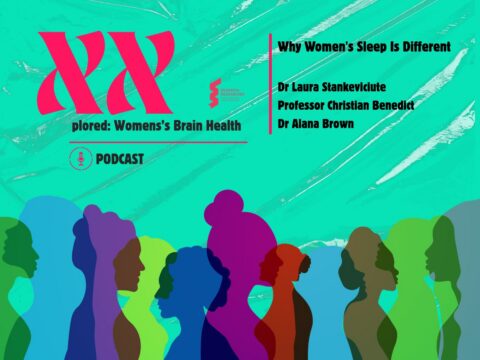
In this episode of XXplored: Women's Brain Health, host Dr Laura Stankeviciute from the University of Gothenburg is joined by Dr Jenny Rabin from the University of Toronto and Sunnybrook Research Institute, and Dr Louise Schindler from King's College London, to explain why the heart and the brain belong in the same conversation for women.
Cardiovascular disease is the leading cause of death for women worldwide, yet the picture most people hold of a heart attack is still an older man clutching his chest. The same blind spot carries over to the brain. Most of the dementia risk factors named by the 2024 Lancet Commission, from high blood pressure and LDL cholesterol to diabetes and smoking, are cardiovascular ones, and a growing body of evidence suggests several of them weigh more heavily on women than on men.
Jenny Rabin, a neuropsychologist whose work began with vascular contributions to Alzheimer's disease, and Louise Schindler, whose PhD linked cardiometabolic health across the menopause years to later brain changes, follow that thread through a woman's life.
In this episode:
- Why heart disease is the leading killer of women, and what that means for the brain
- The heart attack symptoms women are most likely to miss
- What vascular dementia really is, and why it rarely travels alone
- Why blood pressure in your 40s may matter more for women
- The female-specific risk factors missing from risk calculators
- What pregnancy complications can tell us decades later
- Hot flushes, HRT and the Women’s Health Initiative, revisited
- GLP-1s, menopause and the belly fat question
Ask the researchers
Women's heart health and the brain
Seven short answers on cardiovascular health and dementia risk in women from this episode, with Dr Jenny Rabin and Dr Louise Schindler.
01How are heart health and brain health connected?
The brain has a very high energy demand and depends on a constant supply of blood, oxygen and nutrients from the cardiovascular system. Dr Jenny Rabin describes two main routes to harm. Reduced or interrupted blood flow can affect brain health, and a sudden blockage causes a stroke. Risk factors such as high blood pressure and diabetes also damage the brain's tiny blood vessels, known as small vessel disease, often silently over many years. She prefers the term vascular cognitive impairment to vascular dementia, because vascular injury affects cognition across a spectrum, and in older people it commonly coexists with Alzheimer's pathology. The more useful question is how much vascular disease is contributing to someone's decline.
02Are heart attack symptoms different in women?
They can be. Chest pain or pressure is the most common symptom in women as well as men, but Dr Louise Schindler explains that women are more likely to also experience breathlessness, nausea, pain in the jaw, neck or back, and extreme unexplained fatigue in the weeks before a heart attack. Because these symptoms are vague, they are often put down to indigestion or flu, and women tend to seek help later than they should. Dr Jenny Rabin stresses that time matters: the longer the heart goes without oxygen, the greater the damage. Many women, especially younger women, do not see themselves as at risk, so awareness among women and healthcare providers is key.
03Is high blood pressure in midlife riskier for women's brains?
The evidence points that way, though the reasons are not fully understood. Years of high blood pressure strain the small vessels in the brain, raising the risk of stroke and dementia. Dr Louise Schindler sets out several possible explanations for a stronger effect in women. Oestrogen helps keep blood vessels flexible, and as it falls at menopause arteries stiffen, sending more pressure into those small vessels. Yet one study found the effect in women regardless of menopausal status, so menopause is not the whole story. A large US study linked high midlife blood pressure to dementia only in women, most strongly in those also carrying APOE4. Survival bias, differences in diagnosis and management, and social factors such as stress may all play a part.
04Which cardiovascular risk factors are specific to women?
Dr Jenny Rabin's recent review looks beyond the traditional risk factors. Early menopause is linked to higher cardiovascular risk later in life. Polyendocrine metabolic ovarian syndrome, formerly PCOS, is associated with insulin resistance, high blood pressure and abnormal cholesterol. Autoimmune conditions and depression are more common in women and both carry cardiovascular risk, as do some breast cancer treatments. Dr Louise Schindler adds pregnancy: preeclampsia, gestational hypertension and gestational diabetes resolve after birth, but raise the risk of later hypertension, heart disease, stroke and diabetes, and these women are rarely followed up. Pregnancy's wider effects on the brain are explored in our episode on matrescence. Most of these factors are missing from standard risk models, which may underestimate risk in some women.
05Are hot flushes a sign of vascular risk to the brain?
Possibly, but the data are not yet there to say. Vasomotor symptoms, the hot flushes and night sweats many women experience around menopause, have been linked to cardiovascular events, and work from Rebecca Thurston's group has associated them with white matter hyperintensities and with blood amyloid levels. Dr Jenny Rabin suggests they may be picking up an underlying vascular vulnerability, but says the causal nature of the association still needs to be established. Dr Louise Schindler adds that the brain fog many women notice around menopause, along with changes in brain volume and energy use seen on imaging, largely appears to be temporary.
06Does menopause hormone therapy increase dementia risk?
Dr Jenny Rabin's answer is that hormone therapy cannot be treated as one thing. Timing, formulation and route all matter. Started within around five to ten years of menopause, most randomised trials show a largely neutral effect on cognition. The Women's Health Initiative memory study enrolled women aged 65 and over, often many years past menopause, so its findings should not be applied to women starting treatment around menopause. It also used conjugated equine oestrogens with MPA, rather than the 17-beta-oestradiol and micronised progesterone more common today, which may have a better safety profile, though direct evidence is limited. Transdermal oestrogen bypasses the liver and its effects on clotting. The better question is when it was started, what it contains and how it is delivered.
07Can GLP-1 drugs help women through menopause?
GLP-1 receptor agonists such as Ozempic, Wegovy and Mounjaro mimic a gut hormone, prompting insulin release, slowing stomach emptying and reducing appetite. Dr Louise Schindler notes they also reduce heart attacks, strokes and heart-related deaths, apparently independent of weight lost, and stresses they are a treatment rather than a cure. Around menopause, many women find fat shifting from the hips to the abdomen, and visceral fat between the organs is harmful for both the heart and the brain. A review drawing mostly on animal studies suggests GLP-1s reduce weight and abdominal fat in menopausal and postmenopausal women, but no randomised trials have tested this directly. Research on GLP-1s and cognition is moving fast, including the PROTECT-Cog trial.
Narrator
Welcome to "XXplored, Women's Brain Health", a dementia researcher podcast exploring the many factors that shape women's brain health across the lifespan.
Why women's heart health matters for the brain
Dr Laura Stankeviciute
Welcome to another episode of "XXplored, Women's Brain Health", where we'll be discussing why the heart and the brain belongs in the same conversation for women, and what that means for women’s brain health. When we usually hear about the heart attack, I bet the majority of us are actually imagining a middle age or an old man clutching the chest.
But what surprised me quite a lot when I was preparing for this episode that actually statistics show that heart and vascular diseases, shortly cardiovascular disease (CVD), is actually the leading cause globally of death for women, with one out of three deaths being attributed to cardiovascular diseases for females. And when we think about the heart and the brain, we usually think of them as two separate entities.
The heart is all about the blood vessels, cholesterol, and the brain is where all the difficult processes take place, what decisions are being made, memories are being created, and emotions are being felt. But in fact, both of these systems are more intertwined than we may think.
In 2024, the Lancet Commission actually published a new dementia risk factors list, and a majority of them out of those 14 were actually related to cardiovascular disease, such as hypertension, high LDL cholesterol, smoking, diabetes, which are all directly related to cardiovascular health. And all of them, as well as Alzheimer's disease and cardiovascular disease, they share those risk factors. But what is very interesting is actually that these risk factors may differ between men and women.
And as you can imagine, cardiovascular health or cardiovascular disease is a huge entity, a field of its own, and we're probably not going to be able to cover it all in today's episode. But I'll try to focus on what matters most for women's brain health, its ageing, and Alzheimer's disease risk. And to help me walk through all of this huge topic, I have two incredible people here with me trying to disentangle the heart and brain connection throughout their careers, Dr. Jennifer Rabin and Dr. Louise Schindler.
So just a quick introduction, both of them have a laundry list of affiliations and achievements, but Jennifer Rabin is an Associate Professor in the Division of Neurology at the University of Toronto and a scientist at the Sunnybrook Research Institute. And Dr. Louise Schindler is a postdoc at King’s College London. So welcome to you both.
Dr Jennifer Rabin and Dr Louise Schindler
Thank you. Thank you.
How our guests came to study women's heart and brain health
Dr Laura Stankeviciute
I'm honestly really excited about this episode, because I do feel like cardiovascular health is something that is being talked a lot, and even probably more than Alzheimer's disease. But being a researcher that is embedded in the field of AD, I don't divide that much attention to cardiovascular health, so I'm really curious to learn more, and specifically how that affects women's health and women's risk for neurodegenerative diseases. So Jennifer, how did it actually start with you?
Because you have recently been awarded a very prestigious award and a specific funding, right, to establish a research collaborative institute. So was women's health always there on the radar since the beginning of your career?
Dr Jennifer Rabin
Yeah, thank you for that question. It's always really nice to talk about my trajectory. And I'm a neuropsychologist by training, and during my training, I developed a particular interest in Alzheimer's disease and really in understanding the factors that accelerate the progression of the disease, and especially at the earliest phase of the disease where we can intervene most effectively.
And during my postdoc, which was at Mass General, I started focusing on vascular contributions to Alzheimer's disease, and realised that a lot of the things we think about as risk factors for cardiovascular disease are also risk factors for Alzheimer's disease and dementia. And when we really dug into this question, we realised that classic cardiovascular disease risk factors like high blood pressure, diabetes, obesity, smoking, and so on, actually play into the progression of Alzheimer's disease.
So we found that individuals who had more cardiovascular disease burden and also amyloid in their brain, one of the proteins associated with Alzheimer's disease, also had more tau in their brain and faster progression to dementia. And so that was some of the earliest signs that made me start paying much more attention to the heart–brain connection. And really, I didn't get into women's health until I came to Toronto and had a graduate student who was very interested in why women are at greater risk for Alzheimer's disease.
And when I started delving into the literature, I realised that there's this very strong vascular contribution that emerges over the menopause transition where we start to see vascular risk factors increase. And the more I delved into the literature, I realised actually we know very little about why women are at greater risk for Alzheimer's disease, and how these vascular risk factors play into it. And then once I got into the field, well, it really took over my whole research programme, and now it's a huge part of what I do.
And I really think once you see how little we know, you can't unsee it, and you really get drawn in.
Dr Laura Stankeviciute
Yeah, I think once you get your feet in, you get completely sucked in by the field. And it's really beautiful that not only your own kind of data was pointing you into direction to dig deeper, but also the kind of younger generation of researchers, your mentees were also contributing to your current research trajectory. And how was it for you, Louise?
Dr Louise Schindler
I feel like Jenny has already really nicely summarised so much of the sort of interesting findings. But yeah, for me, I had a background in psychology and neuroscience, and I've always been really interested in the brain. I did my master's thesis on the connection between diabetes and the brain and Alzheimer's disease. So I feel like that sort of cardiovascular connection was there for me from the start. And then a bit coincidentally and maybe with a bit of luck, I got my PhD supervised by Dr. Ann-Marie de Lange in Lausanne, which was really an incredible opportunity, because she had just gotten this funding to work on women's brain health. And it was very sort of broad, and she allowed me a lot of freedom to figure out what I would be interested in. And so I sort of brought in my interest from my master's degree to really start focusing on this connection between menopause, cardiovascular health, or cardiometabolic health and the brain.
And it's funny that you guys just mentioned how you sort of get so sucked into the women's health space, because, so I graduated my PhD nearly two years ago and tried to leave women's health, actually. I wanted to learn a bit about methods, and that has been an incredible opportunity at King's now to learn these different methods and a bit more genetics and so on. But really after about a year, I realised that I don't think I can truly leave women's health, and actually I need to go back because there is so much to be done.
What is cardiovascular disease? Risk factors explained
Dr Laura Stankeviciute
And we are really happy, the field is really happy that you are kind of coming back with more methods, but coming back to the side of women's health research. So before we dive in into the brain side of things, I think it's worth kind of stepping back a little bit and talking about the very basic. What is the cardiovascular disease? What is cardiovascular health? Because I do feel like these terms are used very much interchangeably, and it's such a huge umbrella term for both, but it's definitely not only one condition, it's rather a constellation of things.
So I would really love for us to sort out all of these things in the bag for our listeners, and also for myself, to be completely sure that what I'm calling cardiovascular health and cardiovascular diseases are actually correct terms. So Jennifer, could you give us a bit of a 101, what it means, what it is, what are the difference between the definitions, and what are the differences between the risk factors and the actual CVD?
Dr Jennifer Rabin
Yeah, definitely a great place to start. So as you mentioned, cardiovascular disease is really an umbrella term for diseases that affect the heart and the blood vessels, and it includes things like coronary artery disease, heart attacks, heart failure, and stroke. And then as you mentioned, it's important to distinguish cardiovascular disease from the cardiovascular risk factors. And the risk factors in particular are things that increase our chances of developing cardiovascular disease.
So this includes things like high blood pressure, high cholesterol, diabetes, smoking, and obesity. So just to put it simply, cardiovascular disease is the condition itself, while cardiovascular risk factors are the things that make us more likely to develop it.
Heart attack symptoms in women
Dr Laura Stankeviciute
Okay, I think that was so, so clear. So we were talking about the disease, then the risk factors that leads to developing the disease. And obviously some of these risk factors would potentially serve as symptoms. And we do know that for a lot of conditions in the brain and in the body, we have this quite significant division between males and females. So I would like to ask Louise your opinion about how the typical presentation of the heart attack looks for a woman. Is it the same what we see in males, or do we have to look for different signs?
Dr Louise Schindler
Yeah, that's a really great question. So to answer your question, they can look different. This chest pain or pressure is the most common symptoms in women as well as men, but women are also more likely to get or to experience other symptoms that might be less sort of prevalent in men. For example, feelings of breathlessness, nausea, having pain in the jaws and neck and the back, or having, for example, really sort of extreme unexplained fatigue and tiredness in the weeks leading up to the heart attack.
And I think because a lot of these symptoms can be quite vague and diffuse, they're often attributed to things like indigestion or flu, and actually women tend to seek help much later than they really should because of this.
Dr Laura Stankeviciute
Okay, wow. That definitely points a picture that probably a lot of people when are trained at medical schools or even to give the first aid, we don't know how to differentiate and how to notice these things. And you have mentioned those non-typical symptoms. And what I've also read as well is that apparently in the younger cases of heart attacks, women are more likely also to experience symptoms of anxiety and stress.
And everything that you've also mentioned probably leads to healthcare providers not diagnosing them soon enough, and then obviously the downstream consequences can be very detrimental when the treatment is not provided for the heart attack. So Jennifer, how much do you think the issues with the recognition, the diagnosis actually delays the proper treatment?
Why delayed diagnosis of heart attacks in women matters
Dr Jennifer Rabin
Yeah, I think when it comes to heart attack, time really matters. And so the longer the heart goes without oxygen and blood, the greater potential for damage. So if the symptoms aren't recognised quickly, either by the woman herself or by a healthcare provider, that can delay treatment and ultimately affect outcomes. And I think where we're at right now is it really comes down to awareness. And I think that many women don't really think of themselves at being risk for heart attacks, especially younger women.
So I think there's really an important role for education here, both for women themselves and for healthcare providers so that the symptoms can really be recognised as early as possible. And better to always err on the side of caution.
The heart-brain connection: how cardiovascular health affects the brain
Dr Laura Stankeviciute
Yeah, thank you so much. Now I'd like to bring the brain into this conversation, because the growing research, including your own amazing papers, actually underscore the importance of the cardiovascular disease or the cardiovascular contributions, rather, to Alzheimer's disease and related dementia such as vascular dementia, which we will also touch later on in this podcast. So Jennifer, could you actually explain what is this heart–brain axis or heart–brain connection? How do these two organs communicate together?
Dr Jennifer Rabin
Yeah, such an important question. So I think it's really important to recognise that the heart and brain are incredibly closely connected. So the brain has a very high energy demand, so it depends on continuous supply of blood, oxygen, and nutrients from the cardiovascular system. And when that system isn't functioning optimally, it can affect the brain through several different pathways. So I think one of the most obvious is blood flow. Disruptions or even subtle reductions in blood flow can affect brain health.
And if blood flow to part of the brain is suddenly blocked altogether, well, that's when we start to see strokes occur. And then another important pathway is something that we call small vessel disease. And so the risk factors that I talked about earlier, like high blood pressure and diabetes, these can damage the tiny blood vessels in the brain, and that damage can accumulate gradually over many years, and often without any obvious symptoms. So we call these often kind of silent brain changes.
And so I think when we talk about the heart–brain axis, there really isn't one single pathway. Changes in blood flow and damage to the small vessel disease can really affect the brain in ways that may be underappreciated by many.
Vascular dementia and vascular cognitive impairment
Dr Laura Stankeviciute
Thank you. So in a nutshell, the heart and the brain constantly communicates, whether it's via the blood supply that is needed from the heart to the brain, or whether potential diseases such as the small vessel disease. So I think that kind of really gives us the picture that these two things are closer both in distance and in function and in symbiosis that we probably thought before.
So now I would love to come to this other type of dementia that is very closely related to cardiovascular health, the vascular dementia, which is in fact the second most common type of dementia after Alzheimer's disease when it comes to prevalence. However, it's actually less talked about. So I would love to bring this to the spotlight today since it's so important for this conversation. Jennifer, so what is vascular dementia? For someone who has never heard about it but know about Alzheimer's disease, how can you explain it in very simple terms?
Dr Jennifer Rabin
Yeah, so I actually prefer the term vascular cognitive impairment, because vascular changes can affect cognition across the spectrum, from relatively subtle changes all the way through to dementia. So at the more severe end, we sometimes use the term vascular dementia, meaning that vascular injury to the brain is substantial enough to interfere with a person's ability to function independently. And there are many different ways that this can happen.
So someone can develop cognitive impairment after a major stroke or after multiple smaller strokes, and we even see cognitive impairment or cognitive changes associated with small vessel disease, which I just talked about. So again, this is where we start to see damage to the brain's tiny blood vessels that accumulate over time, and often silently over many years. But importantly, and particularly as people get older, vascular disease isn't the only thing going on.
And so we know that it commonly coexists with Alzheimer's pathology and other age-related brain changes. So I've been trying to move away from thinking about labelling someone as just having vascular dementia or even just having Alzheimer's disease. Especially in older people, it's often much more accurate to think about, well, how much vascular disease may be contributing to their cognitive decline or cognitive impairment?
Midlife blood pressure and dementia risk in women
Dr Laura Stankeviciute
Yeah, I think that's so true. I think it's very difficult just to put things into categories and make things kind of binary, having or not having this or that. And especially when it comes to older age, I'll always remember from some of the conferences when we do get these kind of case studies and then they show someone aged 85, and then you have to guess what kind of pathology they have, and everyone's trying to kind of differentiate and pull one string apart. But then the usual answer, it's common or mixed pathology.
It is very rare that a patient comes with only one pathology, whether it's amyloid or tau, but it's usually a mixed bag of things. And you were talking about cardiovascular contributions to the vascular cognitive impairment. And now I think it's the time to bring the sex angle and the women's health lens to this podcast. And I would love to really discuss, starting with the usual suspects, those cardiovascular contributors, being hypertension, cholesterol, diabetes, or obesity, which we all know, we've all heard about.
We know that we have to take our annual blood test to check our LDL levels and HDL levels. But how do we actually look at them if we know that they might be very different in terms of the results and the outcomes for men and for women? But I think now I'm very curious about Louise's opinion about midlife hypertension being increasingly recognised as a late life dementia risk more strongly in women.
Walk us through a little bit how these risk factors, and specifically in midlife may predict someone's risk, what that really means for a woman if she is 40, 45 and she gets those high blood pressure measurements or high levels of LDL cholesterol, which is very, very common finding. I must admit that my blood works are not always very clean and nice, so sure I already worry about that as well, being just 30.
Dr Louise Schindler
Yeah, that's a really good question. And maybe I'll start with the hypertension angle first and the blood pressure angle first. So maybe to just sort of provide a bit of the big picture, when you have high blood pressure over many years, it really puts a lot of strain on sort of the tiny blood vessels that are in the brain. And these can become damaged over time, which then can later increase the risk for things like stroke and also dementia. And so I guess part of your question is why might that affect women more than men?
And I think it's fair to say that we don't fully know that yet. There aren't that many sort of really clear studies that have tried to look at these mechanisms in depth. But I think we have some ideas and some hypothesis for why that might be. One of them is obviously menopause. So oestrogen, which is the female or the main female sex hormone throughout our life or before menopause tends to keep the vessels really quite flexible.
And when oestrogen declines at menopause, the arteries tend to stiffen, and that basically means that more pressure sort of reaches those tiny vessels, and that can later contribute to the risk for dementia. But it might not be all menopause, because one study, for example, found that uncontrolled blood pressure did lead to this damage in women moreso than in men, but there was no effect of menopause. So while women had this more strongly than men, postmenopausal women did not differ from premenopausal women. So it's clear that menopause is not the whole story.
APOE4, blood pressure and women's dementia risk
Something else that can contribute is genetics. So we obviously know APOE4 is the biggest sort of genetic risk factor that we know for Alzheimer's disease. And in a really big US study, they basically found that having high midlife blood pressure was linked to dementia only in women and not in men. But what's really interesting is that this was, the sort of effect was even stronger in women who had both the high blood pressure and the APOE4 gene.
So I don't think we really know why that is, but it's clear that they somehow seem to interact to really increase this risk of dementia. It might also be something that's not biological. So who even survives to an age to even be diagnosed with dementia, right? I think men tend to die earlier than women from sort of hypertension or even cardiovascular diseases in general. And so that might contribute to the difference we see. Or it could be that blood pressure is sort of diagnosed and managed differently between men and women.
And it could also be something that influences both blood pressure and dementia risk like social circumstances or stress. So to bring that little monologue together, I think why the relationship might be stronger in women is not entirely clear, but what is clear is that blood pressure needs to be taken seriously in women from midlife, both by the women and their doctors.
Female-specific cardiovascular risk factors and dementia
Dr Laura Stankeviciute
Thank you so much. I think obviously it's a difficult question, but to really try to pinpoint these moments where we may see the mechanisms kind of rising in women. And I think APOE is definitely a very, very loud one here. And we know a lot about APOE genetic risk factor epsilon four having a higher risk for females than for males. And potentially that is also how it is related to this cardiovascular contribution being even more stronger.
So you also mentioned menopause, which we'll definitely talk about, but before we do so, I would love to talk about less conventional cardiovascular risk factors that you, Jennifer, have really nicely laid out in your review. So why don't we walk through them?
Dr Jennifer Rabin
Yeah, thanks, Laura, for the plug. Really appreciate it. I think really what motivated us to write this paper in the first place was that we know that cardiovascular risk extends well beyond those traditional risk factors that we've already been talking about. And so I'll just go over a few in the interest of time. So one that we know about is early menopause. And we know that women who experience menopause at a younger age have a higher risk of cardiovascular disease later in life.
Polyendocrine metabolic ovarian syndrome (PMOS)
We also know that female-specific conditions like polyendocrine metabolic ovarian syndrome, so this used to be called polycystic ovarian syndrome or PCOS, so this is a common hormonal and metabolic condition that can be associated with things like insulin resistance, high blood pressure, abnormal cholesterol levels, all of which we know contribute to cardiovascular risk. And then I think it's also important to talk about conditions that affect both men and women, but that we tend to see a higher prevalence in women.
Autoimmune conditions, depression and breast cancer treatment
So this includes things like autoimmune conditions. So we know that these affect women much more than men, and also associated with cardiovascular risk. Depression, it occurs about twice as commonly, it appears twice as common in women, also associated with cardiovascular disease. And then there's also breast cancer. So some of the treatments that have been so successful in improving breast cancer survival can also affect cardiovascular health.
Why cardiovascular risk models underestimate risk in women
And I think really the challenge is that many of these risk factors aren't routinely considered when we assess cardiovascular risk in the clinic, but also in research studies. So when we think about our risk models for predicting cardiovascular disease, they don't tend to include or consider these, and we might really be underestimating risk in certain women. And I think that's maybe given us kind of not the full picture in really understanding cardiovascular disease risk in women and then how that relates to dementia risk.
Pregnancy complications and long-term cardiovascular risk
Dr Laura Stankeviciute
I think I cannot agree more with this. Moving from just a few variables in our calculator to derive someone risk is definitely not enough. The picture is way more complex, we have heard already from this conversation. And I do believe that the way the field is moving right now, we are starting to consider this unconventional risk factors such as autoimmune conditions that I really love that you actually mentioned that in your review. This is something that I'm particularly interested in in my own research.
But this is probably the way that the new research is paving to a more precision medicine, more precise way of understanding individuals rather than putting them all in the same bucket. And now talking about some life transitions that already came up during this episode, obviously the menopause is always there in these conversations. I would love to really talk how, throughout these specific life conditions, these cardiovascular risks may become more disadvantageous for women's health.
Because we have seen in other episodes such as the one on sleep, we have recently recorded that, for instance, obstructive sleep apnea, which is one of the most prevalent sleep-related disorders, actually show very different prevalence, also symptoms manifestations. And what is very important for this episode is actually the prevalence numbers become very, very close. So the gap that used to be quite wide between men and women across the reproductive lifespan, during the menopause transition, it narrows very, very closely.
So is it also the same case potentially for women when it comes to cardiovascular health? And I would love to start with something slightly before the menopause, because another huge reproductive transition is pregnancy. That completely rewires the body and the brain. So Louise, could you walk us through a little bit this life transition in the context of cardiovascular disease?
Dr Louise Schindler
Yeah, so pregnancy is obviously sort of a huge physical challenge that a woman's body goes through. And there tends to be an increase in blood volume, and the heart has to pump more, and the body becomes more insulin-resistant to feed the baby. And as you mentioned, there's a risk for certain sort of conditions like gestational hypertension, which is basically hypertension with an onset during pregnancy, or preeclampsia, which is the same, hypertension or high blood pressure, but also with organ damage, and gestational diabetes, which is when diabetes occurs also or has an onset during pregnancy, and isn't really a sort of preexisting type one, type two diabetes.
What I think is really, really interesting is that these resolve after childbirth, right? And so actually their long-term sort of outcomes or risks have been overlooked for a really long time. But we now have really consistent evidence that those conditions really increase the risk for later conditions like hypertension, heart disease, stroke, and diabetes. And to my knowledge, these women who've experienced those conditions during pregnancy are not sort of routinely followed up. I believe there might be one checkup after delivery, but that's basically it.
And I think we really need to consider, if those women are at higher risk, should they not be monitored? At least, it doesn't have to be in their 30s, but maybe in their 40s and their 50s, should they be checked more routinely than others because they have this higher risk?
Menopause, oestrogen and women's brain health
Dr Laura Stankeviciute
Yes, I think they definitely should be. And I hope that these programmes are potentially in place in some countries. If not, they are being revised and put into action, because we know that obviously what happens in our early 30s, mid-40s has a very strong ripple effect into the late life. Gestational diabetes and preeclampsia, it's not a very, very rare condition. And after pregnancy, the other big transition is obviously menopause, the perimenopause transition.
And Louise, you already very nicely explained that estradiol is very important for the elasticity of the vessels, for endothelium function homeostasis. And apart from that, we know its role in the brain support and repair and anti-inflammatory effects. So when oestrogen starts to decline across the perimenopause continuum and when someone hits this 51 age mark, what happens to the vessels of the brain?
Dr Louise Schindler
Yeah, so as you've already really nicely sort of laid out, we know that oestrogen seems to have really good, or oestrogen has really good effects in the brain. A lot of that comes from animal studies that basically show these sort of neuroprotective effects across the brain. I think the sort of logical question that a lot of women might have is, "Does this mean when oestrogen drops at menopause, my brain will just stop working?" And obviously the answer is no, it does not.
Menopause brain fog: is it temporary?
But we do have some evidence from human imaging studies that there are some changes in brain volume and in energy use. But at least from my understanding of the literature, a lot of that seems to be temporary. And that also quite nicely maps onto experiencing brain fog symptoms. So that is when women feel like they can't concentrate as much or they're not thinking as quickly as they used to. And a lot of women I think get worried that this is actually early onset Alzheimer's disease.
But with that as well, so with both the changes in the brain as well as these brain fog symptoms, we see that that seems to largely resolve after menopause, or it does seem temporary. Also, I think it's important to add a little bit of nuance here is that not every woman who goes through menopause automatically gets Alzheimer's disease, right?
So obviously not to undermine the importance of research that looks at hormones, but I think it's why I've been so interested in the connection with cardiometabolic health, because it is just a separate pathway that links menopause to brain health via that cardiometabolic health. Yeah.
Are hot flushes a window on vascular brain health?
Dr Laura Stankeviciute
Thank you so much. And actually I would love to segue to something that when it comes to menopause, everyone just instantly thinks hot flushes. And what was interesting, that actually the American Heart Association now recognises menopause history and menopause as a female-specific cardiovascular risk factor, which I think is a huge achievement for the women's health and the women's heart health fields in general.
And moderate to severe hot flushes, or in general the vasomotor symptoms, which is kind of the umbrella term to define the hot flushes that are happening during the day and the night sweats that are bothering women during the night. Another thing to also put the new ones here, not everyone will experience those, but the majority of women will. But what is interesting, that a lot of these vasomotor symptoms have been linked to the cardiovascular events, and some are partially being discussed within the cardiovascular nature and origins.
And there's very nice research coming from Rebecca Thurston group showing that these vasomotor symptoms are actually related to the white matter hyperintensities, the white matter lesions, and also to amyloid levels in the blood. So can we speculate and say that hot flushes could be a window into your vascular brain health, could be a potential biomarker? Maybe it's too strong, but what are we thinking, Jennifer?
Dr Jennifer Rabin
Yeah, I think that's such a great question. And the short answer is we just don't really have the data to fully know the answer, which is probably a common theme in women's brain health. I think one thing I think a lot about is that the vasomotor symptoms might actually be an indicator of some vascular vulnerability, and that might be what we're picking up with the vasomotor symptoms. I think it's still early days, and we just need more research.
And so I think the data from Rebecca Thurston's lab is quite interesting, in showing the association with white matter hyperintensities, but I think we really need to understand the causal nature of that association.
Menopause hormone therapy and dementia: revisiting the Women's Health Initiative
Dr Laura Stankeviciute
Yeah, I love that. I think the causality is something that we take for granted in a lot of research, or not necessarily research, but the media takes the research and kind of puts the result and it sounds like it's a causal relationship, A leads to B, but is way more complex because most of this research at the end of the day are only correlational in nature.
So I really want to talk about the two big suspects, which is the menopause hormonal therapy, MHT for short, and the second is another drug that has been raging everywhere from the social media to all the podiums at the conferences, which is, you guessed it right, GLP-1s. So Jennifer, I know that you have been embedded in the field of MHT, and have done a huge amount of research. So I would love to direct the first question to you.
Because over the past decades, from the beginning of the Women's Health Initiative study that was published in the early 2000s and led to a huge drop of MHT prescriptions, that was probably the most debated topic in the entire women's health history, or at least in the women's health history of the 21st century, because of the results showed very sad or very negative effects on women's heart health, breast cancer and other cancer risk, and even some claims of dementia incidence.
And obviously now like, 20 years fast forward, we know that this study was not analysed in its completeness and not everything was done correctly when it came to the statistical analysis. So I really want to hone in onto these things when it comes to the menopause hormonal therapy, and try to bust the myths and actually the anxiety around this topic.
Because even now, more than 20 years after the study has been published, there are a lot of women who are just afraid of taking the therapy, even though they don't have the contraindications and they would be a great candidate for the treatment, which would improve their quality of life. So Jennifer, it's all yours.
Dr Jennifer Rabin
Okay, thank you. We probably could dedicate a whole podcast to this, so I'll try to sum it up quickly.
Dr Louise Schindler
I agree.
Dr Jennifer Rabin
But I think the biggest lesson that we've likely learned from the Women's Health Initiative is that we can't think of hormone therapy as a single treatment or a single thing. So as you mentioned, timing, formulation and route all matter. So I'll just try to go through those very quickly to just hit on the major points of each.
Timing: when hormone therapy is started
So when we start with timing, I think we really need to hit on the point that the hormone therapy may have different effects on the body and on the brain when it started around the time of menopause compared to when it started many years after menopause. And when hormone therapy is started closer to the onset of menopause, generally within five to 10 years, the evidence is pretty reassuring, especially from a cognitive standpoint. And most randomised trials suggest largely a neutral effect on cognition.
There's some data suggesting that there's a potential benefit in the observational study. But I think the key point that we really want to hone in on is that in the Women's Health Initiative, especially the memory study, which looked at dementia outcomes, women were 65 years of age and older when the treatment was started, and so often many years past menopause. And when you think about the women who are starting hormone therapy, it's really around the time of menopause.
So we really should not be extrapolating the data from the Women's Health Initiative and applying it to women who are starting hormone therapy closer to the time of menopause or even perimenopause.
Formulation: older versus modern hormone therapy
And then I think we need to think about the type of hormone therapy used. So the Women's Health Initiative used something called Conjugated Equine Estrogens or CEE. And then in women who had a uterus, they were also recommended to take MPA.
Which is fair, this was the most common type of hormone therapy at the time, but it's not the type of hormone therapy that's commonly used today. And we think that the hormone therapy more commonly used today, which is 17-beta-estradiol and micronized progesterone, might actually have a better safety profile compared to the older treatments. Now, just take that with a grain of salt because we don't really have the data showing that. but there's some animal data, and when you look at the mechanisms, there's good reason to kind of conclude that.
Route: oral versus transdermal oestrogen
And then finally, there's the route of administration. So when oestrogen is taken orally, it has to go through the liver, and that can affect clotting and other vascular pathways where transdermal estradiol or oestrogen bypasses that route and so may have better outcomes. So I think we really should not be thinking about hormone therapy, is it good or is it bad? We really need to ask the more nuanced question of when it was started, what's the formulation, and how is it delivered?
GLP-1 drugs and women's heart health
Dr Laura Stankeviciute
Thank you so much for this very concise but very informative overview on MHT use. And I think this is very important to understand. And if we can kind of put it into very easy and simple to remember things, an abbreviation, TTR, which is like timing, when it is administered. So the closer to the menopause onset, the less severe side effects. Another thing, it's the type, whether it's estradiol or estradiol and progesterone. And the third one is the route of administration. But as you said, Jenny, I think especially for dementia risk, the jury is still out there.
Because there are articles coming out saying that there is a risk, there is no net risk. But I think what we probably can agree on, that this is probably neutral, and when the risk is being shouted out from the highlights of the manuscript, we really need to understand what population was being used and whether it was done in the way the medications are being used nowadays. So moving from MHT, I would like to go to another big drug that there are now a lot of opinions about.
Because everyone probably heard, maybe even tried or know someone who is using drugs such as Ozempic or Wegovy, which are actually medically known as semaglutides or GLP-1 receptors agonists. So these class of drugs were initially developed for management of type two diabetes and obesity, but since then, we have seen that their prescription has proliferated to many other conditions. So Louise, now it's your time to educate us and our listeners about the magical pill, the GLP-1 agonists.
Dr Louise Schindler
Yeah, thank you so much. That makes it sound like I am an expert on the topic, which I am not, but I am very happy to try and give a brief overview of how they work and what their sort of impact is. So as you've already said, they're very commonly known by their brand names, Ozempic, Wegovy, or Mounjaro. And basically these drugs mimic the GLP-1 hormone, which is a hormone that the gut naturally releases after eating. So this drug promotes the pancreas to release insulin when blood sugar is high, and it also helps let the food leave the stomach more slowly.
And in the brain, they act on the appetite centres. So people who are taking this drug feel full sooner and feel less hungry, and just in general have less appetite or this food noise. And it really has these two key uses, which is to lower the blood sugar and decrease appetite, which is why they're used for treatment of diabetes and for weight loss. And obviously, as you said, there's been so much chat about how sort of monumental they are and maybe even sort of world-changing because of really how much weight you're able to lose while you are on those drugs.
GLP-1s are a treatment, not a cure
And just as a very quick side note, it's one of my pet peeves when people say, "Oh, but you gain the weight back once you're off it." And that is because it's a treatment and it's not a cure. So it's the same as with a blood pressure medication. While you're on it, your blood pressure will be sort of nice and controlled, and once you're off it, the blood pressure will go back up again. So obviously it is something to consider that once you're on it, you will probably have to stay on it for the rest of your life.
But yeah, I think a lot of people are sort of talking about it as a miracle cure, but that it really is not a cure for obesity. But yeah, I think what's also really interesting is that it has these really sort of big impacts not only on weight loss and diabetes, but also actually on reducing heart attacks and stroke and heart-related deaths. So people are dying less while on this drug, and that seems to be independent of how much weight they're losing.
GLP-1s, menopause and visceral fat
Dr Laura Stankeviciute
Wow, this is fascinating. And even though it doesn't seem to be the silver bullet and the cure, maybe this treatment after some time can really reduce the incidence of the heart diseases. But also something that I came up when I was researching GLP-1s is actually the skyrocketing prescription and the sex differences in that. So apparently 75% of all the prescriptions are being given to women. That shocked me. Maybe these numbers are not telling the complete story, but that was something that really stuck with me.
And I was just thinking when it comes to drugs, how often do we know that the doses are exactly as they should be given for men and for women? Because we know in some of the cases there should be some differences in titration. So do you potentially come across any of the evidence that there is some different effects or difference in dosage or potentially like, the profile of adverse effects in females? Because we were talking about menopause, and I'll have to bring it back.
We know that during the menopause transition, one of the most severe or one of the most bothersome physiological changes for women is actually weight gain, and that weight gain that is happening around the abdomen area. So they are actually being very much prescribed for these women navigating the transition. So are the doses right? We don't know. But what are potential adverse effects apart from the good benefits in reducing the cardiovascular risk?
Louise, I know that this is also a little bit of the topic in your research area, especially when it comes to visceral fat. So could you share some nuggets of wisdom with our listeners?
Dr Louise Schindler
Yeah, of course. So to bring it back to what you were just saying, we really know that menopause is associated with a lot of these cardiometabolic risk factors, some of which we've already been discussing, weight gain, blood pressure, but also blood sugar, cholesterol, and so on. And that seems to be because oestrogen, again, has a beneficial effect across the body. And so with the decrease of that, women tend to increase in those risk factors, although obviously not all women.
So I think a lot of women also experience that this sort of fat redistribution around menopause. So typically women tend to store their fat around the hips and the bum, but during menopause, something happens and women start to store this fat around the abdominal region or the belly. And what's really important about that is that this fat, especially the fat that sits between the organs, is what is actually really quite harmful both for the body and cardiovascular disease, but also for the brain.
And so I guess what's a really interesting avenue to explore is whether GLP-1s could potentially help with reducing that or even preventing it in the first place. And as far as I'm aware, there's no sort of proper randomised control trials that have looked at this, because that doesn't happen. But yeah, ideally we would obviously like to have sort of a big cohort of women about to go through menopause, put some of them on GLP-1s and the other ones not, and see whether that can help prevent menopausal weight gain.
But what I do know is that there has been a review, which was mostly based on evidence from animal studies, but some human studies as well, which shows that yes, there is increased weight loss and increased weight loss, yes, and loss of the abdominal fat in menopausal and in postmenopausal women when they've been on GLP-1s. So I think that, yeah, it's too soon to sort of conclude based on really good evidence, but I do think that it probably will be helpful, because if it helps with weight loss, then it should not be or it should apply to menopause as well.
What women's brain health means to our guests
Dr Laura Stankeviciute
Thank you so much, Louise. It definitely feels like a very, very promising field from one year to another. I'm sure we'll see more and more research into different conditions, and hopefully into more female-specific trials. Louise and Jennifer, that has been a lot to digest. I have learned so much, and I've been scribbling my notes as we were talking. So I think there's going to be a lot of threads to pull from this. And I do hope that more episodes will come up on the topics of MHT, and I will have you both again here at some point.
But what really struck me throughout this whole time, and I was just contemplating within my own research, I really think about Alzheimer's disease as this kind of preserved entity, but I have realised how much of cardiovascular contributions and specifically how much of cardiovascular vulnerabilities for women should be considered in the context of Alzheimer's disease pathology, but also cognitive decline.
And when we're thinking about menopause, about the menopause treatment, I think we like to say there is one drug or there is one pathway, but it is definitely way more complex. And we do tend to kind of simplify things. And I think sometimes it helps for our understanding. But on the greater scale, I do feel that they reduce the actual story that is hiding behind these unconventional risk factors, unconventional conditions, the data points that matter, and they shouldn't be left in the margins.
So before we wrap it all up, I would love to keep you for one more minute, because we have this tiny tradition on our series, one last thought before we close. I would love to ask both of you, what does women's brain health mean to you? So Louise, what is your one thought about women's brain health?
Dr Louise Schindler
Yeah, I think that's a wonderful note to end on. And to me, women's brain health, but also women's health in general really means women being empowered to understand their own bodies and to make informed choices at every stage of life, sort of from pregnancy to menopause and whatever else, backed by research that actually reflects them.
Dr Laura Stankeviciute
Thank you so much. Empowering is definitely something that resonates with me. What about you, Jennifer?
Dr Jennifer Rabin
Yeah, I love Louise's. I was going to say, you know, I think really women's brain health to me means making sure that women don't just live longer, but that their brains stay healthy enough to really make the most of those extra years.
Dr Laura Stankeviciute
Yeah, that's summarised nicely. It's not about longevity, but it's the healthy and the quality life. So that's it for today's "XXplored". A big thank you once more for Dr. Jennifer Rabin and Dr. Louise Schindler. And thank you for our listeners for tuning in again. We'll see you next time on another episode of "XXplored", where we continue to uncover the many areas of women's brain health that needs deep understanding, louder conversations, and actions that make more change. I'm Dr. Laura Stankeviciute and you have been listening to "XXplored, Women's Brain Health" on the Dementia Researcher Podcast.
Narrator
Thank you for listening to "XXplored, Women's Brain Health" podcast from Dementia Researcher, with generous support from the National Institute for Health and Care Research, Alzheimer's Association, Alzheimer's Research UK, Alzheimer's Society, and Race Against Dementia. From hormones to cognition, from risk to prevention, we feature conversations with researchers, clinicians, and changemakers working to challenge assumptions and close the gaps in how we understand and support the female brain.
If you would like to share your own experiences or discuss your research in a blog or on a podcast, drop us a line to dementiaresearcher@ucl.ac.uk
Did you know... you can find our podcast in your favourite podcast app on mobile devices, and our narrated blogs are also available as a podcast.
The views and opinions expressed by the host and guests in this podcast represent those of the guests and do not necessarily reflect those of UCL, Dementia Researcher or its funders.

 Dementia Researcher


Essential links / resources mentioned in the show:
Cardiovascular contributions to dementia: sex differences and female-specific factors
Cardiometabolic health across menopausal years and white matter hyperintensities
Age at menopause, vascular risk and cognitive change
Female sex, early-onset hypertension and risk of dementia
Polyendocrine metabolic ovarian syndrome, the new name for PCOS









 Rahul Sidhu