Ask a stroke survivor what they are most worried about and you will often hear the same answer. Not another stroke. Their memory.
For a long time our research priorities did not match that. Secondary prevention after stroke has been built almost entirely around stopping the next event. Antiplatelets, statins, blood pressure, atrial fibrillation. All of it aimed at the artery. Cognition got a Montreal Cognitive Assessment at six weeks if the service was well resourced, and very little after that.
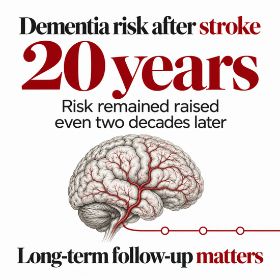
Dementia risk after stroke is a long-term concern. In a large Ontario matched cohort study, the relative risk declined over time but remained elevated 20 years after stroke.
The last eighteen months have chipped away at that arrangement, and I think 2026 is the year it starts to look untenable.
The scale we were ignoring
Rared Joundi and colleagues published a population-wide matched cohort study in Neurology at the end of 2024, using twenty years of Ontario health data to follow almost 175,000 stroke survivors. They matched stroke survivors to people without stroke on age, sex, rurality, deprivation and vascular comorbidity, which is a much harder comparison than the crude contrasts we used to run. Almost one fifth of stroke survivors received a dementia diagnosis. After matching, their risk was around 80% higher than the reference population, and the elevated risk persisted for twenty years.
Twenty years. That is the bit that should unsettle us. This is not a short window of confusion after an acute event that then resolves. It is a permanently altered trajectory, and it stretches well past the point where anyone is still following these people up.
This is not a short window of confusion after an acute event that then resolves. It is a permanently altered trajectory.
A calculator, at last
At the International Stroke Conference in New Orleans this February, Joundi’s group presented a risk prediction tool built on nearly 50,000 hospital admissions from the Ontario Stroke Registry, derived across TIA, ischaemic stroke and intracerebral haemorrhage, then validated in the separate Ontario Stroke Audit. Median follow-up was around seven and a half years.
The predictors are not exotic. Older age, disability before the stroke, disability at discharge, diabetes, depression, cognitive symptoms noted during the admission, and haemorrhage rather than infarct. Nothing there requires a biomarker panel or a research-grade MRI. That is precisely why I like it. Everything on that list is already sitting in a discharge summary.
The discrimination is what makes it useful. People in the highest risk stratum had roughly a 50% probability of dementia within ten years. Those in the lowest had 5%. A tenfold spread from variables you already have.
Two honest caveats. This is a conference abstract, so it has not been peer reviewed and the numbers may shift. And the authors are careful to say the tool is designed for trial enrolment and research stratification, not bedside decisions. I think that restraint is correct, and I hope it survives contact with the enthusiasm that usually greets a new calculator.
The damage starts before the stroke
Deborah Levine‘s group published something in Neurology: Open Access in July that I have not stopped thinking about. Pooling more than 1,800 stroke survivors without prior dementia across four US cohorts, they showed that cardiovascular risk measured before the stroke predicted how fast people declined afterwards. Each one percent increase in prestroke ten-year ASCVD risk was associated with roughly a 5% increase in ten-year dementia risk.
The clinically vivid version of that finding is the timeline. Survivors in the highest quintile of prestroke cardiovascular risk were projected to lose half a standard deviation of global cognition by 7.7 years after their stroke. Those in the lowest quintile took 17.8 years to reach the same point.
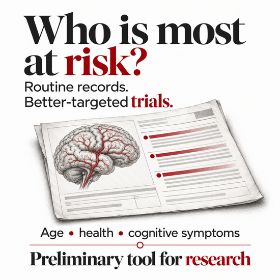
Routine information such as age, health conditions, disability and cognitive symptoms may help identify stroke survivors at higher risk of dementia and support better-targeted prevention trials.
Ten years of cognitive life, decided before the stroke ever happened.
This reframes what the stroke actually is. Not the cause of the decline so much as the moment the underlying brain vulnerability becomes visible. The Rotterdam Study makes the same argument from a different direction, showing that premorbid cognitive impairment, education and APOE4 carriership all independently predict who declines after the event.
Here is my favourite finding of the year, and it is a methodological one.
The Rotterdam group looked at dementia after covert brain infarction, TIA, minor stroke and major stroke, and did the thing we too often skip. They accounted for the competing risk of death. Once they did, the association with dementia held for minor stroke but attenuated or disappeared for major stroke.
Read that carefully. People with severe strokes were not protected from dementia. They died before they could be diagnosed with it. Every naive analysis of poststroke dementia that ignores mortality is reporting survivorship, and the more severe the stroke, the worse the distortion.
Arguably this is the single most important thing to get right in this field, because it determines who our prevention trials should target. If the apparent dementia signal after major stroke is partly a mortality artefact, then the group with the most to gain from cognitive intervention might be the minor stroke and TIA population we currently discharge with a leaflet.
What happens next?
We now have a way to identify high-risk survivors using routine data, evidence that the window for intervention opens years before the stroke, and a clearer view of the analytical traps. What we do not have is a single treatment shown to prevent dementia after stroke.
That is the gap. And it is a solvable one, because the calculator exists precisely to make those trials feasible. Enrol the 50% stratum rather than an unselected cohort and your required sample size collapses.
However, none of this reaches anyone unless cognition becomes a routine part of stroke follow-up rather than an afterthought. If you work in stroke services, ask what happens to your patients’ memory at twelve months. If you work in dementia research, as I do, ask whether your cohorts are even capturing these people.
We have spent decades treating stroke and dementia as separate specialties with separate clinics, separate funders and separate conferences. The evidence stopped respecting that boundary a while ago. Our services should catch up.
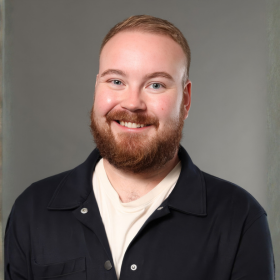
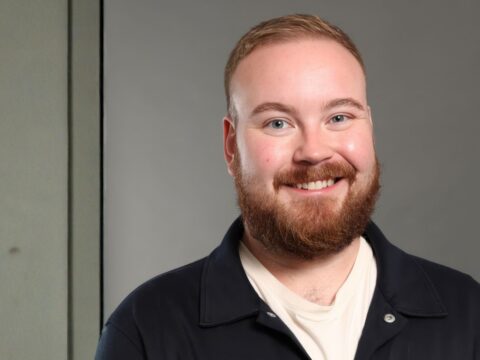
Dr Connor Richardson
Author
Dr Connor Richardson is a Neuro-epidemiology Research Associate at The University of Edinburgh. His research interests lie in using advanced statistical modelling and machine learning to measure dementia risk. Connor blogs about his research, Equality, Diversity and Inclusion and sometimes his Pomapoos.

 Dementia Researcher
 Dr Connor Richardson