Research News

UKDRI Connectome Poster Series Highlights

Reading Time: < 1 minute
UKDRI Connectome Poster Series Highlights

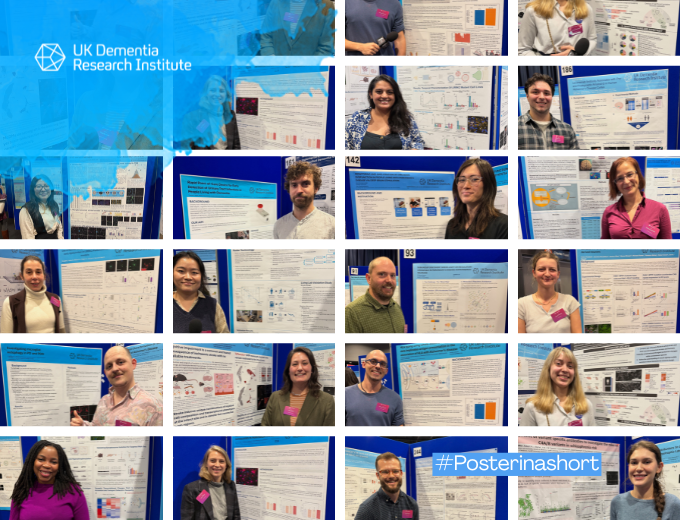
This week Dementia Researcher was invited to join over 700 researchers from the UK Dementia Research Institute at their annual Connectome Conference in Manchester (thanks UKDRI).

This playlist brings together a series recordings featuring a researcher presenting their poster and sharing the ideas, methods and discoveries that drive their work.

Across the series you will find studies on Alzheimer disease, Parkinson disease and related conditions, covering topics such as synaptic health, microglial biology, neuronal models, genetic risk, biomarker development, cellular pathways, imaging, technology for care and new analytical approaches. The aim is to highlight the creativity and commitment of researchers across the UK Dementia Research Institute and to give a clear view of current work through the voices of the scientists themselves.

The playlist includes contributions from early career and established researchers based at Cardiff, Edinburgh, UCL and Imperial. Their posters reflect a wide range of expertise, from molecular and cellular research to clinical insights, computational modelling and technology design.

Find out more about the UK DRI on their website https://www.ukdri.ac.uk/, check out the individual recordings and our LinkedIn page for details on the presenters and their work.


Our @ukdementiaresearchinstitute  Connectome Poster in a Short series concludes with a poster from Shikha Kataria at UKDRI Cardiff. Her work investigates how electrophysiological dysfunction in LRRK2 Parkinsonian neurons relates to disruption in the autophagy lysosomal pathway, a process that is essential for clearing damaged proteins and maintaining neuronal health.

Using iPSC derived cortical neurons, Shikha compares wild type and LRRK2 mutant cell lines through a combination of multi electrode array recordings, imaging based assessments and autophagy markers. The poster shows reduced neuronal activity and altered network firing patterns in LRRK2 lines, indicating early functional changes before major cell loss.

Alongside this, Shikha presents evidence of deficits in autophagy lysosomal pathway function, including changes in DQ BSA signal and lysosome related proteins. These alterations appear to evolve over time, with LRRK2 neurons showing increasing divergence from wild type controls as networks mature. Imaging of synaptic markers further suggests that impaired lysosomal clearance may contribute to synaptic stress.

This work helps connect electrical dysfunction with disrupted autophagy in Parkinson models and provides a platform for investigating treatments that target cellular clearance pathways.

Thank you for following the full series of UKDRI Connectome poster features. This was just a small selection of all the incredible work on display.

Our @ukdementiaresearchinstitute Connectome Poster in a Short series concludes with a poster from Shikha Kataria at UKDRI Cardiff. Her work investigates how electrophysiological dysfunction in LRRK2 Parkinsonian neurons relates to disruption in the autophagy lysosomal pathway, a process that is essential for clearing damaged proteins and maintaining neuronal health.

Using iPSC derived cortical neurons, Shikha compares wild type and LRRK2 mutant cell lines through a combination of multi electrode array recordings, imaging based assessments and autophagy markers. The poster shows reduced neuronal activity and altered network firing patterns in LRRK2 lines, indicating early functional changes before major cell loss.

Alongside this, Shikha presents evidence of deficits in autophagy lysosomal pathway function, including changes in DQ BSA signal and lysosome related proteins. These alterations appear to evolve over time, with LRRK2 neurons showing increasing divergence from wild type controls as networks mature. Imaging of synaptic markers further suggests that impaired lysosomal clearance may contribute to synaptic stress.

This work helps connect electrical dysfunction with disrupted autophagy in Parkinson models and provides a platform for investigating treatments that target cellular clearance pathways.

Thank you for following the full series of UKDRI Connectome poster features. This was just a small selection of all the incredible work on display.

2 0

YouTube Video UExlVUkxR0hCNEV2UkZKbDh0UkMtd3E1UnhrREtGOXR3VS41NkI0NEY2RDEwNTU3Q0M2

Shikha Kataria on Electrophysiology and Autophagy in LRRK2 Neuronal Models #parkinsonsdisease

Dementia Researcher 10/12/2025 9:57 pm

Kristjan Holt on Lecanemab and Synaptic Amyloid in Alzheimer Disease #dementiaresearch

Dementia Researcher 10/12/2025 9:23 pm

Mei Kirby on Circadian Dysfunction and Deep Brain Stimulation in Parkinson Disease #dementiaresearch

Dementia Researcher 10/12/2025 7:43 pm

Gloria Cimaglia on Retinal Ganglion Cell Changes in LRRK2 Models #dementiaresearch

Dementia Researcher 10/12/2025 7:23 pm

Sam Neaves on Subgroup Discovery in Parkinson Disease Neurons #dementiaresearch

Dementia Researcher 10/12/2025 2:01 pm

Leave a comment

Your email address will not be published. Required fields are marked *

Translate »