 Print This Post
In late September 2025, Race Against Dementia held a research summit at Formula 1’s (F1) Media and Technology Centre, Biggin Hill. They brought together researchers and F1 staff to try and accelerate scientific progress into dementia diagnosis, prevention and treatment. A major part of this day was an interview between Lee Mackenzie, an esteemed F1 journalist, and Adrian Newey, technical director and co-owner of the Aston Martin F1 team. Throughout this excellent, inspiring interview were some key quotes that I felt were particularly relevant – and sometimes motivational – for scientists. I’ve picked some below.
Adrian Newey is a British F1 engineer and aerodynamicist, widely regarded as the sport’s greatest car designer, and perhaps one of the most important figures in F1 history generally. Born in 1958, Newey has designed championship-winning cars for Williams, McLaren, and Red Bull Racing (RBR), contributing to over 200 race victories and numerous constructors and drivers championships. His innovative designs have revolutionized F1 several times over. At RBR, his cars won 14 drivers and constructors championships between 2010 and 2024, including arguably the most successful season of all time in 2023. His technical acumen and creative approach to design have made him one of motorsport’s most influential figures. Or, to quote Lee Mackenzie on the day: ‘the man most people in F1 wish didn’t exist’.
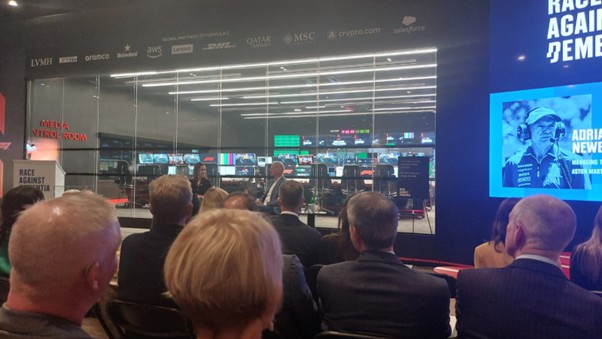
Lee Mackenzie and Adrian Newey, F1 HQ, Biggin Hill, September 25th 2025
“Noone remembers the duff years…but they make you”
Infamously, a lot of science is rejection (hopefully with feedback). Grants, papers, colloquia – take your pick. They are, however, an opportunity to reflect and develop your skills, and come back stronger. In his book, How to Build A Car1, Newey talks at length about how not every car was a championship winner – but they each teach you something.
“Your car is only as competitive as the weakest component. The suspension must be able to handle the [aerodynamic] downforce!”
Science is a team sport, and ideally about collaboration in pursuit of a goal. Lone scientists with specific skillsets won’t cut it – they require support, including infrastructural – whether it’s for example computational/technological, administrative, or financial.
“We are in danger of becoming complacent to data being right”
The marriage of high-throughput data to human expertise and ‘common sense’ is a key commonality between F1 and dementia science2. Are yellow teeth a risk factor for lung cancer? No – smoking is3. The best science requires high-quality, large datasets with good follow-up – and human beings to appraise it.
“The trick is breaking out of silos […] the aerodynamics team at the track has to tell the aerodynamics team at the factory what the problem is. Once they know the problem, they can work on it. Compliment, don’t compete”
The best science comes from collaboration and dovetailing perspectives4. There are many approaches to dementia research: dry versus wet-lab5; outright preventive versus delaying age of onset; ameliorative via medical versus lifestyle interventions 5–8. These approaches are not in competition; they’re complimentary to the overall aim of improving dementia diagnosis, prevention and treatment.
“My time splits into three parts: 10% in meetings, 45% talking to people and watching them work, and 45% alone in my office working on solutions”
The best science involves collaboration, but there’s ultimately no substitute for protected space alone to think. The 45% spent observing and discussing with colleagues provides essential inputs – constraints, realities and fresh perspectives. But critically, he separates gathering from processing information, and allows himself time to ruminate and focus9. In a world of online calls, too many meetings, mandatory webinars and (sometimes noisy) open-plan offices10, this is highly valued. Sometimes there’s no substitute to being left alone with your thoughts and expertise.
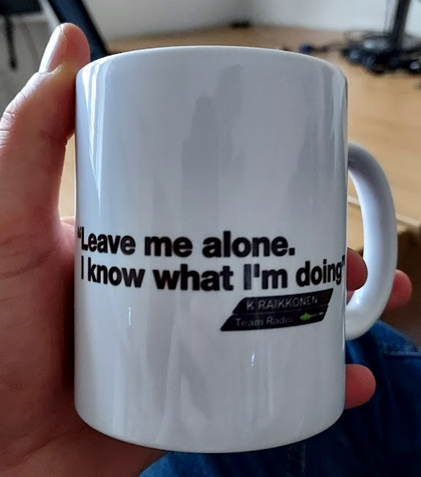
“Just leave me alone” – Kimi Raikkonen en route to winning the 2012 Abu Dhabi grand prix *11
In F1 design, as per science, it can be hard to know how an idea or concept can develop. There are examples of somewhat unfancied concepts, such as the role of the blood-brain barrier in dementia, developing into significant and promising veins of research12.
“If you don’t leave a meeting planning to do something different, it’s been a waste of time […] we have weekly meetings where one department presents on rotation – not just sharing, but creating ideas and directions”
There is a lot of bureaucracy in science13, and structuring your meetings and time to have clear outcomes, and benefit, is key.
Dementia research has a lot at stake. Improving dementia diagnosis, prevention and treatment has influence over public health (e.g. the NHS and associated costs), people with dementia, and their carers. Dementia research is not merely data – it’s real people you’re working to help, which can be very motivating.
“What’s key is caring. Ron Dennis and Frank Williams [famous F1 team bosses] cared. You have to believe in the project. If you don’t believe, you won’t take pride…and the work can get sloppy”
Adrian Newey’s insights from decades designing championship-winning F1 cars suggest a blueprint for accelerating dementia research. Success requires embracing setbacks as learning opportunities, fostering genuine collaboration – not competition – across disciplines, balancing data with human expertise, and crucially, protecting time for deep, focused thinking. Like F1, dementia research needs robust institutional and national infrastructure supporting specialist skills, meetings that generate action rather than bureaucracy, and above all, belief in the mission. The Race Against Dementia summit reinforced that when researchers adopt F1’s relentless pursuit of marginal gains and break down competitive silos, progress can accelerate. As Newey’s career shows: championship victories emerge not from lone genius, but from caring deeply, learning continuously, and collaborating purposefully toward a goal that truly matters.
Donate Now | Help Us In The Race Against Dementia
1. Newey A. Adrian Newey – How to Build a Car_ The Autobiography of the World’s Greatest Formula 1 Designer-HarperCollins (2017). Journal GEEJ. 2017;7(2):400. Accessed October 1, 2025. https://www.goodreads.com/book/show/131215903
2. What can dementia research learn from Formula 1? by Dr Donald Lyall – SDRC. Accessed September 30, 2025. https://sdrc.scot/dr-donald-lyall-dementia-research-formula-1
3. Davies NM, Holmes M V., Davey Smith G. Reading Mendelian randomisation studies: A guide, glossary, and checklist for clinicians. BMJ (Online). 2018;362. doi:10.1136/BMJ.K601
4. Munafò MR, Davey Smith G. Robust research needs many lines of evidence. Nature. 2018;553(7689):399-401. doi:10.1038/d41586-018-01023-3
5. Robinson MD, Cai P, Emons M, et al. Ten simple rules for computational biologists collaborating with wet lab researchers. PLoS Comput Biol. 2024;20(6):e1012174. doi:10.1371/JOURNAL.PCBI.1012174
6. Crenshaw DG, Gottschalk WK, Lutz MW, et al. Using Genetics to Enable Studies on the Prevention of Alzheimer’s Disease. Clin Pharmacol Ther. 2013;93(2):177-185. doi:10.1038/clpt.2012.222
7. Shah H, Albanese E, Duggan C, et al. Research priorities to reduce the global burden of dementia by 2025. Lancet Neurol. 2016;15(12):1285-1294. doi:10.1016/S1474-4422(16)30235-6
8. Frisoni GB, Hansson O, Nichols E, et al. New landscape of the diagnosis of Alzheimer’s disease. The Lancet. 2025;406(10510):1389-1407. doi:10.1016/S0140-6736(25)01294-2
9. ‘Adrian is an amazing individual’ – Andy Cowell on Adrian Newey’s Aston Martin impact and gearing up for 2026. Accessed August 28, 2025. https://www.formula1.com/en/latest/article/adrian-is-an-amazing-individual-cowell-on-neweys-aston-martin-impact-and.2AkD2XolFa87GwAzyMhWq2
10. Francis Crick Institute’s £700m building “too noisy to concentrate” | Science | The Guardian. Accessed September 30, 2025. https://www.theguardian.com/science/2017/nov/21/francis-crick-institutes-700m-building-too-noisy-to-concentrate
11. “Just Leave Me Alone…” 📻 Kimi Knows What To Do! 😎 #Shorts – YouTube. Accessed October 1, 2025. https://www.youtube.com/shorts/kW1Z8lik0hQ
12. Interview with Professor Joanna Wardlaw: “I enjoy challenging dogma” – NeurOn Topic: Learning and Teaching. Accessed September 30, 2025. https://blogs.imperial.ac.uk/neuron-topic/2022/07/18/interview-with-professor-professor-joanna-wardlaw-i-enjoy-challenging-dogma/
13. Husain M. The three deceits of bureaucracy. Brain. 2022;145(6):1869-1869. doi:10.1093/BRAIN/AWAC163
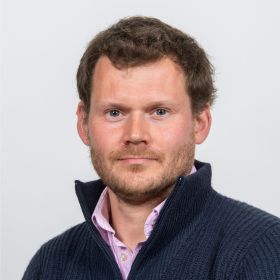
Dr Donald Lyall
Author
Dr Donald Lyall is a senior lecturer in Population Brain Health at the University of Glasgow. His research investigates the predictors, mediators and moderators of cognitive impairment in older age, including neurodegenerative diseases like dementia. Donald’s staff page is here. The first Formula 1 Grand Prix he watched was the 1999 Japanese Grand Prix, which was won by Mika Hakkinen in a McLaren MP4-14, designed by a team led by…Adrian Newey.
 Dr Yvonne Couch
 Beccy Owen
 Bernie McInally
 Dr Chloe Fawns-Ritchie
 Dr Clíona Farrell
 Rahul Sidhu