
 Print This Post
I wrote my first essay on Alzheimer’s at 15. I had no idea then that it would eventually lead me to Oxford, via Bali, a broken bone and a Greek dive boat.
Strange things have happened to me recently; people have been approaching me for advice. At first, I deflected. Surely, they’d be better off asking someone else. But it kept happening, and eventually I started to think maybe I am coming full circle, I have been privileged enough to have been given a lot, and now I have some knowledge to give back.
I hope to introduce myself to all of you, and to share something that really grounds everything I do, the simple give to gain principle. It is the reason I want to write this blog: to hopefully share some insights/knowledge I have gained and will gain throughout my PhD with all of you in the hope that it helps someone, even just one person.
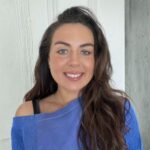
My name is Harriet, and I am a second-year PhD researcher at the University of Oxford studying Clinical Neurosciences. This sentence still feels alien to me despite the fact that I have now been here for over 18 months. Rather than take you down a perfect path of how I got here, with well-laid-out stepping stones and the notion that all of my well-calculated decisions would lead me here, I am going to take you down a very convoluted path.
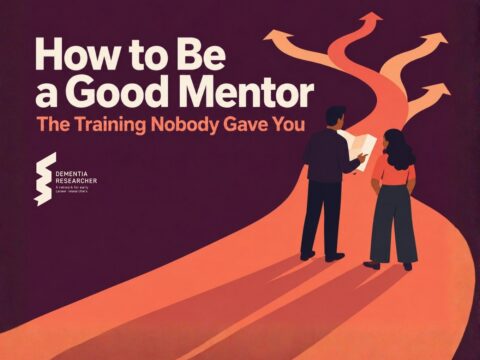
I hope to show that a path doesn’t have to be perfect to be powerful, and that I wouldn’t be here if multiple people hadn’t given me their time and effort.
A sensible start to my story would be ten years ago, at just 15 years old. I had brilliant Chemistry and Biology teachers who made me really love the subjects. I loved science, but I am not sure it loved me back at that point. I liked it because it was hard, it was challenging, and it made me think more than any other subject had. I was encouraged by the same teachers and put my mind to pursuing medicine at university, taking Biology, Chemistry and Religious Studies at A-level. My teachers at school were my first advocates, the first people to believe in me and tell me that I could do anything I put my mind to. They gave me a lot of confidence, and for that, I will always be grateful.
I missed out on the grade boundaries for medicine by one mark, getting a B in Biology instead of an A. I chose my insurance option in Neuroscience; little did I know that this would lead me down the path I am on now, particularly in studying Dementia, as I did my extended project qualification at A-level on Alzheimer’s and was already interested in Neuroscience.
With my dreams of being a neurosurgeon down the drain, I built my new dream as a neuroscientist. I was honestly crushed when I found out I had missed the grades, even more crushed when it was by one mark. I really did think that what was meant to be will be, and maybe medicine wasn’t right for me at that time, and I could always revisit the idea later. I was actually offered a place at St. George’s for Medicine through clearing, but I knew I wanted to go to Queen Mary as I fell in love with the university. Looking back, I just didn’t want medicine enough; it was never my only path.
Three years at Queen Mary University of London sailed past, I scraped my first-class degree, having worked hard but still really enjoyed myself. I did my final year dissertation in an electrophysiology lab, working as an assistant for three months. Truth be told, I didn’t like it; e-phys was not for me, but I loved writing my report. The results for the dissertations came out as a histogram of the whole cohort’s grades. There was a single bar at 90%, representing one person in the cohort who got that mark. It was the talk of the year, who got it, who on earth could it be? Needless to say, my classmates were even more shocked than I was to find out it was me. It was a testament to how hard I worked writing the report, how much I enjoyed researching and piecing together my results to tell a story. As I mentioned, I didn’t love my lab rotation, just the report, and I had absolutely zero idea what I wanted to do, other than get out of London and have some life experiences.
I had worked in a pub in London and saved to go travelling, so that’s exactly what I did. Yes, it is very cliché to do a gap year, to go and find myself, but I packed up an enormous backpack and headed for a tiny island off the coast of Bali to scuba dive, Nusa Penida Island. I am conscious of this not turning into a travel blog, but anything in the ocean had always been my hobby, and I actually tried diving when I was 10 and loved it. I took the next few certifications in diving over three tough months of a very steep learning curve. I had an amazing and patient instructor, who always took the time to talk to me and share everything he had learned. I left Bali with my dive qualifications, travelled some more and ended up back in the UK after 9 months. I was at a loss, back home with my parents, no job, just a broken arm…no cool story to say here, I fell over in Australia and had to go home instead of getting a job diving there.
I convalesced back in the UK and got a job as a divemaster in Corfu, Greece, putting my training to good use. It was challenging, exhausting and incredibly rewarding. I loved my team, I had a brilliant boss, an ex-Greek marine, who taught me so many skills that I carry with me to this day. Diving is a lot like science; you are always learning, and the best of the best never think that they have all the knowledge they need and nothing else to learn. The summer ended, and I worked in the dive office when I could to start researching my next career steps. As incredible as working on a boat is every day, I missed science and contributing to something bigger than myself. I found myself reading papers, thinking about how much I missed the purpose that science gives me. It is grounding.
I set my sights on Oxford for a postgraduate degree, go big or go home right? If I am being completely honest, my Dad, my biggest advocate, had once said he would love one of his children to go to Oxford or Cambridge. It was said just in passing, with no expectation or pressure when I was younger. I think some part of my brain remembered that, and I thought that maybe I could at least try to get into the best university in the world (sorry Cambridge). My mum, my other biggest advocate, always says, “Why not you?” From learning to ride a bike to Oxford, I carry this in everything that I do.
I spoke to my academic advisor from my undergraduate degree. A wonderful scientist, and an extremely kind person. We maintained a good relationship throughout my degree, so when it came to advising me now, nearly two years after graduating, he was very pleased to help. I was second-guessing myself, maybe I shouldn’t apply? He said to me words that I still carry with me to this day.
“Harriet, when we are young, we question ourselves too much. And then when you get older, all you want to do, is do. Less time for questions and more time for taking action.” These words echo in my brain all the time, and it goes to show how important it is to maintain good relationships with mentors when you find them. I needed three references for Oxford: my academic advisor, my head of programme from my undergraduate degree and I even had a supporting letter from my teacher at school that supported me in applying to medicine.
I got into an Oxford PhD at 23 years old, with no master’s degree, just a Bachelor of Science and a teaching qualification in scuba diving. Furthermore, my references were a contributing factor to my being put forward for a graduate scholarship competition in my department. In the early career stages, of course, you have to be excellent, but it is so important to find and keep these mentors. They give you so much time, advice, and they can make or break your career in my opinion, so maintaining a great relationship with them is paramount. These mentors do not have to be scientists; they can be your dad, ex-Greek marines and scuba instructors.
They just need to be people who support you, people who make you feel like you can do something even when you are convinced you can’t.
My path is not traditional; it is convoluted, and it is uniquely mine. No advice should ever tell you to follow the same path, but instead, an individual should draw on the skills they learned during that path and communicate those across. This is what I want to do in my blogs: to turn unique experiences into advice, insights, and information that will support and uplift others. If that sounds like something you’d be interested in, then stick around.

Harriet Greene
Author
Harriet Greene is a PhD student at the University of Oxford researching dementia prevention, with a focus on how vascular risk factors such as hypertension affect the brain. Her project models the neurovascular unit in vitro, allowing her to explore biological mechanisms creatively and collaborate across departments and disease areas. Supported by the British Heart Foundation for research consumables, Harriet is also interested in biotech start-ups and translating lab discoveries into patient benefit. Outside academia, she is a scuba diving instructor, shell collector and lover of the sea, with a strong belief in paying kindness forward within the research community.
 Dementia Researcher
Harriet’s first blog for us, and what a way to start. An Oxford PhD at 23 with no master’s degree, a dive qualification and a set of mentors that includes an ex-Greek marine. We would love to hear from others who took the scenic route into dementia research. Who were the people who gave you their time when it mattered, and what did they say that stuck?