 Print This Post
We’re back people! And this is one I started many moons ago and clearly never finished so it’s coming to your ears courtesy of desperation. Also for any young researchers listening if there is actual advice you think would be beneficial to you, please do reach out with your queries on a postcard.
This week I am going to do a classic. Instantly opening with a podcast I listened to and sharing the information with you so that you become better. Boom.
This week the auditory learnings came care of an old favourite – Steve Levitt and People I (Mostly) Admire. This week Steve was talking to Bill McGowen about ‘how to captivate an audience’ which is really all about how to tell good stories. I think in science we very rarely think about storytelling and we absolutely should, it’s the best way to sell our research both on paper, and in person. So today we’re going to think about storytelling, in our publications and when we present, and how being a good storyteller can make your work seem more engaging.
Steve and Bill open by sharing stories of bad speeches they’ve heard, the ones that include all the traditional cliches or statistics, the ones you know are going to send you to sleep within minutes of starting, the ones that leave you wondering whether you really did order that spare vacuum part off eBay and maybe you should just check your email and find out. I was heavily reminded of the number of conferences I’ve been to where they open with something without having thought about their audience.
Here is my example, until recently I worked on stroke and extracellular vesicles. If I went to a stroke conference, I spent my intro slides explaining what extracellular vesicles are, if I went to an extracellular vesicle conference, I spent my intro slides explaining what stroke is. I might reuse some of the middle data slides but there’s some degree of ‘reading the room’ that has to happen. The number of presenters I saw at the Alzheimer’s Research UK conference who opened with ‘I’m sure I don’t have to tell this audience how bad dementia is’ and then proceeded to tell the audience how bad dementia is. Using all the same stats, and all the same visuals that everyone else used.
And understanding your audience and what they want to get out of you talking is the first important thing in science communication.
If I can recommend only one thing in this whole blog, it would be that you go and read Alan Alda’s book ‘If I Understood You, Would I Have This Look On My Face?’. Alan is an actor but he’s always been really interested in science and realised, at some point, that a lot of scientists didn’t know how to communicate their research very well. He has a centre at Stony Brook University in New York which runs courses which help people learn how to communicate their research better.
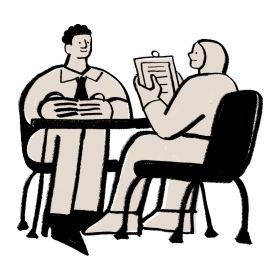
Research has shown that people remember information far better when it is presented as a story. Studies suggest stories can improve recall by up to twenty times compared with facts presented alone, because narratives activate more areas of the brain.
He iterates, in various interviews, the importance of good science communication. From a public facing point of view, he says it’s really important for scientists to be able to communicate their work to the public so that the public know, and I quote, ‘what it might be good to fund and what they should be complaining about’.
I have a good example of this from my recent work with the ARUK Thames Valley Network public engagement initiative. I must confess I have never really done public engagement, I had always considered my work ‘too early’. It’s too pre-clinical. I’m not using patient samples so why would patients or their relatives be interested in what I do? But every time we’ve had local days where we have donors or relatives in and I present my work I get the nicest feedback, everyone is interested and engaged and positive. So the lack of public engagement was really all on me.
Then I stumbled on an issue. I had two potential projects to pitch for an application. Each with, what I considered, major caveats for the funder. I had a preference and thought one project might be more interesting but it potentially wasn’t the one that might be more interesting to everyone else. I was stuck so I reached out to the wonderful Becky Carlyle, a font of knowledge and one of the dementia researchers newest bloggers, if you have yet to read her series on starting a lab go and find them. Becky asked whether I had considered doing some public engagement to find out what regular people thought of my ideas and of course the answer was no, I had not thought of that because fundamentally I thought public engagement was not relevant for what I did.
I was linked up with a few lovely local people who are interested in learning more about research. I heard about their backgrounds and their stories and why they were volunteering their time to listen to scientists talk. And I worked up a very basic presentation that took my ideas back to the basics. It gave me an opportunity to talk about why animal research is important, which I think is something we don’t always do that well in the UK, and it gave me the opportunity to really clarify my ideas. I had a wonderful time with everyone I spoke to and they all pointed me in a similar direction so I now have more clarity over my own work.
But beyond talking to the public, good storytelling and science communication is important for our everyday lives as scientists.
Science is increasingly interdisciplinary. If you’re studying a new brain imaging technique you’ll be working with physicists as well as medics. If you’re studying the gut-brain axis you’ll be working with microbiologists as well as neuroscientists. If you’re studying extracellular vesicles you’ll be working with EV experts as well as disease experts. Communicating your ideas in the context of other people’s work is really important and a surprisingly rare skill it turns out.
I have a couple of examples of people who were actually very good at this. The first was absolutely a case of skill in the face of adversity. I was at a conference in London and the power went out. The generators kicked in but gave us the basics. Light but no projector, no PowerPoint, nothing. The professor due to talk was unphased. He found a whiteboard and a pen and gave a thoroughly entertaining and informative chalk talk. Admittedly, this would be challenging to do if you were presenting data. But he was giving us an overview of his work, some mechanistic stuff and some background which, it turns out, is relatively easy to do with just a pen and some blank space.
The second example was a case of my own prejudice working against someone. An old professor was due to give a big important talk that I felt I should go to. I knew what he worked on and had turned down a PhD with him because I found the whole topic dull. Potassium channels. How can anyone get excited about potassium channels? But the way he gave the talk, introducing the concept of why they were important and how he first came to work on them, and moving through some of the discoveries that made him change his direction of research, made the whole thing truly fascinating and I got to the end thinking ‘maybe I could have worked on potassium channels??’
But storytelling isn’t limited to talks. Yes, it’s absolutely important there but it’s almost just as important in papers. The flow of a story keeps you reading from one chapter to the next. So should the flow of a paper. It should be obvious why you moved from one experiment to the other, even if that maybe wasn’t the reality. If I can recommend any random reading to you it would be Chris Dobson’s Nature Review article on Protein Folding and Misfolding. Even if you don’t work in that field it is an excellent example of well written scientific prose. It is clear and beautiful and I distinctly remember writing him some fan mail when I was a newly minted research assistant. (BTW if you haven’t done this please do, if you read something, ANYTHING you think is amazing, tell the person who wrote it. We get so little praise in academia it’s great when people reach out).
So how can you learn to be better? I think the first and most obvious thing to do is practice. Practice talking about your science to lots of different people under lots of different circumstances. This, if you are someone like me who fundamentally doesn’t really like people was always going to be a challenge but basically, I force myself into it and I have found, over the years, the more I force myself into it the less onerous it seems. I said yes to a local radio chat the other day with barely a second thought because I figured she can’t ask me harder questions than actual experts so what’s to lose? At the end of last year I said yes to a local group meeting and to a local network meeting within the same week.
When you are junior it often feels like giving a talk is the worst thing in the world. ‘What if they ask me questions??’ was always my major worry. Now it’s got to the stage where I think ‘what if they don’t ask me questions??’. Because if they don’t it means I haven’t done my job well. I haven’t sold them the story of why what I am doing is cool and interesting and so they’ve disengaged. And the more you engage your audience, whether it’s through writing, or presenting, or even standing next to a poster and chatting, the more they’ll come with you on your scientific journey.
Dr Yvonne Couch
Author
Dr Yvonne Couch is an Associate Professor of Neuroimmunology at the University of Oxford. Yvonne studies the role of extracellular vesicles and their role in changing the function of the vasculature after stroke, aiming to discover why the prevalence of dementia after stroke is three times higher than the average. It is her passion for problem solving and love of science that drives her, in advancing our knowledge of disease. Yvonne shares her opinions, talks about science and explores different careers topics in her monthly blogs – she does a great job of narrating too.
 Dr Emma Law
 Rahul Sidhu
 Dr Sam Moxon
 Ajantha Abey
 Dr Peter Connelly
 Rebecca Williams