 Print This Post
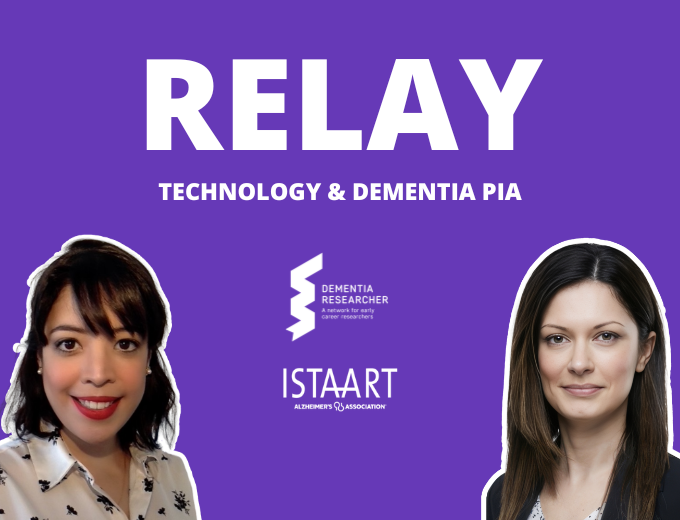
Welcome to the seventh season of the Dementia Researcher X ISTAART PIA Relay Podcast. Across six episodes, leading early career and senior researchers hand the mic from one ISTAART PIA to the next, giving you an honest, peer-to-peer tour of where dementia research is actually heading, from wearables and biomarkers to policy and trial design, in the run-up to AAIC.
If we cured Alzheimer's tomorrow but did no work on cost, distribution or access, we would have cured it only for the richest people in the world. That line from Lillian Morgado sits at the centre of this episode. Lillian is a research coordinator at Georgia State University and Communications Chair of the ISTAART Health Policy PIA, working mainly in qualitative research and legal epidemiology. With host Dr Vanessa Young, she talks through what qualitative work actually involves, her research on caregivers and people with dementia in the justice system, and the question that opened up next: what happens to someone with no caregiver to advocate for them. They get into why AI and blood-based biomarkers are as much policy problems as scientific ones, how regulation differs across borders, and why policy is the bridge that decides whether science reaches the people it was meant for. Lillian also runs through the Health Policy PIA's busy week at AAIC, from PIA Day to a featured research session on dementia care across countries.
Takeaways
- Policy is the bridge from the lab to the patient; without it, a breakthrough only reaches the few who can already afford care.
- Qualitative interviews and coding surface the right questions before the big quantitative money goes in.
- Caregivers matter enormously when someone with dementia meets the justice system, which raises the question of those who have none.
- AI and blood-based biomarkers carry legal and access questions, and the rules differ between, say, the US and Europe under GDPR.
- You do not join a PIA because you already belong; you belong because you get involved, and you need not be an expert to contribute.
Voiceover:
Hello, and welcome to season seven of the Dementia Researcher "ISTAART Relay Podcast." In this series, members of the ISTAART professional interest areas interview each other about their PIAs and the hot topics in their fields. Each guest then becomes the next episode's host, passing the conversation along from one researcher to the next. We're releasing one episode a day in the run up to the Alzheimer's Association International Conference this year in London and online, showcasing the work of the ISTAART PIAs. Thank you for listening.
Dr Vanessa Young:
Hello, everyone, and thank you for joining us. My name is Dr Vanessa Young, and I am a postdoc at the Glenn Biggs Institute at the University of Texas at San Antonio Health Science Center in San Antonio, Texas, USA. I am also the communications chair of the Technology and Dementia PIA. Today, I'm delighted to be talking with Lillian Morgado from the Health Policy PIA. Hi, Lillian. Welcome. Can I start by asking you to introduce yourself?
Lillian Morgado:
Sure. I'm Lillian Morgado. I'm a research coordinator at Georgia State University in Atlanta, Georgia, USA, and I am the communications chair on the Health Policy PIA.
Dr Vanessa Young:
Very nice meeting you, Lillian. And I think this is the beauty of being part of the PIA, since this is the first time that I'm meeting you and so it's nice to actually meet people from all over the places. So, before we actually start talking about your work within the PIA, can you talk to us about your own research? So, what do you do?
Lillian Morgado:
Sure, so I'm a research coordinator, which means I kind of get my hands in everything. I'm very fortunate that I work under a primary investigator, or PI, who allows me to be pretty involved with paper writing and idea generation of that sort of stuff. So, what we do mostly in our lab is we do qualitative research. That includes things like interviews with people and then qualitatively coding that. We've also done some work on legal epidemiology, and the subjects we look at are mostly having to do with things like ageing, bioethics, and sort of the intersection of that with dementia and the best practices to move forward and make sure that science works for people the way that scientists want it to.
Dr Vanessa Young:
So, can you tell me more about that qualitative aspect of research? So, I work more with the quantitative aspect. I did very little with the qualitative component, and it's very fascinating. I know there is some coding that you need to do. Can you tell us more or how you are able to embed that qualitative aspect within the dementia research?
Lillian Morgado:
Sure. So, a lot of it has to do with sort of guiding questions and providing a basis that we're looking for the quantitative research. So, we are getting the qualitative data to make sure that when we put all the money in to do large quantitative projects, then we are asking the right questions in the right directions with the right tools. One of the things we like to do is interviews where we are interviewing groups of people. These can be stakeholders, like researchers or people who are participating in venture research. I recently had a paper that is just about to be published where I was interviewing lawyers and caregivers to people with dementia on their experiences with the legal system and people living with dementia.
So you take these questions and you take the answers that people give to you and you try to look through them for common themes, and from that you're able to figure out sort of the overarching discussion and what is coming out in a way that you can't and with a richness that you can't always find with quantitative data. So, it's really rewarding when you're able to find an answer to a question you were asking or an answer to a question you didn't even know you needed to be asking.
Dr Vanessa Young:
Absolutely. I think that is very fascinating and it really speaks on that ability to then really tailor the future research on that co-design. You're really working with the people for the people and not just with what we have in mind, so that we can better help the community that we serve. In during these qualitative designs, studies that you had, has been any specific themes that you would like to share with us that maybe come out a little bit more, for example, here in South Texas we have been focusing a little bit in the past years on that socioeconomic status that might be related to also increase health disease burden is something that you have noticed in your community, for example.
Lillian Morgado:
So, we're not focused as much on the local community in our research. Depending on our project, sometimes it's national scale, and we've actually got an international project going on right now where we're speaking with international communities, and one of the things that was really interesting to me in my research with the attorneys and the caregivers was seeing just exactly how important of a role caregivers played when a person with dementia is in a position where they might be arrested or could have to interact with the justice system and how important that caregiver is to making sure that there is an okay outcome, and even just making sure that people are aware this person has dementia. So that's led me to a new line of research where I'm thinking about, what do we do if someone doesn't have that caregiver?
How do we make sure that they don't get caught up in the justice system? That sort of thing.
Dr Vanessa Young:
Absolutely. And that is indeed an important work because not everybody has a caregiver who is available or can be available 24 hours, seven days a week. Thinking more broadly of your research within your sphere, what are the really hot topics or exciting area in your field at the moment?
Lillian Morgado:
I would say the two biggest ones we're looking at are probably going to be AI or artificial intelligence. So, everybody wants to talk all about that. And then also blood-based biomarkers are a really exciting topic because while the science, the bench science is really cool on that side, but then you have to talk about, how do we get this information to people? What tests are used for what? How do we communicate what these mean to patients and research participants in ways that make sure that it's given to them in the most useful way possible? That sort of stuff. I think AI and the blood-based biomarkers are probably the two hottest things that I'm aware of right now.
[Mellow music.]
Dr Vanessa Young:
That sounds great, Lillian, and it really relates to me, speaks to me because within my half first year, I work within the sphere of sleep and wearable, and I want to really concentrate on improving diagnostic tools, including AI. And for my dissertation, my effort was more within fluid biomarker, blood-based biomarkers. But I really hear your voice, and I generally wanted to ask you from your expertise, what can we do to get better at speaking that health policy language?
Lillian Morgado:
I think in some ways it is not necessarily scientists' job to be able to communicate that directly, but I do think it's important to be aware of the potential benefits and misuses, as well as a little bit or have a friend who knows what the legal landscape is for what you are trying to do. So, if you are trying to implement something, what legal protections are there in place if it goes wrong? How could bad actors use it? And also, what is the emerging legislation or things that policymakers are looking at doing to put these things into place? These are all things that are good to either keep in the back of your mind or have someone on hand who has a good sense of those things, and knowing those things on the front end can help you design better trials and studies to help more people more effectively.
Dr Vanessa Young:
Absolutely, and I agree. I think probably one of the aspect that I've seen through my past year and our institution is that involvement with some of the members of the community, there are stakeholders, in improving what they really need that that can be better translated in that health policy in a more linear fashion because there is a direct need, although it doesn't necessarily mean that it's always faster. Have you had, I know you mentioned how you work more with international groups at the moment, and since this is an international platform, I do wonder how that can be different. There are different needs, like in the U. S., even for what is covered, we are talking about blood-based biomarkers, for example. Here we need to go through insurance process. When you go an international level, there might be other aspects.
For example, I'm originally from Italy. I know that the healthcare system there works differently. Is there something that you would like to add for that aspect since you had that international experience right now?
Lillian Morgado:
Sure, so just to be 100% clear, I didn't speak a little bit at first. When I'm saying international communities, we have a project that involves us speaking to international researchers. But as far as the international component, that really is another important thing to keep in mind about policy, particularly with things like blood-based biomarkers and AI. So, with AI of course you have different regulations for what data can be collected and how it can be used generally, in the United States versus Europe, which is covered by the GDPR, which I can't remember what that stands for at this moment. Apologies.
Dr Vanessa Young:
It's okay.
Lillian Morgado:
The other thing to keep in mind with blood-based biomarkers and frankly any intervention for Alzheimer's disease is that the policy component is vital to make sure that those improvements reach the people they need. If we create a pill today that cures Alzheimer's disease and don't do any researcher work on how much it's going to cost, how it gets distributed, how it gets shipped, all we have done is we have cured Alzheimer's disease for the richest people in the world and no one else. So, I think it's really important to remember that policy is really the bridge to making sure that the science achieves its grander goal beyond that thing you were funded for, for your grant, beyond what you just need to publish your paper. Policy is what makes it happen.
Dr Vanessa Young:
Absolutely. I agree and thank you so much. That is a very difficult question. I think you did a fantastic job answering.
Dr Vanessa Young:
With respect to all the wonderful job that you are doing, how does the work of your PIA is able to support your field of research?
Lillian Morgado:
I would say our PIA is a really great opportunity to talk to people internationally. We've got some folks who've worked in Asia, in Australia, in Europe, all who are involved in the PIA. And as you can imagine, those policy contexts and the history and the risk profiles of everyone in all those regions is wildly different. So, knowing those other perspectives and being able to communicate with people is a really cool opportunity to be able to learn without having to do things yourself. The other really great thing I love about the PIA is it does offer some really great opportunities for publication. We had a working group that published something earlier this year on bridging research policy and practice, which was really exciting.
I was not a part of it, but I was able to listen in on some of the meetings, and it was really cool to hear everyone going through all these international plans for Alzheimer's disease and seeing how different countries are approaching things for dementia care. That was a really cool experience.
Dr Vanessa Young:
Is there something that really stayed with you from that meeting on how each country is approaching that dementia care part? Since we were talking about that aspect, the question prior, is there something you would like to share with our audience with that regard?
Lillian Morgado:
Nothing super specific, but just that it was very heartening to see how many different people in different places are working hard on such an important issue and who recognise that this is not something that is contained by borders. This is something that affects people all over the world and it requires an international approach to tackle it.
Dr Vanessa Young:
Absolutely. And so, I know that if you go through all the podcasts that we have available, each one of us is a different story on how they joined their PIA. So, what brought you to the PIA? How did you get involved?
Lillian Morgado:
When I was working under my PI as a graduate research assistant, she had mentioned that they were looking for some more members and some folks to be the early career researcher on the executive committee. And I thought, "Well, I'm pretty early," which, very early considering I still didn't have my MPH, but I was really grateful to join and really see the decision-making process and be able to contribute to putting on things like events for AAIC as a member of the executive committee. Because the other thing that I understand, this is mostly aimed at early career researchers, the secret is that you don't have to be an expert to be a contributing member to a PIA. You just have to be willing to put the time and energy in, and you can make a huge difference.
Dr Vanessa Young:
Absolutely. And with you, I agree. I think having that effort, that energy, and I would like to add creativity, it's really what can help the PIA succeed and also share what we are doing with the community. I think that's what I have observed being part with our tech and dementia PIA for example, what I've seen from others, just being committed to the work and to the effort. I don't know if you have seen the same experience with your health policy, with other collaborators there.
Lillian Morgado:
I feel like I really have, and one of the really cool things that I've experienced, particularly when going to in-person meetings is speaking with people who do not necessarily work in policy but are interested and want to keep abreast of what's going on with it. And that's always really nice because, you know, the policy people, we know what's going on with the policy, but we don't always know what's going on directly with the very sciencey, the bench research sort of stuff. So, it's cool to have someone to anchor us in that information.
Dr Vanessa Young:
No, absolutely. And that's why it's wonderful to meet and collaborate. I think these collaboration now are growing, and for example, I think our two PIAs should do something together, a session on the policy and the implication of the digital biomarkers, for example, because the people building these tools and the people thinking about access and insurance almost never shared the same rooms, and the PIAs provide that opportunity, that space, and it's very unique to Alzheimer's Association. So, it's very exciting. So, thinking about Alzheimer's Association and the big Alzheimer's Association International Conference coming up, what does your PIA have planned, and what are the aims for the upcoming year as a start? Will your PIA be doing anything at this year's AAIC? And will you be presenting, attending? Will I see you in person? (laughs)
Lillian Morgado:
Unfortunately, I won't be able to make it in person, but I'm excited for everyone who is. Our PIA though is doing a lot of really cool stuff. So, pull out your pencil and your notepad because we've got a lot to list off. On Saturday, July 11th, we will be out there for PIA Day in the morning. On Sunday, July 12th, we will be doing an electronic guided poster session. We're titling it Context Matters: Rethinking Dementia Risk Reduction Beyond Individual Behaviours. On Monday, July 13th, we are going to be doing an intermission, which, that I was involved in ours last year. That was probably my favourite one because it's very free form and it's just a way for people to sit around and really talk about what they're interested in in policy and what background they're bringing to it. Or people from all over the world last year.
And I'm really sad I'm going to miss it, but I'm excited for the people who can make it to see what they'll be able to do. On Tuesday, July 14th, we have a featured research session that's titled Health and Dementia Care Field Gaps, Priorities, and Promising Initiatives Across Countries. And then on Wednesday, we will go ahead and collapse from exhaustion.
Dr Vanessa Young:
Excellent. That sounds like (Lillian laughs) a very, very busy time.
Lillian Morgado:
Yes.
Dr Vanessa Young:
Yeah, so I will definitely check this out. Can you tell me more about what usually your PIA does during the year beyond, like, the Alzheimer's Association International Conference? What do you do? I'm curious to see what you do differently from our PIA, for example, to be engaged with the community. How do you communicate with the community, your audience? For example, do you have any newsletter? Do you have any journal clubs? So, what do you do? Anything new this year?
Lillian Morgado:
Yeah, we actually did a journal club earlier this month where we did a little meet the authors, which was very cool. Usually how we handle things is after AAIC, we all get together and we think about what was great, what were we so excited to talk about, and what did people seem interested in doing for the coming year. And then we take that and sort of roll that into our goals. So far, we've done a few webinars on different topics. Those are recorded and available on the ISTAART website. We did the journal club. We are preparing for our existing AAIC events, and then we also usually do a working group or try to aim towards a publication. We're a newer PIA, so we are trying to sort of get our feet over what we want to do as our routines, but we are always really passionate about the things that we do go forward with.
Dr Vanessa Young:
So, you say you're new. How many, do you know how many members you have at the moment? No? Oh, tough question. It's okay.
Lillian Morgado:
I don't off the top of my head, I'm sorry.
Dr Vanessa Young:
No, it's okay. It was a tough question and I was like, "I'll try and ask." So, if I wanted to join your PIA, so what shall I do, and is there any way for me to get involved at this time?
Lillian Morgado:
So, at this time in the year, the best thing you're going to want to do is just keep your eyes open for what we're doing at AAIC. And if you want to join and you are interested in pursuing any research or doing any publications with the group, let us know and we can roll those into our goals for the next year and then we'll send out communication. Also, I apologise, one of the things you mentioned on your previous question was how we communicate with people. Our LinkedIn is the main one, our LinkedIn, and then also we make sure to include our events in the weekly ISTAART newsletter.
Dr Vanessa Young:
Excellent. Thank you. No, thank you so much. That was wonderful to hear.
Dr Vanessa Young:
Thank you. It's time to end today's podcast. Before we go, I do have a final question though. What advice do you have for someone who is just learning about ISTAART, and how has it helped you and your career be involved in this, ISTAART?
Lillian Morgado:
Say, my advice for anyone who is just learning about ISTAART is to join a PIA. Anything you are tangentially interested in. You do not have to be an expert. And then also watch as many recordings as you can. They're right there. You can speed them up if you're pressed for time. And also see how you can contribute. You can even try and see if they need any executive committee members. So once again, you do not need the research experience to join an executive committee. Just a willingness to organise, be involved, and work towards those goals for the group, and being in there, in the sauce, in the environment, is a really great way to meet new researchers, learn what the terrain of a field is, and the best ways that you can really move for your career to advance.
Dr Vanessa Young:
If you can think of two to three skills that you have learned from this experience of just being part of the Health Policy PIA that you didn't have before or that you think that just by being at, you know, university or working in the lab, you will not be getting, what are those skills?
Lillian Morgado:
Don't know if it would be a specific skill, but it absolutely would be the knowledge of what the international policy situation looks like. That's something that obviously most researchers are focusing locally on what's going on in their country or with their populations they're working with. And that was the case with me before the policy PIA. And since joining I've become a lot more aware of how these things differ in, you know, Australia, how data sharing and that stuff is different versus if you are looking at plans and research from China, how those things work. And that's been really helpful. It's also been cooled to connect with senior researchers and get a better idea of how to interact appropriately with folks as a researcher and put a little bit of extra polish on that.
Dr Vanessa Young:
Absolutely. And I think for me, it's been beautiful, because you're always a little bit afraid of engaging with senior scientists, but the ISTAART and the PIAs create that environment where you're really able to meet people from all over the countries and in a more relaxed way and you really feel part of the community. So, based on what you just said, that being in the PIAs really allow you to learn more about international policy, shall we say that then be part of the PIA? It is relevant from everybody, regardless of whether you are from the US, or you are from a country in Europe or Africa.
Lillian Morgado:
Absolutely. So, in a lot of the work we do, even if it doesn't apply to absolutely every country, we do try to be aware of the importance of context and not assuming that one particular policy is the default policy. And we also try to make sure that what we're doing is we're looking at comparative things, so that way we can take those findings from different environments and apply them to new ones. I would say that yes, it's relevant whether you're in the U. S. or you're in South Africa or wherever you are in the world because everybody's doing things differently and everybody has great lessons to teach everyone.
Dr Vanessa Young:
Excellent. I couldn't agree more. Thank you so much, Lillian, for taking the time to join us today. And thank you everybody else for tuning in and listening. You can find profiles on myself and my brilliant guest and information on how to become involved in the ISTAART on our website at dementiaresearcher.nihr.ac.uk and also at alz.org/istaart. There is a link in the show notes. I am Dr Vanessa Young, and you have been listening to the "Relay Podcast" from Dementia Researcher and Alzheimer's Association. Hit subscribe on YouTube, on your favourite podcast app to ensure you don't miss an episode. Thank you. Bye.
Voiceover:
You have been listening to the "Relay Podcast," delivered as a collaboration between Dementia Researcher and ISTAART. This podcast is made at University College London with generous funding from the NIHR, Race Against Dementia, Alzheimer's Association, Alzheimer's Research UK, and the Alzheimer's Society. Please like and subscribe and share your thoughts in the comments.
If you would like to join a panel or record a podcast on your own area of research, complete our show form. You can subscribe to our podcasts through your favourite podcast app, just search for 'Dementia Researcher' or follow the links in the footer of this page.
Did you know... all of our blogs are also available as podcasts? Find them here on Apple, and here on Spotify
The views and opinions expressed by the host and guests in this podcast represent those of the guests and do not necessarily reflect those of UCL, Dementia Researcher or its funders.
Join our Supporter Programme and subscribe to our channel in YouTube or in Apple Podcasts for exclusive access to bonus shows, and to gain early access to our recordings.
Share your thoughts on this topic in the comments below.

 Dementia Researcher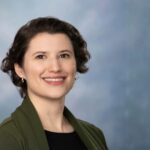

 Alzheimer's Association

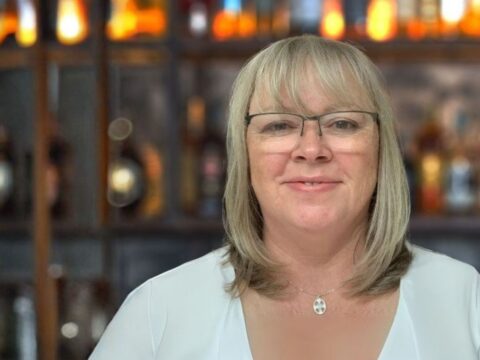
If you would like to hear more from Lillian Morgado, members of the Dementia Researcher Supporter Programme can find an exclusive B-Sides episode with Lillian in Apple Podcasts and on YouTube.
5 things we learn in this B-Sides episode:
– The moment that pushed Lillian towards policy research.
– Why fixing one case at a time was not enough.
– How money can distort what dementia data seems to show.
– Why researchers need to say less, but say it more clearly.
– Why her first AAIC poster still sticks with her.
Listen – https://podcasts.apple.com/gb/podcast/the-b-sides-lillian-morgado/id1350258595?i=1000774506737
Watch – https://youtu.be/yW8oIgYMyYc