 Print This Post
Welcome to the sixth season of the Dementia Researcher X ISTAART PIA Relay Podcast. This series features interviews with ISTAART PIA committee members talking about their research, the research landscape of their fields, and the work of the ISTAART Professional Interest Areas (PIA) they represent. As we build up to the Alzheimer’s Association International Conference in Toronto, join us for daily episodes that showcase the remarkable work being done in various research fields.
In this episode, Professor Owen Carmichael talks with Dr Shana Stites, Assistant Professor at University of Pennsylvania and Chair of the ISTAART Diversity and Disparities PIA. In this discussion they explore the importance of inclusive participation in dementia research, the challenges of equitable access to research and care, and the shift toward more community-engaged approaches. The conversation highlights barriers like limited access to healthcare, the ethics of stipends, and the value of transparency, reciprocity, and representation in Alzheimer's disease and related research. They also talk about the wider work and aims of the PIA and what they have planned for the upcoming AAIC.
The Alzheimer’s Association International Society to Advance Alzheimer’s Research and Treatment (ISTAART) convenes the global Alzheimer’s and dementia science community. Members share knowledge, fuel collaboration and advance research to find more effective ways to detect, treat and prevent Alzheimer’s and other dementias. Professional Interest Areas (PIA) are an assembly of ISTAART members with common subspecialties or interests.
There are currently 30 PIAs covering a wide range of interests and fields, from the PIA to Elevate Early Career Researchers to Biofluid Based Biomarkers and everything in between.
Voice Over:
Welcome to season six of the Dementia Researcher ISTAART PIA Relay Podcast. In this special series, we've invited members of ISTAART's professional interest areas to interview each other in a unique relay format. One guest becomes the next's host and the conversation keeps moving episode by episode.
ISTAART, part of the Alzheimer's Association, brings together researchers, clinicians, and professionals dedicated to understanding and treating Alzheimer's disease and other dementias. We'll be releasing one episode each day in the lead-up to this year's Alzheimer's Association International Conference taking place in Toronto and online, showcasing the vital work of ISTAART PIAs and talking hot topics in research. Thank you for listening and we hope you enjoy the series.
Professor Owen Carmichael:
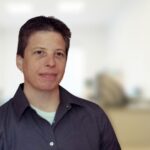
I am Owen Carmichael. I am a professor and director of biomedical imaging at Pennington Biomedical Research Centre in Baton Rouge, Louisiana, in the United States. And I am the incoming chair of the Nutrition, Metabolism, and Dementia Professional Interest Area of ISTAART. And today, I'm delighted to be talking with Shana Stiles.
Well, okay. So maybe we can start by having you tell us a little bit about your role and your research.
Dr Shana Stites:
My name is Shana Stites. I'm the outgoing chair of the Diversity and Disparities PIA. I'm an assistant professor at the University of Pennsylvania in Philadelphia, Pennsylvania. And as the chair for the last almost two years, I've been helping to work with the members of our PIA to do research and develop programming and interventions in order to improve representation of diverse perspectives, biology, social experiences across Alzheimer's disease-related research, as well as to develop interventions that may be behavioural, social, psychological in nature that are tailored to specific social groups basically.
Professor Owen Carmichael:
And what is sort of your pathway that brought you into this area?
Dr Shana Stites:
My training is as a clinical psychologist and also as a sociologist. And for my own professional research programme, I study the social and psychological aspects of the Alzheimer's disease experience, specifically around early disease. And so, what are those social and psychological experiences of early disease? So, it's a very short leap, I would say, to diversity and disparities work, which focuses on understanding those social and cultural differences, whether those are meaningful differences or whether they're actually just differences without differentiation, but are they differences that are leading to differences in outcomes, participation in research, clinical outcomes?
Professor Owen Carmichael:
Now, I think for the casual listener who's maybe not fully immersed in this Alzheimer's disease and dementia research, a lot of the information that gets out there has to do with biochemical events. So, things like amyloid plaque in the brain and proteins that are aggregating and so on. And so, it might not be obvious to everyone that Alzheimer's disease unfolds differently in different people and, in particular, that, for example, the environment that one is living in and the social context that one is living in can have an effect on outcomes and how Alzheimer's disease expresses itself. So, can you talk a little bit about that? How is it the case that Alzheimer's disease can play out differently in different people?
Dr Shana Stites:
Yeah. Thank you for reminding me that the audience tuning in here might be quite broad in terms of their experience.
Professor Owen Carmichael:
Right. Yeah.
Dr Shana Stites:
So let me back out just a little bit. And the PIA itself covers a very broad territory. This could include, I think I mentioned a little bit about representation in research. Oftentimes, especially in Alzheimer's disease-related research, we end up with weird samples, right? White from higher income countries with rich and fairly homogeneous samples. And one of our big initiatives is to try to broaden who gets to participate in research. And both in terms of socially and culturally, can we make our research methods as inclusive as possible to welcome as broad a group as possible? That means, for example, if you have a hairstyle that has a lot of metal sort of put through it, or any metal, can you still be in an imaging study? How can we make those protocols as friendly as possible to anyone regardless of a hairstyle or of diet or of geography in the world to welcome you into the science?
And then so it's social, it's cultural, but it's also biological. So, as many different aspects as we can cover to broaden research. And then in addition to that, there's a recognition that, as you were suggesting there, that the disease experience can be different for different groups of people. And those differences might be, for example, in terms of access to research or access to clinical care. Within some high-income countries, for example, there's ready access to state-of-the-art hospital facilities where one can get imaging and access to a diagnosis in urban settings. But then out in more rural settings or low- and middle-income countries, those types of resources are not so readily available. And so, how do we develop methods, technology, education within certain populations in order to bridge those disparities in healthcare access?
And then lastly, this sort of third piece is, how do people's customs perhaps impact how the biological components of the disease impact some groups differently than other groups? And we can say this, sometimes it's just lifestyle, culture, diet that of course people, members of our PIA are investigating those sorts of aspects. What we might be more familiar with are things around lifestyle, such as tobacco use, alcohol, these things that elevate our risk for dementia and that those are not uniformly distributed across populations. Some groups are more at risk for dementia based on some of those lifestyle factors than other groups.
Professor Owen Carmichael:
So just to kind of zero in on the research representation issue, I wanted to get your sense, I feel like earlier in my career, the idea that you would simply put up flyers for a research study and whoever responded and that's who you got. I think that was considered acceptable maybe a decade or two ago, and I feel like there's more and more pressure or more and more attention towards making sure that you don't simply characterise Alzheimer's disease in, as you say, upper middle class or upper class, comfortably retired urban dwelling white people, but that you really try to understand the disease in all of its various forms, all of its heterogeneity. Do you think it's true that the field as a whole is kind of pushing in that direction?
Dr Shana Stites:
I sure hope so, for starters, and maybe I'm being too optimistic here, I think so. In my own experience, at least anecdotally, I've certainly seen reviewers becoming more assertive in calling those things out, like in grant proposals and not settling for what you're suggesting there, like, who responds? If you have the resources to respond to participate in research, then we will enrol you. But to actually require, when we're putting together our research projects, some sort of effort to maybe reach people who aren't the quickest to respond or maybe even push away because they say, "That's not for me. It doesn't apply to me," that we actually reach out to them and say, "No, this actually could be for you." And to help to... I think there's been more acceptance and acknowledgement within the research programmes at large that it takes a lot of resource to participate in research.
It's not an accident that when we look at our samples, they mostly are often retired or semi-retired professionals. Those are people that have the time or if they're employed, they're employed in jobs with a social status that allows them to be like, "You know what? I'll be back in a couple of hours," to have that discretion in how they build their schedules and time, and that they have the financial resources that spending a little bit of money to pay for parking, to pay for transit, to get into these appointments, and to use that time to spend it on research where you're not making money, to forego those wages that you otherwise could be earning, that's a very specific group that we've now cut out, who's now eligible to participate. But in more these last few years, last five or 10 years, I suppose, I have heard more offerings around, at least, stipends and trying to compensate people. So minimally, it's not a loss to participate in research. It's not necessarily to make someone wealthy by participating, but at least to minimise some of the costs that are incurred by participating in research.
Professor Owen Carmichael:
Right. And I'm sure you had to go through similar research ethics training that I did where there's a conversation or an issue around stipends where, on one hand, offering someone who's economically disadvantaged a life-changing amount of money is not ethically permissible because it could entice them to take really unreasonable risks. On the other hand, as you say, it's also not acceptable to expect people to take an economic loss, losing a day's wages and getting nothing in return for that. So, I'm not sure what the question is. I think for different institutional review boards, or that's what we call them in the US, ethics boards, I wonder if different ethics boards have to have this conversation with researchers about what role should the stipend play?
Dr Shana Stites:
I'm sure they do. And even if the ethics boards or the IRBs aren't having those conversations, I would be encouraging all researchers to struggle with it because it's often not very clear cut. It's in one hand, we've had historically populations exploited and victimised through research because they've been made available as research specimens, and then it turns around in more current times and while those are the groups that are now currently being exploited, how do we incentivize them to participate? And you can see how that's a very difficult road to travel where you're holding both of those things.
And so, the conversations with our peers in figuring out the best way to do that, because what I think more directly to what you were just talking about there, what incentivizes one person or becomes manipulative to another person is difficult to judge. And you have to know your populations that you're working with so you can more accurately have those conversations and figure out what the right answers or the best answers for those particular groups are.
If we're going to plug things, it's another reason why having participants or participant engaged research is so important, because then you have community members who are helping to offer that guidance, right? Are you on the right side of this where you're compensating people, so they don't take losses or are you going so far as now it's exploitative or manipulative? I think if I could add on, for just a second.
Professor Owen Carmichael:
Yeah, go for it.
Dr Shana Stites:
Something else that's come along this same line of research, it's very easy to have the conversations around stipends where there's direct money is involved. But in more recent years, this conversation's expanding to include things that are not about money. We need to cover people's time and costs for participating in research. And then we have people show up on our door to be part of research and they're not looking for money, they're looking for knowledge about themselves, about their communities. And this has come sort of boiling over into conversations that are happening right now around disclosure of results. And where research meets clinical practise of like, "Well, if we're doing these studies because this information is experimental, we don't really know what the knowledge means, how do we return this information to people who are participating because they want and need to know it?"
Professor Owen Carmichael:
I'm reminded of the metaphor of the researcher as a helicopter. So, you have a community that is going about its life in community. The helicopter flies in with the researcher. The researcher asks for a bunch of things, says, "Give me, give me, give me blood, saliva, test questions, and survey answers," and so on, and then the helicopter leaves and never comes back. So, if that's the scenario, then it's not that difficult to understand why communities can be reticent to join in research studies because it's very one-sided in that kind of situation where they give, give, give their time, their information, their biofluids, their resources, and seemingly get very little in return. So, that was another trend I wanted to get your thoughts about is, do you think that, as you say, getting past that where it's more of a two-way relationship, that's really genuinely two-sided between the researcher and the research community, is that becoming more of a prevalent concept and more demanded by reviewers?
Dr Shana Stites:
I think... Give me my pause there as I sort of take that in because it almost feels easy to say yes to your question, but I think the base rate is so low of how often that two-way street is formed and travelled, that any increase can seem huge. But if I step back and I sort survey the Alzheimer's disease and related dementia research landscape, that big picture, I will say no. I think that ADRD researchers follow a tradition that has been set up by researchers, western researchers’ large, that there is a magical veil. We're following the Hawthorne effect. Things are changed by studying them. So, we're going to try to hide ourselves and pretend we're not studying them or we're going to keep this wall, this facade. We are over here, and you can't really see the man behind the curtain, what we're really doing, and we're not really here, we're just going to be observing you, but you don't know it. And they maintain that false idea very vehemently.
So, I would say no, I would love to see more of it because I think research participants are very aware that they are in research. I think the ones that aren't in research are aware they're not in research and when researchers are trying to bring them in. And so, if we could be more genuine in saying, "This is actually a real process here, it's a two-way street. How do we have communities engaged, community participatory research?" So, we're doing research in a way that not only can we as researchers be seen by those communities, but we can be seen and then embraced because they agree, even after the transparency is there, they still are on board. That might; to clarify, I think participants do sense transparency and agree and willingly there. I think in some ways, researchers fool themselves into not realising just how transparent they are to the people they're interacting with.
Professor Owen Carmichael:
Right. It almost sounds like a monastery type of mindset where the scientist needs to stay separate from their object of study, lest the relationships that they build or the blending that they do with their object of study in some way bias them or make them turn into the community that they're studying, which as you say, is a really old-fashioned mad scientist cloistered in a... Cloistered, I think, is the word I was looking for, kind of having severe mental focus in a laboratory by their own self. And as you say, as a community of researchers, we haven't done ourselves too many favours by having that wall or that veil, as you say.
Dr Shana Stites:
Yeah, this could be my sort of spot in the world. It's biassed by what I get to see. I do feel like there's been growing recognition, visibility among researchers or insight maybe, is that researchers are seeing how they interpret their data, how they make sense of it, and what they do with what they discover is really... You don't want to say biassed, but it is informed by their lens.
Professor Owen Carmichael:
Yeah.
Dr Shana Stites:
And I've seen in the ADRD community, people becoming more aware of that and being able to once... I like to think that once people start to recognise that, it's a much shorter step to then being like, "Well, then I need those other voices there," because I can only see what it is that I am. And so, we get more people around the table, we can see more things and open up, being able to see the implications for these findings and the next steps.
Professor Owen Carmichael:
Right. On a mundane level, I think one of the challenges that I've had, at least in the American research grant system, which some of our listeners may not be familiar with, there's a very, very siloed system for what you charge to a grant. So, there's my salary support in one bucket, and there's staff salary support in a bucket, and then there's research procedures like blood draws and so on. And there are recruiters whose job it is to try to get people to sign up for research studies. But I think in order to have this kind of two-way street that we're talking about between researchers and communities, that's not free.
So, at my institution, we talk about no-ask events that are really about trust building, and we've gotten a lot of pushback on those by grant reviewers who say, "Wait a minute, the output of this activity is not that you get a bunch of people to sign up for your research study." And we say, "Okay, yes and no." I think in the long term you have to build up trust slowly and steadily, and that trust really has to be there in order to get... I think you used the word genuine. I think that's the right word, of genuine kind of conversations where we are very honest and the community is very honest with each other, and we have an exchange of information.
Dr Shana Stites:
I would fully agree with what you're saying there. And listening to what you were saying, it made me think of how we keep the ledger in research is like, I'm a psychologist, just to go back to that one. We're taught in family and couples counselling that you can tell that there's a marriage that's in trouble when they come into your office and they've got the ledger, right? "You did this, and I did this, and you did that, and I did this." Right? When you hear that, you're like, "Oh, the bucket of emotional and community resources, familial resources are empty. This couple is in trouble."
The sort of painful irony there is that is exactly how we keep the ledgers in research. I pay for this, I get for this, I recruit you, then I get this. It's because of the monetary ways in which how we keep track, I guess, of our monetary exchanges. And so, it makes it very difficult for establishing real healthy relationships that are the opposite of that, right? It's not about that ledgering, it's not about that tit for tat, but about a reciprocity and broader sense of community and wellness that you're building into your relationships.
Professor Owen Carmichael:
Maybe now is a good time to ask, what are some of the activities of your PIA that are wrapped around these kinds of concepts that we're talking about?
Dr Shana Stites:
So, we have, within our PIA, I believe it's six different working groups and special interest groups. As you had mentioned before we got on the air here, the Rural Health Group is one of them. The LGBTQI+ Group is another one. We have a Sex and Gender Differences Group, Low- and Middle-Income Country Focused Group. And so... Oh, it's Social and Structural Determinants of Health Group, and I feel like I'm missing, there's one more in there that I will remember as we're talking, unless I miscounted my six. And so, we're a very active PIA, we're one of the biggest of the PIAs, and we're very active and the way in which we help that to happen, is through these working groups and special interest groups all running on different topics.
Each one of those groups has a set of activities that they're involved in. For example, one that's really easy to talk about is there's always working papers that are happening. And those working papers help to synthesise what's going on in the field, bring it together, and sort of advance the broader narrative in a topic. Other things that happened, like at AIC, I believe we're having a couple sessions that are related around participant engagement that we're helping researchers, welcoming them into some of the ideas that we're talking about on this podcast, and how could you find your place in what it is that you are studying or maybe venture into somewhere that's less familiar too.
Professor Owen Carmichael:
I was going to say, can you give us a sneak peek into your PIA Day session for the PIA?
Dr Shana Stites:
Yeah. So, again, we like to struggle with everything that we do in the PIA, it feels in some ways like a noble cause, right? It's easy to say, "This feels like it's the right thing to do." The problem is when you actually go to do it in practise, it's very difficult. There are challenges all over the place. We were just talking before about the way a healthy relationship is structured is not using a ledger, but honestly, the way you take care of money is using a ledger. And so, how do you get those systems to play well together? Those are very real problems that need to be addressed in order to appropriately address disparities and diversity in ADRD research.
So, the PIA Day, similarly, is taking on this issue of access to routine care and research. As we, I say we as a field in ADRD, continue to push out to welcome in as many and as broad a range of populations as is possible, we are, and we should be running into groups that do not have regular access to healthcare. Especially, you can say that as a global footprint. If you're out in rural communities, let's say in Sub-Saharan Africa, you do not have routine access to healthcare. I will also point out that within the US system, which is a high-income country, you would expect people to have routine access but given our limitations in how our system is set up, you run into people that do not have routine access. And so, for some people, when they participate in research, part of what they're looking for is routine screening. In addition to that, we also find, especially as part of our research assessments, we can come across incidental findings. Right?
Professor Owen Carmichael:
Right.
Dr Shana Stites:
And so, it's all part of this pool of like, "Well, then how do we incorporate what would be more considered like routine care into our research?" That is on one side, there is a push that we should. It seems like the right thing to do. If we have information about a person that if we gave that back to them could help them improve their health, or maybe it's part of the reciprocity groups are looking for in participating in research that they could get some of access to care that they otherwise can't get, then they should have access to routine healthcare.
On the flip side of that, let's say our reviewers and that these are the monies that support the research programmes are for research. It is not for routine care. And also, we are potentially creating a dependency. In ways, we are becoming a bridge to fix a problem, as in the lack of healthcare in a community or a broken national healthcare system that we're now bridging support through research to cover that gap, where then it becomes very problematic. And so, we're stuck in the middle of, do we? Don't we? And to what degree do we, and to what degree do we have to say, "There are boundaries here and we can't do that?"
And so, in our PIA Day, we're hoping to have that conversation of, how do we do this? To what degree do we advocate and say we need to support certain parts of regular routine healthcare services in our research, and where are the boundaries that we draw where we're actually facilitating problems rather than actually helping people?
Professor Owen Carmichael:
Yeah. I mean I'll say maybe this is obvious to everyone, but the proper role of a session like PIA Day isn't to ask the softball questions that are easy to answer and go around the room high fiving each other. But I think it's really to tackle some of the tough issues that we really need to address as a field to try to move forward.
I'll tell you, so I have two exercise trials that enrol African American adults, and I think that one of the primary reasons that they enrol is because they see me as an expert, which is true in some sense. And so, many of the participants, even if they're not asking me to provide medical care of my own, I think most people in 2025 in the United States sort of fall victim to the hurried doctor problem where a doctor only has seven minutes to spend with you, there's a fire hose of complex information that goes out from the doctor into your ears. Well, some participants have come to me and my staff and said, "Can you help me? You're an expert, you're a professor. Can you please take this complex information and try to break it down for me?"
But it is true that some of the people in our trials do not have adequate access to healthcare in the first place. And of course, in my institution, we don't have a medical mission on site. So, there's all sorts of malpractice issues, insurance, and all these other things which add to the complexity.
So, I think that sounds like a really exciting, as I say, just weighty consequential kind of topic for a PIA Day session. So, I think it's spectacular. Does your PIA do other activities that are going to be featured at AIC?
Dr Shana Stites:
Well, just let me hang on PIA Day for just a second.
Professor Owen Carmichael:
Yeah.
Dr Shana Stites:
I want to say, so part of the reason this came up is I know that there is individual, I've heard from individual researchers that are struggling with these issues and they're struggling alone. And so at least if we can do it as a PIA Day, it brings those people together to try to have those hard conversations about, what do we do when we're trying to do the right thing? And for those people who are not yet... I've also had people sort of react to this like, "Why this topic? Why do we care? This is not relevant." And clearly, they need to become more informed about seeing how these struggles can unfold in research and maybe helpful to them in engaging the issues as well. So, we'll see. Please come. You're welcome, as well as anybody who's listening to this podcast, please come to the PIA Day.
I will say I am never disappointed. We have not only one of the biggest PIAs, but we also have one of the liveliest and spiciest PIAs where people put it out there, right? So, we could argue and figure out what is the next thing we need to do here? How do we move this forward? And it's pretty awesome.
Yeah, so there's the PIA Day happening. We also have a newsletter that went out within the last week or two, if you haven't caught that, that should be available online. And it has a listing of many of the activities that will be going on at AIC. There's an intermissions that will be happening focused on LGBTQI+ conversations, given some of the climate that's currently going on in the US and potentially broader. There's a PIA-driven workshop as well that's happening that is around introducing people to the PIA, to participating in the PIA, and different activities that we do. And then of course, we've asked everybody who's submitted posters and talks that are related to PIA Day topics or issues to tag the PIA in the programme. And so, you can, of course, search out using the Diversity and Disparities hashtag within the programme for those specific topics and conversations.
Professor Owen Carmichael:
Well, I'll tell you, I always try to attend this particular PIA because, as you say, it's anything but boring. It's a full room. It's people who are not afraid to ask questions and speak their mind and it's very, very stimulating. So, I would encourage everybody to try to attend the Diversity and Disparities PIA Day session.
Dr Shana Stites:
We are a very welcoming group. Some groups are more or less welcoming. I'd like to think of the D&D PIA as being very welcoming to new people. We have a breakfast one of the days, I forget which, I think it's a Thursday morning. That is a breakfast that anybody is welcome to join and participate in. We try to focus it on new investigators, early career folks. It's an opportunity to come and network and talk to more mentored, seasoned folks who fall along that entire continuum of professional experience. Please come to the breakfast. It's a little bit early, but I promise you won't be disappointed. It's a good group.
One of the big barriers that I hear when I talk to people who are looking at the Diversity and Disparities PIA, who are thinking it might be something for them, but they don't do it, is because they're worried that they can't fit in, that they can't find their thing or they want to be part of it because they want to know more about these topics, but they're reticent to join in because they don't know enough about the topics and just chase themselves in circles. And I'd like to just cut to the chase there and say, please come and participate. If you show up and you say, "I don't know these things," that is a perfectly fine place to start. Hang out in the PIA long enough and you won't be able to say that, but it's perfectly fine to come in and not know where you're going or why you're there beyond a sense that maybe it's the right place to be for you. Please come join us.
Professor Owen Carmichael:
Absolutely. Well, Shana Stites, this has really been a great conversation. It's time to end today's podcast.
Now, before we go, I do have one final question. What advice would you have for someone who's just learning about ISTAART for the first time? And how has ISTAART helped you to get involved?
Dr Shana Stites:
So ISTAART has been instrumental in giving me access to the broader field. One, I would say with the organisation of this, the PIA system, it's possible to actually look up topics and then figure out where experts are hanging out, where they're grouped together. With the help, I think of the pandemic as people became more and more comfortable with getting onto these online meetings or virtual meetings, ISTAART, the PIAs that ISTAART supports, the additional webinars that ISTAART does is phenomenal through this virtual platform that you can range anywhere from actually being one of the people that's doing one of the talks on the webinar and sharing your expertise to actually being like, "You know what? I have 10 minutes before my next meeting," this webinar is going on or this SIG group for a certain PIA is going on, jump on, keep your camera off, just listen to what's happening and feel it out until you find your niche.
And so ISTAART has created this beautiful continuum of opportunities that you can find the right level for you, and that's what I've done. I've shown up in groups where I can fall into the background and just learn from the other people that are there versus groups where I'm one of the people that's running my mouth at the top.
Professor Owen Carmichael:
Right. Well, again, Shana Stites, great conversation. Thanks for taking the time to join us today.
Dr Shana Stites:
Thank you, Owen. It's been a real pleasure talking with you and getting a chance to meet you.
Professor Owen Carmichael:
Thank you for listening. You can find profiles on myself and Dr. Stites from the Diversity and Disparities PIA and information on how to become involved in ISTAART on our website at dementiaresearcher.nihr.ac.uk and also at www.alz.org/ISTAART. That's I-S-T-A-A-R-T. There's a link on that page to the show notes. I'm Owen Carmichael, and you've been listening to the Relay Podcast from Dementia Researcher and the Alzheimer's Association. Please hit subscribe on YouTube or in your favourite podcast app to ensure that you do not miss episode. Thank you. Bye.
Voice Over:
The Dementia Researcher Podcast was brought to you by University College London with generous funding from the UK National Institute for Health Research, Alzheimer's Research UK, Alzheimer's Society, Alzheimer's Association, and Race Against Dementia. Please subscribe, leave us a review, and register on our website for full access to all our great resources. Dementieresearcher.nihr.ac.uk.
If you would like to share your own experiences or discuss your research in a blog or on a podcast, drop us a line to dementiaresearcher@ucl.ac.uk
Did you know... you can find our podcast in your favourite podcast app on mobile devices, and our narrated blogs are also available as a podcast.
The views and opinions expressed by the host and guests in this podcast represent those of the guests and do not necessarily reflect those of UCL or Dementia Researcher
 Dementia Researcher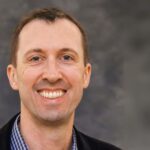
 Alzheimer's Association