 Print This Post
Since I was about 11, I wanted to be a scientist. I announced this to some raised eyebrows. As a pupil, I was ok. I could spell, I could read well. When it came to concentrating, I was less good, and I consistently received the comment in my school report: “could try harder.” But I persevered.
Now, as I reflect on 34 years in academia—leading a research group focused on Alzheimer’s and other neurodegenerative diseases—part of me wonders: did I actually do it? Did I become a scientist?
A considerable part of me believes that I haven’t finished. Perhaps there’s no way to “finish,” especially for someone with constant self-doubt. But the evidence is there: I led a team, won grants, taught students, and spoke at conferences. I wrote hundreds of papers and examined loads of PhD students theses. I applied for many grants, some successful, others not funded.
What Made It All Worthwhile
My proudest achievements are seeing the PhD students finish and graduate. Watching students progress from often worried, unconfident beginners to experts in their topic—that’s what truly excited me.
One standout memory is a master’s student who did his project with me, then progressed through his PhD, became a postdoc, and is now opening a new neuroscience institute in Nigeria. At the Biological Research Training Centre, they’re training the next generation of neuroscientists, and the lead founder, Dr Mahmoud Bukar-Maina, continues to forge ahead!
When Everything Changed
In mid-2024, I started to find work difficult. I was stressed, overwhelmed by the workload, the grant applications, the paper reviewing, the grant panels, the teaching, the admin. and worst of all, the marking! I carried on working. This had happened before (so many times!), and I usually worked through it. Pushing down the disappointment and mourning for the loss of my latest great grant idea.
But this time it didn’t pass.
Talking with a therapist, I realized I was not OK. Was it burnout? Depression? I just couldn’t do anything. It was terrifying. I was signed off work for a month, then another. I realized that working was what I knew, what I was good at. Who was I without it and without the distraction of it? A mind filled with thoughts, self-doubt and disillusionment.
I gradually returned to work, but although I still loved the research and teaching project students, I had somehow lost the drive. That drive that had kept me going through disappointments of rejected grants and papers. That energy that drove me to bounce back after tough reviews and think, “we can show them.”
Making the Pivot
When the opportunity appeared, I thought long and hard about taking voluntary redundancy. I loved my research, my group, the research area—but it wasn’t working for me anymore. The thought occurred to me: perhaps there is time in my life to do something new. Something exciting and challenging.
I realized I might be able to use my expertise to find another direction—a pivot towards another way to work in neurodegenerative diseases research and make a difference. I worked with the innovations centre to consider how I could set up my own consultancy business, and I’m just at the start of that journey. The space is open. I’ll let you know how it goes!
Looking Forward
Now, I feel excited for the future. One where I might make a difference with my background and knowledge of the research area, my experience in academia, and my understanding of how it works. I’m keen to find ways to support researchers to do creative work and to provide space for exciting ideas to be generated.
I see some of the issues with academia that I found hard: the rejection, the constant criticism, the expectations of working evenings and weekends to get ahead and to make sure the teaching is prepared and marked. The increasing workload is obvious for academics, and as universities compromise for economic reasons, researchers find they have less and less time to read, think, and create.
I don’t know what will happen next, but I hope that whatever happens, the wellbeing of the academic community will be of utmost importance. I believe we can strive for a new way of working, celebrating the success of teaching, supervising, sharing, communicating our work to colleagues and the public. What about those “soft skills”? A subject for another blog.
Until then, “Please – now, more than ever, “be excellent to each other.” (Quote from Bill and Teds excellent adventure and full quote from Films to be buried with podcast by Brett Goldstein).
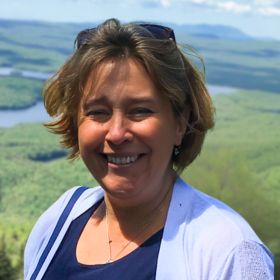
Professor Louise Serpell
Author
Professor Louise Serpell is an Emerita Professor of Biochemistry at the University of Sussex. Her research focuses on how proteins misfold and form amyloid structures linked to Alzheimer’s disease and other neurodegenerative conditions, using approaches from structural biology and molecular biophysics. Louise completed her DPhil at the University of Oxford and later established her own research group in the UK. Alongside her research career, she has been active in mentoring, public engagement, and supporting early career researchers.


 LSE Impact Blog
 Dementia Researcher
 Dr Peter Connelly

 Professor Louise Serpell