 Print This Post
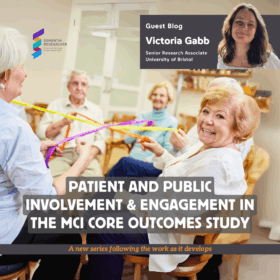
Engaging with the public is a great opportunity and an important responsibility as a researcher. Patient and public involvement (PPI) and engagement (PPIE) means doing research with patients and the public, rather than to, for, or about them. In other words, it’s about actively involving people with lived experience in shaping research and sharing research in meaningful ways. PPIE can help us to develop research priorities and questions, design research studies which are inclusive and engaging, provide insights for how research or its findings might impact individuals, services, and communities, and help us to share our work with wider audiences.
Yet, due to limited resources or a lack of understanding about its value, PPIE activities can often end up being restricted to feedback on a funding application or study documents like participant information sheets. Whilst these are undoubtedly valuable contributions, there’s a lot more that PPIE offers – which, as researchers, we should be doing.
PPIE goes hand in hand with efforts to improve equality, diversity, and inclusion in research. As expectations around research inclusion grow, for example, with the NIHR now encouraging researchers to specifically budget for research inclusion in funding applications, there’s an opportunity for PPIE to have a more significant impact and help us to design studies which are more inclusive and impactful, and less burdensome, for our target participants.
The aim of the MCI Core Outcomes Study was to develop a core outcome set which captured the most meaningful trial outcomes for patients as well as those who support them (including families and clinicians) as well as researchers. This meant investing a lot of time and effort into public engagement – not just to recruit stakeholders from diverse backgrounds and different lived and professional experiences, but also to raise awareness so that when the core outcome set was decided on, researchers and clinicians would consider using it.
The process wasn’t always easy, and it required a lot of time of effort – both from the research team and from our PPIE contributors – but involving the public made the research more grounded, collaborative, and hopefully more impactful. And it’s made me more reflective about how I do research.
So, what did our Patient and Public Involvement and Engagement (PPIE) look like?
Previously, I’d often worked with PPIE contributors online in a group format, using videoconferencing software like Zoom or Teams. Typically, I’d be presenting a study using some PowerPoint slides and asking questions we had about design, or asking for some feedback on information sheets. Conversations often revolved around feasibility and acceptability, such as what barriers to participation people might face or what questions they would want answered before agreeing to participate.
We ran several sessions like this for MCI Core Outcomes study too, but we also ran some in-person sessions for those who were less comfortable with technology, or who preferred to talk face-to-face. In the breaks, it was great to see conversations between PPI contributors sharing their experiences and have the chance to chat more informally about research and their insights and experiences – which isn’t as easy online.
Besides attending online or in-person meetings with researchers, PPIE contributors can also help testing out research protocols or materials, advising on analysis and write-up… really, it can take any form, if it suits the project and the contributors that you’re working with. For example, we asked our contributors to help with coming up with examples for outcomes (e.g., giving tangible, real examples of difficulties with memory, speech, or attention), test out our survey to see how long it took and what questions they had about it, and help develop our interview topic guide and ensure it was accessible and gave us the answers we needed in a way that was sensitive to symptoms, the varied experiences of MCI and its diagnostic uncertainty.
People with lived experience can also be involved in research management as PPIE co-applicants. We really benefitted from having two PPI co-applicants as a core part of the study management team. These individuals helped to shape the original grant application, attended research team management meetings to ensure that PPI perspectives were heard and acted on, and helped to facilitate PPIE meetings and public engagement events.
How have you involved people with lived experience in your research? Share your approaches, challenges, and any tips for meaningful PPIE.
What benefits does PPIE bring to dementia research?
Meeting the public ‘where they are’
Through many discussions, we learned what questions people might have when we talk about MCI, and understood a bit better about their experiences, and what they know and think about MCI, dementia, and Alzheimer’s disease. These discussions helped us to frame the study in a way that makes sense, and was respectful of different peoples’ experiences.
PPIE also helped us to find potential participants and engage with wider communities. Through meeting community leaders and volunteers, we built relationships with communities where people are less likely to come forwards for a diagnosis or to take part in research, to encourage trust and engagement with research and health services. Our PPI co-applicants and PPI lead also had established networks to supplement our own as researchers, which provided an opportunity for us to share and gain new knowledge and have discussions with communities that we had not met before about brain health and cognitive impairment.
Improving how we communicate
Following PPIE, I learned to adjust the language I use when engaging with PPIE contributors as well as research participants. Our PPIE contributors (and some of our participants) rightfully called us out when we were using jargon or overcomplicating things. So, we made our study title simpler and produced Plain English information sheets with imagery and simplified text for all participant groups, including professionals, because they’re easier to read and understand even for people who don’t require Easy Read. We also worked to make sure, wherever possible, we were framing outcomes neutrally (e.g., cognition, symptoms, functioning) or positively (e.g., cognitive performance) rather than negatively (e.g., cognitive difficulties, deficits, or problems), to prevent unnecessary distress.
Remembering what research is for
Finally, PPIE helped us to stay motivated throughout the research process. We know that research aims to help people, but research can be at times intense, difficult, repetitive, or even feel quite far removed from that end goal (like when you’re facing a never-ending mountain of paperwork and admin). By talking to people with lived experience about what you’re doing and what they need from research, their enthusiasm and support can make all the effort feel worth it. It’s also great to feel part of a wider community of people who all care about the work that you’re doing.
What are some of the challenges we faced?
PPIE is not without its challenges. Like research, you’re working with people – meaning opinions may differ, expectations may not align, and things might change or go wrong.
In the MCI Core Outcomes Study, we were often asking quite complicated questions – like, what counts as a ‘unique’ outcome, or how can we word something like ‘instrumental activities of daily living’ to make it clear to both lay and professional audiences. Reaching a shared understanding and agreement often took time and patience, and it is not always possible to ensure everyone is happy with every decision made. Good facilitation skills were essential during PPI group meetings, for example, allowing time and space for all contributors to share, whilst keeping conversations on track so others don’t get lost or frustrated. This can certainly be a challenge whatever the project – and requires practice. On the odd occasion, some people found advising on the study challenging. However, for the most part, PPIE contributors shared stories and experiences generously, openly, and respectfully, and seemed to overall enjoy the experience.
We were lucky enough to have a PPIE lead and two PPIE co-applicants as part of our study management team, meaning we had the time, funding, and experience to help us know where and how PPIE could have impact and to recruit the most suitable contributors. We also had an established pool of potential PPI contributors, which meant we didn’t have to ‘start from scratch’ finding people, though we had to be careful not to over-burden these individuals; as with research participants, they were often in high demand for other studies. So, we were still careful to find new contributors to complement our more experienced contributors. People who are familiar with research may spot details newer contributors might miss, whilst newer contributors can give you a fresh perspective and new ideas.
So, you’ve done PPIE, and your project is completed. What next?
We have now completed the main part of our research study, and we’ll share more about how the consensus process went in our next blog. But the project is far from over, as dissemination to the public and professionals who we’ll ask to adopt the core outcome set is a huge part of this project. But, for now, we’re focusing on writing up the results.
An important part of the write-up will be ensuring that we report our PPI effectively in our research papers. A recent report by the NIHR found that unfortunately, reporting PPIE in research publications is the ‘exception and not the rule’.
Why? It could be because people don’t know how to, or aren’t sure whether it’s appropriate to, given that PPIE contributors don’t give consent in the same way that participants do. Some journals (like the BMJ) require a section on PPIE in the Methods section of the paper, but others don’t. If you’re interested in how you can share the efforts of your PPIE contributors, there is the GRIPP2 checklist for reporting PPIE in research which could come in handy. It might also be a word count issue – but in this case, we can try to make use of Supplementary Materials or Acknowledgements sections in papers. However you do it, sharing the contribution of PPIE to your research can be a great way to show appreciation to contributors, as well as sharing what you’ve learned with other researchers so they can improve their PPIE processes – and as a consequence – their research, too.
Finally, enormous thanks to our PPIE contributors and co-applicants for sharing their experience and insights and helping to shape the study at every step.

Victoria Gabb
Author
Victoria Gabb is a Senior Research Associate in Sleep & Dementia Neuroscience at University of Bristol. Victoria is working on her PhD through publication and she is currently working on an important project to develop ‘Core Outcomes’ for Mild Cognitive Impairment. Her blogs on dementia researcher will be a way of sharing the progress of her work, to improve transparency, share the process and as a way to involve others – sharing the work, the process, and life in the pursuit of research.