 Print This Post
If you haven’t read any of my blogs before, let me start you off with some context. I am Dr Sam Moxon and I run a university spinout company. Prior to that I was solidly in academia. I guess I am sort of a researcher turned entrepreneur. One thing I have learned on this journey is that the business side of dementia research can feel very ‘corporate’. It’s rarely as fantastical as being in the lab doing exciting work but it is absolutely critical to our fight against dementia.
This is because dementia isn’t just a scientific challenge, it is a business challenge also. Research needs to be funded. It costs money. Who funds the majority of the research? The answer is private businesses or private equity. Yes we have amazing charities and government funding initiatives but translation of research is expensive. It involves multi million (sometimes billion) pound/dollar trials. Almost all of these are funded by industry sponsors.
This isn’t selling out to the evil corporate world; it is what makes progress possible.
This point was really hammered home to me recently when I saw the recent news about Novo Nordisk and their trial involving the use of oral Ozempic to try and slow the progression of Alzheimer’s. In short, it was not clinically effective and the trial was scrapped. The company admitted beforehand that the chances of success were low. This did not, however, stop the market from responding brutally. Shares dropped by more than 10% in early trading, closing at 5.8% down. We are talking about a reduction in the value of the company in the realm of millions to billions. It also killed a ray of hope that we had. If the trial went well, it could mean that we had another tool in the fight against dementia and the company would have made billions.
It also means the company loses ground to the likes of Eli Lilly, which recently became the first US drugmaker to reach a $1 trillion valuation, fuelled by tirzepatide and its dominance in obesity and diabetes. Novo Nordisk will be under immense pressure from shareholders and could be facing a large cut in global staffing as a result. When a trial like this fails, investors pull out and companies can go pop. When that happens, we lose a potential sponsor who would provide the cash for us to do our research. Breakthroughs can only reach patients with funding. We only get funding if the treatment is financially viable. These companies need to be able to make money. That might sound grim and immoral when we are talking about people’s lives but it is how the world works.
Without business models, we simply don’t get the development of new treatments. Science and business need to walk hand in hand along this journey towards a cure. Without business there is no science. Without science, there is nothing for the business to sell. The two sides depend on each other far more than we might realise and when something like this happens, the whole field feels the impact. It’s about way more than one drug. Investors fund dementia research on faith. Faith that we know what we are doing. Faith that we are confident we can find a cure. When a pharmaceutical giant like Novo Nordisk reports a failure like this, that faith can get rocked.
My view is that this trial was way too risky as a result (hindsight is 20:20 right?) They admitted it was a bit of a lottery ticket. Why take that risk? Obviously the answer is ‘because if it was a success we’d make billions’ but it wasn’t a success. The failure tanked their stock value and probably left something in the minds of all biotech investors. A reminder that dementia research is flipping hard. It is complex and as we move more and more towards a harsh economic climate investors might be looking to put their money into much easier wins.
In short, we have to care about the business side of dementia because it directly affects us. We don’t have to celebrate the corporate side; many don’t. But we do need to understand it. Our research cannot steam ahead without the engines that fuel it. I now find myself on the other side and it’s clear that the business decisions we often roll our eyes at are the same decisions that keep labs open and keep research funded. Every investment, every risk, every failure and every breakthrough shapes the speed and direction of our fight against dementia.
If we want science to win, then we have to also make sure the businesses behind that science survive long enough to get us there.
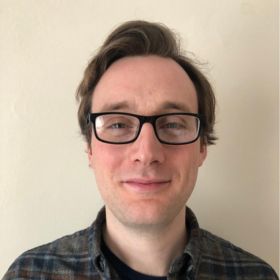
Dr Sam Moxon
Author
Dr Sam Moxon is a Research Fellow at the University of Birmingham. His expertise falls on the interface between biology and engineering. His PhD focussed on regenerative medicine and he now works on trying to develop 3D bioprinting techniques with human stem cells, so that we better understand and treat degenerative diseases. Outside of the lab he hikes through the Lake District and is an expert on all things Disney.


 Dr Yvonne Couch
 Rahul Sidhu
 Ajantha Abey
 Dr Peter Connelly
 Dr Kamar Ameen-Ali