 Print This Post
Reading a recent Dementia Researcher blog reflecting on the benefits of taking a proper break after a PhD made me realise how differently my own transition unfolded. I moved directly from finishing my thesis into a postdoc abroad, carrying momentum and excitement with me, but also exhaustion. Somewhere along the way, rest began to feel less like a choice and more like a luxury in my twisted perception of academic performance. The fictional essay below emerged from that tension: a dystopian thought experiment imagining a world in which the only acceptable break is enforced through human hibernation; a speculative reflection on the limits of productivity.
Title: ‘If I fall behind I’ll fall into torpor’
How have we ended up here?
Increasing demand for electricity, driven by the mainstream adoption of generative artificial intelligence (AI) technologies and the rise of corporate-owned predictive AIs, accelerated the arrival at the point of no return. Boiling data centres released heat into an atmosphere already climbing toward unprecedented temperature highs.
Lecturers discussed the effects of climate change on human physiology. Policymakers issued recommendations and executive summaries for governments to swiftly address the energy crisis. The first step was rationing energy supplies, with only a few selected industries permitted to operate at full capacity. Corporate AIs continued relentlessly running their predictions, and research-intensive universities were deemed essential in addressing climate change and thus exempt from cuts. I was finishing my PhD at the time—fortunate enough to work in a field aligned with these urgent societal challenges, I continued my career as a research fellow.
It felt alienating to be in London back then. Though rationing provided some respite, it was far from enough. We all knew the government’s hardest decision was imminent: that is, heating would also be rationed. Households in Zones 1 and 2 were guaranteed just one hour of heating daily, with no official decrees issued for other zones.
Once lively with lights and buzzing with after-work gatherings at pubs, the streets fell into stark darkness. Candlelight flickered from windows, while the bright, fluorescent bulbs from research labs exuberantly glowed—a distant flare of hope that, to me, felt like a tunnel of shame. Failed experiments and flawed hypotheses haunted me: how could I justify the resources, the energy, the waste?
In such dire conditions, science was expected to deliver answers, to offer certainty. But against such unrealistic standards, science, as a discipline of ‘truths until proven otherwise’ offered something else: a diversion.
Human hibernation was a niche subject in neurobiology research back in the 2020s. Neuroscientists, funded by space agencies, had begun questioning the notion that the capacity to hibernate had been evolutionarily lost in humans. If possible to be safely induced, it could sustain human life during extended space missions, and have a myriad of clinical applications. The breakthrough in induced hibernation came with the discovery that combining a reduced room temperature of 29 degrees Celsius with digitally guided intrathecal injections of the psychoactive muscimol, an agonist of GABAA receptors in neurons, effectively inhibited thermoregulatory and metabolic centres in the hypothalamus, inducing a torpor-like state in humans.
Torpor, a temporary and reversible state of hypometabolism and deep hypothermia, slows physiological functions. Colloquially termed “the long sleep”, synthetic torpor could be induced safely for several months in healthy individuals.
For everyone except astronauts, the idea of hibernating was previously reserved for bears. But with the shutdown of heating, large-scale synthetic torpor emerged as a viable solution to the energy crisis, providing a reversible pause in energy demands that would also reduce the generation of waste. Like other mammals, humans could exploit torpor as a survival mechanism in response to external conditions. It was elegant, refined, and, above all, ethical. How strange to remember that we once believed we had the right to overproduce for survival in extreme conditions—as soon as someone challenged this belief, it quickly showed its flaws. Yet, while ethical for the planet, was it ethical for the population?
A couple of years into my postdoc, it became exceedingly difficult for research universities to justify the high energy demands of -70°C freezers and sequencers while households remained cold. Academics were soon classified as holding non-essential jobs, becoming eligible for synthetic torpor. Complaints poured in from academics arguing that their work, a necessary investment, should not be treated as a waste. Funding agencies, however, were adamant: very few outstanding projects would receive further funding. Researchers could only hope to qualify for an exemption based on academic excellence, enabling them to avoid “the long sleep”.
Niña, is this long sleep thing safe? They say is like a drug inducing dementia in the brain. I saw in the news a story from a woman who couldn’t remember some things when she woke up!
I am not sure mum.
Well, you have worked very hard to be there, you shouldn’t be put at risk of losing capabilities. Me? It does not matter.
I sought advice from experienced mentors, colleagues, and friends. Laid out informally, advisers were mostly unaware of how long the echo of five simple words can linger.
How are your manuscripts progressing?
Focus on top-quartile journals
Don’t surrender into forced rest!
Are you preparing your fellowship?
Several months off right now?
Was I “there” yet?
Uncertain whether my research project would lead to a promotion later on, whether my record sufficed, or whether such a promotion was the path to stability, I filed for an exemption with my department head.
Now, just hours from the interview to plead my case, my thoughts spiral unproductively. Am I “there” yet? The noise is overwhelming. I feel like a machine in need of tuning to increase my signal-to-noise ratio, to focus on what’s important. I turn to a simple, grounding task at the lab bench. Noise-cancelling headphones on, I log into the electronic lab book. Approved. The glass door slides open to my cubicle, projecting my latest experimental protocol on the wall.
Day 3. Please load protocol for protein assay.
Protocol loaded.

Pierre Puvis de Chavannes, Sleep, 1867. A quiet vision of rest, vulnerability, and human closeness beneath the fading light.
I retrieve my samples from the ice machine and sit down. I breathe into the certainty of the humble protein assay. In grant applications, I ambitiously formulate hypotheses to explain pathological mechanisms. Here, I only set myself to measure the protein concentration in these samples. Nothing else, no grand visions. The automated pipetting system could handle this task within the slightest margin of error. But, nervous, I insist on doing it manually as a grounding exercise.
Falling into the rhythm of the task, I feel the embodiment of my work. My hands, skilled worker hands, move convinced yet shaky. I am exchanging energy for labour in a contest for accuracy I know that, as a human, I cannot win. It is frustrating and soothing at the same time. An allowance to my vulnerability as a sentient being—a status that often clashes with the productivity of my research lines.
As I scrutinise my samples for protein content, I think of the scrutiny I am going to face by the interview panel and wonder if they also have some sort of colorimetric assay to analyse the levels of research ambition in a candidate.
Am I “there” yet?
The penny drops. Isn’t it ironic that, amid a climate collapse brought on by endless questioning to an AI, I might be driving myself to oblivion by continuously asking that question?
Perhaps it’s time to save some energy.
It remains uncertain where “there” is, while it is quite clear that I am here – that liminal space where intentions, efforts, and I can coexist.
(PS. In hindsight, I suspect I was a bit too close to burnout and I wasn’t willing to admit it. Please do take that break.)
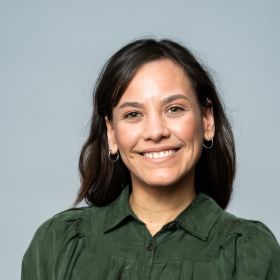
Dr Tatiana A Giovannucci
Author
Dr Tatiana A. Giovannucci is a Postdoctoral Research Fellow at UCL’s Institute of Neurology, Dementia Research Centre and UK Dementia Research Institute, studying the turnover of proteins relevant to neurodegeneration. She holds an Alzheimer’s Association Research Fellowship and is part of a Race Against Dementia team, having completed her PhD at Karolinska Institutet in Stockholm before joining UCL in 2022. Originally from Medellín, Colombia, she can usually be found upside down doing acroyoga when not in the lab.
 Dr Yvonne Couch
 Dr Becky Carlyle
 Dr Lindsey Sinclair
 Nature Careers Blog

