 Print This Post
If you missed my first blog post, last month I gave an introduction to myself, my work, and how I found myself becoming a dementia researcher. Over the coming months I’ll be talking about my experience of becoming a parent while undertaking my PhD, whatever that ends up looking like. My intention is to offer as much honesty as possible. With that in mind, today I’ll be talking about what it meant to make sense of my evolving identity – and how challenging I found it.
I have to admit (don’t hate me!) that my whole pregnancy was ridiculously easy. I didn’t really have any classic pregnancy symptoms; no sickness, no cravings. I had one week perhaps four months in where I felt pretty tired, and that was about it. I insisted on still running and playing football until at least five months, and went to a couple of gigs in the last few weeks before my due date (I’m never one to pass up a chance to see Blink-182 play). At 35 weeks I flew out to Helsinki for the Alzheimer Europe conference. The physical side of things, which I had anticipated being pretty full-on, was such a breeze.
What I hadn’t appreciated was how much I would struggle with the mental work of accommodating this new aspect of my identity – particularly where it came to what I felt were quite gendered expectations around pregnancy and ‘motherhood’. When I told my family that I was pregnant, one very well-meaning person asked when I would be moving out of London (an unsuitable place to start a family), and gently suggested that my priorities would need to change, so it might be a good time to quit my PhD. I managed to be pretty gracious at the time (very unlike me), although did then spend probably a month ranting to my sister about how this person was clearly a misogynist (I’d like to think I’m now over it). When my parents visited from overseas shortly thereafter, my mum innocently asked whether the university would be open to me studying part time on my return. Sadly, by this stage I was primed to bite, so demanded to know whether she had asked the same question of my husband, whether his employer would allow him to work part time, and then also accused her directly of being a misogynist (sorry Mum!).
In the autumn, my husband and I attended some antenatal classes. One week, we were given a series of questions to discuss. Some example questions with accompanying answers people actually gave are as follows:
Q: What do you think an average weekend will look like a year from now?
A: Staying at home, protecting our furniture from our toddler.Q: How might your relationship with friends or hobbies change?
A: There will be a time for friends and hobbies, and that time is not now.
I was suitably alarmed. I found it interesting that when the question, “How will you ensure a work-life balance” was asked, this seemed to be taken as a question for the fathers in the room; as such, only the men offered their opinions. I understand that in the UK the norm is still for maternity rather than shared parental leave to be taken (and in my case, unfortunately this was the only option available), but surely a woman’s work-life balance can also factor into the equation? I have to admit, after this session I cried. I just felt so different to the other attendees. The expectations around motherhood seemed so centred upon the notion of personal sacrifice, of being ready and willing to give up everything that had previously made me ‘me’. For months this played on my mind. I felt convinced that whatever other women possess that make them suitable mothers was something that I was lacking.
I took the opportunity to offload a lot of this anxiety onto my cousin during a four hour conversation on a bench next to Regent’s Canal. The crux of the conversation was my overwhelming discomfort with becoming a ‘mother’, with everything that seemed to imply. My identity is kaleidoscopic, multifaceted; it is constructed from so many things. I love to read, to run, to play football (badly). I’m a singer, a guitarist. I love independent cinema, playing board games. I am close to my family, loyal to my friends. And my work! My work is so important to me; it gives me such a sense of accomplishment, such a sense of pride. In honesty, a lot of my self-worth comes from my work. Yet someone could still suggest that I give it up, that as a mother my priorities would need to change, and getting a PhD should not be a priority.
If motherhood necessarily seemed to involve this universal sacrifice, I struggled to see how I could make it work. But what about parenthood? Maybe I could be a parent? This seemed freer of expectations, connotations. That isn’t to devalue motherhood, or imply that any of the expectations I felt are the reality of motherhood. But taking gender out of the equation helped me see that rather than there being a right or wrong way of doing things, I could figure out my own way. Rather than sacrificing parts of my identity, I could incorporate new ones. My dreams and ambitions – including around my work – would still have value.
This reframing of my role as a ‘parent’ rather than ‘mother’ was the single most helpful thing in terms of processing my new identity, and perhaps it’s something that could be helpful for someone else. So, I sit here now as the proud parent of a three-week-old boy. Still a researcher, a musician, an avid reader, a constantly frustrated Spurs fan, but also a parent. And yes, maybe above all, a parent.
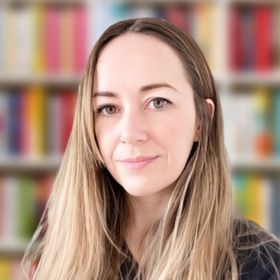
Emily Spencer
Author
Emily Spencer is a PhD Student at University College London looking at improving how GPs communicate with people with dementia and their family carers about their future care. Emily previous had a 5 year career break to pursue a career as a musician, and has previously undertaken research on improving the care people with dementia receive from their GP practice, as well as end-of-life and palliative care provision in the community. Emily is also a new mum and will be writing about her experiences navigating motherhood and a research career.


 Beccy Owen
 Dementia Researcher
 Rahul Sidhu
 Dr Yvonne Couch