Research News

Poster Talks from UK DRI Connectome 2026 | Watch the Playlist

Reading Time: 3 minutes
Poster Talks from UK DRI Connectome 2026 | Watch the Playlist

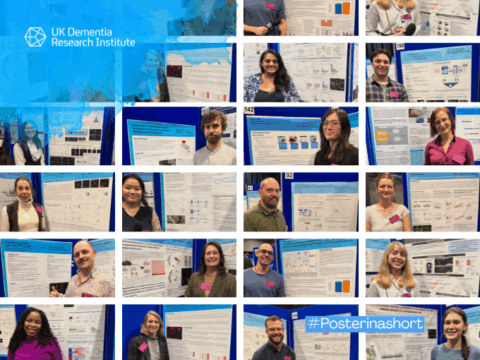
At Connectome 2026, the UK Dementia Research Institute’s annual gathering in Liverpool, we spent time in the poster hall recording short conversations with researchers about their work.

Over three days at #Connectome2026, we captured 28 short talks, each explaining a study in the researcher’s own words, all in 3 minutes or less! We’ve brought them together into a single playlist, just over an hour in total, so you can explore science from right across the UK DRI, from genes and cells to the clinic.


Huntington's disease is caused by a single gene, but it affects people in very different ways. As well as movement problems, many people experience changes in thinking, mood and behaviour, such as depression and anxiety, and these can vary a lot from person to person. Some of that variation may come from other genes that modify the disease, and some from the same genetic factors that shape thinking and mental health in everyone.

At Connectome 2026, the UK Dementia Research Institute's annual gathering in Liverpool (2–4 November 2026), Christopher Wills from the UK DRI at Cardiff talked us through his poster (#110), "Genetic basis of cognitive/psychiatric/behavioural phenotypes in Huntington's Disease".

Using data from the Enroll-HD study, Christopher looked at dozens of cognitive and psychiatric measures, both at a single point and how they changed over time. He tested whether polygenic scores, which sum up a person's genetic tendency towards traits such as educational attainment, depression or anxiety, explained these symptoms. Genetic tendencies linked to education and intelligence were most strongly tied to thinking skills and to how fast memory and thinking declined. Genetic tendencies towards depression, anxiety and related conditions were most strongly tied to psychiatric symptoms. Whole-genome sequencing in nearly 19,000 people also confirmed known Huntington's modifier regions and pointed to new candidate genes, including near KCNC2 and PLK5.

Understanding why symptoms differ could help predict who is likely to develop which problems, and point to new ways to support people with Huntington's.

Presenter: Christopher Wills, UK DRI at Cardiff
Authors: Christopher Wills, Danielle Fitt, Duncan McLauchlan, Tom Massey and Peter Holmans (Centre for Neuropsychiatric Genetics and Genomics, Cardiff University; Swansea Bay University Health Board; UK Dementia Research Institute at Cardiff University)
Biosamples and data were provided by Enroll-HD participants and made available by the CHDI Foundation.

Dementia Researcher is funded by the NIHR and the charities Alzheimer's Association, Alzheimer's Research UK, Alzheimer's Society and Race Against Dementia, and delivered by UCL. We support early career researchers in dementia and neurodegeneration. Find blogs, podcasts, jobs, funding calls and career guides at https://dementiaresearcher.nihr.ac.uk

#Connectome2026 #UKDRI #Huntingtons #Genetics #MentalHealth #Neurodegeneration #Shorts Huntington's disease is more than movement

Huntington's disease is more than movement

GLP-1 receptor agonists, the family of diabetes and weight-loss drugs that includes exenatide, have shown promising signs in early Parkinson's trials. But a large Phase III trial found no clear benefit. One explanation is that these drugs may only help a particular group: people whose Parkinson's goes hand in hand with type 2 diabetes or other metabolic problems, who may have been too few in the trials for any effect to show.

At Connectome 2026, the UK Dementia Research Institute's annual gathering in Liverpool (2–4 November 2026), Jared Maina from the UK DRI at Imperial talked us through his poster (#80), "Stratified GWAS of Parkinson's Disease Subtypes by Metabolic Comorbidity in Our Future Health: Implications for GLP-1RAs Stratification".

Jared is testing whether Parkinson's with metabolic problems is genetically distinct. Using Our Future Health, a UK study of over two million people, he identified people with Parkinson's with and without type 2 diabetes or metabolic dysfunction, and is running genome-wide studies that compare them. Data from other large cohorts, including UK Biobank, FinnGen and All of Us, will be combined to boost the numbers. Early data suggest that Parkinson's with metabolic problems is enriched for genetic variation in insulin-signalling and GLP-1 receptor pathways.

If confirmed, that would give a genetic reason to design future GLP-1 drug trials around the people most likely to benefit.

Presenter: Jared Gichohi Maina, UK DRI at Imperial
Authors: Jared Gichohi Maina, Rishideep Chatterjee, Marirena Bafaloukou, Viola Volpato, Caleb Webber and Cynthia Sandor (Imperial College London; UK Dementia Research Institute; Cardiff University)

Dementia Researcher is funded by the NIHR and the charities Alzheimer's Association, Alzheimer's Research UK, Alzheimer's Society and Race Against Dementia, and delivered by UCL. We support early career researchers in dementia and neurodegeneration. Find blogs, podcasts, jobs, funding calls and career guides at https://dementiaresearcher.nihr.ac.uk

#Connectome2026 #UKDRI #Parkinsons #Genetics #Diabetes #PrecisionMedicine #Shorts Could GLP-1 drugs work for some people with Parkinson's?

Could GLP-1 drugs work for some people with Parkinson's?

Problems with endocytosis, the system cells use to take in, sort and recycle material, are one of the earliest signs of Alzheimer's disease, and many Alzheimer's risk genes work in this pathway in microglia, the brain's immune cells. A technique called Endo-IP can pull out early endosomes, the first sorting stations in this system, so researchers can see exactly what's inside. But it relies on getting a tagged gene into the cells, and microglia are notoriously hard to modify because they're built to fight off viruses, including the lentiviruses researchers use to deliver genes.

At Connectome 2026, the UK Dementia Research Institute's annual gathering in Liverpool (2–4 November 2026), Srilakshmi (Sri) Goberdhan from the UK DRI at Cardiff talked us through her poster (#166), "Optimising Endo-IP technique for use with iPSC-derived microglia".

The original Endo-IP lentivirus barely worked in stem cell-derived microglia, and even adding VPX, a protein that disarms one of their antiviral defences, only got about 10% of cells. So Sri systematically tested the building blocks of the delivery plasmid. Switching to a promoter called SFFV, and using a backbone with the right supporting elements, made a big difference. Moving the tagged EEA1 gene into this new backbone raised success rates to up to 90%, and the tag sat correctly on endosomes. The team has now scaled up and used it to isolate early endosomes from microglia.

That opens the door to studying how Alzheimer's risk genes affect endosomes in microglia grown from patients' own cells, and to genetic modification of microglia and macrophages more widely.

Read the preprint on bioRxiv: https://doi.org/10.64898/2026.05.23.727402
Plasmid maps and references: https://www.canvaqr.com/RGQblKcY0e

Presenter: Srilakshmi Goberdhan, UK DRI at Cardiff
Authors: Srilakshmi Goberdhan, Bethany Geary, Philip R. Taylor and Natalie Connor-Robson (UK Dementia Research Institute, Cardiff University)
Principal funder: Medical Research Council

Dementia Researcher is funded by the NIHR and the charities Alzheimer's Association, Alzheimer's Research UK, Alzheimer's Society and Race Against Dementia, and delivered by UCL. We support early career researchers in dementia and neurodegeneration. Find blogs, podcasts, jobs, funding calls and career guides at https://dementiaresearcher.nihr.ac.uk

#Connectome2026 #UKDRI #Dementia #AlzheimersDisease #Microglia #LabMethods #Shorts Cracking a tough nut: genetically modifying microglia

Cracking a tough nut: genetically modifying microglia

Mitochondria, the cell's power stations, go wrong in many conditions, including Parkinson's and other neurodegenerative diseases. But getting them out of cells to study them is slow and fiddly. Standard methods take hours, need lots of material, and can damage the mitochondria or change the molecules researchers want to measure. A faster antibody-based method, Mito-IP, exists, but it only works on cells or animals that have been genetically engineered to carry a tag.

At Connectome 2026, the UK Dementia Research Institute's annual gathering in Liverpool (2–4 November 2026), Christos Themistokleous from the University of Dundee talked us through his poster (#176), "Tagless Mito-IP: 5 minute mitochondria isolation from cells and tissues, including brain and patient blood".

Christos and colleagues developed Tagless Mito-IP, which uses an antibody against SYNJ2BP, a protein found naturally on the outside of mitochondria. No genetic tag is needed, so it works on almost any sample, and it pulls out pure, intact, working mitochondria in about five minutes. The team has used it on cultured cells, primary neurons and astrocytes, mouse brain and other tissues, and, crucially, on human blood cells, giving direct access to patients' own mitochondria. A single preparation can be used for proteomics, lipidomics, metabolomics, functional tests and mitochondrial DNA sequencing, and the method has already helped identify new mitochondrial proteins.

Presenter: Christos Themistokleous, MRC Protein Phosphorylation and Ubiquitylation Unit, University of Dundee
Authors: Christos Themistokleous, Odetta Antico, Yuko Lam, Ana L. Tonidandel, Karolina Zeneviciute, Esther Sammler and Miratul Muqit (MRC Protein Phosphorylation and Ubiquitylation Unit, University of Dundee)

Dementia Researcher is funded by the NIHR and the charities Alzheimer's Association, Alzheimer's Research UK, Alzheimer's Society and Race Against Dementia, and delivered by UCL. We support early career researchers in dementia and neurodegeneration. Find blogs, podcasts, jobs, funding calls and career guides at https://dementiaresearcher.nihr.ac.uk

#Connectome2026 #UKDRI #Mitochondria #Parkinsons #Neurodegeneration #LabMethods #Shorts Tagless Mito-IP: a faster way to study mitochondria

Tagless Mito-IP: a faster way to study mitochondria

In amyotrophic lateral sclerosis (ALS) and frontotemporal dementia (FTD), the connections between neurons start to break down well before the neurons themselves die. Studying that early damage needs human models in which researchers can build circuits with a controlled layout and then look closely at the synapses that link them.

At Connectome 2026, the UK Dementia Research Institute's annual gathering in Liverpool (2–4 November 2026), Cristina Rios Mejia from the UK DRI at King's talked us through her poster (#214), "Human Stem Cell-Derived Cortical Circuits to Study Synaptic Connectivity in ALS/FTD".

Cristina grows cortical-like neurons from human stem cells on BIOCONNET, a bioengineered platform with separate compartments linked by tiny grooves. Neurons in one compartment send their projections across to another, forming circuits in a set layout, and material from each compartment can be collected separately for detailed molecular study. ALS and FTD vary a lot from person to person, and around 90% of ALS cases are sporadic, with no single known gene behind them. So the team is building circuits from stem cell lines that cover both sporadic ALS and familial ALS caused by mutations in TDP-43 and FUS. They then measure how well the circuits are connected by looking at where markers for the sending and receiving sides of synapses overlap.

The aim is a reproducible human system for tracking early circuit breakdown, studying disease mechanisms and finding new biomarkers.

Presenter: Cristina Rios Mejia, UK DRI at King's
Authors: Cristina Rios Mejia, Cathleen Hagemann, Deepak Khuperkar, Juan Alcalde Gomez, Marc-David Ruepp and Andrea Serio (Institute of Psychiatry, Psychology & Neuroscience, King's College London; UK Dementia Research Institute at King's College London; The Francis Crick Institute)
Principal funder: Medical Research Council

Dementia Researcher is funded by the NIHR and the charities Alzheimer's Association, Alzheimer's Research UK, Alzheimer's Society and Race Against Dementia, and delivered by UCL. We support early career researchers in dementia and neurodegeneration. Find blogs, podcasts, jobs, funding calls and career guides at https://dementiaresearcher.nihr.ac.uk

#Connectome2026 #UKDRI #ALS #MND #FTD #StemCells #Shorts Building human brain circuits in a dish to study ALS

Building human brain circuits in a dish to study ALS

For many people with Parkinson's, symptoms rise and fall through the day as each dose of levodopa kicks in and then wears off. These fluctuations are usually tracked with diaries or wearable sensors during set tasks in clinic, which misses how people actually move in daily life.

At Connectome 2026, the UK Dementia Research Institute's annual gathering in Liverpool (2–4 November 2026), Jenna Yun from the UK DRI Centre for Care Research & Technology at Imperial talked us through her poster (#24), "Markerless Kinematics of Levodopa Response During Activities of Daily Living in Parkinson's Disease".

In a fully furnished "living lab" studio fitted with depth cameras, 38 people with mild-to-moderate Parkinson's made a cup of tea and some toast twice: once before their medication dose, when it had worn off, and once an hour after, when it was working best. The cameras tracked their body movements without any markers or sensors on the body. On medication, people moved through a wider range, with clear changes in shoulder and ankle movement. When all the movement features were combined, the overall pattern also reliably told the two medication states apart, and it held across both tasks.

That suggests passive camera tracking during ordinary activities could one day give a realistic, real-world measure of how well Parkinson's treatment is working.

Presenter: Jenna Yun (Juyoung Yun), UK DRI Centre for Care Research & Technology, Imperial College London
Authors: Juyoung Jenna Yun and Dr Shlomi Haar (Imperial College London; University of Surrey)

Dementia Researcher is funded by the NIHR and the charities Alzheimer's Association, Alzheimer's Research UK, Alzheimer's Society and Race Against Dementia, and delivered by UCL. We support early career researchers in dementia and neurodegeneration. Find blogs, podcasts, jobs, funding calls and career guides at https://dementiaresearcher.nihr.ac.uk

#Connectome2026 #UKDRI #Parkinsons #DigitalHealth #MotionTracking #ParkinsonsResearch #Shorts Making tea and toast to track Parkinson's medication

Making tea and toast to track Parkinson's medication

Electronic health records hold data on millions of people, which makes them a powerful way to study what raises the risk of dementia. But they're full of traps. People with and without a given exposure, such as depression, differ in age, health and much more. And common design mistakes, like starting follow-up at the wrong moment, can create associations that aren't real.

At Connectome 2026, the UK Dementia Research Institute's annual gathering in Liverpool (2–4 November 2026), Zeinab Ghannam from the UK DRI Centre for Care Research & Technology at Imperial talked us through her poster (#34), "CohortLearn: an open-source Python library for propensity score matching and target trial emulation in electronic health records".

CohortLearn is a free, open-source tool that helps researchers design observational studies that mimic a randomised controlled trial. The user chooses an exposure, an outcome and a list of confounders. CohortLearn then combines the confounders into a single propensity score, matches each exposed person with similar unexposed people, lines up the start of follow-up for everyone, and checks that the groups are balanced. That avoids common biases such as immortal time bias and look-ahead bias.

As a test case, the team used the All of Us dataset to look at recurrent depression and later Alzheimer's disease. People with recurrent depression had a higher risk of Alzheimer's across the different models, even after matching on factors such as age, APOE4, education, heart disease and sleep problems. The poster is clear that unmeasured confounders and gaps in health records can still affect results like these.

Get the code, documentation and Docker image: https://github.com/tmi-lab/CohortLearn
DOI: 10.5281/zenodo.23305680

Presenter: Zeinab Ghannam, UK DRI Centre for Care Research & Technology, Imperial College London
Supervised by: Dr Fatemeh Geranmayeh and Prof Payam Barnaghi (Department of Brain Sciences, Imperial College London)
Principal funder: Medical Research Council

Dementia Researcher is funded by the NIHR and the charities Alzheimer's Association, Alzheimer's Research UK, Alzheimer's Society and Race Against Dementia, and delivered by UCL. We support early career researchers in dementia and neurodegeneration. Find blogs, podcasts, jobs, funding calls and career guides at https://dementiaresearcher.nihr.ac.uk

#Connectome2026 #UKDRI #Dementia #OpenSource #Epidemiology #HealthData #Shorts Mimicking a clinical trial with health records data

Mimicking a clinical trial with health records data

Problems with walking and balance, including freezing of gait, are some of the most disabling parts of Parkinson's disease, and they often don't respond well to medication. Spinal cord stimulation, already an established treatment for chronic back pain, has been tried as an experimental option, but studies so far have given mixed results, partly because many weren't blinded and used different device settings.

At Connectome 2026, the UK Dementia Research Institute's annual gathering in Liverpool (2–4 November 2026), Bradley Lonergan from the UK DRI Centre for Care Research & Technology at Imperial talked us through his poster (#58), "Spinal cord stimulation to reduce imbalance and falls in Parkinson's Disease (SCORE-PD): preliminary results of a feasibility pilot study".

In SCORE-PD, three people with Parkinson's had a stimulator implanted in the spine and then spent six weeks each on two different stimulation settings and a sham setting, without knowing which was which. The team measured walking on a pressure-sensing walkway and with wearable sensors, tracked movement at home, and recorded brain activity. So far, the procedure has been safe, with no complications, and a blinded study has proved feasible. All three participants completed a walking task and turned faster on both active settings than on sham, although other measures, such as balance, varied between people.

These are early results from a very small group. Two more participants are now in the randomised phase, and the aim is a larger trial to test whether spinal cord stimulation really helps.

Presenter: Bradley Lonergan, UK DRI Centre for Care Research & Technology, Imperial College London
Authors: B Lonergan, M Ciocca, JJ FitzGerald, P Waskett, S Freeston, Z Zhu, I Slatner, S Haar, C Sandor, BM Seemungal and YF Tai (Imperial College London; Imperial College Healthcare NHS Trust; University of Oxford; Boston Scientific; University of Surrey)
Funding: The Jon Moulton Charity Trust; Medical Research Council

Dementia Researcher is funded by the NIHR and the charities Alzheimer's Association, Alzheimer's Research UK, Alzheimer's Society and Race Against Dementia, and delivered by UCL. We support early career researchers in dementia and neurodegeneration. Find blogs, podcasts, jobs, funding calls and career guides at https://dementiaresearcher.nihr.ac.uk

#Connectome2026 #UKDRI #Parkinsons #FreezingOfGait #Neuromodulation #ParkinsonsResearch #Shorts Can spinal cord stimulation help walking in Parkinson's?

Can spinal cord stimulation help walking in Parkinson's?

ABCA7 is one of the most consistently replicated genetic risk factors for late-onset Alzheimer's disease. It makes a lipid transporter that is especially active in microglia, the brain's immune cells. A common variant, rs3752231, carried by around a quarter of people, slightly raises Alzheimer's risk. But how does it affect the human brain?

At Connectome 2026, the UK Dementia Research Institute's annual gathering in Liverpool (2–4 November 2026), Marianna Papageorgopoulou from the UK DRI at Imperial talked us through her poster (#140), "ABCA7 rs3752231 is associated with attenuated glial responses to amyloid-β in human brain".

Marianna studied post-mortem brain tissue from the middle temporal gyrus of around 100 donors, at every stage of Alzheimer's pathology. In late-stage disease, carriers of the variant had more amyloid plaque coverage overall, with more loose, diffuse plaques and fewer tightly packed compact plaques. That fits with microglia being less good at compacting plaques. Single-cell sequencing showed why. Microglia and astrocytes in carriers switched on the same genes in response to amyloid as non-carriers, but only at a fraction of the strength. Microglia in carriers were also smaller around plaques.

The team suggests carriers might respond differently to anti-amyloid antibody treatments that rely on microglia, an idea that could be tested in treated patients.

Presenter: Marianna Papageorgopoulou, UK DRI at Imperial
Authors: M Papageorgopoulou, E Adair, M Burridge, NN Fancy, B Avot, SL Boulger, MS Wülfing and PM Matthews (UK Dementia Research Institute at Imperial College London; Department of Brain Sciences, Imperial College London; University of Oxford; Rosalind Franklin Institute)
Principal funder: Medical Research Council

Dementia Researcher is funded by the NIHR and the charities Alzheimer's Association, Alzheimer's Research UK, Alzheimer's Society and Race Against Dementia, and delivered by UCL. We support early career researchers in dementia and neurodegeneration. Find blogs, podcasts, jobs, funding calls and career guides at https://dementiaresearcher.nihr.ac.uk

#Connectome2026 #UKDRI #Dementia #AlzheimersDisease #Genetics #Microglia #Shorts An Alzheimer's risk gene that turns down the brain's immune response

An Alzheimer's risk gene that turns down the brain's immune response

Over 75% of people in Parkinson's genetics studies are of European ancestry. That leaves big gaps in what we know about the genetic causes of Parkinson's in everyone else, and it makes genetic results harder to interpret for people from under-represented backgrounds.

At Connectome 2026, the UK Dementia Research Institute's annual gathering in Liverpool (2–4 November 2026), Michael Wride from the UK DRI at UCL talked us through the poster (#124), "DIVERSE-PD: From diversity to discovery: expanding the genetic landscape of Parkinson's disease".

DIVERSE-PD is a new UK-based Parkinson's genetics study at University College London. It builds on an existing resource of whole-exome sequencing data from more than 50,000 people, including over 3,000 with Parkinson's or atypical parkinsonism. The study is now recruiting across England, Wales and Northern Ireland. It prioritises people with early-onset Parkinson's (before age 50), people with a family history of Parkinson's, and people from ethnic backgrounds that are under-represented in research. Participants provide clinical and family history details and a blood or saliva sample. Cases that remain unexplained will go on to newer techniques such as long-read DNA and RNA sequencing.

The aim is to find new Parkinson's genes, improve genetic diagnosis, and make sure Parkinson's genetics research reflects everyone affected by the condition.

Find out more or get involved with DIVERSE-PD: https://oqr.to/DIVERSEpd

Presenter: Michael Wride, UK DRI at UCL
Authors: Wride M, Mohammad R, Mhapankar K, Patel S, Sofian R, Chelban V and Houlden H (UCL Queen Square Institute of Neurology; National Hospital for Neurology and Neurosurgery)

Dementia Researcher is funded by the NIHR and the charities Alzheimer's Association, Alzheimer's Research UK, Alzheimer's Society and Race Against Dementia, and delivered by UCL. We support early career researchers in dementia and neurodegeneration. Find blogs, podcasts, jobs, funding calls and career guides at https://dementiaresearcher.nihr.ac.uk

#Connectome2026 #UKDRI #Parkinsons #Genetics #DiversityInResearch #ParkinsonsResearch #Shorts DIVERSE-PD: now recruiting for a new Parkinson's genetics study

DIVERSE-PD: now recruiting for a new Parkinson's genetics study

Most of the genetic variants linked to Alzheimer's disease don't sit in genes themselves. Many lie in stretches of regulatory DNA that control genes in microglia, the brain's immune cells. These regions work by binding proteins called transcription factors, but for most risk variants we don't know which ones are involved, or whether a variant turns their effect up or down.

At Connectome 2026, the UK Dementia Research Institute's annual gathering in Liverpool (2–4 November 2026), Mrinal Joshi from the UK DRI at Imperial talked us through his poster (#106), "Decoding Alzheimer's risk through microglial transcription factor binding".

Mrinal is building the tools needed to map where transcription factors bind in microglia grown from human stem cells. So far, he has improved a binding assay that works with small numbers of cells and profiled 12 microglial transcription factors, including IRF8 and MEF2A. Profiling 100 factors would normally need 100 validated antibodies, so the next step is to use prime editing to add the same small tag to each factor. One antibody can then read them all. The team is also setting up statistics that show which direction a variant pushes a factor's binding, not just whether the two overlap.

The goal is an atlas of around 100 factors that points to regulators worth targeting with treatments, and which way to nudge them.

Presenter: Mrinal Joshi, UK DRI at Imperial
Authors: Mrinal Joshi, Megan Coates, Hiru Dash, Toby Clark, Maria Weinert, Nathan Skene and Ching "Jade" Leung (UK Dementia Research Institute at Imperial College London)

Dementia Researcher is funded by the NIHR and the charities Alzheimer's Association, Alzheimer's Research UK, Alzheimer's Society and Race Against Dementia, and delivered by UCL. We support early career researchers in dementia and neurodegeneration. Find blogs, podcasts, jobs, funding calls and career guides at https://dementiaresearcher.nihr.ac.uk

#Connectome2026 #UKDRI #Dementia #AlzheimersDisease #Genomics #Microglia #Shorts Which switches turn Alzheimer's genes on in microglia?

Which switches turn Alzheimer's genes on in microglia?

Many of the genes linked to late-onset Alzheimer's disease, including BIN1, PICALM, CD2AP and SORL1, are involved in endocytosis, the process cells use to take in, sort and recycle material. Problems with this system show up very early in Alzheimer's, and many of these genes are especially active in microglia, the brain's immune cells.

At Connectome 2026, the UK Dementia Research Institute's annual gathering in Liverpool (2–4 November 2026), Mizuki Morisaki from the UK DRI at Cardiff talked us through her poster (#269), "Investigating the effect of high endocytic polygenic risk in late onset Alzheimer's Disease using iPSC-derived microglia".

The team developed a new polygenic risk score that adds up a person's genetic risk specifically in the endocytic pathway. They then made 18 new stem cell lines from people with Alzheimer's who had a high score, and compared microglia grown from them with microglia from 11 controls. The high-risk microglia had fewer and smaller early endosomes, the first sorting compartments inside the cell, and seemed to break down material in their lysosomes less effectively. Their handling of amyloid-beta was also altered.

These cell lines give researchers a human model of one genetic route into Alzheimer's, and the risk score could help group patients by the biology driving their disease.

Presenter: Mizuki Morisaki, UK DRI at Cardiff
Authors: Mizuki Morisaki, Sri Goberdhan, Patricia Dos Santos Rodrigues, Atahualpa Castillo Morales, Matilda Kakengi, Julie Williams and Natalie Connor-Robson (UK Dementia Research Institute at Cardiff; School of Medicine, Cardiff University)
Principal funder: Medical Research Council

Dementia Researcher is funded by the NIHR and the charities Alzheimer's Association, Alzheimer's Research UK, Alzheimer's Society and Race Against Dementia, and delivered by UCL. We support early career researchers in dementia and neurodegeneration. Find blogs, podcasts, jobs, funding calls and career guides at https://dementiaresearcher.nihr.ac.uk

#Connectome2026 #UKDRI #Dementia #AlzheimersDisease #Microglia #Genetics #Shorts Studying Alzheimer's genetic risk in patients' own microglia

Studying Alzheimer's genetic risk in patients' own microglia

Pericytes are cells that wrap around the brain's tiniest blood vessels, helping to control blood flow and maintain the blood-brain barrier. They can start to disappear up to 30 years before dementia symptoms appear. We know a lot about how that damages blood vessels, but much less about how it affects neurons.

At Connectome 2026, the UK Dementia Research Institute's annual gathering in Liverpool (2–4 November 2026), Emily Cooper from the UK DRI at Edinburgh talked us through her poster (#232), "Identifying Neural Signatures of Vascular Degeneration in Early Dementia".

Emily removed pericytes in mice and then recorded the electrical activity of neurons in two brain regions involved in memory and decision-making, the hippocampus and the prefrontal cortex, while the mice navigated a virtual reality task. She saw a two-stage response. Shortly after pericyte loss, neurons in the hippocampus slowed their firing, brain rhythms slowed, and communication between regions was disrupted. This may be a temporary, protective response. But after more sustained loss, communication between regions recovered, while hippocampal neurons became hyperexcitable, firing in rapid bursts, a sign of stress.

The hope is that these changes in brain activity could one day act as an early signature of vascular damage, picking up dementia before symptoms begin.

Presenter: Emily Cooper, UK DRI at Edinburgh
Authors: Emily Cooper, Mingshan Liu, Audrey Chagnot, Axel Montagne and Jian Gan (Institute for Neuroscience and Cardiovascular Research, University of Edinburgh)
Principal funder: Medical Research Council

Dementia Researcher is funded by the NIHR and the charities Alzheimer's Association, Alzheimer's Research UK, Alzheimer's Society and Race Against Dementia, and delivered by UCL. We support early career researchers in dementia and neurodegeneration. Find blogs, podcasts, jobs, funding calls and career guides at https://dementiaresearcher.nihr.ac.uk

#Connectome2026 #UKDRI #Dementia #VascularDementia #Neuroscience #BrainHealth #Shorts What happens to neurons when brain blood vessels start to fail?

What happens to neurons when brain blood vessels start to fail?

Age is the biggest risk factor for Alzheimer's disease. But what is it about getting older that makes the brain more vulnerable?

At Connectome 2026, the UK Dementia Research Institute's annual gathering in Liverpool (2–4 November 2026), Reuben Yaa from the UK DRI at Imperial talked us through his poster (#231), "Lifespan-dependent epigenomic reprogramming in microglia links ageing to Alzheimer's disease risk".

Reuben and colleagues built what they describe as the first lifespan-resolved epigenomic atlas of human microglia, the brain's immune cells. Using brain tissue from 53 people, ranging from before birth to their late 80s, they mapped which gene "switches" (enhancers) were active in microglia at each stage of life. Over the lifespan, activity shifted away from developmental programmes and towards inflammatory, immune-related ones.

Strikingly, the genetic risk for Alzheimer's built up step by step with age in these regulatory regions, a pattern not seen for other brain disorders. Alzheimer's appeared to amplify changes that already happen in healthy ageing rather than create new ones. That points to a possible window for treatment before the disease takes hold, and a drug-repurposing analysis picked out a compound, methyl-fasudil, as a candidate to counteract these ageing-linked changes.

Presenter: Reuben M. Yaa, UK DRI at Imperial
Authors: Reuben M. Yaa, Janna Van Dalen, Aydan Askarova, Charbel Gergian, Katarina Gregorovicsova, Lucy Bedwell, Maria Thom, Nicole Coufal and Alex Nott (Department of Brain Sciences and UK DRI at Imperial College London; University of Cambridge; University College London; University of California San Diego)

Dementia Researcher is funded by the NIHR and the charities Alzheimer's Association, Alzheimer's Research UK, Alzheimer's Society and Race Against Dementia, and delivered by UCL. We support early career researchers in dementia and neurodegeneration. Find blogs, podcasts, jobs, funding calls and career guides at https://dementiaresearcher.nihr.ac.uk

#Connectome2026 #UKDRI #Dementia #AlzheimersDisease #Ageing #Microglia #Shorts From before birth to age 89: mapping microglia across the lifespan

From before birth to age 89: mapping microglia across the lifespan

Up to 40% of people with Alzheimer's disease show hidden, seizure-like activity in the brain, and around 10% go on to develop epilepsy. One explanation is that the balance between excitatory synapses, which drive activity, and inhibitory synapses, which keep it in check, gets thrown off. But when researchers grind up brain tissue to study its proteins, all the synapse types are mixed together, and the differences between them get lost.

At Connectome 2026, the UK Dementia Research Institute's annual gathering in Liverpool (2–4 November 2026), Jan Wos from the UK DRI at Imperial talked us through his poster (#202), "FASS (fluorescence activated synapse sorting) on human post-mortem tissue examining the nature of synaptic proteins in isolated synaptic populations".

Jan is using fluorescence activated synapse sorting, or FASS, a flow cytometry technique that sorts tiny synaptic particles one at a time. He labelled excitatory synapses in human post-mortem brain tissue using a marker called VGLUT1 and sorted them out. The sorted sample gave a 42% stronger VGLUT1 signal than the same amount of unsorted material, which shows the method enriches excitatory synapses. It also kept the receiving side of the synapse attached, a sign the synapses stay intact.

That makes FASS a platform for comparing the proteins in excitatory and inhibitory synapses in Alzheimer's, epilepsy and control brains, to help explain why the Alzheimer's brain becomes hyperactive.

Presenter: Jan Wos, UK DRI at Imperial
Authors: Jan Wos and Dr Johanna S Jackson (UK Dementia Research Institute at Imperial College London; Department of Brain Sciences, Imperial College London)

Supported by the Medical Research Council, with Alzheimer's Society

Dementia Researcher is funded by the NIHR and the charities Alzheimer's Association, Alzheimer's Research UK, Alzheimer's Society and Race Against Dementia, and delivered by UCL. We support early career researchers in dementia and neurodegeneration. Find blogs, podcasts, jobs, funding calls and career guides at https://dementiaresearcher.nihr.ac.uk

#Connectome2026 #UKDRI #Dementia #AlzheimersDisease #Synapses #Proteomics #Shorts Why are some Alzheimer's brains overactive? Sorting synapses to find out

Why are some Alzheimer's brains overactive? Sorting synapses to find out

Not every display in the Connectome 2026 poster hall was a poster. Between the boards were framed screenprints of networks, flowing lines and branching vessels, each one made from real dementia research data.

Printed Matter: Exploring Neuroscience Data Through Printmaking is a project by Dr Irina Earnshaw, a doctor and PhD student in the McColl lab at the UK Dementia Research Institute at the University of Edinburgh. We met her at Connectome 2026, the UK DRI's annual gathering in Liverpool (2–4 November 2026).

Irina takes data from UK DRI research, simplifies it into images and interprets it as screenprints. The aim is to show how varied dementia research is, and to start conversations between scientists and the public: how the data was made, how it became art, and what researchers hope it will lead to. The project is also asking for the public's ideas, questions and priorities.

The prints are due to go on show at Edinburgh Printmakers as part of the Edinburgh Science Festival in April 2027. The project is supported by a UK DRI public engagement grant, in partnership with Edinburgh Printmakers.

Find out more and share your thoughts: https://ukdri-printedmatter.com/

Featuring: Dr Irina Earnshaw, UK DRI at Edinburgh, University of Edinburgh

Dementia Researcher is funded by the NIHR and the charities Alzheimer's Association, Alzheimer's Research UK, Alzheimer's Society and Race Against Dementia, and delivered by UCL. We support early career researchers in dementia and neurodegeneration. Find blogs, podcasts, jobs, funding calls and career guides at https://dementiaresearcher.nihr.ac.uk

#Connectome2026 #UKDRI #SciArt #Printmaking #PublicEngagement #DementiaResearch #Shorts Turning dementia research data into art

Turning dementia research data into art

Neurodegenerative conditions such as Parkinson's disease can disrupt the autonomic nervous system, the part that runs things we don't think about, including heart rate. Changes in heart rate variability could be a useful marker to track over time, and smartwatches and other wearables measure it continuously. The catch is that wrist sensors are easily thrown off by movement.

At Connectome 2026, the UK Dementia Research Institute's annual gathering in Liverpool (2–4 November 2026), Sahar Rahbar from the UK DRI at Imperial talked us through her poster (#207), "Taylor-Fourier analysis of wearable PPG for continuous cardiac dynamics: a framework for physiological monitoring in neurodegenerative disorder".

Wearables measure the pulse with light (photoplethysmography, or PPG), and the usual approach is to spot each individual pulse peak. When the wearer moves, peaks get distorted or missed, and the gaps have to be filled in, which adds more error. Sahar's method skips peak detection altogether. It uses Taylor-Fourier analysis to track the heart's rhythm continuously, giving a smooth, instantaneous heart rate. The team tested it against ECG recordings in 18 people at rest and while moving, and on sleep recordings from people with Parkinson's and healthy controls. Even with noisy signals, the method kept a key measure of heart rate variability within an acceptable range.

It's a measurement framework the team hopes will make wearable data reliable enough to track autonomic changes across neurodegenerative conditions.

Presenter: Sahar Rahbar, UK DRI at Imperial
Authors: Sahar Rahbar, Cecilia Rodriguez, Roberto Ferrero and Cynthia Sandor (Department of Brain Sciences, Imperial College London; University of Liverpool)

Principal funder: Medical Research Council

Dementia Researcher is funded by the NIHR and the charities Alzheimer's Association, Alzheimer's Research UK, Alzheimer's Society and Race Against Dementia, and delivered by UCL. We support early career researchers in dementia and neurodegeneration. Find blogs, podcasts, jobs, funding calls and career guides at https://dementiaresearcher.nihr.ac.uk

#Connectome2026 #UKDRI #Parkinsons #Wearables #DigitalHealth #DementiaResearch #Shorts Can your smartwatch track Parkinson's? Better heart signals from wearables

Can your smartwatch track Parkinson's? Better heart signals from wearables

In Alzheimer's disease, toxic tau spreads through the brain along connected circuits, probably passing from one neuron to the next across synapses. But which proteins help it on its way?

One candidate is clusterin, also known as ApoJ, a protein whose gene is a well-known Alzheimer's risk factor. At Connectome 2026, the UK Dementia Research Institute's annual gathering in Liverpool (2–4 November 2026), Shayne Omale from the BHF-UK DRI Centre for Vascular Dementia Research at the University of Edinburgh talked us through his poster (#219), "Investigating Clusterin-Tau Interactions Within Synapses and Microglial Processes in Human Alzheimer's Disease".

Shayne used array tomography, which slices brain tissue into ultra-thin sections around 70 nanometres thick and rebuilds them in 3D, to look at individual synapses in post-mortem visual cortex from 10 people with Alzheimer's and 10 age- and sex-matched controls. Compared with controls, presynaptic terminals in Alzheimer's tissue were significantly more likely to contain tau, clusterin, and the two together. Synapses carrying tau and clusterin were also found close to microglial processes, the brain's immune cells.

Next, Shayne will look at the receiving side of the synapse, test whether microglia are engulfing these tau-laden synapses, and see whether changing clusterin levels affects how tau spreads.

Presenter: Shayne Omale, BHF-UK DRI Centre for Vascular Dementia Research, University of Edinburgh
Authors: Shayne Omale, Elizabeth M. Simzer, Jane Tulloch, Claire Durrant, Blanca Díaz-Castro, Colin Smith and Tara L. Spires-Jones (Institute for Neuroscience and Cardiovascular Research and UK Dementia Research Institute, University of Edinburgh)

Dementia Researcher is funded by the NIHR and the charities Alzheimer's Association, Alzheimer's Research UK, Alzheimer's Society and Race Against Dementia, and delivered by UCL. We support early career researchers in dementia and neurodegeneration. Find blogs, podcasts, jobs, funding calls and career guides at https://dementiaresearcher.nihr.ac.uk

#Connectome2026 #UKDRI #Dementia #AlzheimersDisease #Tau #Synapses #Shorts Clusterin, tau and synapses in Alzheimer's disease

Clusterin, tau and synapses in Alzheimer's disease

Some forms of dementia begin in the first years of life. LRRC33-related encephalopathy (LRE) is a rare childhood dementia caused by faults in both copies of a gene called LRRC33. Children develop seizures in their first year, then lose skills they had gained, and sadly the condition is usually fatal within two years.

At Connectome 2026, the UK Dementia Research Institute's annual gathering in Liverpool (2–4 November 2026), Veronica Villeri from the UK DRI at Edinburgh talked us through her poster, "Investigation of the cellular and molecular bases of a rare childhood dementia: A human cells-based approach".

In the brain, LRRC33 is made by microglia, the brain's immune cells. It presents a signalling molecule, TGFβ1, at the cell surface, and that signal switches on the programme that turns developing cells into true brain microglia. In children with LRE, those specialised microglia are missing. Fifteen LRRC33 variants have been linked to LRE, but how each one affects TGFβ1 signalling hasn't been studied, so Veronica is testing them in cells in the lab.

She's also building a human model of the disease. Skin cells from a patient carrying one LRRC33 variant have been reprogrammed into stem cells and grown into microglia-like cells, and a matched, gene-corrected control line is being made. The next step is to grow these cells alongside neurons and astrocytes to see how faulty microglia affect the rest of the developing brain.

Presenter: Veronica Villeri, UK DRI at Edinburgh
Authors: Veronica Villeri, James Cooper, Sarah McGlasson, Bhuvaneish T Selvaraj, David Munro, Kathryn Bowles and Barry McColl (Institute for Neuroscience and Cardiovascular Research, UK Dementia Research Institute, University of Edinburgh)

Dementia Researcher is funded by the NIHR and the charities Alzheimer's Association, Alzheimer's Research UK, Alzheimer's Society and Race Against Dementia, and delivered by UCL. We support early career researchers in dementia and neurodegeneration. Find blogs, podcasts, jobs, funding calls and career guides at https://dementiaresearcher.nihr.ac.uk

#Connectome2026 #UKDRI #ChildhoodDementia #RareDisease #Microglia #DementiaResearch #Shorts A rare childhood dementia caused by faulty microglia

A rare childhood dementia caused by faulty microglia

Dementia isn't only a disease of older age. The neuronal ceroid lipofuscinoses (NCLs), sometimes known as Batten disease, are a group of inherited disorders that together are the most common cause of childhood dementia. There are 13 types, each caused by a different gene, yet they share a striking feature: the brain's support cells, the glia, become reactive before neurons are lost.

At Connectome 2026, the UK Dementia Research Institute's annual gathering in Liverpool (2–4 November 2026), Jenny Lange from the UK DRI at UCL talked us through the poster (#285), "Elucidating the role of astrocyte dysfunction in childhood dementia".

Jenny and colleagues grew astrocytes from human stem cells carrying disease-causing variants in two NCL genes, CLN1 and CLN5, and compared them with healthy controls. Although the two genes are different, the astrocytes shared common problems. Both showed changes in key proteins such as glutamine synthetase and connexin 43, which matter for how astrocytes handle stress and communicate. Both also showed disruption to their recycling system (the endolysosomal network) and a build-up of enlarged lipid droplets.

That points to impaired astrocyte health as a shared mechanism that may make neurons more vulnerable across different forms of childhood dementia. Next, the team will look at which lipids are building up, and how unhealthy astrocytes affect neurons when the two are grown together.

Presenter: Jenny Lange, UK DRI at UCL
Authors: Jenny Lange, Sophie Rogers, Isabella Tugulu and Soyon Hong (Hong lab, UK DRI at UCL)
Principal funder: Medical Research Council

Dementia Researcher is an NIHR-funded platform, delivered by UCL, that supports early career researchers in dementia and neurodegeneration. Find blogs, podcasts, jobs, funding calls and career guides at https://dementiaresearcher.nihr.ac.uk

#Connectome2026 #UKDRI #ChildhoodDementia #BattenDisease #Astrocytes #DementiaResearch #Shorts Childhood dementia: are astrocyte part of the story?

Childhood dementia: are astrocyte part of the story?

Former professional rugby and football players face a higher risk of neurodegenerative disease. Staying physically active is one of the best-known ways to lower dementia risk, but what does activity actually look like after an elite sporting career ends, and does it relate to brain health?

At Connectome 2026, the UK Dementia Research Institute's annual gathering in Liverpool (2–4 November 2026), Caleigh Lynch from the UK DRI Centre for Care Research & Technology at Imperial talked us through her poster (#45), "Post-Career Physical Activity and Brain Health in Former Elite Contact-Sport Athletes at Elevated Neurodegenerative Risk".

Using questionnaires and wrist-worn activity trackers, the team found that former athletes stay very active. Around 79–84% said they met NHS physical activity guidelines, compared with 64% of UK adults. Motivation that came from within, rather than from outside pressure, was the only thing that predicted how active they were.

The surprise was that the amount of activity wasn't linked to brain health, but its regularity was. Former athletes whose activity varied more from day to day tended to have poorer memory and metacognition. It's an early, cross-sectional finding from a fairly small group, so next the team plans to look at blood biomarkers and run larger, longer-term studies to see whether regular activity could be a target for reducing dementia risk.

Presenter: Caleigh Lynch, UK DRI Centre for Care Research & Technology, Imperial College London
Authors: Caleigh Lynch, Erin Rooney, Jessica Hain, Elisabeth Joyce, Martina Del Giovane, Neil Graham, Thomas Parker, Mathew Wilson, Daniel Friedland, Richard Sylvester, David Sharp and Amie Wallman-Jones

Dementia Researcher is an NIHR-funded platform, delivered by UCL, that supports early career researchers in dementia and neurodegeneration. Find blogs, podcasts, jobs, funding calls and career guides at https://dementiaresearcher.nihr.ac.uk

#Connectome2026 #UKDRI #Dementia #BrainHealth #PhysicalActivity #SportsConcussion #Shorts Life after elite sport: physical activity and brain health

Life after elite sport: physical activity and brain health

Ageing is the biggest risk factor for Alzheimer's disease. Yet some people carry gene variants linked to living longer, and many of those genes help keep the brain's support cells, microglia and astrocytes, working normally. Their activity also drops with age. So what do these genes actually do?

That's the question behind GLIAgeing, a collaboration between UCL, Edinburgh Napier University and the University of Glasgow. At Connectome 2026, the UK Dementia Research Institute's annual gathering in Liverpool (2–4 November 2026), Clíona Farrell from the UK DRI at UCL talked us through her poster (#61), "GLIAgeing: Exploring the role of longevity-associated genes in microglial homeostasis using an RNAi screen".

Clíona is switching off the 20 strongest longevity-linked genes one at a time in microglia grown from human stem cells. She then challenges the cells with amyloid-beta or the inflammatory signal interferon-gamma, and measures how their inflammatory, homeostatic and disease-related genes and secreted signals change. Early data show the knock-down approach works for candidate genes including STAT3 and CASP8.

Partners are running matching screens in human astrocytes at Edinburgh Napier and in fruit flies at Glasgow. The aim is to find age-related mechanisms in glia that could be targeted to protect brain health and prevent dementia.

Presenter: Clíona Farrell, UK DRI at UCL
Authors: Clíona Farrell, Naciye Magusali, Zahra Firoozfar, Laura Blaikie, Shannon Ghilchrist, Nathan Woodling, Fiona Kerr and Dervis Salih (UK DRI at UCL Queen Square Institute of Neurology; Centre for Biomedicine & Global Health, Edinburgh Napier University; School of Molecular Biosciences, University of Glasgow)

Principal funder: Medical Research Council

Dementia Researcher is an NIHR-funded platform, delivered by UCL, that supports early career researchers in dementia and neurodegeneration. Find blogs, podcasts, jobs, funding calls and career guides at https://dementiaresearcher.nihr.ac.uk

#Connectome2026 #UKDRI #Dementia #Ageing #Microglia #Longevity #Shorts Can longevity genes keep our brain's immune cells healthy?

Can longevity genes keep our brain's immune cells healthy?

Genetic studies have found dozens of regions of the genome linked to Alzheimer's disease. The hard part is working out which variant in each region is actually doing the damage, especially since most sit in non-coding DNA and are inherited together in tight blocks.

Toby Clark, a researcher in the Skene lab at the UK Dementia Research Institute at Imperial, is tackling that with AI. We filmed him at Connectome 2026, the UK DRI's annual gathering in Liverpool (2–4 November 2026), talking us through his poster (#105), "Toward functionally-informed fine-mapping of Alzheimer's Disease using AlphaGenome".

Toby has fine-tuned AlphaGenome, Google DeepMind's deep learning model of gene regulation, to predict chromatin accessibility and histone marks in six brain cell types. The idea is to use those predictions to help statistical fine-mapping pick out the variants most likely to be causal. Fine-tuning improved how well the model predicts the effects of variants on chromatin accessibility in microglia. It also suggested a plausible mechanism for one Alzheimer's variant, which appears to disrupt a binding site for the microglial transcription factor SPI1.

It's honest, work-in-progress science. Fine-mapping 82 genome-wide significant loci from the largest Alzheimer's genetic meta-analysis to date gave some puzzling early results, possibly because of mismatched reference data. And the model still misses some known effects. The team plans to resolve those issues before adding the functional predictions into fine-mapping.

Presenter: Toby Clark, UK DRI at Imperial
Authors: Toby Clark and Nathan Skene (Department of Brain Sciences, Imperial College London; UK DRI at Imperial)

Dementia Researcher is an NIHR-funded platform, delivered by UCL, that supports early career researchers in dementia and neurodegeneration. Find blogs, podcasts, jobs, funding calls and career guides at https://dementiaresearcher.nihr.ac.uk

#Connectome2026 #UKDRI #Dementia #AlzheimersDisease #Genetics #DeepLearning #Shorts Teaching AlphaGenome to read the Alzheimer's brain

Teaching AlphaGenome to read the Alzheimer's brain

Billions of cells are being sequenced, and the public databases are growing faster than any human team could ever sort through. So how do you turn that explosion of data into answers about genetic risk for disease?

At Connectome 2026, the UK Dementia Research Institute's annual gathering in Liverpool (2–4 November 2026), we met Jay Moore from the UK DRI at Imperial. He gave us a quick tour of his poster (#107), "Every human trait in every cell: agent-curated whole-body genetic risk mapping across public scRNA-seq".

Jay is building a framework in which AI agents find public single-cell datasets, curate their metadata, annotate cell types and run validation checks, while keeping a record of every step and handing key scientific decisions back to people. Raw data from over 500 million cells across 27 species have been reprocessed through one harmonised pipeline, giving whole-body reference maps of hundreds of human cell types.

The team then tests which cell types carry the genetic risk for different traits, including Alzheimer's disease, Parkinson's disease, schizophrenia, depression, intelligence and height. The results line up with what we'd expect from the biology, which is a good sign the approach works. The next step is to scale it to around 144,000 genetic studies, with the aim of mapping every human genetic trait to the cells where it acts.

Presenter: Jay Moore, UK DRI at Imperial
Authors: Jay Moore and Nathan Skene (Skene lab, UK DRI at Imperial)

Dementia Researcher is an NIHR-funded platform, delivered by UCL, that supports early career researchers in dementia and neurodegeneration. Find blogs, podcasts, jobs, funding calls and career guides at https://dementiaresearcher.nihr.ac.uk

#Connectome2026 #UKDRI #Dementia #Genomics #SingleCell #AIinScience #Shorts Every human trait in every cell: mapping genetic risk across the body

Every human trait in every cell: mapping genetic risk across the body

If you grow microglia from stem cells, how do you know they're really microglia and not macrophages? It matters more than it sounds. The two cell types look and behave alike, and mixing them up can muddy how we read immune responses in Alzheimer's disease and age-related macular degeneration (AMD).

At Connectome 2026, the UK Dementia Research Institute's annual gathering in Liverpool (2–4 November 2026), Anna Staub from the UK DRI at UCL and the UCL Institute of Ophthalmology talked us through her poster (#259), "Distinguishing Stem Cell-Derived Microglia from Macrophages: Marker Identification in iPSC-Derived Immune Cells".

The team grew microglia and macrophages from induced pluripotent stem cells (iPSCs) and compared them using bulk RNA sequencing, network analysis and qPCR. Several commonly used "microglia-specific" markers turned out to be expressed by both cell types. Instead, they found three genes, LMO4, ANKRD22 and C3, that were consistently enriched in the stem cell-derived microglia, across cell lines from age-matched controls and people with AMD. Encouragingly, the microglia's overall gene expression closely matched that of primary human retinal microglia.

A more reliable set of markers should make lab models of microglia more precise, and help researchers interpret immune responses in AMD and neurodegenerative disease. Next, the team will test the markers in other microglial states and in human tissue.

Presenter: Anna Staub, UK DRI at UCL and UCL Institute of Ophthalmology

Authors: Anna Staub, Joe Vile, Alexandra Turner, Dervis Salih and Amanda Carr (UK DRI at UCL; Institute of Ophthalmology, University College London)

Principal funder: NC3Rs (National Centre for the Replacement, Refinement & Reduction of Animals in Research)

Dementia Researcher is an NIHR-funded platform, delivered by UCL, that supports early career researchers in dementia and neurodegeneration. Find blogs, podcasts, jobs, funding calls and career guides at https://dementiaresearcher.nihr.ac.uk

#Connectome2026 #UKDRI #Dementia #Microglia #StemCells #iPSC #Shorts Microglia or macrophage? Telling lab-grown immune cells apart

Microglia or macrophage? Telling lab-grown immune cells apart

Distance matters. In Alzheimer's disease, astrocytes close to amyloid plaques behave very differently from those further away, and a new spatial proteomics method is showing exactly how.

Recorded at Connectome 2026, the UK Dementia Research Institute's annual gathering in Liverpool (2–4 November 2026). Millie Thackray, from the UK DRI at UCL, talks us through her poster (#247), "Spatially Resolved Astrocyte-Domain Proteomics Reveals Divergent Plaque Proximal and Distal Responses in Alzheimer's Disease".

Astrocytes and the cells around them tend to fall apart when brain tissue is broken down for analysis. So the team used laser-capture microdissection to cut out astrocyte "domains" directly from mouse brain sections, grouped by how close they were to a plaque, and ran them through mass spectrometry. From a sample of just 90,000 cubic micrometres, roughly the size of six cells, they detected up to 5,500 different proteins.

Astrocyte domains near plaques were enriched for lysosomal and inflammatory pathways. Those further away showed shifts in metabolism and synaptic support. The team confirmed some of the key proteins under the microscope, including CD44 near plaques and GLOD4 further away. Next, they plan to look at how individual plaques differ.

Presenter: Millie Thackray, UK DRI at UCL
Authors: Millie Thackray, Carlo Zanetti, Tania Auchynnikava, Emma Davis, Verity Mitchener, Mark Skehel, Mark Fiers, Bart De Strooper and Lorena Arancibia-Carcamo (UK DRI at UCL; The Francis Crick Institute; KU Leuven)
Principal funder: Medical Research Council

Dementia Researcher is an NIHR-funded platform, delivered by UCL, that supports early career researchers in dementia and neurodegeneration. Find blogs, podcasts, jobs, funding calls and career guides at https://dementiaresearcher.nihr.ac.uk

#Connectome2026 #UKDRI #Dementia #AlzheimersDisease #Astrocytes #Proteomics #Shorts How do astrocytes change near amyloid plaques?

How do astrocytes change near amyloid plaques?

The blood-brain barrier keeps the brain's environment stable, and when it breaks down it's linked to stroke, brain injury, neurodegeneration and dementia. But opening it briefly could also help drugs get into the brain. To study either, researchers need a human model that can be damaged in a controlled way, and then recover.

That's what Patrick C Hurley from the BHF-UK DRI Centre for Vascular Dementia Research at the University of Oxford has built. We filmed him at Connectome 2026, the UK Dementia Research Institute's annual gathering in Liverpool (2–4 November 2026), talking us through his poster (#245), "Modelling reversible blood-brain barrier injury and recovery in a humanised 3D microfluidic system".

The team grew human brain endothelial cells, astrocytes and pericytes in a 3D microfluidic chip, where they formed perfused, vessel-like tubes with the hallmark junction proteins of a real barrier. They then tested two ways of opening it. The sugar alcohol D-mannitol disrupted the barrier but also damaged the cells. Twenty-four hours of low oxygen followed by reoxygenation weakened the barrier without killing cells, and the barrier recovered afterwards. Models with all three cell types were the most resilient.

That makes hypoxia-reoxygenation a realistic way to study barrier injury and repair in the lab, and to test treatments that protect the barrier or open it safely.

Presenter: Patrick C Hurley, BHF-UK DRI Centre for Vascular Dementia Research, University of Oxford
Authors: Patrick C Hurley, Eva Bardol, Roslyn M. Bill, Luise Schlotterose and Mootaz M. Salman (Salman lab, University of Oxford; BHF-UK DRI Centre for Vascular Dementia Research; Kavli Institute for NanoScience Discovery; BHF Oxford Centre of Research Excellence; Aston University)

Dementia Researcher is an NIHR-funded platform, delivered by UCL, that supports early career researchers in dementia and neurodegeneration. Find blogs, podcasts, jobs, funding calls and career guides at https://dementiaresearcher.nihr.ac.uk

#Connectome2026 #UKDRI #Dementia #VascularDementia #BloodBrainBarrier #OrganOnChip #Shorts Can a damaged blood-brain barrier recover?

Can a damaged blood-brain barrier recover?

Some of the strongest genetic signals for Alzheimer's disease sit in genes of the complement system, part of the body's immune defences. But do those genetic variants actually drive the disease, or are they just along for the ride?

We caught up with PhD researcher Samuel Keat from the UK Dementia Research Institute at Cardiff at Connectome 2026, the UK DRI's annual gathering in Liverpool (2–4 November 2026). He talks us through his poster (#136), "Unravelling the genetic basis and the functional relevance of the genetic association at the complement genes with risk of Alzheimer's disease".

Samuel's PhD tackles the question from four angles. Epigenetic data show that complement genes such as CR1 and CLU are regulated differently in glial cells than in neurons. Multi-omic mapping places known Alzheimer's risk variants in open, active regions of DNA. Long-read sequencing finds structural variants hiding in "dark", hard-to-read parts of the genome, including in CR1, that standard short-read sequencing misses. And blood-based complement biomarkers can help tell people with long COVID, a risk factor for dementia, apart from controls.

Together, the work suggests that complement-driven Alzheimer's risk comes from a mix of genetic variation, regulatory context, structural complexity and environmental triggers, which could point towards distinct Alzheimer's sub-types.

Presenter: Samuel Keat, UK DRI at Cardiff, Cardiff University
Authors: Samuel Keat, Paul Morgan, Atahualpa Castillo Morales and Rebecca Sims (Sims lab, UK DRI at Cardiff), in collaboration with the Jackson Lab (Imperial College London) and the Holstege Lab (Amsterdam UMC)
Funding: Alzheimer's Society Heather Corrie PhD Studentship

Dementia Researcher is an NIHR-funded platform, delivered by UCL, that supports early career researchers in dementia and neurodegeneration. Find blogs, podcasts, jobs, funding calls and career guides at https://dementiaresearcher.nihr.ac.uk

#Connectome2026 #UKDRI #Dementia #AlzheimersDisease #DementiaResearch #Genetics #Shorts Why do complement genes raise Alzheimer's risk?

Why do complement genes raise Alzheimer's risk?


What You’ll Find

Connectome brings every UK DRI centre together, and the posters covered a huge range of science. Most of the presenters are early career researchers, and many were sharing their work for the first time.

A lot of the posters focus on genetics and risk. You’ll hear why complement genes raise the risk of Alzheimer’s, how AI agents can map genetic risk across every cell in the body, and how a fine-tuned AlphaGenome could help pinpoint the variants that matter. Others show how ageing primes microglia for Alzheimer’s, how risk variants shift transcription factor binding, why a common ABCA7 variant dampens the brain’s response to amyloid, and what happens to microglia from people with high endocytic genetic risk. There’s Parkinson’s genetics too, from recruiting under-represented groups to whether Parkinson’s with diabetes is genetically distinct, and a look at what shapes symptoms in Huntington’s disease.

Others look at cells and synapses. Studies explore how astrocytes near amyloid plaques behave differently from those further away, how to tell lab-grown microglia from macrophages, and a screen of longevity genes in microglia. Two posters tackle rare childhood dementias, one looking at astrocytes and one at microglia. You’ll also hear about clusterin and tau inside synapses, sorting synapses one at a time, lab-grown cortical circuits for ALS/FTD, and new ways to isolate mitochondria and endosomes in minutes.

There’s work on blood vessels and the brain too, from a blood-brain barrier on a chip that can be injured and recover, to the early signals in brain activity when pericytes are lost.

And some posters bring the science closer to care, technology and the clinic. These include physical activity and brain health in former rugby and football players, tracking heart rhythm from wearables, spinal cord stimulation to reduce falls in Parkinson’s, a free tool for running trial-style studies in health records, and tracking Parkinson’s medication while people make tea and toast.

Finally, something a little different: a project turning UK DRI research data into screenprints.

Thank You to Our Presenters

Thank you to everyone who stopped to talk to us: Samuel Keat, Patrick Hurley, Millie Thackray, Anna Staub, Jay Moore, Toby Clark, Dr Clíona Farrell, Caleigh Lynch, Jenny Lange, Veronica Villeri, Shayne Omale, Sahar Rahbar, Dr Irina Earnshaw, Jan Wos, Reuben Yaa, Emily Cooper, Dr Mizuki Morisaki, Mrinal Joshi, Michael Wride, Marianna Papageorgopoulou, Bradley Lonergan, Zeinab Ghannam, Jenna Yun, Cristina Rios Mejia, Christos Themistokleous, Srilakshmi Goberdhan, Jared Maina and Christopher Wills. Each video credits the presenter and their co-authors in full.

And a huge thank you to the UK Dementia Research Institute for hosting such a friendly, busy and brilliantly organised Connectome.

Why We Recorded These

Poster sessions are where a lot of conversation happens, but they’re also easy to miss.

You might catch a few while walking around, but not all of them. And if you aren’t at the conference, you miss them entirely.

These short videos are a simple way to make that work visible. Each one is quick to watch, and together they give a broad picture of the research being done right now across the UK DRI. If you enjoy them, you’ll find more in our poster series from last year’s Connectome, our poster talks from Alzheimer Europe 2026 and our poster talks from ADPD 2026. If you’re preparing a poster of your own, read our guide on how to design an award-winning conference poster.

Dementia Researcher works alongside events organisers to share their work. If you’re organising a dementia research event and would like us to record or share your plenary talks, posters or share highlights in our podcast, or even support livestreaming to get them open access and to reach a wider audience, get in touch: dementiaresearcher@ucl.ac.uk
Leave a comment

Your email address will not be published. Required fields are marked *