 Print This Post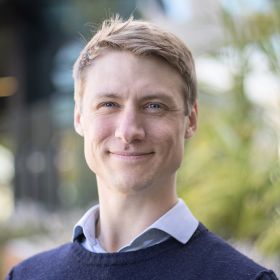
Dr James Brady
Name:
Dr James Brady
Job Title:
Post Doctoral Research Fellow
Place of work / study:
University of Tasmania
Area of Research:
I work across a broad range of areas relating to brain health, including psychological and biological stress (hair-based glucocorticoids/endocannabinoids), blood-based biomarkers, social isolation, physical activity, nutrition, and genetics. I am currently working on projects focused on Alzheimer’s disease and related dementias, and amyotrophic lateral sclerosis (ALS; or Lou Gehrig’s disease).
How is your work funded:
My research is funded by the Australian Disaster Resilience Fund (Dr Duncan Sinclair), the National Health and Medical Research Council (Dr William Reay), and supported by the Dementia Australia Research Foundation.
Tell us a little about yourself:
I started my academic journey with an interest in psychology and mental health, which quickly shifted to a greater and greater interest in cognitive and behavioral neuroscience. I studied neural correlates of attention (EEG/ERPs) for my honors project, which led to the dementia field – an area where cognitive and behavior intersected. In 2024, I completed my PhD with the Wicking Dementia Research and Education Centre in Hobart. My studies focused on the contributions of anxiety, stress, and glucocorticoids (cortisol, cortisone) to dementia risk and risk behavior. My work is increasingly based on navigating large, complexly mixed datasets, to answer questions related to the prevention, or slowing, of neurodegenerative conditions and associated psychiatric symptoms. I am passionate about science outreach and apply knowledge from my experience as a print and digital journalist to engage in public speaking opportunities, and to mentor and train other up-and-coming researchers across all fields of science.
Tell us a fun fact about yourself:
Before I began my career in journalism, I was touring as a guitarist in a heavy metal band. I have a growing collection of quite large cacti, enjoy competing in trail-based ultramarathon events, and presented a TEDx talk on stress in 2023!
Why did you choose to work in dementia:
I have a deep interest in complex systems and brain health. The dementia field offers a beautiful synergy between these, with outcomes that are (hopefully) beneficial for vulnerable members of society.
What single piece of of advice would you give to an early career researcher?
Knowledge is power – stay hungry, keep reading new (and old) research with a view to connect the dots between them.
What book are you reading right now? Would you recommend it?
I’ve just started reading Hallucinations by Oliver Sacks – it’s a bit early to recommend it, but so far it seems interesting!
Favourite film of all time?
I love Stanley Kubrick movies, especially The Shining and Eyes Wide Shut. As many times as I’ve watched them before, there are somehow still new things to notice with each re-visit.
Favourite ways to unplug and unwind?
I like getting into nature, it lets me slow down and reconnect with my thoughts. The further out of mobile phone reception, the better.
 Dr Emma Law
 Alzheimer's Association

 Dr Becky Carlyle