Print This Post
Welcome to the sixth season of the Dementia Researcher X ISTAART PIA Relay Podcast. This series features interviews with ISTAART PIA committee members talking about their research, the research landscape of their fields, and the work of the ISTAART Professional Interest Areas (PIA) they represent. As we build up to the Alzheimer’s Association International Conference in Toronto, join us for daily episodes that showcase the remarkable work being done in various research fields.
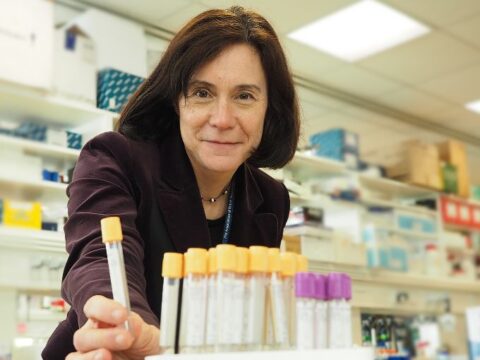
In this Relay Podcast episode, Dr Colin Groot interviews Dr Marta Del Campo, Head Fluid Biomarker Facility; Ramón y Cajal Research fellow at BarcelonaBeta Brain Research Center and chair of the ISTAART Biofluid Based Biomarkers PIA. Together, they talk about recent advances in fluid biomarkers in dementia research, and explore the growing role of plasma biomarkers, integration with clinical trials, challenges with reproducibility and diversity, and the promise of proteomics and AI. Marta also reflects on the work of ISTAART, their plans for AAIC, the value of publishing negative findings, and why ISTAART offers vital opportunities for early career researchers.
The Alzheimer’s Association International Society to Advance Alzheimer’s Research and Treatment (ISTAART) convenes the global Alzheimer’s and dementia science community. Members share knowledge, fuel collaboration and advance research to find more effective ways to detect, treat and prevent Alzheimer’s and other dementias. Professional Interest Areas (PIA) are an assembly of ISTAART members with common subspecialties or interests.
There are currently 30 PIAs covering a wide range of interests and fields, from the PIA to Elevate Early Career Researchers to Biofluid Based Biomarkers and everything in between.
Voice Over:
Welcome to season six of the Dementia Researcher ISTAART Relay Podcast. In this special series, we've invited members of ISTAART's professional interest areas to interview each other in a unique Relay format. One guest becomes the next's host, and the conversation keeps moving episode by episode.
ISTAART, part of the Alzheimer's Association, brings together researchers, clinicians, and professionals dedicated to understanding and treating Alzheimer's disease and other dementias. We'll be releasing one episode each day in the lead-up to this year's Alzheimer's Association International Conference taking place in Toronto and online, showcasing the vital work of ISTAART PIAs and talking hot topics in research. Thank you for listening, and we hope you enjoy the series.
Dr Colin Groot:
I'm Colin Groot, and I'm an assistant professor at the Alzheimer's Centre in Amsterdam. I'm also the junior trainee in the atypical AD professional interest area of ISTAART. Today, I am delighted to be talking to Marta Del Campo from the Biofluid Based Biomarkers PIA. Hi, Marta. Can I start by asking you to introduce yourself and tell us which PIA you are involved with?
Dr Marta del Campo:
I'm Marta Del Campo. I'm the head of the fluid biomarker facility at Barcelonaβeta Brain Research Centre in sunny and, right now, very hot Spain. And I'm the chair of the Biofluid Based Biomarkers PIA at the ISTAART.
Dr Colin Groot:
Well, to start things off, maybe you can start to quickly tell us a little bit about yourself a little bit more and also a little bit about your research and what brought you into the dementia research sphere.
Dr Marta del Campo:
Actually, I would start for the second question, what brings me into dementia research, and it was basically, I think, I've always been fascinated by how the brain works because it makes what we are. And especially memories, it makes what we are and how we consider life if we like it, if not. This is about our memories. So, I was also very intrigued about the biology behind.
I'm a biologist so I was very intrigued about the mechanisms and pathways that leads to lose our memories. And that's why I think little by little did I enter into the field of dementia, and I'm a biologist by background, and I'm really working to the Biofluid Based Biomarker field because that actually now we started with CSF that really reflects those pathological changes that the brain undergoes. And now, of course, with the huge developments, we are also moving into plasma, of course. So really interested of what the field is bringing us.
Dr Colin Groot:
And it also ties nicely into my next question. So, you mentioned the plasma-based biomarkers that are really becoming, are taking the field by storm, let's say. But what are the hot topics other than plasma biomarkers in general within the field of biofluid markers that are really going to be hot in the coming months and maybe will play a big role at AIC?
Dr Marta del Campo:
Is there any big topic other than plasma biomarkers? That's the question.
Dr Colin Groot:
I've seen some other posters.
Dr Marta del Campo:
No. Just kidding. Yeah. Just kidding. No. I think that there are too many hot topics. One is plasma biomarkers, of course, and the other is that we have now approvals of therapies, a biological therapies to counteract AD.
So, we really need to understand, I think there's been a paradigm shift in the field of Alzheimer's because we need another way to study this disorder rather than observational studies. We have another field that is intervention studies.
So, biomarkers are going to play a crucial role in this and to see how these different drugs work, what mechanisms are affected, which ones know. So, I think this is going to bring a new era. We need to still work on plasma biomarkers. It seems that it's a little bit tedious, but we really need to work, and we are going to see a lot of this in AIC, I think, how we implement this in clinical settings.
Are we ready for that? How this is going to change the patient journey, especially, whether it's useful, finally useful or not. And then from a more translational research perspective, I think that we are living in an era also, we experienced a lot of huge technological developments. And that means that for example, we can measure now with several different types of protein errors, thousands of proteins in one drop of blood or CSF.
That means that we can include now proteins within the omics field, and we can integrate this different knowledge with very well phenotype data sets. And I think that will consider in that proteins are, of course, I'm biassed because I work in proteins and biofluids and everything, that's considered that proteins bring the function of the different systems, of the cellular models as one plays a major role into the functionality. I think this time of omics combination especially I'm thinking about [inaudible 00:05:25], protein and genetic information, this integration will provide huge insights into the pathophysiology of Alzheimer's disease and other neurodegenerative dementia, which we should not forget also because it's not everything Alzheimer's. There are many other things there that we need to understand in order also to understand Alzheimer's.
Dr Colin Groot:
Yeah. I definitely agree. And also following up on that. So, you mentioned like Alzheimer's disease. Most of the biomarkers that are available now clinically are focused on amyloid and tau. There have been some developments in the field of α-Synuclein and TDP-43 proteinopathy. Can you tell us a little bit more about those other types of proteinopathy other than what's associated to Alzheimer's disease?
Dr Marta del Campo:
Yeah. Definitely. I think there has been huge step regarding the alpha-synuclein. It's very important because it characterises dementia with Lewy bodies, for example. And this, of course, plays a role in Parkinson's disease. And we see that the seed amplification assays are novel technologies are really hitting. But to be honest, it is more than the paper set, and it seems that they're not so easily reproducible. So, we need to still see how despite when they work, they work really well.
We need to see how they bring it into the clinical practise because I think it's not going to be that easy. That means that there is a lot of space for doing more research. We need more markers. There are upcoming proteomics studies both in DLB and FTD, which are revealing very, very, very interesting markers, and we need to follow up on those on what do they reflect.
Regarding TDP-43, we don't even have these technologies that we use for alpha-Synuclein. So, we really need biomarkers, and I think that's a very hot topic. Field also, frontotemporal lower degeneration is extremely complex, and we need biomarkers for that. And there are very interesting proteomics studies upcoming, some from our team and collaborators. So, I don't want to do advertisement, but the truth is that we do.
Dr Colin Groot:
Yeah. Well, there's no reason to be modest if you're producing nice results. So, stepping a little bit back, also what you talked about. So, the integration into the clinic, but also into maybe clinical trials with these disease-modifying treatments that are available for Alzheimer's disease. As a neuroimager to a biofluid researcher, what do you think is the relative role of neuroimaging and biofluid analysis in clinical trials and also clinical implementation of disease-modifying treatments?
Dr Marta del Campo:
I also thought about, of course, I'm biassed. And I said like, "Well, now, we are going to get the place of imaging," and they are nothing to do. Well, lot farther than that, I completely.... Then I was thinking, I was like, "That's not true." Biomarkers just give us the big picture.
But the imaging, I think, is very important also. And we have to work together to get which area, and which places are these changes occurring. And I think that's very relevant to understand also what's going on and which things needs to be done still. I think we need more work together actually working together into the specifics of different tracers and how this change these different fluid biomarkers.
And I think, to be more specific, one of the next steps, this collaboration that maybe we can start through the ISTAART PIA actually is to understand the role of GFAP as a fluid biomarker. And I think here looking into the imaging tools, maybe, we can get more important insights about this marker.
Dr Colin Groot:
So, it's more about collaboration and less about competition.
Dr Marta del Campo:
Exactly. Exactly.
Dr Colin Groot:
I agree with you wholeheartedly. So, moving on to a little bit more about the PIA itself, so you are the chair of the Biofluid Based Biomarkers PIA. Can you tell a little bit more about how the committee is organised and what's it made up of, and what your yearly activities are around the PIA?
Dr Marta del Campo:
So, we have different chairs or sub-chairs that's programmes chairs and community chairs, which also gets in charge of all these sharing information with the social media and so on. And they have executive committee members.
And the nice thing is that together, we spam the whole different profiles and different career stages. So, it's a very rich community for discussion and for doing new ideas. I don't know what your experience is, Colin. But I think it probably goes with all the PIAs.
Dr Colin Groot:
The same. Yeah.
Dr Marta del Campo:
And when I joined, I actually joined as a junior executive committee member. I was not expecting much of it, to be honest. And I was really greatly surprised because it's a place for networking and to see what other things and for scientific discussions itself. And it seems sometimes you may feel like, okay, another meeting of one hour. What I'm going to do.
But to be honest, I see that there are a lot of activities that we do there, and I think that this is general to all the PIAs again. But we do a lot of activities in terms of webinars, in terms of preparation of hours of making the year-end review, which I think is super important for the field to have these kind of setups.
And they are very, very well done. And we have also actually publications going through cross-collaboration. That's what I was saying like, "Colin, maybe we should initiate something with neuroimaging regarding this work," because we have cross-collaboration, for example, with the Down syndrome PIA and this led to a paper with FTDP, and that led to also a paper of how the biomarkers impact for FTD.
Now, there is a very active working group trying to work in the analysis of how to implement the different biomarkers in clinical settings. What is the challenge, how can we tackle this challenge? So, it's very active, and it's a great opportunity to interact with other researchers that you often don't interact.
Dr Colin Groot:
So, I was going to ask, so I'm from the atypical Alzheimer's disease PIA you are from the Biofluid Based PIA. So, I was wondering about, can you tell us a little bit about if there are specific biofluid signatures of atypical AD where you obviously know neuroimaging signatures and clinical profiles? Is there a role for biofluids and the differentiation between atypical variants of Alzheimer's disease?
Dr Marta del Campo:
It's funny that you asked me this question because the other day in the meeting of this PIA, there was a working group evaluating the biomarkers for atypical and typical Alzheimer's disease. And the fact is that so far, the preliminary investigations that they did is that there was not much difference between another. But they just check for some markers.
Actually, what we thought is, "Okay. Let's talk together. Let's sit down and talk together and see which other markers can be of interest," because maybe we can find something. Obviously, maybe, it's not beta or it's not the amyloid beta or things like that, but there might be other markers that actually are worth implementing. So, if we have the data here, let's do that analysis and maybe take an outcome out of it. I don't know, a paper or a review, even if it's negative. So, we should make-
Dr Colin Groot:
Certainly.
Dr Marta del Campo:
... this open to everyone.
Dr Colin Groot:
Yeah, I agree. I think there's not a lot... At least not published, so on the atypical variants and biofluids. It's also thinkable that there's a negative result there. But like you said, it's incredibly important to assess it just to have this knowledge available.
We had a debate going at the Controversies in Neurology Conference in Prague this year about including atypical Alzheimer's disease cases into clinical trials. And especially for those trials where biofluid is an endpoint or a secondary endpoint, it would be really important to know whether there are actually differences between the two.
Dr Marta del Campo:
And actually, here with this postcard, I would like to highlight the importance of negative findings that sometimes it's like, "Oh, it's negative." And you put there into the closet, and it's very relevant to really publish negative funding, and we have to find a solution to do so because we need to know what doesn't work also in order to prevent people doing exactly the same thing or move the field forward.
Dr Colin Groot:
I certainly agree. So, there should be a negative finding journal where everybody-
Dr Marta del Campo:
Maybe we should build it.
Dr Colin Groot:
Yeah, we can organise it maybe. This is our first collaboration between the peers. No. I certainly agree. I think there's a whole lot of money and energy being lost in projects that are already known to be negative but were not published.
So, taking a step back and looking at the PIA a little bit again, so we obviously have AIC coming up in Toronto this year in July. Hope to see you there, by the way. So, what are the PIA-organised activities that you have planned for AIC specifically? And maybe also worth noting on which day for anybody who is in Toronto who might want to attend.
Dr Marta del Campo:
Unfortunately, I won't be able to attend this year to the AIC because of baby caring duties. It's a little bit far away, but I will be following it online, of course. From the PIA, we have a very exciting programme, I think. I'm very busy as always.
There is this workshop in the PIA days just before the conference, and there is this fluid biomarker workshop about the basics of fluid biomarkers. But we discuss a lot of things. It's very engaging with very good speakers, high top speakers. We speak about classical biomarkers both in CSF and plasma, but we discuss also emerging biomarkers in other non-AD dementias as we said that this is very important. Regulatory guidelines, how to develop biomarkers also how important it is, which are the things that you need to do, what are the things that you need to check in order to make them valid. And regulatory things, how the biomarkers look like within the clinical trials space.
So, I recommend everyone to join. It's a very, very good workshop. I'm not sure which day it is, but it's within the days before the AIC starts. And then we have a PIA Day also. We are participating in the PIA Day in that we have organised a session with very renowned panellists. And the idea is to promote a discussion of where we are and where do we want to go in the field of biofluid-based biomarkers.
So, it's really a forum to discuss what is out there and what needs to be done, and what the people thinks, what are the doubts and try to work together towards that. I'm not sure if it depends whether the person go, but there will be a year-end review award-
Dr Colin Groot:
Oh, good.
Dr Marta del Campo:
... a publication award, and we will hand in if the person is there during the PIA Day also. So, stay tuned about the winner. And another activity, and this is to promote especially to post-docs and early career researcher and PhD students, think that there are awards for poster presentations. And so, your posters will be evaluated during the AAIC.
And yeah, it's difficult competition. I already took a look, some pre-selections and everything. And then there will be discussions on site. And be there because it's very stimulating, and there might be an award waiting for you.
Dr Colin Groot:
So that's really focused on early career researchers.
Dr Marta del Campo:
Yeah. What are your plans for the Atypical PIA?
Dr Colin Groot:
We have a very similar plan. So, we have poster competition that plans specifically focused on early career researchers, future research session, a PIA Day, also workshop groups, also a general discussion on the role of atypical Alzheimer's disease in disease-modifying treatment trials.
So, I think both of our topics are really moving in the same direction, probably also with the same goals. And it's very nice to hear also that the Biofluid Based PIA is also giving a podium to early career researchers who might otherwise be a little bit hesitant about becoming involved. But with this kind of competitions and also these open work groups where probably everybody can join.
Dr Marta del Campo:
Yeah.
Dr Colin Groot:
I think that's a great initiative to get those early career researchers, give them a springboard towards being a later career researcher.
Dr Marta del Campo:
We need them. We need fresh thinking. I'm biassed, obviously. So, I need someone that is not biassed.
Dr Colin Groot:
And also in the same vein, your PIA executive committee is focused on biofluid analysis. But what kind of backgrounds are in your executive committee? So, are you all really in the biofluid sphere? Are there neuropathologists or neuropsychologists? And what do you think might be very relevant to your PIA to have more of a pathological perspective or clinical perspective?
Dr Marta del Campo:
Yeah. I think it is very nice because we have a whole spectrum of profiles. We have biologists. We have clinicians. And we have people that have worked a lot within the industry also. So, we have a very mixed profile.
Now that you mentioned, it was very nice to have neuropathologists to see how this work with the latest pathologists, how co-pathologists impact different fluid biomarkers. So, I think it could be great if some neuropathologists would like to join the PIA. Yeah. But there is also a PIA related to those. It's about the statistics. I think when we are entering now, especially in the omics era, how to deal with this analysis, what are the best analysis now if we have to account for different multiple comorbidities, would be nice to how to get this statistical power.
But again, there is a specialised PIA for that, so maybe a little different or maybe we can create another workshop of how to do these things, working group. I think that it's very important that the different PIAs get different profiles. That, definitely,
Dr Colin Groot:
I definitely agree. There are a lot of PIAs out there. So, it's also logical that there's some specialisation going on within the different groups. But I think most of the areas of research and also the type of research like statistician, like you said, clinical research is very important to incorporate also in order to have a holistic view of your topic.
Also, along those same lines, so you mentioned statistics, omics data is infamously complicated. What is the role of AI or, let's say, machine learning in having the integration of all that omics data into something that's interpretable for someone, for instance, in the clinic?
Dr Marta del Campo:
I think that's the next step up. There are many studies now working with this [inaudible 00:21:49] proposals working on how we are going to benefit from AI. I think it's under development. But probably, it will come. I really envision that it will be a platform or some kind of algorithm that can integrate not only fluid biomarkers but also the imaging data, all the different cognitive tests and all kind of different factors that may influence the phenotype. We can speak even about environmental factors, all these kind of things that to some extent influence a little bit the risk of developing Alzheimer's disease.
I think this AI can really make this integration into an algorithm that makes later on interpretable to the clinician and say, "Okay. Still, I think it's important to have the clinical symptoms out there and-
Dr Colin Groot:
Certainly.
Dr Marta del Campo:
... by person." But I think it will, in time, probably get to make the things easier to really work towards personalised medicine because, probably, we'll get different subtypes of Alzheimer's disease which may require different types of therapeutics. And I think that that's where we can benefit a lot.
Dr Colin Groot:
Yeah, I agree, again because, sometimes, it seems like for instance, neuroimagers and biofluids researchers speaking a little bit the different languages and certainly the genomics side of things. Other than, obviously, collaborating and trying to get familiarised with all the types of different data, we also use AI to have that do that for us. And especially in the clinic where an integration of all of these types of different info is not feasible to be done by a clinician can definitely be aided by something that's automated or computerised.
Dr Marta del Campo:
The challenge of AI, I think, is validation. How are we going to validate in a way that we are sure that is telling us the true thing. This likely requires a lot of a very important thing that usually we don't think about that, this really requires a lot of samples. Let's say, we need huge samples, which means a lot of phenotyping that we need to create these cohorts, and we need support to create these cohorts, and we can collaborate across cohorts. In Alzheimer's field, that might be a little bit easier, but in fields like frontotemporal dementia, or dementia with Lewy bodies, that's extremely difficult, and we really need to collaborate across centres, and there needs to be funding in order to create these cohorts.
Dr Colin Groot:
Yeah. That is really important also for the generalizability of results. So, on single site results, obviously, very needed and necessary, but have a really holistic view of what is happening within different patient groups and also the relationship of, for instance, demographics, but also other clinical characteristics.
You need large samples and need them from different sites. So, the collaboration is, obviously, key.
Dr Marta del Campo:
It's a must.
Dr Colin Groot:
Yeah. It's a must. Exactly. So, if I just can ask you one final question. So, along those same lines, so there has been a lot of attention recently on the differences in, for instance, Alzheimer's disease pathology between sexes and also between ethnoracial backgrounds. What is the current status of biofluid research on those markers? Are there any hot topics with regards to, for instance, those factors relating to differences in biofluid levels?
Dr Marta del Campo:
Well, for the classical markers, it seems there are some difference, but we also have to think, "Okay, if there is a difference, is this meaningful in a way that it's really influenced the final outcome," that is, do you have a beta pathology or not?
And I think most biomarkers show that there is some difference, but it doesn't really change the major outcome. Let's say, it doesn't have a big impact. And that said, we need more studies in order to really check that in large cohort and in different cohort. Also, in terms of ethnicity, we really need to see how, in the same way we are trying to validate it in real world scenario, that means real world scenario.
We need to diversity and include these cases, which is not easy because there is a lot of... We have to be careful about that also. There are a lot of socio-demographic characteristics that influence also depending on the region where you are allocating this or collecting these samples.
So, what is influencing the biomarker status, the socioeconomic status or the ethnicity and everything, so we have to be careful also in order to avoid stigmatisation and something that we need to think about. But definitely, we need to do it. And that's something that we are doing at Barcelona with [inaudible 00:26:48] is doing a special study focused on trying to see how it influences the biomarker status.
And I'm aware that there are many other researchers trying to do [inaudible 00:27:00] demo, which is an executive committee also, and then BBPI is working on that and many other researchers. So, we need also to move in that direction too.
Dr Colin Groot:
Very important research, I think. And also, what I find interesting, but I do not encounter as a neuroimaging. Obviously, we have protocol differences, but I always find interesting also the handling of the biofluid samples themselves, how that can also influence eventual results.
So, I was always not very aware of that until these publications came out, like processing times, freezing, temperatures, and stuff. I was like, "Oh, this all has a major influence." So, it's an extra complication that you in the biofluid sphere encounter.
Dr Marta del Campo:
Yeah. We are lucky in a way that there was a lot of work done previously in the field of CSF biomarkers in relation to pre-analytical factors. So basically, we could test it. And that's something that the GBSC which is a global standardisation consortium, which is led, I think, by Henry Zetterberg, Kaj Blennow, and Charlotte Teunissen among other people. They are really working on this and standardising these factors and plasma biomarkers.
And the good thing is that since we learn a lot from the CSF field, we have applied all that knowledge into the plasma field. So, it has been much, much quicker because we look for the problems rather than the problems came to us. We look whether those problems were there, and I think it's moving very, very fast. So, it is a problem that we are solving it quickly. The take home message here is that use the learnings for your future-
Dr Colin Groot:
Yeah. Exactly. Yeah.
Dr Marta del Campo:
... because it can save you a lot of time.
Dr Colin Groot:
So, science, it shouldn't be simple, right?
Dr Marta del Campo:
Right.
Dr Colin Groot:
But it's good that you are aware of the problems already, and you can try to see whether the CSF results also translate to plasma. So, you're basically getting a head start there, which is not saying that it's going to be easy but easier.
Dr Marta del Campo:
We like when it's not easy actually.
Dr Colin Groot:
Of course, we like a challenge.
Dr Marta del Campo:
Yeah.
Dr Colin Groot:
Well, Marta, thank you very much for all the information you gave us. I think it was a very nice overview of what your PIA is doing, but also what is happening in the biofluid field of research. With that, I would like to thank you very much. And it's time to end today's podcast.
But before we go, I do have a final question. What advice do you have for someone who is learning about ISTAART and how has it helped you being involved in ISTAART in the biofluid field?
Dr Marta del Campo:
Yeah. I think that you should join ISTAART, and it seems marketing. But as I said before, it's a huge opportunity for networking with different people of different profiles and to bring your ideas up into action. They will support you. So don't hesitate to join.
Dr Colin Groot:
I agree. That's also why I joined up. And that was really the final question. And I would like to thank you again, Marta, for taking the time to join us today. And thank you all for listening to this podcast. You can find profiles on myself and my brilliant guest, Marta, and information on how to become involved in ISTAART like we have done in the past on the website at dementiaresearch.nihr.ac.uk and also at www.alz.org/istaart.
There's a link in the show notes. I'm Colin Groot, and you've been listening to the Relay Podcast from Dementia Researcher and the Alzheimer's Association. Hit subscribe on YouTube or in your favourite podcast app to ensure you don't miss an episode.
Dr Marta del Campo:
Thank you very much, Colin.
Dr Colin Groot:
Yeah. Thank you, Marta.
Voice Over:
The Dementia Researcher Podcast was brought to you by University College London with generous funding from the UK National Institute for Health Research, Alzheimer's Research UK, Alzheimer's Society, Alzheimer's Association, and Race Against Dementia. Please subscribe, leave us a review, and register on our website for full access to all our great resources, dementiaresearcher.nihr.ac.uk.
If you would like to share your own experiences or discuss your research in a blog or on a podcast, drop us a line to dementiaresearcher@ucl.ac.uk
Did you know... you can find our podcast in your favourite podcast app on mobile devices, and our narrated blogs are also available as a podcast.
The views and opinions expressed by the host and guests in this podcast represent those of the guests and do not necessarily reflect those of UCL or Dementia Researcher

 Dementia Researcher
 Alzheimer's Association
 Dr Emma Law