Research News

Research from the ARUK Thames Valley Conference

Reading Time: 2 minutes
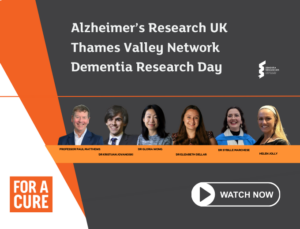
On 17th June 2026, Dementia Researcher joined the Alzheimer’s Research UK Thames Valley Research Network for its annual research conference, a day bringing together researchers from across the region to share new findings, ideas and approaches in dementia and neurodegeneration research.
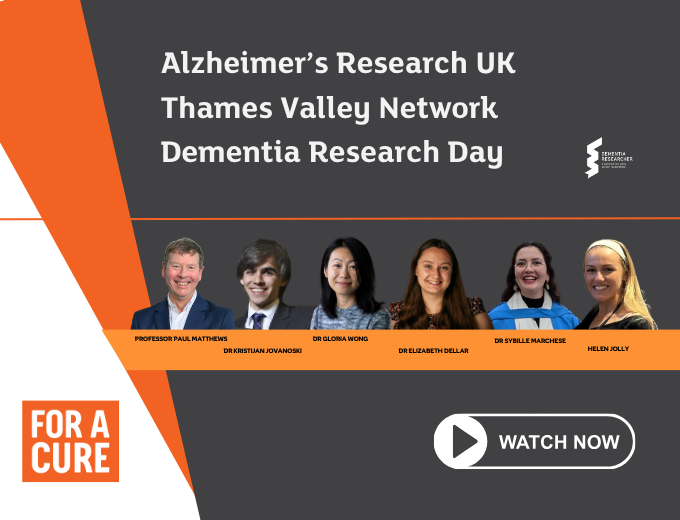
We were pleased to record a selection of talks from the event, including the main plenary lecture and five flash talks. These recordings do not represent the full conference programme, but they offer a valuable snapshot of the breadth of science presented on the day, from fundamental disease mechanisms through to applied interventions, biomarker discovery and new approaches to diagnosis.

The playlist includes Professor Paul Matthews, Director of the Rosalind Franklin Institute, discussing mechanisms of inflammatory neurodegeneration in Alzheimer’s disease. His plenary lecture explores the role of microglia, astrocytes, genetic risk, systemic inflammation and emerging tools that may help researchers better understand and target early disease processes.

The five flash talks showcase a wide range of current research. Helen Jolly presents work on subcellular proteomics and protein mislocalisation in Alzheimer’s disease, exploring not only how much of a protein is present, but where it is located within cells. Dr Sybille Marchese discusses new iPSC derived neuron models designed to study 4R tau splicing and tau aggregation. Dr Elizabeth Dellar shares research on cerebrospinal fluid extracellular vesicle proteomics in amyotrophic lateral sclerosis, and how this may help identify prognostic protein signatures. Dr Gloria Wong presents preliminary findings on brain changes in people with dementia receiving Cognitive Stimulation Therapy. Dr Kristijan Jovanoski examines whether machine learning and neuropathology can help distinguish dementia with Lewy bodies from Parkinson’s disease dementia.

Together, the talks reflect the range of methods now being used to understand neurodegenerative disease, including imaging, proteomics, stem cell models, post mortem tissue analysis, psychosocial intervention research and data driven approaches. They also show how dementia research increasingly crosses traditional boundaries, connecting molecular biology, clinical science, psychology, technology and care.

We are grateful to the Alzheimer’s Research UK Thames Valley Research Network for inviting Dementia Researcher along, and to all of the speakers who allowed us to share their work more widely.

Dementia Researcher also recorded a podcast at the conference, featuring further discussion from the event and the people behind the research. That episode will be released in the next few weeks.


Recorded at the Alzheimer’s Research UK Thames Valley Research Conference on 17th June 2026, this lecture features Professor Paul Matthews, Director of the Rosalind Franklin Institute, speaking on mechanisms of inflammatory neurodegeneration in Alzheimer’s disease.

Professor Matthews explores how inflammation in the brain may contribute to the development and progression of Alzheimer’s disease. He focuses in particular on the roles of microglia and astrocytes, two types of glial cells that help regulate immune activity, synaptic function, tissue repair, and communication between the brain and the body.

The talk considers why these cells are so important in Alzheimer’s research, how genetic risk factors may influence inflammatory responses, and how new tools in imaging, molecular analysis, and physical sciences could help researchers better understand disease mechanisms and identify future therapeutic targets.

Professor Matthews also discusses the work of the Rosalind Franklin Institute, a national research institute based at the Harwell Science and Innovation Campus, and its role in bringing physical sciences, advanced imaging, mass spectrometry, chemistry, and AI supported methods into life science discovery.

The session is introduced by Professor Clare Mackay from the University of Oxford, who reflects on Professor Matthews’ long standing contribution to imaging, neuroscience, dementia research, and scientific leadership.

Speaker notes

Professor Paul Matthews is Director of the Rosalind Franklin Institute. He is also the Edmond J. and Lily Safra Professor of Translational Neuroscience and Therapeutics at Imperial College London and a Group Leader in the UK Dementia Research Institute at Imperial. His research focuses on neuroinflammatory mechanisms in neurodegeneration, with particular attention to Alzheimer’s disease and multiple sclerosis. His work uses approaches including MRI, PET imaging, epidemiology and molecular omics to understand disease mechanisms and support translational research.

Professor Clare Mackay is Professor of Neuroscience at the University of Oxford, Associate Director and Head of Translation at the Oxford Centre for Human Brain Activity, and Co Theme Lead for Dementia at the NIHR Oxford Health Biomedical Research Centre. Her research uses neuroimaging to understand risk for psychiatric and neurodegenerative disease, and she is also the academic lead for the Oxford Brain Health Clinic.
--

Find out more:

Alzheimer's Research UK Network - https://www.alzheimersresearchuk.org/research/for-researchers/network-centres
Professor Paul Matthews - https://www.rfi.ac.uk/our-people/paul-matthews/
--

Dementia Researcher works alongside events organisers to share their work. If you're organising a dementia research event and would like us to record or share your talks, to get them open access and to reach a wider audience, get in touch: https://www.dementiaresearcher.nihr.ac.uk 
--

Follow us on Social Media:
https://www.instagram.com/dementia_researcher/ https://www.facebook.com/Dementia.Researcher/ https://twitter.com/demrescommunity https://www.linkedin.com/company/dementia-researcher https://bsky.app/profile/dementiaresearcher.bsky.social

#dementiaresearch 

Chapters

00:00 Introduction to Paul and his scientific journey
01:04 Paul's transition from academia to industry and leadership roles
02:24 The importance of creativity in scientific research
02:57 Overview of the Rosalind Franklin Institute and its focus on physical sciences in biology
08:24 Mechanisms of neuroinflammation in Alzheimer's disease
09:12 Microglia: the brain's immune cells and their diverse roles
11:39 Microglia activation states and their significance
13:11 The role of astrocytes in brain health and disease
15:24 Microglia-astrocyte interactions in neuroinflammation
20:45 Microglia's central role in Alzheimer's pathology
21:33 Genetic insights into Alzheimer's disease
23:20 Environmental factors and viral associations in neurodegeneration
25:42 Cell signaling pathways in microglial responses
28:58 Gene expression and microglial response to amyloid beta
31:22 Spatial propagation of inflammatory signals in the brain
37:23 Microglia and astrocyte responses in Alzheimer's variants
41:45 Therapeutic implications and future directions in glial research
48:35 Biomarkers and environmental risk factors in neurodegeneration
49:55 Emerging therapeutic strategies targeting glial cells

Recorded at the Alzheimer’s Research UK Thames Valley Research Conference on 17th June 2026, this lecture features Professor Paul Matthews, Director of the Rosalind Franklin Institute, speaking on mechanisms of inflammatory neurodegeneration in Alzheimer’s disease.

Professor Matthews explores how inflammation in the brain may contribute to the development and progression of Alzheimer’s disease. He focuses in particular on the roles of microglia and astrocytes, two types of glial cells that help regulate immune activity, synaptic function, tissue repair, and communication between the brain and the body.

The talk considers why these cells are so important in Alzheimer’s research, how genetic risk factors may influence inflammatory responses, and how new tools in imaging, molecular analysis, and physical sciences could help researchers better understand disease mechanisms and identify future therapeutic targets.

Professor Matthews also discusses the work of the Rosalind Franklin Institute, a national research institute based at the Harwell Science and Innovation Campus, and its role in bringing physical sciences, advanced imaging, mass spectrometry, chemistry, and AI supported methods into life science discovery.

The session is introduced by Professor Clare Mackay from the University of Oxford, who reflects on Professor Matthews’ long standing contribution to imaging, neuroscience, dementia research, and scientific leadership.

Speaker notes

Professor Paul Matthews is Director of the Rosalind Franklin Institute. He is also the Edmond J. and Lily Safra Professor of Translational Neuroscience and Therapeutics at Imperial College London and a Group Leader in the UK Dementia Research Institute at Imperial. His research focuses on neuroinflammatory mechanisms in neurodegeneration, with particular attention to Alzheimer’s disease and multiple sclerosis. His work uses approaches including MRI, PET imaging, epidemiology and molecular omics to understand disease mechanisms and support translational research.

Professor Clare Mackay is Professor of Neuroscience at the University of Oxford, Associate Director and Head of Translation at the Oxford Centre for Human Brain Activity, and Co Theme Lead for Dementia at the NIHR Oxford Health Biomedical Research Centre. Her research uses neuroimaging to understand risk for psychiatric and neurodegenerative disease, and she is also the academic lead for the Oxford Brain Health Clinic.
--

Find out more:

Alzheimer's Research UK Network - https://www.alzheimersresearchuk.org/research/for-researchers/network-centres
Professor Paul Matthews - https://www.rfi.ac.uk/our-people/paul-matthews/
--

Dementia Researcher works alongside events organisers to share their work. If you're organising a dementia research event and would like us to record or share your talks, to get them open access and to reach a wider audience, get in touch: https://www.dementiaresearcher.nihr.ac.uk
--

Follow us on Social Media:
https://www.instagram.com/dementia_researcher/ https://www.facebook.com/Dementia.Researcher/ https://twitter.com/demrescommunity https://www.linkedin.com/company/dementia-researcher https://bsky.app/profile/dementiaresearcher.bsky.social

#dementiaresearch

Chapters

00:00 Introduction to Paul and his scientific journey
01:04 Paul's transition from academia to industry and leadership roles
02:24 The importance of creativity in scientific research
02:57 Overview of the Rosalind Franklin Institute and its focus on physical sciences in biology
08:24 Mechanisms of neuroinflammation in Alzheimer's disease
09:12 Microglia: the brain's immune cells and their diverse roles
11:39 Microglia activation states and their significance
13:11 The role of astrocytes in brain health and disease
15:24 Microglia-astrocyte interactions in neuroinflammation
20:45 Microglia's central role in Alzheimer's pathology
21:33 Genetic insights into Alzheimer's disease
23:20 Environmental factors and viral associations in neurodegeneration
25:42 Cell signaling pathways in microglial responses
28:58 Gene expression and microglial response to amyloid beta
31:22 Spatial propagation of inflammatory signals in the brain
37:23 Microglia and astrocyte responses in Alzheimer's variants
41:45 Therapeutic implications and future directions in glial research
48:35 Biomarkers and environmental risk factors in neurodegeneration
49:55 Emerging therapeutic strategies targeting glial cells

0 0

YouTube Video UExlVUkxR0hCNEV2UkZ0ejNwaUdZazJ6ZTd3cElmU2kwOS41NkI0NEY2RDEwNTU3Q0M2

Mechanisms of inflammatory Neurodegeneration in Alzheimer's disease - Professor Paul Matthews

Recorded at the Alzheimer’s Research UK Thames Valley Research Conference on 17th June 2026, this talk features Helen Jolly from the University of Oxford discussing subcellular proteomics in Alzheimer’s disease.

Rather than only asking whether protein levels go up or down in Alzheimer’s disease, this research asks a different question: where are proteins located inside cells, and does that location change in disease?

Helen explains how subcellular fractionation can be used to separate brain tissue into different cellular compartments, creating a map of protein localisation. Using brain tissue from the ROSMAP cohort, the study compares people with Alzheimer’s disease, control participants, and people with high Alzheimer’s pathology who remained cognitively resilient.

The talk highlights how some proteins appear to shift location within cells in Alzheimer’s disease, even when their overall abundance does not change. These changes may point to disrupted trafficking, synaptic vesicle processes, spliceosome movement, and other mechanisms that could help researchers understand vulnerability and resilience in the Alzheimer’s brain.

Helen also discusses early findings around proteins that may not have been detected in previous whole tissue proteomic studies because their total levels did not change, but their subcellular distribution did. This approach opens up new ways to study disease mechanisms beyond simple changes in protein abundance.

Speaker notes

Helen Jolly is a DPhil researcher at the University of Oxford, based in the Centre for Human Genetics and associated with the Institute for Molecular and Computational Medicine. Her PhD project focuses on modelling protein localisation and interactions at subcellular resolution in brain tissue from individuals with Alzheimer’s disease and cognitive resilience, as well as in iPSC neuronal models of tauopathy. Her work also uses multiomic statistical approaches to investigate mechanisms linked to vulnerability and resilience.

This talk builds on Helen’s work using subcellular proteomics to investigate Alzheimer’s disease and cognitive resilience, including research presented through Oxford’s Genomics Data Forum under the title “Sub cellular proteomics to investigate cognitive resilience in Alzheimer’s disease”.
--

Find out more:

Alzheimer's Research UK Network - https://www.alzheimersresearchuk.org/research/for-researchers/network-centres
Helen Jolly - https://www.chg.ox.ac.uk/people/helen-jolly
--

Dementia Researcher works alongside events organisers to share their work. If you're organising a dementia research event and would like us to record or share your talks, to get them open access and to reach a wider audience, get in touch: https://www.dementiaresearcher.nihr.ac.uk 
--

Follow us on Social Media:
https://www.instagram.com/dementia_researcher/ https://www.facebook.com/Dementia.Researcher/ https://twitter.com/demrescommunity https://www.linkedin.com/company/dementia-researcher https://bsky.app/profile/dementiaresearcher.bsky.social

#dementiaresearch 

Chapters

0:06 Introduces the study question: protein abundance vs. protein distribution in cells
0:36 Explains subcellular localization and the fractionation method
1:03 Shows canonical organelle markers and how the fractions behave
1:32 Applies the method to ROSMAP brain tissue from controls, AD, and resilient individuals
2:02 Introduces protein mislocalization as a disease signal independent of abundance
2:31 Example with APP/amyloid showing abundance and fraction shifts across conditions
2:59 Describes modeling spatial change across seven fractions
3:26 Reports around 220 proteins predicted to mislocalize by disease
3:54 Highlights converging pathways like dynactin, AP3, and spliceosome-related proteins
4:23 Discusses top hit SCAI and plans for tissue- and cell-based validation

Recorded at the Alzheimer’s Research UK Thames Valley Research Conference on 17th June 2026, this talk features Helen Jolly from the University of Oxford discussing subcellular proteomics in Alzheimer’s disease.

Rather than only asking whether protein levels go up or down in Alzheimer’s disease, this research asks a different question: where are proteins located inside cells, and does that location change in disease?

Helen explains how subcellular fractionation can be used to separate brain tissue into different cellular compartments, creating a map of protein localisation. Using brain tissue from the ROSMAP cohort, the study compares people with Alzheimer’s disease, control participants, and people with high Alzheimer’s pathology who remained cognitively resilient.

The talk highlights how some proteins appear to shift location within cells in Alzheimer’s disease, even when their overall abundance does not change. These changes may point to disrupted trafficking, synaptic vesicle processes, spliceosome movement, and other mechanisms that could help researchers understand vulnerability and resilience in the Alzheimer’s brain.

Helen also discusses early findings around proteins that may not have been detected in previous whole tissue proteomic studies because their total levels did not change, but their subcellular distribution did. This approach opens up new ways to study disease mechanisms beyond simple changes in protein abundance.

Speaker notes

Helen Jolly is a DPhil researcher at the University of Oxford, based in the Centre for Human Genetics and associated with the Institute for Molecular and Computational Medicine. Her PhD project focuses on modelling protein localisation and interactions at subcellular resolution in brain tissue from individuals with Alzheimer’s disease and cognitive resilience, as well as in iPSC neuronal models of tauopathy. Her work also uses multiomic statistical approaches to investigate mechanisms linked to vulnerability and resilience.

This talk builds on Helen’s work using subcellular proteomics to investigate Alzheimer’s disease and cognitive resilience, including research presented through Oxford’s Genomics Data Forum under the title “Sub cellular proteomics to investigate cognitive resilience in Alzheimer’s disease”.
--

Find out more:

Alzheimer's Research UK Network - https://www.alzheimersresearchuk.org/research/for-researchers/network-centres
Helen Jolly - https://www.chg.ox.ac.uk/people/helen-jolly
--

Dementia Researcher works alongside events organisers to share their work. If you're organising a dementia research event and would like us to record or share your talks, to get them open access and to reach a wider audience, get in touch: https://www.dementiaresearcher.nihr.ac.uk
--

Follow us on Social Media:
https://www.instagram.com/dementia_researcher/ https://www.facebook.com/Dementia.Researcher/ https://twitter.com/demrescommunity https://www.linkedin.com/company/dementia-researcher https://bsky.app/profile/dementiaresearcher.bsky.social

#dementiaresearch

Chapters

0:06 Introduces the study question: protein abundance vs. protein distribution in cells
0:36 Explains subcellular localization and the fractionation method
1:03 Shows canonical organelle markers and how the fractions behave
1:32 Applies the method to ROSMAP brain tissue from controls, AD, and resilient individuals
2:02 Introduces protein mislocalization as a disease signal independent of abundance
2:31 Example with APP/amyloid showing abundance and fraction shifts across conditions
2:59 Describes modeling spatial change across seven fractions
3:26 Reports around 220 proteins predicted to mislocalize by disease
3:54 Highlights converging pathways like dynactin, AP3, and spliceosome-related proteins
4:23 Discusses top hit SCAI and plans for tissue- and cell-based validation

0 0

YouTube Video UExlVUkxR0hCNEV2UkZ0ejNwaUdZazJ6ZTd3cElmU2kwOS4yODlGNEE0NkRGMEEzMEQy

Subcellular Proteomics in Alzheimer’s Disease - Helen Jolly

Recorded at the Alzheimer’s Research UK Thames Valley Research Conference on 17th June 2026, this talk features Dr Sybille Marchese from the University of Oxford discussing new approaches to modelling tau pathology in human iPSC derived neurons.

Tau is a key protein involved in several neurodegenerative diseases, including Alzheimer’s disease and frontotemporal dementia. In the adult human brain, tau exists in different forms, including 3R and 4R tau. However, modelling tau pathology in the lab has been difficult because iPSC derived neurons typically express mainly 3R tau, making it harder to reproduce the tau biology seen in the adult human brain.

In this presentation, Dr Marchese explains how her team is developing more human relevant, reproducible, and scalable neuronal models for studying tauopathies. Using rational design and splice AI, the team identified non coding intronic mutations that increase 4R tau expression, enabling the creation of cell lines that more closely reflect adult human tau expression patterns.

The talk also describes how these models can be used to generate tau assemblies, including Triton insoluble tau aggregates, and to study whether these assemblies resemble the tau conformations found in human disease. This work could help researchers better understand tau aggregation, test disease mechanisms, and develop more relevant models for future therapeutic research.

Speaker notes

Dr Sybille Marchese is a Postdoctoral Researcher in the Fowler Lab at the University of Oxford’s Centre for Human Genetics, within the Oxford GSK Institute of Molecular and Computational Medicine. Her current work combines spatial proteomics and super resolution imaging to investigate changes in the subcellular localisation of tau following pathological assembly in iPSC models of tauopathy.

Before joining Oxford in 2024, Dr Marchese completed her PhD at the University of St Andrews, where she studied early receptor mediated mechanisms leading to neuronal dysfunction in Alzheimer’s disease. Her background includes synaptic biology, amyloid beta oligomers, neuronal plasticity, advanced imaging, and tau biology.
--

Find out more:

Alzheimer's Research UK Network - https://www.alzheimersresearchuk.org/research/for-researchers/network-centres
Dr Sybille Marchese - https://www.chg.ox.ac.uk/people/sybille-marchese
--

Dementia Researcher works alongside events organisers to share their work. If you're organising a dementia research event and would like us to record or share your talks, to get them open access and to reach a wider audience, get in touch: https://www.dementiaresearcher.nihr.ac.uk 
--

Follow us on Social Media:
https://www.instagram.com/dementia_researcher/ https://www.facebook.com/Dementia.Researcher/ https://twitter.com/demrescommunity https://www.linkedin.com/company/dementia-researcher https://bsky.app/profile/dementiaresearcher.bsky.social

#dementiaresearch 

Chapters

00:00 Introduction to Tau and Its Importance in Neuroscience
02:31 Challenges in Modeling Tau Pathology
04:50 Innovative Approaches to Tau Research

Recorded at the Alzheimer’s Research UK Thames Valley Research Conference on 17th June 2026, this talk features Dr Sybille Marchese from the University of Oxford discussing new approaches to modelling tau pathology in human iPSC derived neurons.

Tau is a key protein involved in several neurodegenerative diseases, including Alzheimer’s disease and frontotemporal dementia. In the adult human brain, tau exists in different forms, including 3R and 4R tau. However, modelling tau pathology in the lab has been difficult because iPSC derived neurons typically express mainly 3R tau, making it harder to reproduce the tau biology seen in the adult human brain.

In this presentation, Dr Marchese explains how her team is developing more human relevant, reproducible, and scalable neuronal models for studying tauopathies. Using rational design and splice AI, the team identified non coding intronic mutations that increase 4R tau expression, enabling the creation of cell lines that more closely reflect adult human tau expression patterns.

The talk also describes how these models can be used to generate tau assemblies, including Triton insoluble tau aggregates, and to study whether these assemblies resemble the tau conformations found in human disease. This work could help researchers better understand tau aggregation, test disease mechanisms, and develop more relevant models for future therapeutic research.

Speaker notes

Dr Sybille Marchese is a Postdoctoral Researcher in the Fowler Lab at the University of Oxford’s Centre for Human Genetics, within the Oxford GSK Institute of Molecular and Computational Medicine. Her current work combines spatial proteomics and super resolution imaging to investigate changes in the subcellular localisation of tau following pathological assembly in iPSC models of tauopathy.

Before joining Oxford in 2024, Dr Marchese completed her PhD at the University of St Andrews, where she studied early receptor mediated mechanisms leading to neuronal dysfunction in Alzheimer’s disease. Her background includes synaptic biology, amyloid beta oligomers, neuronal plasticity, advanced imaging, and tau biology.
--

Find out more:

Alzheimer's Research UK Network - https://www.alzheimersresearchuk.org/research/for-researchers/network-centres
Dr Sybille Marchese - https://www.chg.ox.ac.uk/people/sybille-marchese
--

Dementia Researcher works alongside events organisers to share their work. If you're organising a dementia research event and would like us to record or share your talks, to get them open access and to reach a wider audience, get in touch: https://www.dementiaresearcher.nihr.ac.uk
--

Follow us on Social Media:
https://www.instagram.com/dementia_researcher/ https://www.facebook.com/Dementia.Researcher/ https://twitter.com/demrescommunity https://www.linkedin.com/company/dementia-researcher https://bsky.app/profile/dementiaresearcher.bsky.social

#dementiaresearch

Chapters

00:00 Introduction to Tau and Its Importance in Neuroscience
02:31 Challenges in Modeling Tau Pathology
04:50 Innovative Approaches to Tau Research

0 0

YouTube Video UExlVUkxR0hCNEV2UkZ0ejNwaUdZazJ6ZTd3cElmU2kwOS4wMTcyMDhGQUE4NTIzM0Y5

4R Tau Splicing in iPSC Neurons - Dr Sybille Marchese

Recorded at the Alzheimer’s Research UK Thames Valley Research Conference on 17th June 2026, this talk features Dr Elizabeth Dellar from the University of Oxford presenting research on cerebrospinal fluid extracellular vesicle proteomics in amyotrophic lateral sclerosis, also known as ALS.

ALS is a progressive neurodegenerative disease caused by the loss of motor neurons in the brain and spinal cord. Current ALS biomarkers are largely based on neurofilament proteins, which reflect nerve cell damage. In this talk, Dr Dellar explains why researchers are looking for additional biomarkers that may reveal more about the underlying biological mechanisms driving disease.

The presentation focuses on extracellular vesicles, small membrane bound particles released by cells that carry molecular cargo, including proteins. By capturing extracellular vesicles from cerebrospinal fluid and analysing their protein content using mass spectrometry, the team aims to identify protein signatures that may provide new information about ALS progression, survival, and disease biology.

Dr Dellar describes how this approach can reveal signals that are not easily detected in whole cerebrospinal fluid alone. The work identifies extracellular vesicle enriched protein modules associated with survival and disability progression in ALS, as well as individual proteins with prognostic potential comparable to neurofilament light, one of the best existing ALS biomarkers.

This research suggests that extracellular vesicle proteomics could help enrich biomarker discovery in ALS and other neurodegenerative diseases, offering new ways to study disease mechanisms and support future therapeutic research.

Speaker notes

Dr Elizabeth Dellar is a Postdoctoral Researcher in the Nuffield Department of Clinical Neurosciences at the University of Oxford. Her research focuses on biomarkers for amyotrophic lateral sclerosis and other neurodegenerative diseases, with a particular interest in extracellular vesicles and the use of biofluid based approaches to better understand early disease mechanisms.

Her recent work includes research using data independent acquisition mass spectrometry to profile cerebrospinal fluid in ALS, aiming to identify biomarkers and biological pathways linked to disease processes.
--

Find out more:

Alzheimer's Research UK Network - https://www.alzheimersresearchuk.org/research/for-researchers/network-centres
Dr Elizabeth Dellar - https://www.ndcn.ox.ac.uk/team/elizabeth-dellar
--

Dementia Researcher works alongside events organisers to share their work. If you're organising a dementia research event and would like us to record or share your talks, to get them open access and to reach a wider audience, get in touch: https://www.dementiaresearcher.nihr.ac.uk 
--

Follow us on Social Media:
https://www.instagram.com/dementia_researcher/ https://www.facebook.com/Dementia.Researcher/ https://twitter.com/demrescommunity https://www.linkedin.com/company/dementia-researcher https://bsky.app/profile/dementiaresearcher.bsky.social

#dementiaresearch 

Chapters

00:00 Introduction to ALS and Biomarkers
03:04 Exploring Extracellular Vesicles in ALS Research
04:53 Network Analysis and Clinical Correlations in ALS

Recorded at the Alzheimer’s Research UK Thames Valley Research Conference on 17th June 2026, this talk features Dr Elizabeth Dellar from the University of Oxford presenting research on cerebrospinal fluid extracellular vesicle proteomics in amyotrophic lateral sclerosis, also known as ALS.

ALS is a progressive neurodegenerative disease caused by the loss of motor neurons in the brain and spinal cord. Current ALS biomarkers are largely based on neurofilament proteins, which reflect nerve cell damage. In this talk, Dr Dellar explains why researchers are looking for additional biomarkers that may reveal more about the underlying biological mechanisms driving disease.

The presentation focuses on extracellular vesicles, small membrane bound particles released by cells that carry molecular cargo, including proteins. By capturing extracellular vesicles from cerebrospinal fluid and analysing their protein content using mass spectrometry, the team aims to identify protein signatures that may provide new information about ALS progression, survival, and disease biology.

Dr Dellar describes how this approach can reveal signals that are not easily detected in whole cerebrospinal fluid alone. The work identifies extracellular vesicle enriched protein modules associated with survival and disability progression in ALS, as well as individual proteins with prognostic potential comparable to neurofilament light, one of the best existing ALS biomarkers.

This research suggests that extracellular vesicle proteomics could help enrich biomarker discovery in ALS and other neurodegenerative diseases, offering new ways to study disease mechanisms and support future therapeutic research.

Speaker notes

Dr Elizabeth Dellar is a Postdoctoral Researcher in the Nuffield Department of Clinical Neurosciences at the University of Oxford. Her research focuses on biomarkers for amyotrophic lateral sclerosis and other neurodegenerative diseases, with a particular interest in extracellular vesicles and the use of biofluid based approaches to better understand early disease mechanisms.

Her recent work includes research using data independent acquisition mass spectrometry to profile cerebrospinal fluid in ALS, aiming to identify biomarkers and biological pathways linked to disease processes.
--

Find out more:

Alzheimer's Research UK Network - https://www.alzheimersresearchuk.org/research/for-researchers/network-centres
Dr Elizabeth Dellar - https://www.ndcn.ox.ac.uk/team/elizabeth-dellar
--

Dementia Researcher works alongside events organisers to share their work. If you're organising a dementia research event and would like us to record or share your talks, to get them open access and to reach a wider audience, get in touch: https://www.dementiaresearcher.nihr.ac.uk
--

Follow us on Social Media:
https://www.instagram.com/dementia_researcher/ https://www.facebook.com/Dementia.Researcher/ https://twitter.com/demrescommunity https://www.linkedin.com/company/dementia-researcher https://bsky.app/profile/dementiaresearcher.bsky.social

#dementiaresearch

Chapters

00:00 Introduction to ALS and Biomarkers
03:04 Exploring Extracellular Vesicles in ALS Research
04:53 Network Analysis and Clinical Correlations in ALS

1 0

YouTube Video UExlVUkxR0hCNEV2UkZ0ejNwaUdZazJ6ZTd3cElmU2kwOS41MjE1MkI0OTQ2QzJGNzNG

CSF Extracellular Vesicle Proteomics in ALS - Dr Elizabeth Dellar

Recorded at the Alzheimer’s Research UK Thames Valley Research Conference on 17th June 2026, this talk features Dr Gloria Wong from the University of Reading discussing brain changes in people with dementia receiving Cognitive Stimulation Therapy, also known as CST.

CST is a structured, group based intervention for people with mild to moderate dementia. Rather than using brain stimulation, CST brings people together for activities, games and discussions that are socially engaging and personally meaningful. Evidence from previous studies has shown that CST can provide modest cognitive benefits, alongside benefits for quality of life, and it is recommended by NICE for people with mild to moderate dementia.

In this talk, Dr Wong asks an important question: if CST can support cognition and quality of life, what might be happening in the brain?

She presents preliminary neuroimaging findings from pilot studies exploring whether CST is associated with changes in functional connectivity and brain structure. One study, conducted in Hong Kong, examined changes in networks linked to autobiographical memory, self representation, executive function and language. Early findings suggested increased connectivity in the default mode network after CST, while measures linked to brain reserve and cognitive reserve appeared to predict cognitive benefit.

The talk also discusses pilot work from collaborators in Brazil, using structural MRI to explore cortical thickness changes following CST. These early results raise questions about how social interaction, reduced stress, language use, verbal working memory and neuroplasticity may contribute to the effects of CST.

Dr Wong emphasises that these findings are preliminary, but they point towards important future research on how psychosocial interventions may influence the brain in dementia.

Speaker notes

Dr Gloria Wong is an Associate Professor in the School of Psychology and Clinical Language Sciences at the University of Reading. Her specialist areas include dementia, psychosis, mental health and ageing, with research interests spanning cognitive stimulation, self concept, personhood, language and psychopathology, and early intervention in psychiatry.

She is also connected to the International Cognitive Stimulation Therapy Centre and has worked on CST implementation, training and research, including studies of CST in Hong Kong and international collaborations on the mechanisms and delivery of CST for people with dementia.
--

Find out more:

Alzheimer's Research UK Network - https://www.alzheimersresearchuk.org/research/for-researchers/network-centres
Dr Gloria Wong - https://www.reading.ac.uk/pcls/staff/gloria-wong
--

Dementia Researcher works alongside events organisers to share their work. If you're organising a dementia research event and would like us to record or share your talks, to get them open access and to reach a wider audience, get in touch: https://www.dementiaresearcher.nihr.ac.uk 
--

Follow us on Social Media:
https://www.instagram.com/dementia_researcher/ https://www.facebook.com/Dementia.Researcher/ https://twitter.com/demrescommunity https://www.linkedin.com/company/dementia-researcher https://bsky.app/profile/dementiaresearcher.bsky.social

#dementiaresearch 

Chapters

00:00 Introduction to Cognitive Stimulation Therapy
02:35 Evidence and Benefits of CST
04:34 Preliminary Findings and Future Directions

Recorded at the Alzheimer’s Research UK Thames Valley Research Conference on 17th June 2026, this talk features Dr Gloria Wong from the University of Reading discussing brain changes in people with dementia receiving Cognitive Stimulation Therapy, also known as CST.

CST is a structured, group based intervention for people with mild to moderate dementia. Rather than using brain stimulation, CST brings people together for activities, games and discussions that are socially engaging and personally meaningful. Evidence from previous studies has shown that CST can provide modest cognitive benefits, alongside benefits for quality of life, and it is recommended by NICE for people with mild to moderate dementia.

In this talk, Dr Wong asks an important question: if CST can support cognition and quality of life, what might be happening in the brain?

She presents preliminary neuroimaging findings from pilot studies exploring whether CST is associated with changes in functional connectivity and brain structure. One study, conducted in Hong Kong, examined changes in networks linked to autobiographical memory, self representation, executive function and language. Early findings suggested increased connectivity in the default mode network after CST, while measures linked to brain reserve and cognitive reserve appeared to predict cognitive benefit.

The talk also discusses pilot work from collaborators in Brazil, using structural MRI to explore cortical thickness changes following CST. These early results raise questions about how social interaction, reduced stress, language use, verbal working memory and neuroplasticity may contribute to the effects of CST.

Dr Wong emphasises that these findings are preliminary, but they point towards important future research on how psychosocial interventions may influence the brain in dementia.

Speaker notes

Dr Gloria Wong is an Associate Professor in the School of Psychology and Clinical Language Sciences at the University of Reading. Her specialist areas include dementia, psychosis, mental health and ageing, with research interests spanning cognitive stimulation, self concept, personhood, language and psychopathology, and early intervention in psychiatry.

She is also connected to the International Cognitive Stimulation Therapy Centre and has worked on CST implementation, training and research, including studies of CST in Hong Kong and international collaborations on the mechanisms and delivery of CST for people with dementia.
--

Find out more:

Alzheimer's Research UK Network - https://www.alzheimersresearchuk.org/research/for-researchers/network-centres
Dr Gloria Wong - https://www.reading.ac.uk/pcls/staff/gloria-wong
--

Dementia Researcher works alongside events organisers to share their work. If you're organising a dementia research event and would like us to record or share your talks, to get them open access and to reach a wider audience, get in touch: https://www.dementiaresearcher.nihr.ac.uk
--

Follow us on Social Media:
https://www.instagram.com/dementia_researcher/ https://www.facebook.com/Dementia.Researcher/ https://twitter.com/demrescommunity https://www.linkedin.com/company/dementia-researcher https://bsky.app/profile/dementiaresearcher.bsky.social

#dementiaresearch

Chapters

00:00 Introduction to Cognitive Stimulation Therapy
02:35 Evidence and Benefits of CST
04:34 Preliminary Findings and Future Directions

1 0

YouTube Video UExlVUkxR0hCNEV2UkZ0ejNwaUdZazJ6ZTd3cElmU2kwOS4wOTA3OTZBNzVEMTUzOTMy

Brain Changes in Dementia After Cognitive Stimulation Therapy - Dr Gloria Wong

Recorded at the Alzheimer’s Research UK Thames Valley Research Conference on 17th June 2026, this talk features Dr Kristijan Jovanoski from the University of Oxford presenting research on Lewy body dementias.

Lewy body dementias include dementia with Lewy bodies, often shortened to DLB, and Parkinson’s disease dementia, often shortened to PDD. These conditions share Lewy body pathology, but in clinical practice they are commonly separated using the “one year rule”: if dementia develops before, or within one year of, Parkinsonism, the diagnosis is usually DLB; if dementia develops later, it is usually classed as PDD.

In this talk, Dr Jovanoski asks whether DLB and PDD are truly biologically distinct conditions, or whether they are being separated mainly by the timing of symptoms.

Using 668 post mortem cases from the Oxford Brain Bank and the Parkinson’s UK Brain Bank, the team trained a machine learning model to predict clinical diagnosis from neuropathology. The analysis included healthy controls, Alzheimer’s disease, dementia with Lewy bodies, Parkinson’s disease and Parkinson’s disease dementia.

The findings suggest that DLB is not defined by Lewy body pathology alone. Instead, the model identified Alzheimer’s disease pathology, including tau pathology and neuritic plaques, as important features distinguishing DLB from PDD. This supports the idea that DLB may be better understood as a combination of Lewy body and Alzheimer’s pathology, while PDD more closely resembles Parkinson’s disease.

The talk highlights how data driven approaches could support more biologically informed classification of Lewy body dementias, with the longer term goal of improving diagnosis, treatment selection and care for people affected by these conditions.

Speaker notes

Dr Kristijan Jovanoski is a Postdoctoral Research Scientist at the University of Oxford. He is listed within Oxford’s Nuffield Department of Clinical Neurosciences Translational Neuropathology Group, which studies Parkinson’s disease, Lewy body diseases and related neurodegenerative conditions.

His work brings together neuropathology, neuroscience and data driven methods to better understand the biological features that distinguish overlapping neurodegenerative diseases, including Lewy body dementias.
--

Find out more:

Alzheimer's Research UK Network - https://www.alzheimersresearchuk.org/research/for-researchers/network-centres
Dr Kristijan Jovanoski - https://www.dpag.ox.ac.uk/team/kristijan-jovanoski
--

Dementia Researcher works alongside events organisers to share their work. If you're organising a dementia research event and would like us to record or share your talks, to get them open access and to reach a wider audience, get in touch: https://www.dementiaresearcher.nihr.ac.uk 
--

Follow us on Social Media:
https://www.instagram.com/dementia_researcher/ https://www.facebook.com/Dementia.Researcher/ https://twitter.com/demrescommunity https://www.linkedin.com/company/dementia-researcher https://bsky.app/profile/dementiaresearcher.bsky.social

#dementiaresearch 

Chapters

00:00 Introduction to Lewy body dementia
00:28 What DLB and PDD are, and the one-year rule
01:25 The core question: are they biologically distinct?
01:54 Brain bank study and machine learning approach
02:24 Model performance and what it found
02:53 Why Alzheimer’s co-pathology matters
03:49 What the findings mean for diagnosis and classification
04:17 Conclusion and future direction

Recorded at the Alzheimer’s Research UK Thames Valley Research Conference on 17th June 2026, this talk features Dr Kristijan Jovanoski from the University of Oxford presenting research on Lewy body dementias.

Lewy body dementias include dementia with Lewy bodies, often shortened to DLB, and Parkinson’s disease dementia, often shortened to PDD. These conditions share Lewy body pathology, but in clinical practice they are commonly separated using the “one year rule”: if dementia develops before, or within one year of, Parkinsonism, the diagnosis is usually DLB; if dementia develops later, it is usually classed as PDD.

In this talk, Dr Jovanoski asks whether DLB and PDD are truly biologically distinct conditions, or whether they are being separated mainly by the timing of symptoms.

Using 668 post mortem cases from the Oxford Brain Bank and the Parkinson’s UK Brain Bank, the team trained a machine learning model to predict clinical diagnosis from neuropathology. The analysis included healthy controls, Alzheimer’s disease, dementia with Lewy bodies, Parkinson’s disease and Parkinson’s disease dementia.

The findings suggest that DLB is not defined by Lewy body pathology alone. Instead, the model identified Alzheimer’s disease pathology, including tau pathology and neuritic plaques, as important features distinguishing DLB from PDD. This supports the idea that DLB may be better understood as a combination of Lewy body and Alzheimer’s pathology, while PDD more closely resembles Parkinson’s disease.

The talk highlights how data driven approaches could support more biologically informed classification of Lewy body dementias, with the longer term goal of improving diagnosis, treatment selection and care for people affected by these conditions.

Speaker notes

Dr Kristijan Jovanoski is a Postdoctoral Research Scientist at the University of Oxford. He is listed within Oxford’s Nuffield Department of Clinical Neurosciences Translational Neuropathology Group, which studies Parkinson’s disease, Lewy body diseases and related neurodegenerative conditions.

His work brings together neuropathology, neuroscience and data driven methods to better understand the biological features that distinguish overlapping neurodegenerative diseases, including Lewy body dementias.
--

Find out more:

Alzheimer's Research UK Network - https://www.alzheimersresearchuk.org/research/for-researchers/network-centres
Dr Kristijan Jovanoski - https://www.dpag.ox.ac.uk/team/kristijan-jovanoski
--

Dementia Researcher works alongside events organisers to share their work. If you're organising a dementia research event and would like us to record or share your talks, to get them open access and to reach a wider audience, get in touch: https://www.dementiaresearcher.nihr.ac.uk
--

Follow us on Social Media:
https://www.instagram.com/dementia_researcher/ https://www.facebook.com/Dementia.Researcher/ https://twitter.com/demrescommunity https://www.linkedin.com/company/dementia-researcher https://bsky.app/profile/dementiaresearcher.bsky.social

#dementiaresearch

Chapters

00:00 Introduction to Lewy body dementia
00:28 What DLB and PDD are, and the one-year rule
01:25 The core question: are they biologically distinct?
01:54 Brain bank study and machine learning approach
02:24 Model performance and what it found
02:53 Why Alzheimer’s co-pathology matters
03:49 What the findings mean for diagnosis and classification
04:17 Conclusion and future direction

0 0

YouTube Video UExlVUkxR0hCNEV2UkZ0ejNwaUdZazJ6ZTd3cElmU2kwOS4xMkVGQjNCMUM1N0RFNEUx

Predicting Clinical Diagnosis and Pathology in Lewy Body Dementias - Dr Kristijan Jovanoski
Leave a comment

Your email address will not be published. Required fields are marked *

Translate »