 Print This Post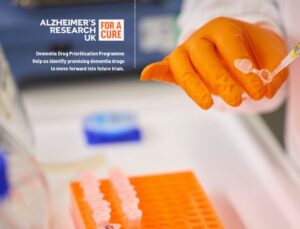
Alzheimer’s Research UK has launched a Dementia Drug Prioritisation Programme, and it’s asking clinicians and researchers across academia and industry to put forward drugs that could move into clinical trials for Alzheimer’s disease and related dementias. If you’ve got a compound you think deserves a proper trial, this is a direct route to getting it in front of the people who decide.
An independent panel – experts in dementia research and clinical development, sitting alongside people affected by dementia – will look at candidates from across the phases of clinical development, from early-phase compounds through to later-stage ones, and prioritise which should go forward.
A route into AD-SMART
Part of the panel’s first meeting will focus on drugs that could join future arms of AD-SMART, the UK-wide Phase 2b/3 multi-arm, multi-stage platform trial for Alzheimer’s disease. The point of a platform trial is that new drugs can be added as arms over time and tested against a shared control group, rather than every candidate needing a trial of its own built from scratch. But each new arm needs a candidate, and that’s where this call comes in.
It’s worth knowing how the trial’s opening arms were picked. Atomoxetine and metformin came out of an earlier open call to the research community, followed by independent ranking by an international expert panel – a process written up in Alzheimer’s & Dementia this year. So a nomination made through this kind of process can end up as a live trial arm.
What ARUK is looking for
Candidate drugs should:
- Target a biological mechanism implicated in the diseases that cause dementia
- Have been evaluated in clinical studies for any indication, whether approved or investigational
- Address an unmet need or overcome the limitations of current approaches
- Have the potential to modify disease progression
- Have evidence of getting into the central nervous system, where that’s relevant to the mechanism of action
The second criterion is the one to read carefully. This isn’t a call for preclinical discoveries – the drug needs to have been in people already, for dementia or for something else entirely. That makes it a natural fit for repurposing ideas, where a drug licensed for another condition acts on a mechanism relevant to neurodegeneration.
Who can put a drug forward?
Clinicians and researchers in both academia and industry. ARUK doesn’t set a seniority threshold, so if you’re an early career researcher sitting on a well-evidenced idea, there’s nothing stopping you making the case. Talk it through with your supervisor or PI first – a nomination backed by a clear rationale and supporting evidence will carry more weight than a name on its own.
How to submit
Complete ARUK’s short survey, or send your candidate drugs and supporting information by email to research@alzheimersresearchuk.org.
No closing date has been published, but nominations feed into the panel’s first meeting, so it makes sense to get yours in sooner rather than later.
Further reading
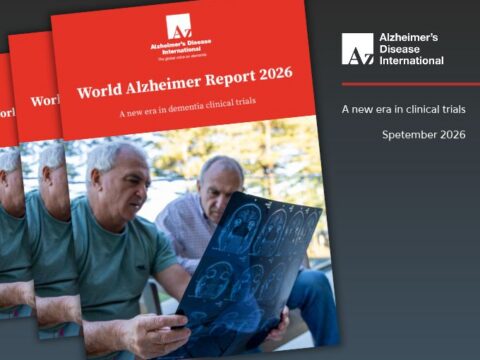
For the bigger picture on where dementia trials stand, our summary of the World Alzheimer Report 2026 findings on clinical trials is a good place to start, and our piece on the 2025 Alzheimer’s drug pipeline shows how many repurposed agents are already in testing.
Frequently asked questions
Does the drug have to be approved already?
No. It can be approved or investigational, but it must have been evaluated in clinical studies for some indication. Drugs that have only been tested in the lab or in animal models don’t meet the criteria.
Is it only for Alzheimer’s disease?
No. The programme covers Alzheimer’s disease and related dementias. Only part of the first meeting is focused on AD-SMART, which is an Alzheimer’s trial.
Is there a deadline?
ARUK hasn’t published one. Because nominations feed into the panel’s first meeting, submitting early is the safer bet.
Complete the Survey
 Adam Smith
 Dr Emma Law