
Dr Anna Volkmer
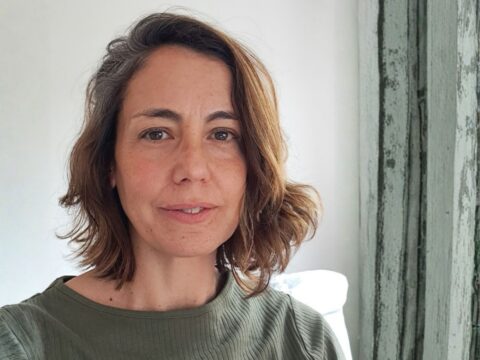
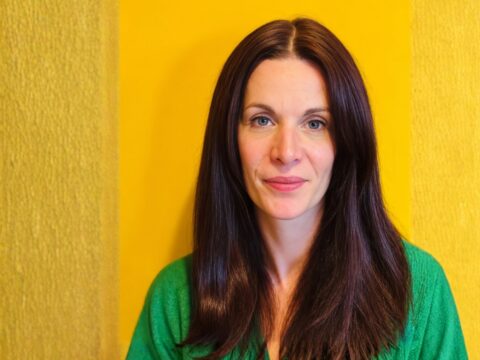
Dr Anna Volkmer spent 13 years working as a speech and language therapist before starting her NIHR funded doctoral research. People with dementia and their families wanted support with conversation, but the evidence available to guide services did not answer the questions she was encountering. Now an Associate Professor at UCL and an honorary consultant speech and language therapist at UCLH, Anna reflects on developing that evidence, finding support and continuing through the uncertainty of research funding.
“Find a corner no one else is in, that makes a difference, and be that person to make that difference.”
The questions came from clinical practice
I qualified as a speech and language therapist at UCL in 2002 and worked in clinical services across the UK and Australia until 2015. During that time, I completed a Masters of Clinical Rehabilitation at Flinders University in Adelaide in 2009. My route into dementia research grew out of the work I was already doing with people and families.
I was working in the NHS and trying to build services for people with dementia. I needed evidence to support that work, but the research I could draw on was largely about practising individual words. People were telling me that they wanted help with conversation. There was a gap between the evidence available and the support they were asking for.
That became my reason for moving towards research. I wanted to help create evidence that was relevant to people’s lives and could influence how services were funded. The questions came from listening to people with dementia and trying to respond to what mattered to them.
The fellowship that made a PhD possible
My NIHR Doctoral Research Fellowship made it possible for me to do a PhD. The funding ran from October 2015 to September 2019, and I was awarded my PhD in Language and Cognition at UCL in 2020. The project focused on Better Conversations with Primary Progressive Aphasia, a conversation training intervention for people with primary progressive aphasia and their communication partners.
Primary progressive aphasia, or PPA, is a form of dementia in which language and communication difficulties are the leading symptoms. Developing support for conversation meant working with people with PPA and their families to understand what they needed from therapy.
Moving from clinical work into doctoral research also meant finding people who could help me take that step. Professor Suzanne Beeke at UCL was a mentor who became my supervisor. She has continued to mentor me, alongside other people, as my career has developed.
Finding support from people who had been there
People who already held NIHR awards were generous with their time and advice. They shared what they had learnt from applying and helped me understand the process. That willingness to pass on experience made a difference to my own applications.
It is one reason I encourage other people to contact researchers who have followed a similar route. You do not have to work everything out on your own. Someone who has been through the process can help you think about what to do next, and their experience can make an unfamiliar opportunity feel more approachable.
Building continuity after doctoral research
From 2019, my work brought together NHS clinical practice, research and teaching. I returned to a speech and language therapy post at UCLH and continued to apply for NIHR support. The NIHR Development and Skills Enhancement Award, which I held from October 2020 to September 2021, was another part of that progression.
The first award had made doctoral research possible. The awards that followed helped me continue in research employment and, eventually, move towards greater permanence. That continuity matters when you are trying to develop a programme of work across several years.
My career has continued to combine clinical, teaching and research responsibilities. I became an honorary consultant speech and language therapist at UCLH in 2023 and an Associate Professor at UCL in 2025. Those different parts of my work remain connected by the same interest in improving support for people with dementia and their families.
What the Advanced Fellowship changed
My NIHR Advanced Fellowship runs from July 2022 to June 2027. It supports 60% of my salary, along with research staffing, training, project costs, equipment and travel. It has also helped me secure a permanent, part time research role at UCL.
Protected research time is a major part of what the fellowship offers. So is the value placed on training, including opportunities for overseas visits. These are practical ways to develop the work and my skills as a researcher.
There is also something less tangible about knowing that NIHR believes in me. The recognition that comes with an award has mattered alongside the funding itself. Salary matching and pension contributions have been valuable too. For someone building a career across clinical and academic work, those details are part of what makes the route possible.
Keeping conversation at the centre of the research
One of my biggest projects has been developing and trialling Better Conversations with Primary Progressive Aphasia and other dementias. We have developed the work with people affected by dementia, with the aim of helping them and their families live better for longer.
People have told us that the intervention helped their conversations and relationships, and some described it as foundational. Hearing that feedback matters to me. The research programme also needs to establish how the intervention can be delivered, how people can access it and how its outcomes should be measured.
The initial pilot study examined whether the approach was acceptable and feasible in NHS settings. Further work has included adapting it for delivery by video and exploring how it might reach people with other rare dementias. The work has led to other projects focused on access to speech and language therapy.
Different funders have supported parts of this wider programme. Alongside my NIHR fellowships, I have received support from UCLH Charity, UCL, the Tavistock Trust for Aphasia, SPIN Dementia Network Plus and a philanthropic donor. Those contributions support related work, but they are separate from my personal NIHR awards.
Rejection and learning to believe I can do it
Rejection has been one of the difficult parts of this route. Even while holding an award, there is a sense of needing to keep applying for more funding or for the next opportunity. Having support in place does not remove that pressure.
Something else that has been harder than I expected is believing that I can do it. Looking at a list of awards and appointments does not tell you much about that part of a career. The uncertainty can still be there while the work is progressing.
Talking to people with lived experience helps keep me motivated. They bring me back to the reason I wanted to do the research in the first place: improving the support available to people with dementia and their families. That remains the thread through the different jobs, projects and applications.
Thinking about the next stage
I am now applying for an NIHR Future Leaders Fellowship. That is an application in progress, with the outcome still to come. It is another reminder that a research career continues to involve looking ahead while doing the work already underway.
My advice is to find an area where your contribution could make a difference and keep working at it. For me, that area has been conversation and access to speech and language therapy for people with dementia. It began with a question from practice and has remained grounded in what people tell us they need.
Three practical steps
- Find people who have gone before you and email them for advice. Their experience can help you understand the route and prepare for the next step.
- Apply for grants. Rejection is difficult, but submitting an application is part of giving your ideas a chance to develop.
- Talk to people with lived experience. Keep their priorities close to the research and let those conversations remind you why the work matters.
What I wish I had known earlier
“Endurance and enthusiasm and curiosity are treasures, more than stats skills.”
About Anna
Dr Anna Volkmer is an Associate Professor in Human Communication Sciences at UCL and an honorary consultant speech and language therapist at UCLH. Her work focuses on developing speech and language interventions with people with dementia and their families, including Better Conversations with Primary Progressive Aphasia.
Useful links
- Anna Volkmer at UCL
- Better Conversations with Primary Progressive Aphasia research
- Browse Dementia Researcher funding calls
- Explore the Dementia Researcher Career Framework