 Print This Post
One of the many transitions on the path to being a dementia leader is taking ownership of your publications. Dr Charlie Arber recently published his first paper as senior author from the work funded by his Alzheimer’s Society’s fellowship where he developed models of astrocytes and microglia from stem cells to investigate inflammation in Alzheimer’s disease.
In this blog, Charlie reflects on the shift in his career after being an Alzheimer’s Society fellow, gives some advice for other early career researchers making this transition, and discusses the next steps for his research.
Developing iPSC models to track Alzheimer’s disease to its earliest point
Everyone is born with the same brain cells that they live with throughout their whole life, but some people will go on to develop Alzheimer’s disease later in their life in their 50s, 60s, and 70s. I’m really interested in understanding what it is that changes in the brain. The cells are the same, so something in the environment must have shifted to start the disease.
We know the immune system has a role to play in the late stages of Alzheimer’s disease, so I wanted to understand if the same was true for its onset. To go back to these earliest time points and understand what goes wrong in Alzheimer’s disease, through my Alzheimer’s Society Fellowship I began developing new iPSC-derived stem cell models. Moving beyond neurons and developing astrocytes and microglial cells to better understand immune responses in early onset familial forms of Alzheimer’s disease.
Answering your own research questions
Through this recent paper, we show mutations in PSEN1 change the cellular response to inflammatory signals. And this was really satisfying to see, as I’m now moving towards being at the point in my research career to be able to answer these questions, and having my own research goals. It’s been fantastic to come up with an idea, test it and have an output like this.
We demonstrated that PSEN1 is upregulated in response to inflammatory stimuli, so it’s part of that inflammatory cytokine cascade response. But also, the mutations in PSEN1 seen in familial Alzheimer’s disease cause the astrocytes to have an altered response and a raised inflammatory profile. This is in addition to the effect of PSEN1 mutations on how amyloid precursor protein and amyloid beta are being processed, which has been shown previously.
It’s like a two-pronged attack and might explain why familial forms of Alzheimer’s disease start younger. Not only is inflammation happening, which we think is true across other types of Alzheimer’s disease as well, but the mutations also impact how amyloid builds up in the brain.
Model development gives you an opportunity for new collaborations
The astrocyte model I’ve developed through my Alzheimer’s Society Fellowship has really benefited my skill set, helping me to research glia and inflammation but also start to combine cell types to build better, more complex models of the brain. I’ve also been sharing them widely since the work started and I’ve found that really fulfilling – helping to support other researchers with these models and opening the possibility for new collaborations, particularly as the cells take six months to make! It’s been really nice to see how varied the research is using these models, and exciting to see the different outcomes and impacts.
Make sure you’re speaking to everyone…
Reassuringly, there weren’t too many differences to being a senior author compared with how I’ve worked on papers before. I’m still doing a lot of the research, writing the papers, securing grant funding so it is quite similar. I did lead on the conversations about author order, I think it’s important to be open and discuss that with everybody. We also added a new author during revisions, which again just required me to make sure people understood the decision. It was more about directing and leading the team, doing the chasing rather than being chased!
… and that you’ve chosen people you want to speak to!
I’ve been very lucky in my research career so far to have amazing mentors. I think when you’re choosing your first or second postdoc it’s important to go for a project that you’re interested in but it’s equally important to be choosing the right team and environment for you. Particularly when you’re looking to move more towards being independent, you’ve got to have the right people around that fully support you.
I have been in Professor Selina Wray’s lab for 12 years, who has been a fantastic mentor, helping me to gain more independence as my career progresses. One question that researchers face at this point in their career is about whether to move institute to establish their career. Because the science is going really well, and I have the support of those around me to help me progress, I am motivated to build my lab at UCL, making the most of these new tools and techniques that I have established with the Alzheimer’s Society.
And celebrate the wins!
I have been waiting for the right moment to open a nice bottle of whiskey my lab group were kind enough to gift as a recent birthday present. My first senior author paper felt like just the right moment. It’s an indication of my progression and a sign of the next step of my career getting closer. It was a great way to celebrate!
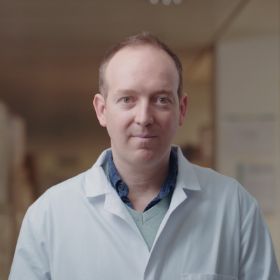
Dr Charlie Arber
Author
Dr Charlie Arber is a Senior Research Fellow at University College London using stem cells to look at how Alzheimer’s disease affects brain cells. Charlie uses skin cells donated by research participants in the lab to make brain cells in a dish containing the same genes as the donor of the skin cells. These brain cells allow Charlie to see some of the early underlying effects of Alzheimer’s disease. He believes that a better understanding of the disease at the basic biological levels is crucial to develop the next generation of drugs.


 Dr Peter Connelly
 Dr Kamar Ameen-Ali
 Dr Clíona Farrell
 Dr Gemma Lace
 Dr Becky Carlyle
 Dr Yvonne Couch
Thanks Charlie, this is an inspiring reflection on taking ownership of your research and growing as a scientist. Your insights on mentorship, collaboration, and celebrating milestones really resonate.