 Print This Post
Last year, something happened to me that I only told a few people about. It was something which I’d heard happen to other people, but it was rare and wasn’t something which had happened to anyone I knew. It’s taken me a while to decide what I want to say about this and consider what I’m even allowed to say. But it’s important that I say something, because what happened to me could happen to you too. So this is my story about how one of my grant applications was stolen.
As researchers, we are constantly producing creative works (data, manuscripts, grants) which constitutes our intellectual property (IP) – a legal term which gives us ownership over what we create. Copyright is a form of IP which gives us legal protection over our work, and we obtain this automatically when our work is created. In some instances, your university or organisation may own IP for certain works, but this depends on what the work is and local policies.
In this blog, I’ll be keeping all names and organisations involved anonymous because the aim is simply to raise awareness about research IP and copyright and hopefully prevent what happened to me from happened to other people. My story starts in a meeting with a colleague where I was told what had happened. Someone had requested access to a grant application they knew I had submitted, and it was subsequently shared by someone who had access to it without my knowledge or permission. My colleague had found out and let me know that they believed content from my grant application had been used in a grant application submitted by the person who requested it. If I hadn’t been told, I would never have known. There was no other way I could have found out unless the grant application happened by chance to be sent to me by the funder for review, or if I happened to be on the funder’s grant review panel.
I remember feeling so shocked and angry. I didn’t know what to do. I had to establish the facts: Who else had been given unauthorised access to my grant application? What, if anything, had been taken from my application and plagiarised? And what personal data of mine had been shared? I had to approach this professionally, without accusation. Sometimes these things can happen, particularly if people are inexperienced in research and lack understanding of copyright and what is considered IP. Regardless, at the least this would be a personal data breach as my personal information had been accessed and shared without my permission. GDPR training is mandatory for most organisations and institutions, so most people would know unauthorised sharing of someone’s personal data could be considered illegal under UK data protection laws. I was expecting a simple explanation, an apology, and a reasonable discussion about how this mistake could be rectified. I didn’t get that. What I did get, was an admission that content from my grant application had been used in their application, but that they thought this was ok because their organisation had an established partnership with my university. Despite me not being involved in this partnership in any way, they believed this allowed them to access my work and copy it without my consent. By this logic, they were also implying they thought they could access and copy the work of literally anyone from my university. At this point, any reasonable person would accept they made an error and seek to put it right. A reasonable person wouldn’t double down and then contact the senior management in my School to intimidate me into keeping quiet. Yet this is what they did.
I decided to take advice from my university’s data protection officer. If this person wasn’t going to be forthcoming about what specific content from my grant application had been taken and what personal data of mine had been shared unauthorised, then I would need to submit a subject access request (SAR) to their organisation, giving them 30 days to respond. I was also advised to speak with my university’s legal team about potential copyright infringement, but they couldn’t do anything until I’d established exactly what had been taken and used from my work.
Meanwhile, this person had involved senior people from both organisations to try and make me go away, as this issue was apparently threatening to destabilise the organisation’s partnership. Note that the potential plagiarism and data breach wasn’t the perceived issue, but rather me trying to obtain information about what had happened. I wasn’t even asking for them to withdraw their grant application, just to provide the information I’d requested. I don’t think they expected me to pursue it and hoped I would just let it go. But I couldn’t, despite this person being more senior than me, and clearly knowing the right people in the right places. There was no ambiguity that what had happened was wrong, and that motivated me to pursue it until my questions were answered.
As people in the circles I work in began to hear about what I was going through, I received messages of support. Many people wanted to tell me that they couldn’t do what I was doing. They would have felt angry but not pursued it because we’re actively discouraged from disrupting the status quo, even when there is a clear injustice.
But people who are willing to exploit others rely on us being silent and it’s what gives them confidence to take what isn’t theirs.
I was asked what it would take for me to withdraw the SAR. Putting questions about what they didn’t want me to see in the SAR aside, I reiterated the information I wanted, in addition to an apology for all the stress which had been caused and had impacted on my work over the four months this was occurring. The 30-day deadline was ticking. I received no apology, and eventually the SAR was sent back to me. I was able to see all the effort this person had gone through to try and cause me reputational damage by positioning me as the perpetrator for pursuing answers, and them as the victim. Those who’ve worked with people who have experienced domestic violence will know the acronym DARVO which describes the tactic of Deny, Attack, Reverse Victim and Offender. I could see how this person was using this tactic to manipulate the situation to deny what they did was wrong, attack me for pursuing answers, and position themselves as a victim to evoke sympathy. I couldn’t believe this was happening to me and I was being characterised by this person to senior people in a way which could impact on my future career.
To end the story, I was apparently issued an organisational apology, but to this day I’ve never seen it and it wouldn’t mean anything anyway.
I’m determined for something positive to come from what happened to me. The problem is researchers rely too heavily on good faith. I was asked by my university’s legal team why we share our grant applications and unpublished manuscripts with exclusive data with collaborators when they’re being prepared, and external organisations and researchers when they’re being reviewed. It would be unheard of in other sectors due to risk of copyright infringement, so why weren’t we asking for non-disclosure agreements (NDAs) to legally bind people into keeping work confidential? But in academia, no one would want to work with you if you did this, because it would create too many barriers and it would contradict the big push for the open science agenda. There’s also a mutual trust – you wouldn’t want it to happen to you, so why would you do it to someone else?
My advice to other researchers would be to make sure you know your legal rights, know your university’s or organisation’s policies on IP and copyright, and know who to contact if you need further advice. Be careful with who you share your work with and explicitly state that the work must not be shared onwards without your permission. This doesn’t necessarily stop them from doing it but could be important later down the line when needing to provide evidence that confidentiality wasn’t implicit.
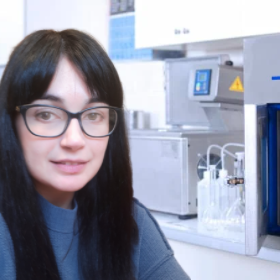
Dr Kamar Ameen-Ali
Author
Dr Kamar Ameen-Ali is a Lecturer in Biomedical Science at Teesside University & Affiliate Researcher at Glasgow University. In addition to teaching, Kamar is exploring how neuroinflammation following traumatic brain injury contributes to the progression of neurodegenerative diseases that lead to dementia. Having first pursued a career as an NHS Psychologist, Kamar went back to University in Durham to look at rodent behavioural tasks to completed her PhD, and then worked as a regional Programme Manager for NC3Rs.
 Beccy Owen
 Bernie McInally
 Dr Chloe Fawns-Ritchie
 Dr Yvonne Couch
 Dr Clíona Farrell
 Dementia Researcher
 Rahul Sidhu
 Dr Emma Law
 Dr Ajantha Abey