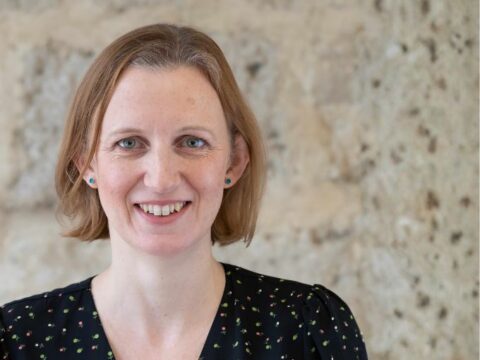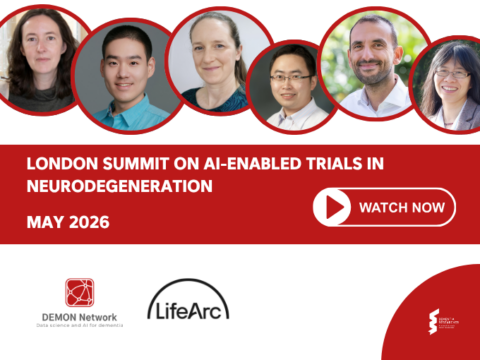
This talk by Dr Sophie Farrow was recorded on st April 2026 by the DEMON Network Biomarkers Working Group.
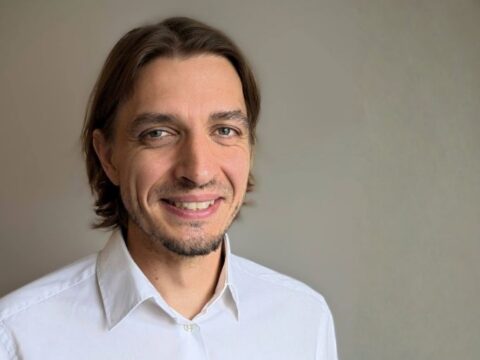
Dr Sophie Farrow is a Parkinson’s UK Senior Fellow at the Oxford Parkinson’s Disease Centre (OPDC), within the Department of Physiology, Anatomy & Genetics at the University of Oxford. Her work focuses on sporadic Parkinson’s, the common form with no single known cause, using genetics to understand what drives the wide variation seen from one person to the next.
In this session, hosted by Dr Laura Winchester for the DEMON Network Biomarkers Working Group, Sophie sets out a chromatin-based framework for prioritising drug targets in Parkinson’s. She explains why genetic signals from genome-wide association studies are so hard to translate into biology: most sit in non-coding regions, the nearest gene is often not the one that matters, and the effects shift from one cell type to another.
To get around this, Sophie uses chromatin conformation data to capture the physical 3D contacts between variants and genes as the genome folds, rather than assuming the closest gene is responsible. She has built cell-type-specific maps in stem-cell-derived dopamine neurons and microglia from OPDC patient lines, then layered on expression data to find which links are likely to be functional.
A central finding is that the same genetic risk points to different biology depending on the cell type, with pathways tied to neuronal connectivity in dopamine neurons and to vesicle trafficking and immune processing in microglia. The longer aim is molecular stratification: grouping people by the mechanisms driving their disease, rather than the shared end point of dopamine neuron loss, so treatment can begin earlier and trials can be better targeted.
Sophie is open about where the work still stands, the limits of stem cell models, and the analysis still to come. The talk gives a clear view of how chromatin biology and functional genomics can move the field from a list of genetic signals towards cell-specific mechanisms, and from there towards earlier, more targeted treatment.
Find out more about Sophie and her work:
https://www.dpag.ox.ac.uk/team/sophie-farrow
Find out more about the DEMON Network and how you can get involved in their work:
https://demondementia.com/
 Dementia Researcher