 Print This Post
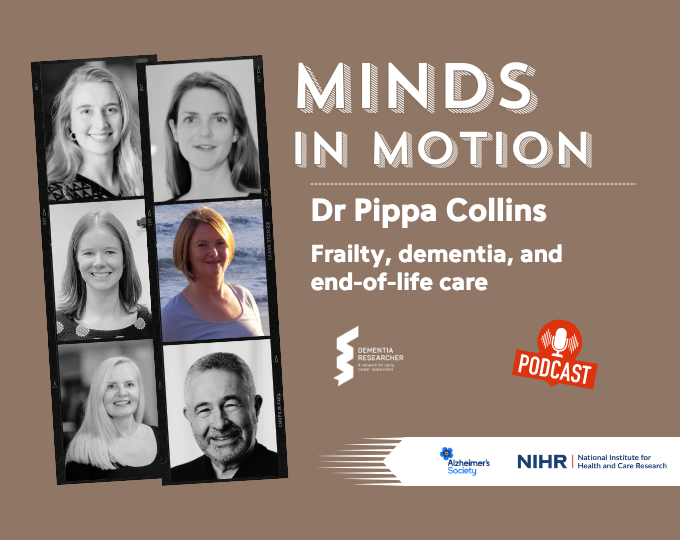
Most people with dementia live, and many die, at home. The person who knows them best in those final months is often not a clinician but a home care worker coming through the door several times a day, doing some of the hardest work in the dementia pathway with little training and almost no research behind them. This episode asks what good home care actually looks like, why it is so hard to deliver, and what one study is doing about it.
Host Dr Alice Carstairs is joined by the PALLDEM Homecare team from the Cicely Saunders Institute at King's College London: Dr Lesley Williamson, who co-leads the study; research assistant Annika Dhawan, who runs the engagement work; and Dr Clare Ellis-Smith, who developed the IPOS Dem outcome measure. They are joined by lived experience expert Alan Richardson, who cared for his mother for 15 years, and Tony O'Flaherty, director at Home Instead Wandsworth, Lambeth and Dulwich.
Together they cover what IPOS Dem is, why home care gets so little attention, what it really takes to get a tool used on the ground, and why recognition for this workforce is overdue.
Key topics:
- Role of home care workers in dementia support
- Implementation of iPOSDEM in home care settings
- Challenges and solutions in home care for dementia
- Research and innovation in community dementia care
Narrator:
The Dementia Researcher podcast, talking careers and research, sharing conference highlights, and so much more.
Dr Alice Carstairs:
Hello, and welcome to the Dementia Researcher podcast.
Today, we're talking about the role of home care workers in supporting people with dementia at home, particularly as needs become more complex towards the end of life. This episode is brought to you by Famileo. For families living with dementia, staying connected with their loved one can become more difficult over time. Famileo helps families stay close by automatically turning photos and messages into a personalised printed magazine, delivered straight to their loved ones' homes monthly. It's a simple way to spark memories, create conversation, and remind them they're loved. More than a quarter of a million families are already using Famileo to stay close.
And listeners of Dementia Researcher can get their first month free with the code DR26 at famileo.com,
Hello, I'm Dr Alice Carstairs. I'm part of the research communications team at Alzheimer's Society, and we focus on the full spectrum of dementia research, including dementia care and applied research. So, this is a topic close to home for me. Most people with dementia in this country live at home, and many will die at home. Beyond family members and close friends, the person who knows them best in their final months is often not the clinician. It's a home care worker, who comes through the front door several times a day. Today, we're asking what good home care looks like in that context, why it's so hard to deliver, and what one research team is doing about it.
I'm joined by a panel of five who bring together research leadership, fieldwork, tool development, the operational reality of running a home care service, and the lived experience perspective. First, we have Dr Lesley Williamson, who co leads the PALLDEM Homecare Study at the Cicely Saunders Institute at King's College London, which has been funded by Alzheimer's Society and Marie Curie as part of a joint funding call. We're also joined by Annika Dhawan, who is a research assistant on the study and the one engaging directly with home care workers and lived experts as part of that work. Next, Dr Clare Ellis Smith, also from King's, who led the development of IPOS Dem, the outcome measure that PALLDEM Homecare is implementing.
And we'll explain what that means properly in a moment. Then Alan Richardson, who's worked with the team as a lived expert, bringing the perspective of people affected by dementia into the design of the study. And finally, Tony O'Flaherty, director at Home Instead, Wandsworth, Lambeth and Dulwich, and a collaborator on the study, who brings the view from inside a home care service. Thank you all for joining me. Hello, Lesley, Annika, Clare, Alan and Tony.
Panel:
Hello.
Panel:
Hi there.
Dr Alice Carstairs:
So, to start us off, could I ask each of you to introduce yourselves briefly? Lesley, let's start with you.
Dr Lesley Williamson:
Sure, yeah. Thanks, Alice. Hi, everyone. So, as you heard, I'm Dr Lesley Williamson. I'm a postdoctoral researcher at the Cicely Saunders Institute of Palliative Care, Policy and Rehabilitation, which is based at King's.
Dr Alice Carstairs:
And Annika.
Annika Dhawan:
Thanks, Alice. Hi, everyone. I'm Annika, and I work at the Cicely Saunders Institute as the research assistant on the PALLDEM Homecare project.
Dr Alice Carstairs:
Clare.
Clare Ellis Smith:
Hello, everyone. I'm an occupational therapist, and I'm a senior lecturer in palliative care, also at the Cicely Saunders Institute.
Dr Alice Carstairs:
Fab. Alan.
Alan Richardson:
Yeah, hello, everybody. I'm Alan, and I'm a former carer, and I've been involved with patient and public involvement for 17 years.
Dr Alice Carstairs:
And last but not least, Tony.
Tony O'Flaherty:
Hi there, Alice, I'm Tony. I'm the director of Home Instead, which is a care company providing home care to people in South London.
Dr Alice Carstairs:
Fantastic. Thank you all for joining me.
So, before we get into PALLDEM Homecare itself, I want to spend a few minutes on the picture as it stands. Home care is everywhere in the dementia pathway and almost nowhere in the research literature. The people doing the work are doing it under time pressure, on low pay, often with little training in dementia or palliative care. And nonetheless, they're the ones holding much of this together. And I want to understand that gap, but before we talk about how to close it. Lesley, I'd like to start with you. When we talk about people with dementia being supported at home, what role do home care workers actually play, and why has this part of the dementia care system been so under researched?
Dr Lesley Williamson:
Yeah, thanks, Alice. I mean, there are different roles in terms of home care workers. They vary across the world in terms of the roles that they do, but primarily in the UK, home care workers support people to continue living safely in their own homes and as independently as possible, but it also includes supporting people towards the end of life if they're able to stay at home. So that support, it could be with personal care and comfort, it can be practical and emotional support. And I think they also play a key role in social support as well. For some people, it might be the only person that they see in a day or the week, particularly if that person doesn't have family or have people popping around.
But I think home care workers, as well, they could be the first person to identify if there's an issue, if there's any particular concern, if that person might be deteriorating in some way. So, they're the ones who would kind of escalate concern and, in that way, kind of be a link for that person with the wider health and social care system. So, I think, in that sense, home care workers do play a massive role in supporting people, but also kind of supporting the wider health system as well. But as you say, they tend to be a sector that aren't particularly researched in relation, perhaps, to some other areas of social care and particularly in relation to health care. I don't know why exactly.
Like, I don't know, but I'm assuming, and I suspect, there's probably a lot of different factors that are at play. I certainly think there's a lot of stigma surrounding home care and a lot of misunderstanding more generally in the public about that, and potentially some bias towards the workforce. But I think that stigma is probably perpetuated by the fact that people don't tend to have much experience of home care. So, I think probably everybody on the call and everyone who's listening would be able to say that they've got experience of interacting with healthcare at least once in their life.
You know, it's something that they are familiar with that whether it be going to visit the local family doctor or whether it going to the emergency department for whatever reason. So, we've all kind of got a good sense of healthcare. But I think few people can say that they have experience of home care. They may have a relative who's had home care before, but that direct experience, I think, probably is quite minimal. So, I think on that front, it's probably not on people's radar so much. And I think what compounds that is the fact that it happens behind closed doors. You know, home care is obviously in people's homes, it's in that kind of closed environment. So, while all this work is happening, we're not necessarily seeing it.
So, I think there's an issue of visibility there. And I think that might be contributing to why it's not so readily researched as some of the other sectors.
Dr Alice Carstairs:
Yeah, what an important role to be playing in somebody's life. And it sounds really kind of, you know, specific to the person affected by dementia. Are there things that we can be doing to increase the visibility of home care workers?
Dr Lesley Williamson:
Yeah, definitely. I mean, I think just by having this podcast, for example, these kind of activities talking about it, and I think it is about just getting people having that conversation and just starting to kind of just broaden people's awareness and just allow people to see that when they are kind of perhaps researching health and social care across the dementia kind of spectrum then to actually be thinking about home care. Because I think a lot of people are thinking about the hospitals. Obviously, there's a lot of kind of key strong policy agenda and the priorities about reducing secondary care use and have it in the community.
But even when we're thinking about the community, home care doesn't really quite get a mention, or perhaps not a strong mention. So, I think actually bringing it to the forefront of people's minds and actually talking about it more, having these broad discussions, I think, will go some way to kind of increasing that visibility.
Dr Alice Carstairs:
Fantastic. And for, I guess, for people that might not know exactly what home care looks like, I'm going to bring Tony into the conversation, because you will have obviously a lot of experience of describing this and increasing visibility for our listeners. So, bringing this into kind of practise, what does a typical week look like for a home care worker supporting someone with dementia at home?
Tony O'Flaherty:
Hi there, Alice. Yeah, it can vary. So typically, we have the usual sort of task-based activities. So that's providing medication, providing food, drink, and providing personal care. But, you know, people with dementia have quite a wide range of requirements. So, for example, we have a chap who's got dementia, but his carer, he likes travelling and apparently, he's in Vienna with his carer, okay? Because people ultimately want to carry on living the lives they used to live. And that's where the carers come in. Yes, we can do the task-based stuff, which keeps people alive, but what adds value is actually helping people carry on living as they used to live.
And so, if that be going on holiday with them or taking them for a drink in the local cafe or going for a walk in the park or going to the cinema. You know, whatever the person is able to do is what we try to maintain for as long as possible. So, a typical week, as I say, it depends on the client. Sometimes it's going to be very routine. And you'll have clients who've got very used to living a very sort of, you know, dynamic life, the carer's going to have a very dynamic time. We had a carer and the person who was looked after with was an ex-army, very, very fit, and was very bored at home. And the carer's job was to take him around Clapham Common three times a day. And, you know, he wore the carer out and the carer was exhausted.
So, it really does depend on the person you're looking after.
Dr Alice Carstairs:
Fantastic. I sort of asked for a typical week. Sounds like there really isn't a typical week for a home care worker.
Tony O'Flaherty:
No, no.
Dr Alice Carstairs:
How would those visits change? You said you know how important it is to kind of keep sort of the person's life as they would like to be living, but how would that change as someone's dementia progresses?
Tony O'Flaherty:
It changes, because obviously the person's, you know, it is progressive. So clearly, as time goes by, they may be able to do less over a course of months or years, whatever it's going to be. So clearly, it might be very sociable and let's go out and do lots of things, but as time carries on, maybe the person is less able and more housebound, so then becomes more routine. So, it then would be a question of sort of stopping social isolation. Really, just talking to people, watching television with them. For example, we had one of our clients was very much into opera, and he and the carer listened to opera music. He couldn't go out to the opera anymore, but they could talk about it. So that was the value.
Yes, we can provide the companionship and the food and the meds and the personal care. And that's great. As I say, that's baseline. That keeps people where they need to be. But the value comes from, actually, as I say, it's the social side, it's talking to people. 'Cause people may be at home for a long time. They can become socially isolated; they can become lonely. And we always say, you know, to our carers, "If you leave the client with a smile on the face, you've done a good job. And if they're looking forward to seeing you again, that's great." So, you know, that's what good looks like to us.
Dr Alice Carstairs:
That's a wonderful ethos. Alan, I'm going to bring in your perspective here as one of our lived experience experts. We've heard a little bit from Tony about sort of what home care can do well and what that looks like, but could you talk a little bit more about from your experience what good home care would look like, and when it's not done so well, what tends to be missing?
Alan Richardson:
Yeah, thank you very much. Yeah, I mean our experience, my late mother had dementia and have care for her at home for 15 years, right through from start right through to end of life. So, home care became a bit different for us because we hadn't really experienced it, because as a family were caring. And then, must have been about nine years into the journey, my late father passed away. So, there was just me sort of doing the caring, and that's when we got involved with home care that was actually provided through the local authority. That started with companionship, which I mean became very, very important, because that companionship meant that I could have a little bit of a break.
And when I had that break, the care person that came in wanted to know the interests of my late mother, and she loved cats. And on the second visit that that person did, that home care worker, she brought in some books on cats, which she actually got from the library for her. So, when she came in, that new person that was coming in to be part of our life made that an effort. Being something really important for her. And, I mean, it gave me a lot of peace of mind as well. During the journey, and I tend to call it a journey, I mean, a lot of people don't really recognise that dementia is end of life at the start. It's not like other conditions. Because you haven't necessarily got a terminal time or something like that.
And so, when we had a home care package put in when she had a major stroke, that became a whole new experience. And we were assessed; someone came in to do it. I'd like to think I'd found out a bit more about home care as well. I'd like to know what to expect, basically. And I think that's one of the things that I'm so passionate about being involved on this PALLDEM project as well, because palliative and dementia coming together. It's understanding, and a compassion that comes into the home as well. And people have different things, as well, that they're carrying out, as our previous speaker Tony was saying, because we have lots of specialised equipment brought into the home, and we used to have three visits a day, and they were double ups.
So consequently, during that week, seven six was a 42. We had 42 individuals coming in to provide that care. And over the 2.5-year period, we had 85 different carers came in. Once again, projects like this and the way they're understanding what families would like are very good, because I used to explain to my late mother who was coming in so that when they came in, she was partially prepared for it. And I was fortunate enough to meet someone who was a home care researcher back in 2017. And I've been connected ever since.
Dr Alice Carstairs:
No, fantastic. And thank you for sharing some very good examples from your experience there. It is so valuable to be kind of hearing what that experience is like. If you had kind of a message to researchers that are kind of looking into home care workers or home care workers themselves that you wish they understood better, is there something kind of along those lines you'd wish for them to understand?
Alan Richardson:
Yeah, I think, ironically, when I first became involved and getting involved with research as well, I was sat around the table with some early career researchers when I was a guest somewhere. And it really inspired me, the people that were coming in. And I think the fact for it to be person centred, and it would be [indistinct], so it was part of the... It's a person as well as the people that are coming in, and they're your new family. It's like two people, because it's a person that you knew before and it's the person, whoever your relative is, is now the new person, and they are your new family. And when it becomes part of that new family, it can make so much difference with the experience.
Dr Alice Carstairs:
Absolutely. And that sounds like it would be much harder if you have the sheer number of carers that coming in that you did. Thank you. So, as we've heard, we have a workforce doing some of the most important work in the dementia pathway, and often that's invisible, and there's a research base that just hasn't kept up. PALLDEM Homecare is one attempt to address part of that gap.
Lesley, this is your study, so let's start with you again, and then I'll bring in Clare on some more of the specifics about IPOS Dem and Annika on the engagement work. But Lesley, what is PALLDEM Homecare actually trying to do, and how did you come to design it the way that you have?
Dr Lesley Williamson:
Yeah, thanks, Alice. So PALLDEM Homecare is a two-year project and, as you mentioned, it's funded by Marie Curie and the Alzheimer's Society. And with this project, we're aiming to explore, as a proof of concept, the implementation of IPOS Dem in home care. IPOS Dem stands for Integrated Palliative Care Outcome Scale in Dementia. And I'm not going to say too much more about that, because obviously, Clare, you'll be able to speak to this more. But just to say that it facilitates holistic assessment and person-centred care. So, it's been implemented in different settings, but not in home care before. So, we're looking to understand how it could be best implemented in home care.
And the reason for this is because we know from the growing evidence base that home care workers can often feel unprepared and unsupported to provide end of life care for people with dementia. But we also have a growing evidence base looking at people with dementia who stay at home towards the end of life. They can sometimes have a more turbulent time, back and forth into hospital, compared to those who might be in a care home, for example. So, we wanted to see how we could best implement this tool to help with that. So, because we're looking at the implementation, it's obviously an implementation study, and we are very much informed by implementation science.
So, the theory that's kind of underpinning our approach is called the Normalisation Process Theory. And just in essence, that basically looks to explain the work that people do, both individually but also collectively, to try and embed innovations into routine practise, which is obviously what we're trying to do. But we are also using co design principles in the design. Obviously, we don't want to impose our own assumptions and ideas about how home care should implement IPOS Dem. As we've heard from Tony, it varies so much across day to day and for each worker.
But I think we also, just again, drawing on what Alan was saying as well, the importance of involving the home care workers, the home care managers, but also people with lived experience, so people living with dementia and people with experience of supporting loved ones with dementia. We wanted to kind of get people in a room and kind of explore this all together. And I think it's particularly important for studies like this just because we know that, as we've said, you know, home care doesn't typically get a lot of visibility. You know, dementia itself, like the condition, compared to other conditions, doesn't really get as much attention.
So, I think it's really important when we're looking at topics like this, where people can feel unheard, that it's just really important that we listen. And so that's kind of some of the reasons that have influenced how we've gone about designing the project.
Dr Alice Carstairs:
No, fantastic. And can I bring it back just sort of the motivation behind the work? If there's one thing you could achieve coming out of this project, what would you like that to be?
Dr Lesley Williamson:
One thing?
Dr Alice Carstairs:
One thing. I mean, I can expand it to two if you would like, but maybe more than that might be difficult.
Dr Lesley Williamson:
Well, I mean, ultimately, we would like to understand how we can implement IPOS Dem, how we can actually implement a tool that's going to be helpful for home care workers, for home care managers, for the people in receipt of home care, but also family. But I think at very least, what I would love to have achieved is what we were talking about before, is just getting people aware of home care and the role that it's played in the dementia care journey, and just to try and shine a spotlight on that, really, and hopefully maybe mobilise a bit more kind of research, a bit more policy attention, maybe. So yeah, that would be the ultimate goal.
Dr Alice Carstairs:
So, helping to raise that visibility a little bit more as well.
Dr Lesley Williamson:
Absolutely, yeah.
Dr Alice Carstairs:
Brilliant. So, I'm going to move to Clare to ask you a little bit more about IPOS Dem. So, we know the study builds on this tool, but could you tell us a little bit more about what it is and what problem it's been built to solve?
Clare Ellis Smith:
Thanks, Alice. I think it's about 10 years ago now that we did a fairly large review of what was out there to support the workforce, and particularly the care workforce and not the clinical workforce, but the care workforce, to identify and assess symptoms and concerns affecting people with dementia. And there were lots out there, but what was striking was there not really any holistic measure that sought to assess all the symptoms and concerns, or the main symptoms and concerns, that affect individuals with dementia, and one that could be used in routine care. And that's why we developed the IPOS Dem.
And we work quite closely with people with lived experience of dementia and, at the time, care home workers who provided day to day care to individuals to develop the IPOS Dem, to understand what needed to be included, and also how it should be used in care provision. And so subsequently, we've continued to develop the work over the last 10 years, evaluating it in different settings with different practitioners, both in health and social care, not just in the UK, but in a number of countries throughout the world. It's now been translated into six or seven languages. And we're continuing to learn from all these new projects and how it should be used and implemented. So, we've got a lot of learning, and we know a lot of what it does do.
The intention is to support person centred assessments, identifying what's affecting individuals most, identifying what their priorities and needs are to inform care. And we know that the best way it's used is not just to use it, but to work with individuals, so talk to them, chat to them, and complete it with individuals. We also know that the care workforce, those who providing the day-to-day personal care, are often best placed to complete the IPOS Dem, because they see changes and they see the person.
So when providing care, you can quite easily start to see if somebody's uncomfortable or they're in pain, or whether they're starting to have a little bit more problems with mobility and walking around, or they might be more at risk of falls, or whether their mood's starting to dip and they actually just don't seem quite as, they're not enjoying things as much as they used to be. So, we know the care workforce are great, really well placed to do this, but this more formalises their assessment. It provides a way of recording it, documenting it, and then escalating it to perhaps their seniors, to perhaps their managers, and perhaps referring to other services.
So, what care practitioners have really told us over and over again is they feel really empowered by using the IPOS Dem, because it transforms their observations and what they do in routine care into something that they can clearly document and escalate more easily.
Dr Alice Carstairs:
What a wonderful tool and a wonderful project to be working on for 10 years. So, you've talked a little bit about kind of to some of the things that it can do, but I wonder if you could give it some of the advantages of using this over, say, other tools or kind of things that might be out there?
Clare Ellis Smith:
I mean, it's quite difficult. There are other tools, but there's not quite anything that does what the IPOS Dem does. Otherwise, we wouldn't have developed it. So, there are lots of outcome measures of that. I think it's important to note that the IPOS Dem is an outcome measure, not just an assessment tool. And so, it certainly does support assessment, but one of the really valuable things about an outcome measure is that it also documents and measures change.
So, care workers can see if they've changed care because of something that they've done, you know, it might be quite simple in terms of changing the food that people are offered or changing the choice of diets, to having some medication prescribed, to some kind of painkillers prescribed, or something like that. It can measure whether there's been any response to that intervention. But also, because if it's used systematically over time, it can also start to detect deterioration more quickly. So, you can start seeing where people are getting increasing needs that might indicate that something's going on and maybe they need a review. So, it's not just a one-off assessment.
Used routinely, it can be a really valuable tool to support care and understand what's working and when more services might be needed as well.
Dr Alice Carstairs:
Fabulous. And how did you have to go about translating this tool from working with clinicians to working with it in a home care setting and with home care workers?
Clare Ellis Smith:
We haven't done many changes to the tool in terms of from the measurement side's point of view. The content validity to assess symptoms and concerns is there, and we haven't really changed many of the questions over the years we've been working on it. Sometimes we've changed it slightly in terms of making sure it's a little bit more understandable. What's crucial is much more about how it's used, so how it should be implemented into different care settings in different contexts. So, for example, it's all very well doing the IPOS Dem, but how does it fit in with the workflows? Who does it? How often do they do it? In an acute hospital, people might be fluctuating and deteriorating or changing quite quickly. You might need to use it more often.
Whereas in the community settings, people might be quite stable over a long period of time. You don't need to use it that often. So, it's a lot about who does it, how often it's used, and then what happens next. How is it escalated? How does it fit in with routine practise so that it actually streamlines care, and it doesn't add additional work? Because that's the important thing, isn't it? There's not resource for additional work, so it's got to fit in with the existing processes. And then, importantly, certainly as more and more services are using electronic health records, how it integrates with health systems as well.
Dr Alice Carstairs:
Yeah, super important in a place where time pressure and time is so limited that we're not adding things, we're streamlining, as you say.
This seems like a good time to pause for a moment to thank Famileo for supporting this episode. For families living with dementia, regular connections and familiar faces can make a real difference. Famileo turns everyday photos, messages, and family updates into a personalised printed magazine that's delivered directly to their loved one's home monthly. Many families use it to share moments that might otherwise be missed and to help loved ones living with dementia feel connected, included, and remembered. Today, more than a quarter of a million families use Famileo to bring generations closer together. Dementia Researcher listeners can enjoy their first month free using the code DR26 at famileo.com. That's F A M I L E O.com.
Annika, I'm going to come to you now because you're the one in the room most weeks with the people that PALLDEM Homecare is designed for and with. So, how's the team going about that engagement work practically?
Annika Dhawan:
Thanks, Alice. I think a really important part of the study has been trying to make sure the work we are developing is with the people who would actually be using it and would be affected by it, rather than trying to design something in isolation and then expecting it to sort of fit afterwards. And from the beginning, we worked really closely with both a lived expert advisory board as well as a home care managers advisory board to sort of make sure that those voices were shaping the project throughout. And our lived expert advisors include people living with dementia as well as sort of former family caregivers, which was really important in grounding the work in sort of real experience.
Alongside that, we also run workshops with home care workers and managers where we've tried to introduce the IPOS Dem and explored how it could work within home care settings specifically. And a big focus of those sessions was developing resources and getting feedback on things like training and communication, as well as what the implementation would realistically look like in practise. Afterwards, the participants have sort of told us indirectly, fed back into the development of the study and the resources.
So, I think the fact that we have had all those voices of the lived experts and the managers, as well as home care workers involved throughout the process has really reinforced how important it is to develop research along with people who understand the realities of dementia care most closely.
Dr Alice Carstairs:
Yeah, that's so valuable, hearing all of those voices, as you say. I mean, who better to be including in these conversations? For people listening that might be interested in doing something similar, bringing those voices into their research, how did you go about kind of recruiting home care workers and lived experts into the work?
Annika Dhawan:
So, we recruited through a mix of routes, and we worked very closely with many people, including our home care managers advisory board, who were very helpful and they shared the study through their own personal networks. But besides that, we also recruited through other networks such as the Relic Home Care Voices, the Home Care Association, as well as the NIHR, which is the National Institute for Health and Care Research Agile Team, to sort of help reach home care workers directly who would be interested in contributing to this work. And for our lived experts, we invited members of our lived expert advisory board to sort of take part in the workshops and the wider discussion throughout the study.
Dr Alice Carstairs:
Sounds like really using those networks, kind of reaching out to people who might be interested. Do you find you have good pickup? Are people interested and wanting to come and work with you on these things?
Annika Dhawan:
I think we do. I think we had a lot of interest for the workshops till the very last minute. So, I think there's a lot of home care workers after seeing the value that the IPOS Dem could bring to their day-to-day work. So, we've had a lot of interest, and I think moving forward to the implementation trial, we're really sort of excited to open recruitment for that. And sort of that, I think, would just give us a lot more interest in the project.
Dr Alice Carstairs:
And what sort of conversations do you find that you're having with these people in these workshops?
Annika Dhawan:
I think what participants have told us has sort of directly fed back into the studies. For instance, we tend to sort of discuss how the IPOS Dem can be used in their day-to-day practise, as well as the challenges that they see that could sort of come up when using the IPOS Dem in different agencies. And what we've done is we've sort of analysed the anonymised workshop transcripts in detail to make sure that we've captured the full nuance of the conversations. And I think that was really important, because a lot of the discussions were really rich and led particularly around sort of the practical and emotional realities of delivering dementia and end of life care in home care settings.
So, I think being able to identify the concerns and where we can support people, I think those are a couple of the things that we've drawn from these workshops.
[Music]
Dr Alice Carstairs:
So far, we've covered the problem and the shape of the study, and I want to turn now what it's actually been like to do this work. So, studies obviously look very tidy on paper. We all know that they're not really always tidy in practise, and the bits that don't make it into a published paper are kind of often the most useful bits for other researchers to hear. So, Annika, as we've mentioned, you're in the room most week, so I'll start with you. What did you expect kind of going into those workshops, and has any of that expectation shifted?
Annika Dhawan:
I think going into the workshops, I expected that there would be some difference across home care services and agencies, but I probably didn't anticipate how much heterogeneity there is between agencies in terms of their structure, staffing, visit lengths, communication systems, as well as the general support that's available to workers in every agency. So, I think that's been really essential when trying to understand how to implement the IPOS Dem if each agency is very different. That's really highlighted that the implementation can't really be approached as a one size fits all process and that we might need to be a bit more flexible depending on the agency and depending on sort of their structure.
Dr Alice Carstairs:
Sounds like some really good learnings. Are there things that you'd do differently if you were to start again?
Annika Dhawan:
So, we have only started the project in October last year, so we are currently towards the end of Workstream 1, where we've completed the workshops and are in the middle of the analysis process. So, I think it's a bit early for me to fully reflect on what I would do differently at this stage, but I think we're still very much learning throughout the process as this study develops. And I think one thing the workshops has reinforced was the importance of remaining flexible and responsive to the participants, because I think some of the most valuable insights have come from the conversations and issues that we hadn't necessarily anticipated as part of the project.
For instance, we probably didn't anticipate how different each agency might function from one another. Yeah, that would be one of the things.
Dr Alice Carstairs:
That's really good. And, Tony, as somebody working in one of these agencies, one of these home care services, what does it take from your side to be involved in a study like this, and what makes it worth your team's time?
Tony O'Flaherty:
It really is working with the likes of Lesley and Annika, because I've worked with a number of similar sort of academic researchers, and one of the things I was keen was that quite often they can cover the same grounds and end up sort of reinventing the wheel. And from an owner's perspective, I've got 100 carers looking after people with dementia, and they're down to time pressure, and obviously, if I introduce anything into them, it's got to add value to them, okay? Because, you know, people with dementia, they take a lot of time, right? So, their attention's at the first tools. And if I introduce something else like, say, "Can you fill out this form? Their going to say, well, "One, do I understand it? Two, does it do anything for me?
Does it make my job easier or better?" And if it doesn't, then they're not going to engage with it. So, it's good working with the team, because they are obviously clearly the approach has to be such that these things will only work if the senior management will drive the change through. Because, as we said, the carers are the guys who know the client best. They are seeing the changes. And, you know, I, as an owner, and my care team need to know what's going on, and that information needs to be sent up. And if the IPOS Dem captures that, that's great. It also is good for the carer, because it means that they feel like they're adding value to their clients and they're being listened to, and there's recognition, and they feel valued.
Because obviously in the care sector, people think, you know, carers, I think, are much undervalued, and they do a great job. They really make a material difference to people's lives. Not just the client with dementia, but the families. And quite often, we have families coming to the carers and asking for advice. "What do we do next? What's going on?" And the carer can, one, help reassure them and, two, then signpost them to the relevant resources. So, they do play a key role. And obviously sort of sharing that with the team to say, you know, "That's how it works." But it doesn't work the same for all care companies. Home Instead is a care company, so we specialise in dementia, so we put a lot of time and effort into training our carers.
But that isn't the same for all care companies. They may have different objectives, okay? And so there may be carers out there who don't have that sort of resource behind them, and this, IPOS Dem, it's going to be very useful to them, because it says, "I've got something that can help me understand what's going on with my client." And I can take that information and ask, you know, it's the management above me or whoever, "This happened, can I have the resources or the support to help me look after this client better." Anything that helps the client or the person with dementia is a good thing. And also, it helps with governance, you know? So, from the point of view, I think I said, you know, about CQC like things like this.
The local authority who employ a lot of care companies, if they can see and be reassured that the person with dementia is being looked after in this systematic way and the care is being managed and delivered accordingly, that gives a lot of reassurance to everybody involved in the ecosystem of care, and the family, ultimately, and obviously the client.
Dr Alice Carstairs:
Yeah, of course. It sounds like, as you say, that buy in is so important. And reflecting on what Annika was saying about every kind of place is different, needs different things. What sort of things could researchers be bringing to you to kind of make that evidence much clearer? You were saying it's an important decision for you as to what to bring in and what not. What sort of information could researchers bring to you to showcase why you should be working with them over others?
Tony O'Flaherty:
Well, I guess ultimately anything that comes in and says, "Right, Tony, client A has started, is on this journey, and these are the material changes that are happening." And as a response, you need, for example, the client's condition may change. They may have diabetes. They might need oxygen. Now, the carer might know that, but I don't, and the care team needs to know. So, if the IPOS Dem captures that and then the carer can say, "Actually, I need training in diabetes. I need training in oxygen administration." We need to get the multidisciplinary team involved because of the change, that clearly is going to help the client. It certainly helps us, because we know we're looking after the client.
It also means that I know my care team are trained accordingly and are now very best. Because there's nothing worse than knowing I've got 100 care clients out there and carers, but not being quite sure what their medical condition is and what changes are going ahead, and am I looking after them in the best possible way, and have I trained the carers accordingly?
And if there's a tool that says, "By the way, Tony, this is the training that you need because [indistinct] has now developed these conditions," and I can put that in place, clearly from a safety point of view and from a CQC point of view, that is really important, because it shows that I'm being effective and providing leadership, the service is safe because we're capturing the changing dynamic requirements of the client and responding accordingly. And those are the things that are great for the client, but they're also very good for the business, because we're all regulated by the CQC.
They want to make sure that we're doing the best, and this tool enables me to demonstrate, you know, we're following the rules, it is systematic, and it's measurable, okay? And they can then say, "Right, okay, you've got the tick in the box." So from an owner's point of view, or anybody who's running a care business, it provides reassurance that you are doing the right thing, but also, importantly, to the people that we answer to, whether it be the local authority or the CQC, that we can actually evidence that we are doing the very, very best.
Dr Alice Carstairs:
You've mentioned the CQC a couple of times. Would you be able to just expand on that, on what CQC means, for our listeners?
Tony O'Flaherty:
Yeah, the CQC is the Care Quality Commission. So, they come in and they evaluate hospitals, home care companies, anybody who's providing care, what they call a regulated service, the inspectors will come in and check that you are providing care to the required standards. And then they have five metrics, which is: How caring is you? How safe is your service? How effective are you being looking after the clients? Is there leadership? I mean, are your carers being trained? Are you doing the right thing? And ultimately, how safe are you? Because ultimately, if you're looking after somebody's mum and dad, they want peace of mind.
They want to know that Mum and Dad are going to get the very best treatment and they're going to be safe, and they're going to be looked after, and there won't be any safeguarding issues. And Mum, she won't be socially isolated and forgotten, there won't be any form of abuse or negligence. So that's what the CQC is there to do, to make sure that everybody is operating at the same high standards. And if they're not, they can see where you've dropped off and then tell you the measures you need to take to be where you need to be.
Dr Alice Carstairs:
Support you in that measure. No, that's really good. Coming back to you, Alan, we've obviously talked a little bit about how important lived experience is and how valuable kind of those voices are. Could you describe a little bit more about what it's like being part of this study as a lived expert?
Alan Richardson:
Yeah. I was delighted to have the opportunity to be part of it. Yes, there was a gap between the years when I was part of that, when we had the services for my late mother, and then there's a time in between, and then there's the volunteering time. And, in fact, one of the organisations that provided care for us, I actually became a volunteer there. And when they used to recruit staff, they used to like to include someone with experience of the condition that the person they were taking on was going to be supporting. And dementia, I mean, it's quite wide sort of thing. It's talked about a lot more now than it really used to be. I do refer to Journey. I make no hesitation of that. But IPOS Dem and that is like a living diary.
I used to keep calendars with notes on all the condition all the way through. And now I've been able to take through the research. And I think the IPOS Dem, as well. Something like that being available for care workers at the start, or people coming in, it's going to help them. There's no doubt about it. If something like that had been about, I can see that we would have, in the organisation that I was with at the time, we would have given a copy of that to every one of our people and discussed it, because it's there to help them along the way. And home care, I mean, as you can probably tell, it's always been a passion of mine. There's a world called qualms, which is no hesitation about.
I'm sorry I've used that particular word, but when people start talking home care to me, I'm afraid they've got me going for quite a few minutes. And being involved in, as you say, and being able to change things, I think one of the things that was highlighted and came into some of the meetings that we had was that a private care package and a local authority care package can be quite different. And I know people that, like me, had something provided by the local authority. They had their rules. And I know people that have had private care. And when you're talking to them now, you need something that's going to assist both of those avenues as well.
So, it's like a sport quotation, "An equal playing field." So, everybody's on the same playing field. And I think that's one of the things that the IPOS Dem can do. Thinking about patient public involvement as well, it's felt like being part of a team on this. And I think that's the thing. And having attended meetings online and then in person, it's been like a natural thing to happen, and no discussion has been limited. We've been able to discuss things. And it helps to bring from the lived experience person, we need to understand their point of view, the same as they're understanding our point of view. And I think there was about seven or eight people in one of the meetings.
And what was the thing was they were all from different parts, whether they were large organisations, smaller organisations, and that's one of the other things. And if something like the IPOS Dem, as well, is it made for people that are starting to enter health and social care, the new breed that are coming in? This could happen, where people could be given something like this at the start is going to help them on their journey as well.
Dr Alice Carstairs:
Fantastic. And what a fantastic sort of thing for the team to be hearing about, you know, kind of the value of, what kind of bits, contributions, and listening in there.
I want to move now from process to substance. We know the study's still live, so we're definitely not asking anybody to kind of pre-empt the formal write up later on. But there are observations emerging that the researchers, clinicians, and home care leads listening today want to hear now. So, Lesley, I'm going to come back to you again. What are the things that you're finding do you think the audience should know now?
Dr Lesley Williamson:
Yeah, thanks, Alice. I mean, there are lots of things coming through. I think Annika was saying that there's been so much rich discussion. And, Alan, as you were saying, we've had so many different people around the table, hearing all different perspectives. So, there's been so much that's come through from some of the preliminary analyses that we've been doing. I think one of the things for me, which feels really important, particularly for this type of work, is really just the degree of isolation that some home care workers can be experiencing in day-to-day work. And I don't just mean the physical isolation of being in somebody's home and they're not having that close, direct contact with health and social care colleagues.
But I think also more the kind of sociocultural isolation, just with regards to the general misunderstanding around home care and some of the preconceptions around it. But I also think, as well, just some of the emotional isolation that we've heard from people just through the nature of doing the job. And of course, as Annika said, it is so variable, and people will obviously have different experiences. But this was something that really kind of has come through that I've been kind of reflecting on quite a bit. And I think because of the isolation, what is, I think, going to be helpful is more of a collective effort to try and support and implement IPOS Dem. So, we must be speaking to recipients of home care.
We must be speaking to family members who've been involved in that care, as well as the home care workers and the managers. But I think we also need to go a bit broader as well, to be focusing on the local health and social care teams, the local social workers and community nursing teams, and general practitioners, or, you know, family doctors. And then even, again, we've heard about the role that the local authority or local government plays in commissioning some of the home care services. So, it's about involving them as well. So, I think because of the isolation that's kind of coming through on multiple layers, it does make me a bit think that we actually need more of a collective and systems approach to targeting this.
And the other thing that's come through that is kind of, again, making me reflect quite a bit is about the language. So, the tool obviously is about palliative care, and we're suggesting adopting a palliative care approach. But I feel maybe that term probably doesn't necessarily always resonate in the home care sector. It's necessarily through a lack of understanding, but I just don't think that term resonates. It isn't particularly meaningful because, obviously, in home care it's not about somebody's prognosis, it's not about labelling their management plan and where they are in that kind of pathway. It's about responding to the person in front of them and their needs. And as Tony was saying early on about providing that value for somebody.
And while IPOS Dem is all about that, that kind of is supporting that, and a systematic way of being able to do that and to, as Clare was saying, to kind of monitor over time to make sure things are tailored to individual needs. I think maybe the language around it is just something that we need to be thinking about. And I think when you are trying to implement tools like this into the home care sector, just thinking about the language, I think it matters, and I think it will help to think about what's going to resonate and what's going to feel like it's going to be valuable for the workforce, and what's going to feel like, perhaps, I doesn't feel very relevant, even though it may be. Yeah, just thinking about that language.
Dr Alice Carstairs:
Fantastic. We're talking about sort of language of the home care worker. Annika, I'm going to bring you in with kind of your working with this on the ground level. Is there anything from the home care worker side specifically you think kind of gets missed in the way that this workforce is usually talked about, thinking about that language?
Annika Dhawan:
Thanks, Alice. I think one of the things that often gets missed is how much complex relational and sort of coordination work home care workers are doing sort of alongside the practical aspects of care. People often talk about home care in terms of tasks, but through the workshops, I think it's become really clear that home care workers are constantly sort of observing changes, it's building relationships with not only the person that they're caring for, but also the family, for supporting the family as well. They're communicating concerns and trying to navigate different parts of the care system around the person that they're caring for.
So, I think that their knowledge of the person can sometimes be underestimated, as Alan, Tony, and Lesley have sort of touched upon, because they're seeing the person regularly within their everyday home environment, and they're often noticing very subtle changes in a person's behaviour, mood, or well being very early on. And quite often then sometimes the only person who are meeting them on sort of that week or that day. So, I think a lot of the discussions really highlighted that home care workers are holding a huge amount of responsibility, particularly with dementia end of life care. And I think that role is far more emotionally demanding and sort of skilled than people might initially realise.
Dr Alice Carstairs:
No, absolutely. I mean, to be going in, as we say, to people's homes, giving them that person centred care, it takes a certain type of person. Tony, I'm going to bring your thoughts in here about, you know, we've talked a lot about the tool and kind of how important it is to get buy in from the owners and the home care workers. But if this tool kind of landed on your desk tomorrow, what do you think companies and individuals would need to be doing to make this work in practise?
Tony O'Flaherty:
I think, first and foremost, it has to be adopted by the management, because without their buy in, it won't happen. So, the value has to be demonstrated to the management team. What's it going to do for them? How is it going to improve care for their clients? How is it going to improve life for the carer? And then, once its value is demonstrated, it then has to be communicated down through the management chain, the carers have to be introduced, they have to be trained. The benefit has to be very obvious to the carer, because at the end of the day, they can do the job at the moment without the tool, right? And then I know some of my carers will say, you know, I've got carers who know when people are at end of life.
They can come to me and say, "I think they've got X number of days left," and they're very precise because they've done it so many times. So, a tool to them, it doesn't add any value, okay? But that's not the same for all carers. And some people don't know that. And if it can be shown that this is going to help you, and develop, because obviously, you know, carers want... There are a lot, in our career, carers. They want to get better. They want to do a better job. They want to know, "I'm here now, what do I need to do?" And quite often people come to me and say, "Yes, I'd like training in end of life, I'd like training in palliative care.
I'm looking after people, and I'd like to make sure I'm doing the best I possibly can." And if there's a tool that says, "By the way, this is what's happening," you can go to your boss or whoever and say, "Right, this is what's happened to my client, and I need X, Y, and Z training, or I need X, Y, and Z resource." Because ultimately, you know, it's a skill that they're developing. It's a transferable skill. And there's a lot of movement in the end of care industry, as you know, but there's also not very much recognition. So, if that tool says, "By the way, I've gone through a process, and I've got training or whatever at the end of it, the IPOS Dem has helped me," then there's value to the carer.
Dr Alice Carstairs:
Yeah, fabulous. So, we've heard a little bit of kind of what it takes from the home care worker side. Clare, I'm going to bring you in and sort of ask you what it takes from the researcher side, kind of thinking about IPOS Dem and PALLDEM Homecare. What does it actually take for researchers developing a research tool? What do they need to be thinking about to actually get these used in healthcare settings?
Clare Ellis Smith:
Just continue learning. Continue learning from the teams who are using it. Continue asking questions and to continue working together. I do co design work that this project is doing. From an IPOS Dem point of view, you know, there are a few things we know have to happen for it to work, but it's not that much. It has to be used regularly. It has to be used systematically. And there has to be some means of actioning what happens next. And we know from the work that we've done, it needs to support work, it needs to fit in with care processes, it needs to streamline and not cause additional burden. We know that leaders need buy in, but actually we know that every level needs buy in as well. And it's really, really interesting.
In different settings, it works quite differently. So sometimes the workforce, the people doing the day-to-day care, are totally bought in, but without leadership support, they can't implement it. So, each setting and context work slightly differently. And our job really is to learn how we can make sure that it works within that system and context to improve everybody's experience. Yeah, so go in with an open mind and ask questions.
Dr Alice Carstairs:
We're always learning as researchers, aren't we? No matter what project we're on, we're always got something to learn. We're almost out of time, but before we wrap up, I do want to give each of you the chance to leave the audience with one thing, something you wish people working in or around this part of the system understood differently. We'll have to keep answers short so that we make sure that we hear from everybody. And I'll come to you in turn. So I'll go to Tony, and then Alan, Annika, Clare, and then, Lesley, you can bring us home. But we'll start off with Tony.
Tony O'Flaherty:
I guess that one thing I'd like to say is that carers have the clients' best interests at heart. They turn up at work to do the very, very best job possible. If things don't go quite right, it is not the carers. Quite often, it is the companies or the structure supporting them. But, you know, carers are there because they're, on the whole, good people who want to do a good job for the people they're looking after.
Dr Alice Carstairs:
Fantastic. Alan.
Alan Richardson:
Yeah, thank you. I'd like to think about using the four initials of IPOS. It's about involvement. It's about pausing to complete. It's about observing what's happening. And it's also about supporting the client so that we all come together as one team. Thank you.
Dr Alice Carstairs:
Amazing using the initials. I really, really like that. Annika.
Annika Dhawan:
I wish I'd said what Alan said, but I think the biggest thing I'd want people to take home is that care workers are carrying such a huge responsibility in dementia and end of life care. And I think sort of just giving them the recognition that reflects the responsibility that we carry.
Dr Alice Carstairs:
Fantastic. Clare.
Clare Ellis Smith:
Hard to beat, all that. [laughs] We don't have much opportunity to get it right. People live with dementia, and we've got to make sure that quality of life is enhanced throughout. And the fact that there are many people living with dementia with distressing unmet need, which causes suffering, is really distressing and wilful. And I think we need to keep apart what this work intends to do, to reduce suffering and improve quality of life.
Dr Alice Carstairs:
And finally, Lesley.
Dr Lesley Williamson:
No pressure. [laughs]
Dr Alice Carstairs:
If there's anything more to say. [laughs]
Dr Lesley Williamson:
I was just going to say, I think it comes back to what we were having, like the earlier discussions about home care being a relatively under researched area. I think we've heard that, you know, home care supports a lot of people with dementia, and in doing so they're kind of supporting the wider system. And while I know that there's some fantastic research being done in home care, I think we can do a lot more to see how we can best support them as well. For us, our experience so far, it has felt like pushing against an open door to some extent. So, I feel like there is a need and there is an appetite within the sector, and we just need to see it, we need to be looking forward to that.
Dr Alice Carstairs:
Amazing. Yeah, it's been fascinating to hear about this sort of underrepresented area within research, but sort of being able to reflect on how important home care workers are, how they are kind of leading the front, really, for person centred care for people affected by dementia. And there's so much more we could be doing to work with this kind of area and how much more we could be doing in this space and research. It's been great to hear about kind of this team's sort of contributions to that through IPOS Dem and PALLDEM Homecare. So, this just leaves me to say thank you so much to Dr Lesley Williamson, Annika Dhawan, Dr Clare Ellis Smith, Alan Richardson, and Tony O'Flaherty for sharing the work and their perspectives today.
Links to the PALLDEM Homecare Study, IPOS Dem, and everything we've talked about today can be found in the show notes. You can find more information and links to resources on our website at dementiaresearcher.nihr.ac.uk. Do also visit our community app, where we continue these conversations, share new events, blogs, and podcasts. I'm Dr Alice Carstairs, and you've been listening to the Dementia Researcher podcast. Goodbye.
Panel:
[In Unison] Bye.
Narrator:
This episode was sponsored by Famileo, the family newspaper loved by grandparents. The Dementia Researcher podcast was brought to you by University College London, with generous funding from the National Institute for Health and Care Research, Alzheimer's Research UK, Alzheimer's Society, Alzheimer's Association, and Race Against Dementia. dementiaresearcher.nihr.ac.uk.

If you would like to join a panel or record a podcast on your own area of research, complete our show form. You can subscribe to our podcasts through your favourite podcast app, just search for 'Dementia Researcher' or follow the links in the footer of this page.
Did you know... all of our blogs are also available as podcasts? Find them here on Apple, and here on Spotify
The views and opinions expressed by the host and guests in this podcast represent those of the guests and do not necessarily reflect those of UCL, Dementia Researcher or its funders. This podcast is sponsored by Famileo. The sponsor had no involvement in the planning, production, editorial decisions, or content of this episode.
Join our Supporter Programme and subscribe to our channel in YouTube or in Apple Podcasts for exclusive access to bonus shows, and to gain early access to our recordings.
Share your thoughts on this topic in the comments below.

 Dementia Researcher