 Print This Post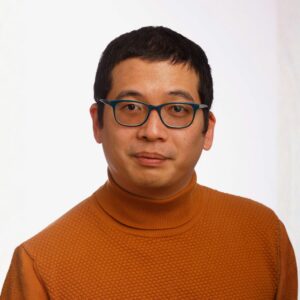
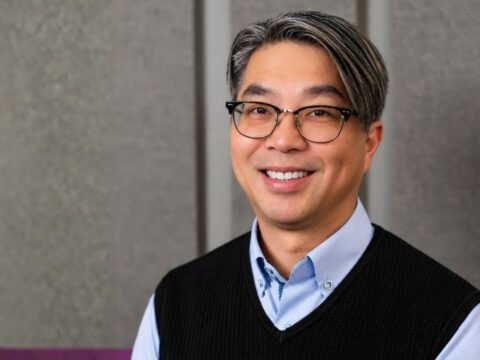
Dr Tharin Phenwan, Lecturer at the University of Dundee. Photo: Kenneth Malcolm UOD / © University of Dundee.
Tharin (Ta-rin) Phenwan is a medical doctor and qualitative researcher whose dementia research connects palliative care and future or advance care planning. Working across the UK and Thailand, he examines how people with dementia can express what matters to them at the right time, and how care systems can respond in ways that are humane, practical and appropriate to their setting.
“We need to slow down, step out and see things systematically.”
Where clinical work met personal experience
Several members of my family have lived with different forms of dementia. As a family medicine and palliative care doctor, I had medical knowledge and the means to help, but I knew that many families did not have the same support. In both Thailand and the UK, I could see gaps affecting people with dementia, their families and the health and care staff supporting them.
One home visit in rural Thailand became a turning point. A man with advanced dementia lived with his daughter in a deprived, flood-prone area. His daughter, who was his family carer, needed to work so the family could eat and, with no adequate support, restrained him to stop him wandering while she was away. Our team discussed clinical treatment, social support and community help, yet none of it felt sufficient. The experience showed me a systemic failure that medicine alone could not resolve.
I wanted to understand what had gone wrong and what sustainable, locally appropriate change might look like. That meant moving beyond immediate clinical action, slowing down and looking at the wider system. Research gave me a way to do that.
An early move into clinical academia
I completed my undergraduate medical degree at Prince of Songkla University in Thailand from 2006 to 2012, followed by a Diploma of the Thai Board of Family Medicine at Mahidol University and palliative medicine training at Khon Kaen University. Walailak University recruited me as a lecturer immediately after medical school. From 2012 to 2019, my role combined clinical work, teaching, research, pastoral support and administration.
Starting as a lecturer so early brought strong feelings of inadequacy. Good mentors helped, and the discomfort pushed me to learn for myself, my students and their future patients. Research infrastructure in Thailand was limited, and protected time for developing ideas or grant applications was not always understood. I learned to prioritise, delegate and make space for work that required concentration.
I became an Assistant Professor at Walailak University in 2019 and held that post until 2021. By then, I knew I wanted research to become a larger part of my career.
A proposed master’s became a PhD
After the rural home visit, I explored postgraduate study at Dundee. Dr Deans Buchanan reviewed my experience and proposal and suggested that the work was already at doctoral level. He referred me to Professor Judith Sixsmith, who became my principal supervisor.
My self-funded PhD at the University of Dundee ran from 2018 to 2023. My project was titled “Exploring the initiation and revision of Advance Care Planning with and for people with dementia in Scotland: a multimethod qualitative study”. During the COVID-19 pandemic, I had to change my data collection from face-to-face to online interviews with people with dementia. The shift was difficult, but it led to several publications and taught me to work with uncertainty, organise complex projects and become more resilient. I also had to learn that research moves differently from clinical medicine: a clinician often needs to decide and act quickly, while research allows more time to question, interpret and reach a considered decision.
My supervisors and my partner, now my husband, helped me through the process. Professor Sixsmith has continued to support me as my line manager and during my early career research development.
Dementia research across Thailand and the UK
In 2021, I became a Lecturer at the University of Dundee while completing my PhD within the same environment. I already understood the people and systems. My role has a 60:40 teaching and research split, giving me around two days each week for research activities such as developing ideas, building partnerships and revising grant applications. The balance changes across the academic year, with quieter periods and intense teaching months.
Working in both countries has shown me different research cultures. In the UK, research assessment places greater emphasis on the quality and impact of outputs, and interdisciplinary work is more established. In Thailand, researchers face weaker infrastructure, pressure to publish frequently and personal publication costs. Concepts used routinely by UK teams, such as equality, diversity and inclusion and interdisciplinary working, may not translate directly into local research systems or be fully understood.
My research focuses on future (advance) care planning with and for people with dementia and palliative care. I want people to be able to express their needs while they can and for those preferences to influence the care they receive. My outputs include qualitative research, publications, public events and writing intended to raise awareness, reduce stigma and address health inequalities.
Funding across different contexts
The funding landscape has become increasingly difficult, particularly for work connecting the UK and Thailand. Reviews can apply expectations developed in the UK without recognising the available clinical workforce, lived-experience organisations or local costs in another country. Shifts in funding priorities can also halt international work after substantial development.
In practice, I have sometimes had to separate the two strands: UK work stays in the UK and Thai work stays in Thailand. That may satisfy funder requirements, but it risks losing opportunities for mutual learning between the Global North and Global South. I value learning in both directions between Thailand and the UK.
Skills, rewards and uncertainty
Time management, decision-making, resilience and approachability have mattered most. A Gantt chart helps me plan, even though it will change. A decision matrix helps me distinguish what only I can do from what can be delegated or left. Grant rejection is common, so I look for what can be reused in another proposal. I also value colleagues who are constructive and pleasant to work with; expertise alone does not make a good partnership.
I am an introvert and prefer depth over breadth in networking. Some of my relationships have lasted more than a decade. I rely on trusted contacts who can connect me with the right person or team when I need expertise beyond my own.
The rewarding part is working with thoughtful, committed people and helping people whose voices are less often heard influence research. The harder parts include repeated funding rejection, increasingly complex student-support needs and institutional uncertainty, which can make longer-term projects difficult to plan.
Three practical lessons
- Protect your research time. Put it in the diary and reduce interruptions so you can concentrate.
- Build relationships slowly and well. A smaller network of trusted collaborators can be more useful than many superficial contacts.
- Know your limitations and know who can help. You do not need to provide every skill within a project yourself.
Further reading
- A relational approach to co-create Advance Care Planning with and for people living with dementia: a narrative study — Tharin Phenwan, Judith Sixsmith, Linda McSwiggan and Deans Buchanan, BMC Palliative Care, 2025.
- Tharin Phenwan on ORCID.
 LSE Impact Blog