
 Print This Post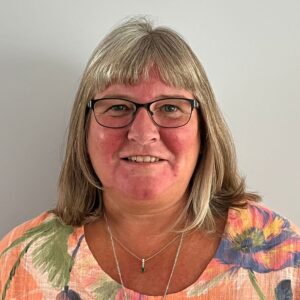
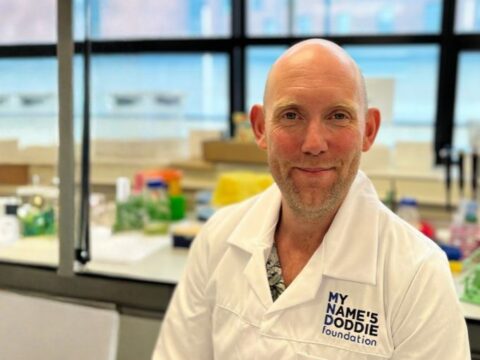
Janine C. Lane, PhD Research Student at Cardiff University. Photograph: Emily Lane.
Janine is a registered nurse and district nurse whose career has moved through hospital and community nursing, dementia practice, clinical leadership, teaching and research. Her PhD examines sustainable training interventions that encourage reflexivity and more affirmative care for older LGBTQ+ people living in long-term residential care, many of whom are affected by cognitive impairment or dementia.
“Believe in yourself and have the confidence to challenge the status quo.”
Dementia care from a community nursing perspective
Research has been part of my nursing career from the beginning, but my interest in dementia became more focused while completing my Primary Care degree. By then, I had been working in community nursing for several years and could see a gap in care after diagnosis. People could leave memory services without building a relationship with the community and district nurses who might later support them towards the end of life.
I began by asking how we could improve generalist nurses’ knowledge and, through that, improve the health and social care journeys of people living with dementia. My clinical background has continued to shape the questions I ask. I want research and training to change what care feels like for the person receiving it.
Building a career in nursing
I trained at Newcastle School of Nursing from 1987 to 1990 and became a Registered General Nurse. I worked at the Freeman Hospital in Newcastle, progressing from Staff Nurse to Junior Sister, before working as a Senior Nurse in a nursing home.
From 2004, I worked in community nursing, first as a Senior Community Staff Nurse and Deputy Team Leader and later as a District Nurse Team Leader. I completed a BSc in Primary Care and District Nursing at London South Bank University in 2012. I also undertook postgraduate modules in dementia care and palliative care, alongside leadership, mentoring and voluntary roles.
From 2015 to 2022, I was a Specialist Nurse Practitioner for Dementia with Your Healthcare CIC. I managed a complex caseload, taught dementia awareness, supported learners, and contributed to research, service development, equality and diversity. In 2020, I was awarded the title of Queen’s Nurse.
From October 2022 to December 2025, I was a Consultant Nurse for Dementia, Frailty and Care Homes at Central London Community Healthcare NHS Trust. Half my role was as the trust-wide lead for dementia, and half was leading the Merton Care Home Team. We delivered the Enhanced Health in Care Homes Framework to help ensure that older people living in long-term care had equitable access to statutory health and social care services, alongside people living in their own homes.
As the trust-wide dementia lead, I updated and delivered dementia training reflecting levels two and three of the Care Standards Framework. This included more contemporary practices, such as technology and social robotics. I also kept the trust informed about local, national and international dementia initiatives and research, and rewrote its Dementia Strategy for 2025–2028.
Living and working in China
A major turning point came when I had the opportunity to live and work in China. I delivered training to doctors, nurses and carers at a time when dementia care was strongly biomedical. Over the following years, I saw attitudes begin to change as psychosocial approaches gained attention.
In 2018, I co-founded the voluntary Jian Ai Family Support Group in Shanghai. At the time of sharing this story, we supported 500 families in the Putuo District who were living with a person with dementia. The group runs through volunteers using WeChat, with support from Street Committees, Shanghai Mental Health Centre and an NGO. It has helped introduce psychosocial interventions.
The experience came as I was thinking about the longevity of my career and how to keep my work meaningful. It showed me that education, relationships and persistence could influence practice across cultures.
Turning experience into evidence
I decided that experience and knowledge were not enough on their own: I wanted to evidence them. From 2020 to 2022, I completed an MSc in Dementia Studies at the University of Hull with distinction. This helped me progress to a senior role as a Consultant Nurse for Dementia, Frailty and Care Homes and strengthened my route into research.
I later completed a pre-doctoral bridging programme at King’s College London. Working with Professor Chris Flood, Professor Ben Thomas and Simon Lewis, I helped host a focus group on health and social care inequalities affecting older LGBTQ+ people with dementia. I presented this work at the BMJ International Forum on Quality and Safety in Healthcare in Utrecht in 2025.
Other opportunities helped me build confidence and experience. The Queen’s Nursing Institute Innovation Programme supported a 12-month project to embed Comprehensive Geriatric Assessments in care homes to reduce or reverse frailty. I have also worked as a clinical adviser for Nine Health Global and as a visiting lecturer at the University of Roehampton and University of Surrey.
From 2022 to 2024, I held a pro bono research contract with UCL for a study looking at technology and people with dementia who get lost. My subsequent involvement as a research participant is distinct from that research role; at the time of sharing this story, this included a project looking at domestic violence in women with dementia.
Choosing a full-time PhD
Leaving my Consultant Nurse role to begin a full-time PhD was another significant decision. I had become disillusioned by systems that I felt placed tasks ahead of compassionate care and made change difficult. Speaking up could mean being seen as a problem. Moving from a well-paid senior post to a studentship and stipend involved financial sacrifice, but it gave me a different way to work for change.
I found the studentship through LinkedIn, and it was an unusually close match to the research I wanted to do. My full-time PhD at Cardiff University began in October 2025, supported by an ESRC Welsh Graduate School of Social Sciences (WGSSS) collaborative PhD studentship.
My PhD project title is “Developing inclusive care homes: addressing care home staff views of older LGBTQ+ people in long-term residential settings”. Professor Paul Willis supervises my work on training that supports cultural humility, reflection and reflexivity.
My internship with the Royal College of Nursing Wales runs from 14 September to 11 December 2026. Working with Professor Ben Thomas and RCN colleagues, I am reviewing literature and other evidence, attending consultation meetings and drafting guidance for nurses on sexual abuse in older people. The project also includes preparing a publication for a professional journal.
Skills, support and the realities of research
Communication, networking and leadership have been essential. I see leadership as different from management: it means demonstrating good practice, leading by example and being prepared to stand up for what you believe in, while providing evidence to support it. Professor Chris Flood, Professor Ben Thomas, Professor Paul Willis and Simon Lewis have all influenced my recent research journey.
Being able to dedicate my time to a subject I care about is deeply rewarding. The difficult part is that PhD research can be lonely, and it can feel as though nothing is ever good enough. Each answer raises further questions. I am learning to accept that uncertainty is part of the work and that we should not just ask questions but that we should also question the answers.
My ambition is to complete my PhD by August 2029 and continue into postdoctoral research on health and social care inequalities affecting older people in underserved communities.
Three practical lessons
- Be a reflective practitioner. Make time to consider whether your practice has had a positive or negative effect on the people you support.
- Hold on to your personal and professional integrity, even when you are under pressure.
- Have confidence in your evidence and beliefs. Speaking up can feel uncomfortable, but it can help create better care.
Publications and further information
- Leung and Lane: Bridging the gap in implementing non-pharmacological interventions in dementia during the Covid-19 pandemic. Read the open-access article.
- Lane and colleagues: How do we care for older LGBTQ+ people at risk of developing cognitive decline or dementia? (2025 conference abstract).
- Video featuring an NGO supporting the Jian Ai Family Support Group. The group does not have an official website.
 Beccy Owen

 Dr Ajantha Abey
 Dr Connor Richardson