 Print This Post
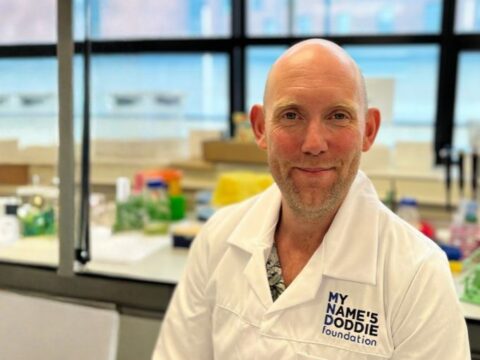
Dr Sunny Chan
Sunny studies sleep and wellbeing in people with subjective cognitive decline, people living with dementia and family carers. His work brings psychology and mental health together with mindfulness, gentle Tai Chi and lifestyle support, examining whether these approaches can help, how they might work and how to make them practical and culturally appropriate.
“I have learnt that a research career does not always develop in a straight line.”
Finding a research direction
My background is in psychology and mental health. I have always been interested in the whole person: wellbeing, lifestyle and how people function in everyday life. I am also a mindfulness teacher and Tai Chi practitioner. These practices were personally meaningful to me, and I wanted to examine them systematically through research.
Sleep became an important connection between my interests. Difficulties with sleep can affect both a person experiencing cognitive decline and the family member supporting them. That led me towards dementia research and towards approaches that involve the person with dementia and their carers together. My direction developed gradually through studies, conversations and learning from people with lived experience.
My career journey
From 2005 to 2007, I completed a Postgraduate Diploma in Psychology at The Chinese University of Hong Kong, graduating with distinction. This gave me a stronger grounding in psychological theory and helped shape my interest in psychological interventions and mental health research.
I subsequently completed a PhD in Mental Health at The University of Hong Kong between 2011 and 2017. My doctoral training was undertaken alongside my professional work in mental health services, allowing me to develop research skills while remaining closely connected to clinical practice.
I did not follow a conventional postdoctoral fellowship route. Instead, I continued combining clinical work, research and teaching before moving directly into a full-time Assistant Professor position at The Hong Kong Polytechnic University in March 2018.
From 2018 to 2021, my Assistant Professor role combined teaching, supervision and research in mental health, sleep, mindfulness and mind-body approaches. I was already leading my own studies as Principal Investigator, developing an independent programme of research rather than leading a formally established research group.
Soon after joining the university, I received a start-up grant to lead a randomised controlled trial comparing psychoeducation and mindfulness-based intervention for people with bipolar disorder. I subsequently secured competitive funding, including an Early Career Scheme award from the Hong Kong Research Grants Council and grants examining mindfulness, Tai Chi and sleep in older adults. Supervising doctoral, master’s and undergraduate research students helped me develop experience in research leadership, mentorship and building collaborative teams.
In 2022, I moved to the UK to become a Senior Lecturer in Mental Health at UWE Bristol through academic recruitment. Since then, I have been developing a more focused programme around sleep, cognitive ageing and dementia, working with academic, health and social care, and community partners.
Moving countries and building connections
Moving from Hong Kong to the UK was a major turning point. I needed to understand a different higher education system, funding landscape, research governance and professional culture while rebuilding my networks. Colleagues, mentors and collaborators helped me understand opportunities and refine my ideas. Community conversations helped me see which questions would be useful to people affected by dementia.
The move gave me greater clarity about the kind of researcher I wanted to become: someone who works across disciplines and connects research with practical needs. I could have continued with broader mental health research, but bringing sleep, mindfulness and Tai Chi into dementia research gave my work a clearer direction. I want to test whether approaches help, how and for whom, and what adaptations are needed.
What my work looks like
My week includes research, undergraduate and postgraduate teaching, supervision and academic leadership. I lead research-related modules and contribute to programme management. Research involves developing studies and funding applications, analysing and interpreting data, writing papers and building partnerships. My role is supported by UWE, while individual projects draw on university resources, external funding and partner organisations.
My work includes DREAM: Dyadic Resilience, Engagement, Awareness & Mind–body intervention. This programme supports people living with dementia and their family carers, with a particular focus on sleep and wellbeing. It integrates mindfulness, gentle Tai Chi and sleep-support strategies. Earlier work involved co-developing the programme and examining its acceptability with people living with dementia, family carers and community stakeholders, supported by Bristol, North Somerset and South Gloucestershire Integrated Care Board (BNSSG ICB) Research Capacity Funding.
I am now developing the next-stage DREAM feasibility study. An application has been submitted to the NIHR Research for Patient Benefit programme; this remains an application, not an awarded grant.
CALM-SLEEP stands for Culturally Adapted Lifestyle and Mind–body approaches for SLEEP health. Its full study title is “Culturally Adapted Lifestyle and Mind–body approaches for SLEEP health (CALM-SLEEP) – Developing a Culturally Tailored, Non-Drug Intervention for Older Adults with Early Memory Concerns”. It involves older adults with subjective cognitive decline: persistent concerns about changes in memory or thinking without a diagnosis of mild cognitive impairment or dementia.
The ongoing study is at the co-development stage, working with White British, Chinese and South Asian communities on a culturally appropriate intervention that integrates mind–body approaches with lifestyle and nutrition-based sleep support. CALM-SLEEP is funded through BNSSG ICB Research Capacity Funding.
Building on this work, I have submitted a separate proof-of-concept application to BRACE Dementia Research to evaluate an integrated mind–body and nutrition-based sleep intervention for older adults with subjective cognitive decline. This is under consideration, rather than an awarded grant.
Challenges and skills I have developed
Balancing teaching, supervision and leadership with research can leave limited protected time for grants, papers and programme development. Applications and manuscripts are rejected, and progress can be slower than expected. Feedback, revisions and collaboration have helped me become more strategic about the projects I take on. Moving from smaller projects towards larger externally funded studies takes time, methodological expertise and sustained partnerships.
I have developed skills in intervention development, quantitative and qualitative methods, evidence synthesis, grant writing and feasibility study design. I am continuing to build my knowledge of implementation science and mechanisms. Teaching has helped me explain ideas clearly; working with lived experience has taught me to listen and adapt. Project leadership has also meant learning to manage timelines, governance and funding, delegate and negotiate a shared direction. I would have developed grant writing, strategic networking and project management earlier.
What keeps me going and what comes next
I value seeing an idea become something that people find relevant and acceptable, and hearing perspectives that change my thinking. Supporting students and early career colleagues as their confidence grows is another rewarding part of the job. Much of the work behind a study is less visible: funding, ethics, governance, partnerships, recruitment and coordination.
My next aim is a coherent, sustainable research programme, moving from small feasibility studies towards larger funded work. Promotion is one route, but development also means greater expertise, independence, supervision and leadership. I would tell my earlier self that a career does not need to be completely planned. Build relationships, learn from rejection and think about how each project contributes to the longer journey.
Three ways to take a next step
- Get close to a real research project. Ask about attending a meeting, shadowing or contributing a defined task through your employer, a placement, a dissertation or professional development time. It does not need to mean unpaid work.
- Choose one research skill and practise it on a small project. That might be interviewing, evidence reviewing, quantitative analysis, intervention development or public involvement. Look for free or employer-supported learning opportunities through your university or research networks.
- Build a small network. Speak with two or three people with different experience, such as a researcher, clinician or methodologist, and identify one realistic development or funding route together. You do not need to wait until you feel completely prepared.
Further information