Print This Post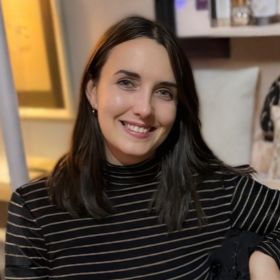
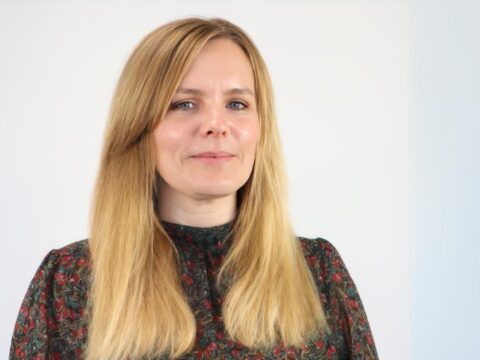
Dr Kira Shaw, Wellcome Trust Career Development Award Research Fellow at the University of Manchester.
Dr Kira Shaw studies how the brain’s blood vessels change during ageing, the menopause transition and Alzheimer’s disease. Her route to independence included doctoral and postdoctoral research, maternity leave and relocation, a period in a teaching-focused role, and a deliberate return to the laboratory to rebuild research momentum. She now has eight years of Wellcome Trust funding to establish a research group focused on vascular health, menopause and Alzheimer’s risk.
“Finding an environment where you enjoy the people, feel supported and share a genuine enthusiasm for the science can make a huge difference to your career.”
Following psychology into neuroscience
I studied Psychology at the University of Leeds from 2008 to 2011. I was particularly drawn to the neuroscience modules and loved learning from researchers who were making new discoveries. Completing my dissertation made me realise that I wanted research to be my career.
I then completed an MSc in Clinical and Health Psychology at the University of Manchester from 2011 to 2012, where I worked with functional MRI data. From 2012 to 2016, my PhD at the University of Sheffield focused on “Neurovascular coupling in health and disease”. It was funded by A*STAR and included a year at the Singapore Bioimaging Consortium in 2014–2015. I learned how to image brain blood vessels in preclinical models and began building the technical and analytical skills that would shape my later research.
Developing specialist expertise
In 2016, I moved to the University of Sussex for postdoctoral research with Professor Catherine Hall. Over the next six years, I became a specialist in recording blood vessels across different brain regions and in models of Alzheimer’s risk and pathology, including the APOE4 gene and amyloid accumulation.
From 2016 to 2018, I worked on “Hippocampal neuronal circuitry dynamics underlying context-specific motivated memories”, supported by an MRC Discovery Award. From 2018 to 2019, my project was “Modulating hippocampal blood flow to alter cognition”, funded by the University of Sussex Research Development Fund. From 2019 to 2022, I worked on the MRC Project Grant “Is Alzheimer’s disease triggered by a failure of the brain’s blood supply?”
Dementia research was a natural direction for me. Changes to the brain’s blood vessels are thought to occur early in Alzheimer’s disease, and I wanted to use my vascular imaging expertise to help answer how blood vessel health may contribute to disease risk and progression.
Stepping away from active research
I took maternity leave in 2021 and relocated back to the North. The uncertainty of short-term research contracts and the possibility of moving around the country for each new role had become increasingly difficult. I wanted greater stability and to be nearer my family, who could help with childcare.
From 2022 to 2024, I worked as a Lecturer in Psychology at University Centre Blackburn College. I enjoyed teaching higher education in a further education setting, but the workload left little time to publish my previous research or develop fellowship applications. My employer was not particularly supportive of my fellowship plans, so when I was invited to interviews I had to take time away from work to attend.
I became concerned that the longer I remained away from active research, the harder it would be to make a competitive case for a fellowship. I therefore chose to return to research through a short-term postdoctoral position in my former PhD laboratory at Sheffield.
Rebuilding research momentum
Returning to Sheffield in 2024 gave me a supportive environment in which to publish, rebuild momentum and dedicate time to my fellowship application. From 2024 to 2026, I worked with Professor Jason Berwick and Professor Clare Howarth on the MRC-funded project “Massaging brain vessels with vasomotion: Targeting the vasculature to alter disease progression in mouse models of dementia”.
I developed my experience of treatments for Alzheimer’s pathology that targeted the vasculature. We aimed to drive vascular dilations at frequencies thought to support amyloid clearance and brain oxygenation.
Moving back onto a short-term contract was not a long-term solution, but it gave me the research environment and protected time needed to give the application the best possible chance. It was a deliberate step backwards in job security to create a stronger route towards independence.
A fellowship shaped by personal and scientific questions
Becoming a parent was one reason I began thinking seriously about a transition to independence fellowship. I wanted to establish a research programme with greater stability and a clearer long-term direction.
The scientific idea was also influenced by my mum’s experience of breast cancer. She is now in remission and takes medication that suppresses oestrogen as part of her treatment. I knew that oestrogen has important effects on blood vessels. This led me to ask what happens to the brain’s blood vessels when oestrogen levels fall, and whether these changes could contribute to Alzheimer’s risk.
On 1 January 2026, I became a Wellcome Trust Career Development Award Research Fellow at the University of Manchester. My project is titled “Does menopause enhance Alzheimer’s Disease risk by exacerbating vascular dysfunction?” The award runs until 31 December 2033, providing eight years of funding to establish my own laboratory group focused on vascular health, menopause and Alzheimer’s risk.
Following blood vessels and neurons over time
I use preclinical models to study Alzheimer’s risk factors such as APOE4 and changes associated with the disease, including amyloid accumulation. A specialised microscope allows me to follow individual blood vessels and neurons over time, including during ageing and the menopause transition. I can measure how well blood vessels dilate, whether they become leaky, and where and when amyloid builds up in the brain.
My aim is to understand how changes in the brain’s blood vessels develop before and during Alzheimer’s disease. I also want to test whether treatments and lifestyle interventions, ranging from hormone replacement therapy to exercise, can improve vascular health and potentially slow disease progression.
What my working week looks like
My experimental work includes cranial window surgery and imaging techniques that measure brain blood flow and blood vessel function in mice over time. The studies may involve mice carrying APOE4, undergoing menopause, developing amyloid pathology, or a combination of these factors. We use methods including functional ultrasound, laser speckle imaging and multiphoton imaging. These techniques span my previous research, current work and planned studies.
Animal health and wellbeing are an important part of this work. We carry out regular weighing and health checks, and gradually habituate mice to the imaging equipment through handling and exposure. In the wet laboratory, I work with brain tissue and label blood vessels, neurons, amyloid deposits, astrocytes and microglia before taking detailed images with a confocal microscope.
A large part of research is analysis. I turn measurements and images, such as changes in blood vessel diameter or neuronal activity, into comparisons between groups. I might ask whether APOE4 and peri- or post-menopause together alter the ability of brain blood vessels to dilate.
Formal supervision of PhD students is a new part of my role as a Research Fellow at Manchester. Supporting students includes individual meetings and discussions. I also take part in journal clubs and wider laboratory meetings where we share findings, ideas and challenges.
Skills I developed deliberately
Communication, collaboration and data analysis have mattered most in my career. Complex public health questions need people with different expertise, and researchers need to explain their work clearly to different audiences. I have deliberately gained experience communicating with patient and public groups, students from the age of four upwards, and fellow academics. Training in science communication and presentation has helped me focus on the larger story rather than overwhelming people with detail.
I began my PhD with no coding experience, but analysis quickly became one of the parts of research I enjoyed most. I learned programming languages, attended specialist courses and sought feedback from colleagues and mentors. I also set up a coding club where early career researchers could work through problems and learn together.
Using the development opportunities around you
Universities offer extensive training and development, much of it free to staff and students. I encourage researchers to use those opportunities to build confidence in areas such as leadership, communication and project management. The Researcher Development Concordat also sets an expectation that researchers have time for professional development.
Do not wait for opportunities to arrive. Speak to colleagues, mentors and research development teams. Attend training, workshops and networking events. These activities can broaden your skills and network, and may open routes that you would not otherwise have encountered.
The rewards and pressures of academic research
Supporting enthusiastic early career researchers is one of the most rewarding parts of my work. It is exciting to see someone begin a PhD knowing relatively little about a subject and finish as an expert, then use those skills to reach their own goals.
Academic research offers independence and flexibility, but it also involves balancing many responsibilities. In one week, you may be a teacher, mentor, experimenter, analyst, writer and public speaker. Having to use such a wide range of skills can leave you questioning whether you are good enough at any one of them. I think that feeling is common in academia.
Three practical ways to explore this career
First, get hands-on research experience through a research assistant or technician role, a student project, a placement, or by asking to learn a technique that interests you in your current laboratory.
Second, identify two or three researchers whose work interests you and ask them for a short conversation about their career and the experience they would recommend. Email, LinkedIn and mutual contacts can all provide a starting point.
Third, explore a research question of your own. Read recent papers, attend seminars or journal clubs, and consider what experiment could address an unanswered question. This develops scientific thinking and helps you decide whether research is a way of working you would enjoy.
Choose the people as well as the topic
Research will include failed experiments, unsuccessful funding applications and periods when progress is difficult to see. Supportive, positive and curious colleagues make those challenges easier to navigate. When considering an opportunity, think about the people and culture as well as the research topic or institution. Finding a place where you enjoy the team, feel supported and share enthusiasm for the science can make a substantial difference to your career.
Find Kira online

 Emily Spencer