 Print This Post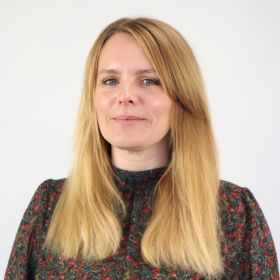
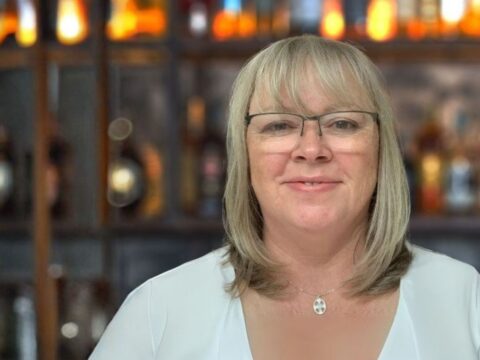
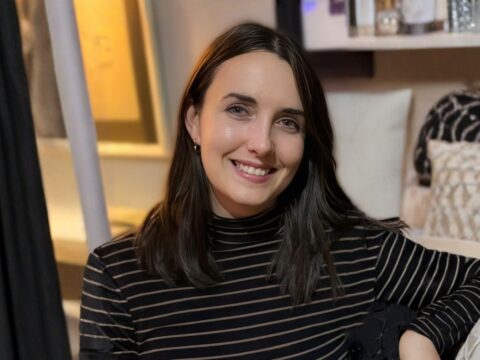
Dr Tamlyn Watermeyer
Tamlyn Watermeyer’s career has taken her through psychology, a PhD, two postdoctoral posts, an assistant professorship and an intermediate-level dementia fellowship. Her research explores biological, psychological and social risks for neurodegeneration, with a particular interest in populations under-represented in research. Here, she reflects on protecting research time, working across different interests and building relationships with the communities her work aims to support.
You can only run your own race.
Finding my interests through study and care work
I became interested in neurodegeneration and dementia while studying psychology and neuroscience. Alongside university, I worked in a care home for people with learning disabilities during term time and at a respite centre for people with multiple sclerosis over the summer. I also completed several internships that introduced me to laboratory life. Together, those experiences helped me refine my interests. I completed my BSc Honours in Psychology at the University of St Andrews in 2009. From 2010 to 2014, I studied full-time for a PhD at King’s College London. My project, “Emotional processing and social cognition in Amyotrophic Lateral Sclerosis”, was supported by the Medical Research Council and the Motor Neurone Disease Association.
Learning from two postdoctoral posts
At Bangor University from 2015 to 2017, I delivered a randomised controlled trial adapting cognitive rehabilitation therapy for people with Parkinson’s disease dementia and dementia with Lewy bodies. From 2017 to 2020, I was the principal neuropsychology researcher at the University of Edinburgh’s Centre for Dementia Prevention. I supported academic and commercial studies including the European Prevention of Alzheimer’s Dementia (EPAD), PREVENT Dementia and CHARIOT-PRO SubStudy, which sought cognitive and biological targets for prevention. I also supported clinical intervention trials at the centre. During both postdocs, I was fortunate to work with leaders in their fields. I learnt from them and the people around them about what good leadership looks like and how to turn a vision into practice. Those experiences helped me understand how research programmes and teams develop.
Finding time for my own research programme
In 2020, I became an Assistant Professor at Northumbria University. I loved teaching, but during the pandemic I became concerned that imbalanced teaching demands were holding back my research programme. A turning point came in 2023, when I applied for an intermediate-level NIHR–Alzheimer’s Society Dementia Fellowship and two medium-to-large grants and was successful in all three. My Assistant Professorship continues alongside the fellowship. It secured research time I would not otherwise have had and gave me the headspace to focus on my programme. NIHR training and mentor-matching resources have also supported my development. The projects had overlapping themes but involved different populations and teams. Splitting my attention between them was challenging. With practice, I have become better at switching between projects and saying no to opportunities that would take me off track. I have learnt to value my time. A supportive network of collaborators makes a real difference.
Considering another direction
Insecure fixed-term contracts have been difficult. At my hardest moments, I considered a corporate career, even though I thought it might be less fulfilling. The pandemic also took a substantial toll, and I came close to leaving academia altogether. What I remind myself is that there can be flexibility within academia. If leaving your job is not an option, it may be possible to change it, even gently at first. Many of the ideas I now have funding for were years in the making, built slowly through small projects with limited resources. I am glad I stayed.
Making room for different interests
I have worked across projects, themes and populations that can appear very different. The advice I often received was to do one thing and stick with it to secure a permanent position and build a solid career. That is not how my interests work. Eventually, I allowed myself to follow all of those interests and found like-minded collaborators. It is much more fun living in the mosaic. Through trial and error and following my curiosity, I have gradually found my key areas of focus. The connections may not always be obvious from the outside, but they make sense to me.
Working with communities
My research concerns the biological, psychological and social risks for neurodegeneration, and how we assess, prevent and respond to cognitive impairment. I am especially interested in under-represented populations. My fellowship aims to improve the detection, prevention and intervention of cognitive and functional changes in people with learning disabilities. I underestimated the importance of working with stakeholders early in my career. Some of my best ideas have come from conversations with communities, clinicians, carers, supporters and charities. Understanding a problem means getting into the field as well as reading the literature. Positive feedback from learning disability communities has been particularly meaningful: knowing that an idea makes sense to people and could help them gives me a reason to keep going.
What my working week looks like
I usually combine teaching and research, although grants and fellowships currently fund a reduction in my teaching. No week is quite the same. I see participants, engage with stakeholders, write grants and papers and meet teams working on ongoing projects. I also run internship programmes in my lab and meet students supporting our studies. Balancing research, teaching and wider university responsibilities is hard. Research is problem-solving, and ideas do not always arrive within working hours. Time management is something I actively develop through mentoring, podcasts and books. That includes protecting time to think creatively and develop ideas.
People who help me move forward
My mentors come from fields including biosciences, statistics, AI and qualitative methods. I look for people who can help me develop particular skills. My collaborator Chi Udeh-Momoh brings infectious energy to writing grants and delivering projects. Many collaborators have become close friends, making it easier to share both achievements and disappointments.
Looking ahead and my advice
Career development involves showing the impact of your work through papers, grants, knowledge exchange or policy. My next step is to build and sustain a team with more PhD students and postdoctoral researchers. Find a mentor with a skill you want to develop or a career you admire. Build a network of peers with whom you can exchange ideas and solve problems. Get to know the communities, clinicians, services, organisations and funders connected to your work. I see funders as part of that collaboration too. Every opportunity offers something, so try not to regret choosing one route over another. You can only run your own race. Outputs, citation counts, h-indexes and the Research Excellence Framework can create a lot of noise. Try to quieten that noise and focus on your curiosity.