 Print This Post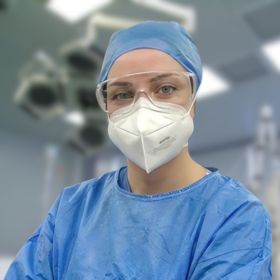
Dr Esra Demir Ünal
Name:
Dr Esra Demir Ünal
Job title:
Associate Professor
Place of work/study:
Ankara Yıldırım Beyazıt University Medical Faculty Department of Neurology
Area of Research:
Parkinson’s Disease; Movement Disorders; Dementia; Neurodegenerative Disorders; Clinical Neuroscience; Clinical Neurophysiology; Quantitative EEG; Cognitive Neuroscience; Pareidolia; Visual Perception; Cognitive Dysfunction; Biomarkers; Artificial Intelligence in Neurology; Translational Neuroscience; Brain Health; Digital Health.
How is your work funded:
Not applicable
Tell us a little about yourself:
I am an Associate Professor of Neurology at Ankara Yıldırım Beyazıt University and Head of the Movement Disorders Clinic at Ankara City Hospital, one of the largest tertiary neurology centres in Türkiye.
My clinical expertise encompasses Parkinson’s disease, dementia, movement disorders and other neurodegenerative conditions, with a particular focus on advanced therapies, including deep brain stimulation (DBS), infusion therapies and botulinum toxin treatment.
My research aims to improve the early diagnosis, phenotyping and monitoring of neurodegenerative diseases by integrating quantitative EEG, cognitive neuroscience, digital biomarkers and artificial intelligence-based approaches. I have a particular interest in cognitive impairment and dementia in Parkinson’s disease, as well as perceptual and cognitive phenomena such as pareidolia as potential biomarkers of neurodegeneration.
I have authored more than 50 peer-reviewed publications and actively lead translational neuroscience projects that bridge clinical neurology, neurophysiology and computational methods. My work has been recognised by national and international neurological societies and contributes to the development of precision medicine approaches in neurology.
Tell us a fun fact about yourself:
A fun irony of my work is that I study pareidolia—the tendency to see faces in random patterns—so spotting “hidden faces” in everyday objects has become something of an occupational habit. Outside academia, I enjoy traveling and discovering new places with my young daughter.
Why did you choose to work in dementia?
My interest in dementia stems from my broader commitment to understanding neurodegenerative diseases and improving patient outcomes through early diagnosis and personalized care. Dementia represents one of the greatest challenges in contemporary neurology, affecting cognition, behavior, independence, and quality of life on a global scale. I am particularly motivated by the opportunity to identify objective biomarkers and develop innovative approaches that enable earlier detection and more accurate disease characterization. By integrating quantitative neurophysiology, cognitive neuroscience, and emerging technologies, my goal is to contribute to a more precise and patient-centered approach to dementia care and research.
What single piece of advice would you give to an early-career researcher?
Focus early on developing strong methodological rigor and a clear scientific question rather than chasing publication quantity. A well-defined research niche, combined with consistency in skills such as study design, statistics, and critical thinking, will have a far greater long-term impact than fragmented outputs. At the same time, actively seek interdisciplinary collaboration and mentorship, as high-quality research in neuroscience increasingly depends on integrating clinical insight, computational methods, and translational perspectives.
What book are you reading right now? Would you recommend it?
I am currently reading “Ending Parkinson’s Disease” by Michael S. Okun and Ray Dorsey. I would highly recommend it—it offers a compelling and accessible perspective on Parkinson’s disease, combining clinical insight with public health strategy and highlighting both current challenges and future opportunities in neurology.
Favourite film of all time?
Not sure
Favourite ways to unplug and unwind?
Travelling and parenting
What’s the best decision you ever made?
One of the best decisions I have made was to dedicate my career to clinical neuroscience with a strong focus on movement disorders and neurodegenerative diseases. This choice allowed me to integrate clinical practice with research, particularly in areas where translational approaches can directly influence patient care. It has also enabled me to contribute to the development of advanced therapeutic strategies such as deep brain stimulation and biomarker-driven diagnostics, while remaining closely connected to patients and their families.
What’s your favourite vacation spot?
Still searching
Do you collect anything?
No