 Print This Post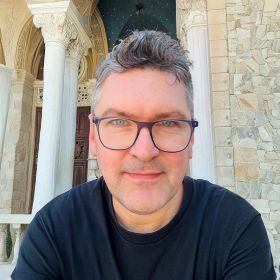
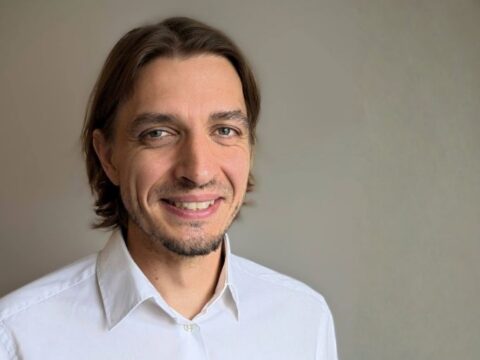
Richard Talbot
Richard Talbot’s career has taken him from artificial intelligence and adult education into speech and language therapy, clinical trials and doctoral research. His work focuses on communication for people living with dementia, including how therapy can be delivered through telehealth. After years of combining NHS and research roles, he is completing his PhD and seeking funding for the next stage. He reflects on keeping a clinical focus, learning research through practice and managing the uncertainty between contracts.
“You don’t have to be the cleverest person in the room to do a PhD or thrive in research, you just have to keep going.”
My route into research
From 1997 to 2000, I studied artificial intelligence at Sussex. It was essentially a modular cognitive science degree with AI modelling including natural language processing, and it sparked my interest in technology and aphasia. My first job was as an eCommerce engineer for a Swedish AI company, configuring complex machines. I learnt that I could code and sell technology, but did not enjoy the solitary aspects of the work.
I took a CELTA course and spent a year teaching English in Central America and Spain. That helped me realise how much I enjoyed teaching and working directly with people. From 2002 to 2005, I taught English for Speakers of Other Languages, basic skills and adult literacy at City & Islington College. Much of the teaching was in the evenings, leaving time to volunteer with Connect, a charity supporting people with aphasia and communication disabilities. That experience was influential as I considered speech and language therapy.
Retraining and developing clinical experience
I completed the speech and language therapy MSc at UCL from 2005 to 2007. My first clinical job, in Norfolk and Suffolk, involved stroke, community neurology and motor neurone disease, with considerable involvement from third-sector organisations. In 2009, I moved to Brighton to work in community neurorehabilitation teams. Over time, I became a team lead and developed specialisms in primary progressive aphasia, frontotemporal dementia and motor neurone disease.
Finding a place for research alongside clinical work
I had always been interested in clinical research. From 2013 to 2021, I combined NHS work with research posts at City St George’s, University of London, working as a research assistant, therapist or project manager on aphasia intervention, technology and implementation projects. These encompassed discourse, virtual reality and telehealth research. During this time my role was split 60% clinical and 40% research. I also gained experience in lecturing and clinical tutoring.
Reducing my NHS hours to take those opportunities was a risk, but a supportive provider trust made it possible. The research roles gave me practical knowledge, enthusiasm and confidence that I could contribute while staying firmly clinical. I was also lucky to work in amazing interdisciplinary research teams including SLTs, linguists, and human computer interaction design specialists. Around 2015, pump-priming funding from my university employer allowed me to run my own project building a gamified assessment app for people with aphasia, supported by research leads and mentors. That helped me believe I could do research independently.
Why dementia research became my focus
As I progressed in the NHS, more of my work became team leadership and managerial, with less hands-on therapy. I missed that contact, although I kept a small specialist caseload in motor neurone disease. It grew to include people with ALS with frontotemporal dementia, then other frontotemporal dementia and primary progressive aphasia cases. I gained substantial experience with people and families living with these conditions, supported by national PPA networks and links with my mentor, Anna Volkmer.
Leading a general speech and language therapy service, I could see that around half our caseload involved people with some form of dementia. Yet swallowing tended to take priority over marked and consistent communication needs. I wanted to redress that balance through staff training, recruitment and changes to the service and its culture.
Moving into a research intensive clinical service
From 2021 to 2023, I worked in the national PPA service at Queen Square with Anna. This overlapped with my Brighton role for a year. The clinical work sat within a strong research culture. Working with inspiring research nurses, therapists, consultants, clinical psychologists and research fellows showed me the difference clinical research could make to people’s lives.
The service closed in 2023. It had depended on grant, research and charitable funding rather than a substantive service arrangement, with support from the National Brain Appeal / Rare Dementia Support and UCLH Charity. Losing a job I valued was a major turning point. I wanted to remain in that research environment with a clinical focus. I successfully applied for a research assistant post working on Anna’s fellowship on a conversation partner training telehealth intervention trial, alongside doing a PhD in implementation science. An honorary contract allowed me to continue contributing to the cognitive disorders clinic.
My research and working week
From 2023 to 2026, my paid research assistant role on the Better Conversations with Primary Progressive Aphasia and other rare dementias (BCPPA plus) telehealth communication partner training programme included support for my PhD. The work was supported through Anna Volkmer’s NIHR fellowship, award NIHR302240: Better Conversations with Primary Progressive Aphasia and other rare dementias (BCPPA): Speech and Language Therapy to keep families together. I was the trial therapist, led recruitment, coordinated data collection and contributed to analysis, talks and papers. My full-time PhD at UCL is titled “Telehealth communication partner training for dementia: implementation and impact on discourse”. It focuses on real-world implementation of the intervention using telehealth, and I undertook it alongside my research assistant role. I also contributed to the diagnostic cognitive disorders clinic, helping with diagnosis, recruitment, signposting, initial advice and liaison with local speech and language therapy services.
My aim is to co-develop, trial and implement interventions that improve conversations, communication and spoken language for people with dementia. I am particularly interested in improving access to speech and language therapy for people with dementia. This means building evidence and helping the profession recognise what it can offer people experiencing communication changes. My research draws on clinical trials, mixed-methods, public involvement and implementation research.
I never expected to do a PhD; I had been happy working as a research assistant and therapist. It has felt like learning research in reverse: gaining years of practical trial experience before undertaking a research degree later in my career. I have thoroughly enjoyed the many opportunities doing a PhD has opened; it’s been a privilege. Writing remains difficult, though. I am naturally a doer who wants to get on with an idea. Research makes me slow down, think and plan, which is invaluable even if it is against my instincts.
Challenges along the way
At City, my employment was technically permanent but tied to funding. I repeatedly applied for research roles in the team where I worked and was eventually written into grants. Keeping an NHS role alongside research helped with security. Research pay has also been lower than my clinical NHS banding or independent work.
My research assistant contract has now ended. In September 2026, I entered completing research status at UCL. I hope to submit by the end of 2026, although it may be January 2027. I retain an honorary UCLH contract so I can access hospital systems if needed to finish the research. I am finishing my PhD, writing papers and applying for further support, including NIHR DSE and EquaDem Network funding. Part-time NHS work, private clinical work and smaller opportunities from colleagues help me bridge the gap. These are applications and possibilities, rather than funding I have secured.
I might have pursued a PhD earlier, but both my parents lived with significant disabilities during the last seven years of their lives. Between 2014 and 2021, I could not make that commitment. With three children and mortgage commitments, I also need to keep finding paid work between research contracts.
Skills and support
Resilience means accepting that there will be bumps and changes, many of them unavoidable, and continuing anyway. Collaboration matters just as much. A team with different skills, backgrounds, levels of experience and perspectives can do much more than one person working alone. It is also more interesting and more fun. Mentors, friends and colleagues have helped me throughout my career.
Supportive NHS managers made the initial move into part-time research possible. University research leads helped me develop my own project. Working with Anna and a new team at UCL enabled my PhD and further experience as a therapist and therapy project manager. Now, colleagues offering smaller research project involvement or clinical tutoring help me stay connected while I seek the next role.
What I find rewarding
Meeting people with dementia and their families around the country, hearing their stories and getting to know them is the most rewarding part of the work. I also enjoy being able to analyse those accounts in detail and hope the work helps in some way. Talks and conferences bring connections with people whose perspectives, priorities and methods differ from mine.
There are disappointments: an experiment may not work, or someone you have worked hard to build a relationship with may withdraw from a study. I have learnt that these are part of research embedded in NHS services and implementation work. The uncertainty about the next contract is harder to live with.
Looking ahead
In my experience, there are relatively few established clinical academic routes for speech and language therapists. People often create their own opportunities through funding or move further into teaching. I have stayed partly clinical, which provides continuity and financial security.
My next step is to seek my own funding to continue clinical research, while retaining clinical posts and independent work as a safety net. People call this becoming an independent researcher. I think of it just as taking more of a lead in the research, building teams and growing collaborations.
Three practical things to try
- Contact people directly. Email someone whose work interests you or approach them at a conference to ask for advice, discuss an idea or explore opportunities. In my experience, those connections often lead somewhere.
- Get involved in a society or committee. I joined the British Aphasiology Society and Qualitative Researchers in Dementia committees.
- Join networks such as the UK or international PPA Networks, EquaDem or Dementia Researcher, and use them to meet people and stay connected.
What I wish I had understood earlier
You do not have to be the cleverest person in the room to do a PhD or thrive in research. You just have to keep going.
 Dr Clíona Farrell