 Print This Post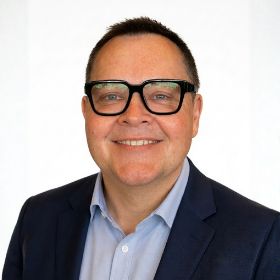
Paul Newman
After more than 30 years in leadership, Paul Newman chose to become a full-time doctoral researcher. His career spans heritage, professional bodies, charities and care organisations, alongside work on international standards. He now studies chosen family caring relationships in dementia, bringing practical experience to questions about recognition, inclusion and support.
“I wish someone had told me that there is no ‘right’ age to become a researcher.”
A career built around organisations and people
I studied for a BA (Hons) in European Business between 1988 and 1992, through the European Business Programme in the UK and Germany with Erasmus funding. My early career was in museum and heritage management. Between 1992 and 1999, I worked in public engagement, operations, marketing and organisational management, developing leadership and project management skills.
From 1999 to 2013, my career moved through senior roles in professional bodies and charities, including the Royal Institute of British Architects, Royal College of General Practitioners, International Students House and The Benevolent Society. I worked on organisational strategy, governance, service improvement and national programmes.
Leading care services
Between 2013 and 2025, I held Chief Executive and Group Chief Executive roles at Greensleeves Care, We Care Group and Summit Care Group. These organisations supported older people, including many living with dementia. My work covered quality improvement, workforce development, governance, digital transformation and service innovation.
Throughout my executive career, I continued learning. My qualifications included an MBA and a PGCert in Patient Safety & Quality Improvement at the University of Oxford, which I completed with Distinction, alongside professional development in marketing, governance and leadership.
Asking questions that management could not answer
I had spent much of my career improving services, but increasingly found myself asking questions that existing evidence could not answer. I wanted to contribute new knowledge that could influence policy and practice more broadly. Returning to higher education at Oxford reminded me how much I enjoyed critical enquiry and showed me what research could offer.
After leaving my final Chief Executive role, I could have pursued another executive position. Instead, I explored doctoral opportunities that would bring together my practical experience and rigorous research. In 2026, I became a Vice-Chancellor’s Doctoral Scholar in Dementia Studies at the University of West London.
Moving from chief executive to full-time doctoral researcher was a considerable adjustment. I was used to making organisational decisions. Now I needed to question assumptions, learn research methods and become comfortable with uncertainty. Financially and professionally, it also meant stepping away from an established executive career. The scholarship enabled me to dedicate my time to developing as a researcher.
Making chosen family carers visible
My research explores chosen family caring relationships in dementia: care provided through close friendships or relationships people regard as family, rather than through marriage or biological ties. I am interested in how these relationships connect with LGBT+ experiences and how services recognise and involve the people providing care.
These carers can play a vital role, yet health and social care services may not always recognise them or include them in decisions. I want to understand the challenges they face, what helps them provide care and where services fall short. By listening to their experiences, I hope to identify practical ways to improve recognition, communication and support.
The aim is to help organisations develop policies and practices that reflect the reality of people’s relationships. No important carer should be overlooked simply because they do not fit traditional ideas of family.
Connecting research with international standards
Since 2017, I have chaired the BSI Ageing Societies Committee and headed the UK delegation to ISO/TC 314. This voluntary work has involved developing standards on healthy ageing and dementia-inclusive communities with experts from different countries and disciplines.
Helping to lead that work is an achievement I am particularly proud of. It has shown me how research, lived experience, professional expertise and policy can come together in practical resources. It also highlighted how much we still need to learn about people whose experiences are often overlooked.
Learning how academia works
Finding my way into doctoral study involved a steep learning curve. Programme structures, funding and the process of developing a competitive research proposal were unfamiliar. My topic brings together dementia, ageing, health equity and health and social care, so finding supervisors with complementary expertise required investigation and conversations with different universities.
I read the literature, attended research events, sought advice and kept refining my proposal in response to feedback. My supervisory team now helps me develop my thinking through constructive challenge and regular feedback. For mature applicants, many parts of the process are unfamiliar but treated as self-evident. More targeted information, mentoring and practical guidance would make research more accessible.
What my working week looks like
My week involves reviewing evidence, planning and managing the study, preparing ethics and governance documentation, analysing findings and writing. The research involves people with lived experience, including participant recruitment, focus groups and interviews, with attention to safe and ethical practice. Alongside the PhD, I continue my work with BSI and ISO.
Communication, listening and project management have transferred directly from leadership into research. They help me build trust, coordinate a complex project and work across disciplines. Research methods, evidence synthesis, critical appraisal and academic writing are skills I am continuing to develop through training, supervision and practical experience.
Making progress without climbing a ladder
Research has the potential to improve lives, but its uncertainty can be difficult. Questions and methods need repeated revision, and months of careful work may pass before visible outputs emerge. Balancing that process with the desire to make an immediate difference takes patience.
I do not see my next steps simply as climbing an academic career ladder. I want to continue applied research, contribute to policy and standards, and help organisations use evidence to improve services. I also hope to supervise and mentor researchers and students, particularly people entering research later in life or from professional practice.
Three ways to get started
First, speak to two or three academics whose work interests you. Ask about their research and supervision style, and attend seminars to develop a realistic understanding of doctoral study. Choosing the right supervisors and research environment matters as much as choosing the topic.
Second, build your skills through a manageable project, such as a structured literature review. Third, join a professional society, charity, public involvement group or research network. These communities can help you understand priorities and learn from other people.
There is no right age to become a researcher. Experience from professional practice can provide a strong foundation, and you do not need to know everything before you begin. Research means asking good questions and being willing to change your thinking when the evidence demands it.
Find Paul online