
Most new research leaders got there by being good at research. Then the job changes. Suddenly you are hiring people, managing a budget and writing appraisals. You have to decide the order of an author list and keep a team going on three years of money. Very little of that was part of your training.
It makes no difference whether you have set up your own lab or won a fellowship that comes with a postdoc. The same is true if you have been promoted and a group of researchers now reports to you. In Wellcome’s survey of more than 4,000 researchers, 80% of those who managed people said they had the skills to manage a diverse team. However, only 48% had ever been trained to do it. None of this is new. A 2013 article in PLOS Computational Biology called most principal investigators self-made managers. They learn the job from their own supervisors, and by trial and error.
This guide gathers the free tools and resources we think help most in your first two years as a leader. Some were written for scientists. Many more come from business, HR and education, where managing people is treated as a skill you can learn. We have favoured free resources wherever we could, and where something costs money we say so. It works best as somewhere to dip in when a particular problem lands on your desk.
In brief
Most new research leaders take on the management side of the job with little or no training. This guide gathers the free resources that help. They include practical guides for new PIs, short courses on managing people and templates for setting expectations. There is also software for running a group, plus the books and podcasts that leaders recommend. It borrows ideas from business and education that are rarely used in research, and leaders who have been through it share their tips. Four interactive tools help you plan your first 90 days, prepare for hard conversations and see where your week goes.
On this page
If you only read one section, make it start here, which covers the free guides and short courses written for people in your position. After that come building your team and setting expectations, managing people week to week and culture, inclusion and wellbeing, which together cover most of the people side of the job.
The practical side is in running the operation, followed by using AI assistants to save time on writing and admin. Then two sections about you rather than your team: managing yourself and managing up and across. Borrowed from business and education is the section you are least likely to find in other guides.
Finally there are books, podcasts, a short note on training worth paying for, our interactive tools, five things to do next and common questions.
Start here: free guides for new research leaders
These are the free resources we would hand to anyone in their first month of leading a group. None of them will take long to find your way around.
Making the Right Moves Free
The Howard Hughes Medical Institute and the Burroughs Wellcome Fund wrote it from the course they ran for new investigators. It is still the best free book on running a lab. The second edition covers staffing, mentoring, time and project management, data and lab notebooks, and laboratory leadership. It dates from 2006 and is written for US biomedical labs, so skip the parts on the NIH and tenure. However, the chapters on hiring, setting expectations and asking staff to leave have aged well. You can download the whole book or individual chapters. Download Making the Right Moves (PDF)
Ten Simple Rules to becoming a principal investigator Free
A short, open access article from PLOS Computational Biology on the move from doing someone else’s research to getting other people to do yours. It defines a PI loosely enough to include anyone running a group on their own funding. Most of the rules are about leadership skills that also work outside academia. The same journal’s interviews with PIs on how they learned to run a lab is worth reading alongside it. Read the article
Short courses on managing people
Acas e-learning Free UK
The UK’s workplace advisory service runs free online courses for people managers, most taking about half an hour. The ones to start with are Managing people, Managing conflict, and Recruitment, induction and probation. They are not written for universities, and that is part of their value. They set out what any good employer is expected to do, and your HR department works to the same rules. elearning.acas.org.uk
Leadership and followership (OpenLearn) Free course
An eight week Open University course, at about three hours a week. It covers leadership styles, what makes a good follower and how to plan your own development. It is self-paced, and you get a statement of participation at the end. That is useful evidence for an appraisal orpromotion case. open.edu/openlearn
Collections from academic leaders
Faculty Factory eBooks Free
The Faculty Factory podcast, started at Johns Hopkins, has turned years of interviews with academic leaders into free eBooks. The Academic Medicine Starter Kit and Snippets for Success are the two most useful for new leaders. They are written for academic medicine in North America. Even so, most of the advice on leadership, mentoring and protecting your time travels well. facultyfactory.org/ebook
The New PI’s Playbook Free
Our own collection of blogs and podcasts from people who have recently made the move. Two good places to start area podcast with three new PIs on setting up a lab and what it’s really like being a PI. See the collection
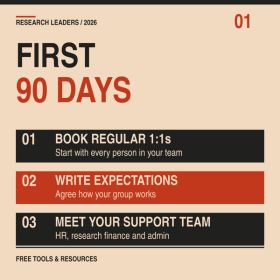
Three useful first steps: book regular one to ones, agree working expectations and meet your key support staff.
Building your team and setting expectations
Most problems in research groups come from expectations nobody wrote down. How quickly should people reply to messages? Who orders the reagents? When does a draft count as finished, and is working late expected? Nature found a big gap between how PIs and their teams see the same lab. In its 2018 survey, almost 90% of PIs felt their group members knew what was expected of them. The lab members themselves were much less sure. These free resources help you close that gap before it causes trouble.
Lab manuals and group handbooks Free templates
A lab manual writes down the things that usually get passed on informally. That covers everything from working hours and authorship to how to ask for help. Mariam Aly’s manual for her lab, described in a short Nature column, is the one most people copy. Samuel Mehr also keeps a public list of dozens more, including a crowdsourced template you can adapt. You do not need to run a wet lab for this to work: computational, clinical and social science groups write them too. Aly lab manual · Lab handbooks collection
Atlassian Team Playbook Free
A software company’s library of short team workshops, which it calls Plays, free for anyone to use and share. Three are especially useful for a new group. My User Manual asks each person, you included, to write down how they like to work, communicate and receive feedback. Working Agreements gets the team to agree its own ground rules. Roles and Responsibilities shows up the jobs that nobody thinks are theirs, such as the shared freezer or the group’s data storage. atlassian.com/team-playbook
Hiring and welcoming new people
Gender Decoder Free
Paste in the text of a job advert and it highlights words that research has shown to be masculine or feminine coded. Examples include “competitive” and “dominant”. Ads with heavily masculine coded wording put some women off applying. It takes a minute and is worth doing before your first advert goes to HR. gender-decoder.katmatfield.com
Onboarding checklists Free
The Whitaker Lab, among others, publishes its onboarding checklist openly. It covers the accounts, inductions, training and introductions a new starter needs in their first few weeks. Borrow the structure and add your own institution’s systems. Whitaker Lab onboarding on GitHub
Worth knowing
Most of the people you employ will be on fixed-term contracts tied to your grants. That brings duties for you as well as for HR. They range from planning bridging funding to the redundancy process when the money ends. Our guide to fixed-term contract rights sets out what your staff are entitled to, and it is worth reading before you appoint anyone.
From a research leader
“Everyone is different and needs different things from a PI. Managing people takes time, so make sure you allow yourself time to think about what your team needs.
Anything by Kay Guccione I always find super helpful, one example is her writing on The Auditorium blog.”
 Professor Heather Mortiboys, Professor of Cellular Neuroscience and Metabolism, University of Sheffield
Managing people week to week
Most of management is done in small, regular conversations rather than in the annual appraisal. These free resources cover the three you will have most often: one-to-ones, feedback and career development.
Manager Tools Basics Free podcast
A long running podcast for new managers, with a short feed of core episodes on one-to-ones, feedback, coaching and delegation. It is American and very corporate, and some of its rules are stricter than a research group needs. The core idea still holds up well. A regular one-to-one with each person in your team will prevent more problems than anything else you do. If you only listen to one thing, start with the one-to-one episodes. manager-tools.com
Google re:Work guides on one-to-ones and coaching Free
Google publishes the guides it uses to train its own managers. The two to read are on holding effective one-on-one meetings and on coaching with the GROW model. The coaching guide was updated in March 2026. GROW (goal, reality, options, will) is a simple structure for helping someone solve their own problem rather than solving it for them. It suits supervision meetings well. The site was reorganised recently, so older links to re:Work may no longer work. rework.withgoogle.com
Situation-Behaviour-Impact feedback Free
The Center for Creative Leadership’s model for feedback. You describe the situation, the specific behaviour you saw and the impact it had. Then you ask what the person was trying to do. It works for praise as well as criticism, and it stops feedback turning into comments about someone’s character. Our feedback builder below walks you through it. Read the CCL article
Your formal duties, and the awkward moments
The Researcher Development Concordat Free UK
Most UK universities and many funders have signed the Concordat. It sets out obligations for managers of researchers as well as for institutions. Two of them often surprise new leaders. First, you should allow your research staff at least ten days a year, pro rata, for professional development. Second, you should hold a career development review with each of them at least once a year. The page for managers is short and worth reading once. Concordat: managers of researchers
Ask a Manager Free
A long running advice column on awkward workplace situations. For example, the colleague who takes credit for others’ work, or the team member whose home life spills into the office. Its archive is searchable, and someone has nearly always asked your question before. The employment law is American, so check anything legal with your HR team. askamanager.org
If you also supervise PhD students or mentor colleagues, our guide on how to be a good mentor goes into that side of the role in more detail.
From a research leader
“A previous mentor (and a very successful Prof) said to me when we first met: ‘what can I do for you?’ I always keep this in mind in offering research group members opportunities to attend events, build their networks, and develop other interests and skills, including outside academia.
I had some leadership coaching when I became a Prof. It supported me to develop a different mindset, not typically cultivated in academia. If I’m allowed a second ‘something’, I’d suggest collaborating with industry. It has refined my understanding of getting things done and making outputs relevant in the real world.”
 Professor Victoria Tischler, Professor of Behavioural Science, University of Surrey
Culture, inclusion and wellbeing
Your group’s culture will form whether you shape it or not. As its leader, you have more influence over it than anyone. In Wellcome’s research culture survey, 78% of researchers said high levels of competition had created unkind and aggressive conditions. The resources below help you build something better in your own corner.
Café Culture toolkit Free
A discussion kit from Wellcome, with prompt cards and a guide. It helps you run an hour-long conversation about research culture with a small group. It can be run online or printed. It works well as a team away day session, because the cards give people a way to raise problems without making it personal. Download from Wellcome
MHFA England Line Managers’ Resource Free UK
A practical guide to supporting someone in your team with their mental health. It goes from spotting early signs to having the first conversation and agreeing adjustments. It is a few years old but clear and sensible. Before you need any of them, find out what your own institution offers. For example, there may be an employee assistance programme, occupational health and mental health first aiders. Line Managers’ Resource
Authorship, and hearing from your team
CRediT and the COPE authorship guidance Free
Authorship disputes are one of the most common sources of conflict in research groups. Most of them start with a conversation that never happened. CRediT is a standard list of 14 contributor roles, from conceptualisation to writing, that many journals now ask for. Use it at the start of a project, not at submission. That way the authorship conversation is about who did what, rather than how people feel. The Committee on Publication Ethics publishes guidance on spotting and handling authorship problems. credit.niso.org · publicationethics.org
The perception gap
In the same Nature survey, 90% of PIs said they consistently checked raw data. Only 57% of lab members said their PI did. Leaders are rarely the best judges of their own group. So run a short anonymous survey once or twice a year, using any free form tool. It will tell you more than asking people to their face. Ask what is working, what is not, and one thing you could do differently. Then tell the team what you are changing as a result. Our blog on listening as a PI has more on this.
From a research leader
“I should be cheeky and say to read through my old Dementia Researcher blog posts!
I went to a training course on ‘Students in Distress’, which was about practical help for these students, but also about setting boundaries. This has been one of the most important soft skills I’ve started to develop since starting my lab, and something I was really bad at. The training really helped me look at certain problems in different lights, and was very helpful in defining where some responsibilities start and end.”
 Dr Becky Carlyle, Alzheimer’s Research UK Senior Research Fellow, University of Oxford
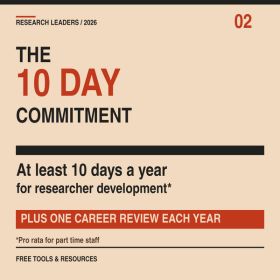
The Researcher Development Concordat expects managers to allow at least ten days of professional development annually, pro rata, and hold a yearly career review.
Running the operation: admin, data and lab tools
A research group is also a small organisation, with stock, equipment, data, money and a lot of messages. Many of the tools in our guide to free research tools for PhD students work just as well for a group. These are the ones that matter most once you are the person responsible.
eLabFTW Free, open source
An electronic lab notebook built by researchers. It also includes a database for reagents, samples and equipment, and a scheduler for booking shared kit and rooms. It is open source, so there is no licence fee. Someone still has to host it, though, so ask your IT or research data team first. Several universities already run it for their staff. elabftw.net
Zulip Free for academic research groups
A team chat app that organises conversations by topic. That makes catching up after a week away far easier than in most chat tools. Zulip offers its Standard plan free or at a large discount to academic research groups and collaborations. The free plan keeps the most recent 10,000 messages searchable. If your institution already provides Teams or Slack, use that. For a collaboration across several institutions, however, Zulip is worth a look. zulip.com
Data plans and meetings
DMPonline Free
Free tool from the Digital Curation Centre for writing data management plans, with templates for the main UK funders. As a group leader you are responsible for what happens to your team’s data, including when people leave. So it is worth writing a plan for the whole group, not just for each grant. dmponline.dcc.ac.uk
Rallly Free
A simple, ad-free way to find meeting times with people outside your institution, such as steering groups, collaborators and advisory boards. The people you invite do not need an account. rallly.co
Understanding the money
How university finances really work Free
A six-minute read from the Royal Society’s series of practical advice for new PIs, by Sir Anthony Finkelstein. It explains full economic costing and why a grant that does not cover its full cost leaves a gap someone else has to fill. It also explains why staff costs make hiring the first thing to freeze when money is tight. His most useful tip is to read the financial statements at the back of your university’s annual report. To keep up with policy that affects your funding, he suggests Times Higher Education, Research Professional and Wonkhe. royalsociety.org
From a research leader
“Read How university finances really work by Anthony Finkelstein, from the Royal Society’s series of practical advice for new PIs. It’s so useful in helping understand how grants are costed vs. the real cost of research. The true cost of research goes beyond people and reagents – understanding this and the broad context of university finances is incredibly useful. It also covers using that knowledge to approach conversations around space and resource strategically. I wish an article like this had been available when I was first starting out.”
 Professor Selina Wray, Professor of Molecular Neuroscience, UCL Queen Square Institute of Neurology
Before anyone leaves
The week someone hands in their notice is the worst time to ask where their data is. It is far easier to settle on their first day. University storage is safer than a personal Dropbox, because when a postdoc leaves, their accounts often go with them. A short leaving checklist in your lab manual also helps. It only needs a few lines: data, samples, half-finished papers, and who picks up each of their jobs.
Using AI assistants for the day-to-day
AI assistants such as ChatGPT, Claude, Gemini and Microsoft Copilot can now take a lot of routine writing and admin off your desk. All of them have free versions. Many universities also give staff an approved version through their Microsoft or Google account. Used well, they buy back time for the parts of the job only you can do. Used carelessly, they can leak confidential information about the people you manage.
What they are good for
First drafts of the documents every group needs
A lab manual, an onboarding checklist, a job description or a data management plan all start faster from a draft. Give the assistant your rough notes, ask for a structure, then rewrite it in your own words. The thinking still has to be yours, but you no longer start from a blank page.
Turning meetings into actions
Paste in your notes from a lab meeting and ask for a list of actions, with who is doing what and by when. Teams and Zoom can also transcribe and summarise meetings, if your institution has switched this on. Tell people before you record, and give them the option to say no.
Rehearsing difficult conversations
Describe the situation, without names, and ask the assistant to play the other person. It is a low-stakes way to practise giving feedback, turning down a request or raising a problem with your head of department. Our feedback builder further down this page is a good place to start the script.
Untangling admin
Ask it to explain a finance report, an HR policy or a funder’s terms and conditions in plain English. It can also write the spreadsheet formula you need to track grant spending, or turn a long email into three clear questions. Check anything you will act on against the original document.
NotebookLM Free
Google’s research assistant answers questions only from documents you upload, and shows you where in each document the answer came from. That makes it useful for a long policy, a set of grant guidance notes or a pile of papers before a meeting. notebooklm.google.com
Agents and automations
The newest tools do more than answer questions. AI agents can carry out a task with several steps: searching the web, working through a folder of files, filling in a form or drafting replies in your inbox. Most of the main assistants now offer an agent mode on their paid plans, and some can run tasks on a schedule. Alongside them sit automation tools, which connect your apps so that one event triggers the next. Many university Microsoft licences include Power Automate, so ask IT whether you already have it.
The best place to start is with a job you do every week and dislike. Some ideas that suit a research group:
- A new starter assistant. Load your lab manual, onboarding checklist and local policies into a custom assistant, such as a Copilot agent or a NotebookLM notebook. New people can then ask it the questions they feel awkward asking you.
- One-to-one preparation. Before each meeting, an agent can pull together the actions you agreed last time and anything the person has shared since.
- Onboarding on autopilot. When you add a new starter to a form or spreadsheet, an automation can send the welcome email, the checklist and the IT account request.
- A weekly reading digest. Set up free PubMed or Google Scholar alerts on your topic, then ask an assistant to summarise the week’s papers for your lab meeting.
- Routine replies. An agent can draft answers to the requests you get every week, such as access to equipment or data, ready for you to check and send.
- Money reminders. A monthly prompt to check each grant’s spending statement, with the figures pulled into one sheet.
Try it: a morning briefing prompt
This works best with an approved assistant that can search the web and read your university calendar and email, set to run each weekday. If yours cannot connect to your accounts, paste in your calendar and recent emails and it can still do the rest. Copy the prompt, fill in the parts in square brackets, then change the sections and the length to suit you.
Every weekday at 7.30am, prepare my morning briefing. I lead a research group at [university] working on [your research topic, e.g. tau and synaptic loss in frontotemporal dementia]. Use my university calendar and email for the first part, and the web for the second. Keep it short enough to read in five minutes, with these sections:
- Today: my meetings in time order, with who is attending. Flag any that clash or have no agenda.
- Before each meeting: one line on what I need to read or bring, based on the invitation and recent emails.
- My team: messages from members of my group since yesterday that need a reply from me, oldest first.
- Deadlines: anything due in the next seven days, such as grant reports, reviews, ethics amendments or student milestones.
- One-to-ones: if I have one today, remind me of the actions we agreed last time.
- Thinking time: suggest one 90-minute gap today that I could protect for writing.
The wider picture (from the last 24 hours, or since Friday on a Monday):
- New papers: up to five new papers or preprints on [your topic] from PubMed, bioRxiv and medRxiv. For each, give the title, the first and last authors, a link, and two lines on why it matters to my work. Put first any from [groups you follow or collaborate with], and any that cite [your key paper].
- Funding: new calls from [UKRI, NIHR, Alzheimer’s Society, Alzheimer’s Research UK and other funders you apply to] that fit my area, with the deadline.
- The field: the one or two most important stories in dementia research, such as trial results, drug approvals or major funding announcements.
- Higher education and policy: anything from Wonkhe, Times Higher Education or Research Professional that could affect my funding, staff or students, such as changes to visas, pay or research budgets.
- My institution: announcements from [your university’s staff news or intranet] and my department that I should know about, such as policy changes, deadlines, consultations or closures.
Do not send, accept, decline or delete anything. If an email is about someone’s health, pay or performance, do not summarise it. Just tell me there is one to read. Give a working link for every paper, call and news item, and leave out anything you cannot link to. If there is nothing new in a section, say so in one line. If you are not sure about something, say so rather than guessing.
Read the first week’s briefings against your actual inbox before you rely on them, and open the paper links to check they are real. Then trim anything you never use. An assistant searching the web will miss things, so keep your PubMed and Google Scholar alerts running as a safety net. Our weekly bulletin also rounds up dementia research news, funding calls and jobs.
Give any agent the least access it needs. Start with read-only access to a test folder, not your whole inbox. Keep a person approving anything that is sent, bought or deleted, and check what it did for the first few weeks. Mistakes in a chain of steps can build on each other before anyone notices. And an automation you have to keep fixing is not saving you time.
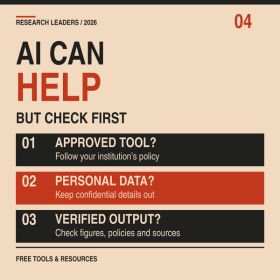
AI can save research leaders time, but first check institutional approval, protect confidential information and verify the results.
From a research leader
“In business, a people leader in your position would have at least one assistant to look after their diary, meetings and admin. Research doesn’t work like that. You wouldn’t hand your admin to a research assistant, because they are there to help with the research, and a whole department may share one administrator for everything.
I’ve been using Claude for a few months now, and it is easily doing the work of an extra person on the team. It does mean putting some trust in the system, and allowing integrations with your email and calendar that you may not be comfortable with at first. But with the proper safeguards in place, it’s a game changer.”
 Adam Smith, Programme Director, Dementia Researcher
What it costs
The free versions are good for occasional use, but they have daily limits and usually leave out agent features. As of November 2026, paid plans for individuals cost around £18 to £20 a month each for ChatGPT, Claude or Gemini. Plans with more agent use run from about £90 to several hundred pounds a month. Microsoft’s academic price for the full Microsoft 365 Copilot is US$18 per user per month. However, the basic Copilot Chat comes free with most university Microsoft accounts.
Those costs add up across a team, so start with whatever your institution already provides. Ask your research office whether software can be costed into a grant or paid from discretionary funds before you buy. Also count the setup time. A complex automation can take days to build, test and keep working. Paying for a personal subscription and using it for university work may also break your institution’s rules, which brings us to policy.
Check your university’s policy first
Most UK universities now publish guidance on generative AI for staff, usually on their IT or digital services pages. Many also provide approved tools through your university login. Oxford, for example, gives staff ChatGPT Edu, Microsoft Copilot and Google’s Gemini and NotebookLM, and says confidential data must only go into those approved platforms. Before you build anything into your group’s routine, find answers to these questions:
- Which AI tools has my institution approved, and do I get any of them free?
- What kinds of data is each tool approved for: public, internal, confidential or personal?
- Can I connect an assistant or agent to my university email, calendar and files?
- What do I need to do before an automation handles personal data, such as a data protection impact assessment?
- What does my research ethics approval say about research data, including anything from participants?
The last question matters in dementia research. Participant data, even when it looks anonymised, should never go into a tool your ethics approval and data management plan do not cover.
Where to be careful
Keep people’s details out of public tools
Never paste anything about a named person’s performance, health, pay or a complaint into a free chatbot. If you need help with a sensitive situation, take the names out, or use the version your institution has approved, where the data is covered by its contract. Your IT or data protection team will have guidance on which tools are approved.
Check the facts
AI assistants can produce references, policy details and figures that sound right but are wrong. Treat what they give you as a draft from a confident new starter, and check anything you will rely on.
Keep your judgement in the important things
Appraisals, references and difficult feedback should sound like you, because they are your view of a person. An assistant can help you organise your thoughts, but people can tell when the words are not yours.
Agree how your group uses AI
Your team is already using these tools, whether you have talked about it or not. Add a short section to your lab manual on how the group uses AI for writing, code and analysis, and what has to be disclosed in papers and theses. Many journals now ask authors to declare it.
Grant applications and peer review
UKRI allows applicants to use generative AI, but substantive use, such as drafting text or generating ideas, must be declared. You must not generate a whole application or section without human involvement. The rules for reviewers are much stricter. You must not enter any part of an application into an AI tool, and UKRI treats doing so as a breach of confidentiality. Other funders have their own rules, so check each one before you write or review. UKRI policy on generative AI
Managing yourself
New leaders often try to do the job they had before alongside the new one, and run out of hours. The resources here are about where your time goes and what you say yes to.
Keep a time log for a week Free
The time management writer Laura Vanderkam suggests tracking every half hour of one ordinary week. Most people find their sense of where the time goes is wrong, often in both directions. A paper sheet works fine, and our week planner below will show you the split between research, people and admin once you have the numbers. lauravanderkam.com
The Imperfectionist Free newsletter
Oliver Burkeman’s twice-monthly email on productivity, limits and the fact that you will never get everything done. It is a useful antidote to productivity advice that assumes you can, and a good companion to his book Four Thousand Weeks. oliverburkeman.com
Saying no Free
New PIs are asked to join more committees, review more papers and take on more students than they can manage. Often it is simply because they are new and keen. Two of our pieces are worth reading before the requests start: when to say no to new opportunities and how and why to say no to colleagues and collaborators.
Your institution’s coaching and support Usually free to you
Many universities offer one-to-one coaching for new academic leaders and peer networks for early career PIs. Most also have an employee assistance programme with confidential counselling. These are often poorly advertised, so ask HR or your organisational development team what exists. Feeling like a fraud in a new leadership role is common, and our blogs on imposter syndrome as a PI and the contradictions of being a junior PI may help.
Managing up and across
Nobody runs a research group alone. How quickly you can hire, spend your grant or fix a broken freezer depends on people you do not manage. That is why a few early relationships make a large difference.
In your first month, find out who your HR partner is and who handles your grant finances in the research office. You will also need your departmental administrator, your technical manager, and someone in IT who can set up storage and accounts. Meet them, ask how they like to be contacted and what makes their job harder, and thank them when things go well. It also helps to ask your research finance team for a regular statement of spending on each grant. Then a forgotten invoice will not surprise you a year later.
From a research leader
“Make sure that you get to know the finance/research office team as quickly as possible, they will be the ones providing you with the support (and costings) for your grant applications. A good line of communication on research costings is worth its weight in gold, as it will help you know exactly what is needed, when it is needed, and who is required to approve for grant proposals.”
 Professor Patrick Lewis, Professor of Neuroscience, Royal Veterinary College
Your Head of Department or line manager is the other relationship to invest in. Agree how often you will meet and what you should deliver in your first year, then write it down. That should include teaching, citizenship and income. If your probation or promotion criteria are unclear, ask now rather than at review time. Our guide to academic promotion criteria explains what panels usually look for.
Ask a Manager and the Manager Tools archive, both above, have plenty on managing your own manager. Faculty Factory also has episodes in which department chairs say what they wish new faculty would ask them.
Borrowed from business and education
Businesses and schools have been training managers and teachers for decades. Even so, some of their everyday habits are rarely used in research groups. These are the ones we think transfer best.
From business and software teams
Retrospectives Free
Software teams stop at the end of every piece of work to ask what went well, what did not and what to change next time. Research groups rarely do this, even after a grant is rejected or a paper takes three years. Try a 45 minute retrospective after each submission, using Atlassian’s free guide. Keep it about the process rather than blaming anyone. Retrospective play
Pre-mortems Free
Before a big experiment, study or grant, ask the team to imagine it has failed and list all the reasons why. People are far more willing to raise risks when asked to imagine a failure. Ask whether the plan is good, and most will just say yes. Pre-mortem play
Writing your own user manual Free
Common among managers in technology companies, and almost unknown in research. Write a one page note on how you work and when you are easiest to reach. Include how you like to receive drafts and what you will never mind being asked. It saves new team members months of guesswork. Atlassian’s My User Manual play, mentioned above, has a template.
From the classroom
Schools and universities have well tested habits that suit a research group. Take peer observation, where a trusted colleague sits in on your lab meeting and gives you feedback. It works as well for chairing a meeting as it does for a lecture. Clear learning objectives for a new starter’s first month make onboarding less of a guessing game. Exit tickets are another. At the end of a training session, ask everyone to write down one thing they are still unsure about. It catches the questions people are too embarrassed to ask out loud.
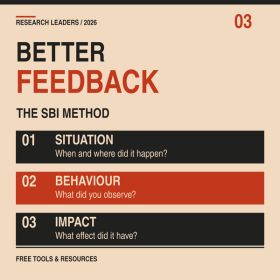
The Situation, Behaviour, Impact model helps research leaders give specific feedback about actions and their effects.
Books worth the shelf space
Books are not free, but most of these will be in your university library or available through a library app on your phone. We have mixed books written for scientists with some of the best general management books.
Running a team and a lab
The Making of a Manager, Julie Zhuo Buy or borrow
Written by someone who became a manager at 25 with no training, and probably the most readable book there is on the first year of managing people. It covers one-to-ones, feedback, hiring and running meetings, and much of it maps straight onto a research group.
Lab Dynamics, Carl M. Cohen and Suzanne L. Cohen Buy or borrow
A book about the human side of science, written specifically for scientists. It ranges from conflict and negotiation to dealing with difficult colleagues. Useful when a problem in your group is about people rather than results.
At the Helm, Kathy Barker Buy or borrow
A practical guide to starting and running a lab, from setting up the space and hiring your first staff to managing money and mentoring. It is aimed at biology labs in the US, but many of the checklists apply anywhere.
Feedback, trust and your own time
Radical Candor, Kim Scott Buy or borrow
On giving honest feedback while showing that you care about the person. Its simple two-by-two grid will make you think again about how often you avoid difficult conversations to be kind.
The Fearless Organization, Amy Edmondson Buy or borrow
The researcher behind the idea of psychological safety explains why teams work better when people feel able to admit mistakes and ask questions. Her examples come from hospitals and other high-stakes settings. Particularly relevant to research groups, where an unreported mistake can undermine a paper.
Thanks for the Feedback, Douglas Stone and Sheila Heen Buy or borrow
Most books on feedback are about giving it. This one is about receiving it well, which matters more once you are the person your team needs to be able to criticise.
Turn the Ship Around!, L. David Marquet Buy or borrow
A submarine captain’s account of moving decisions down to the people closest to the work. It sounds a long way from a lab. Even so, it is one of the best books there is on delegation, which is the skill most new PIs find hardest.
Four Thousand Weeks, Oliver Burkeman Buy or borrow
Not a time management system so much as a case for accepting that you cannot do everything, and choosing what to neglect on purpose. Worth reading in the first year, before the job expands to fill every evening.
Podcasts worth your commute
Faculty Factory Free
Interviews with academic leaders on faculty development, leadership, meetings, mentoring and career transitions. The archive is searchable by topic, so you can go straight to the episodes on whatever you are dealing with. facultyfactory.org/podcast
Starting up in science Free
A short series from the Nature Podcast that followed two new PIs for three years. It tracks their efforts to get their labs off the ground, through grant rejections, hiring and a pandemic. There are three short episodes, and they are refreshingly honest. Listen to episode one
Drs Confess Free
A UK podcast hosted by a PI and her former postdoc about the parts of academic life people rarely say out loud. Start with the live episode on confessions of a new research group leader. Listen
From Postdoc to PI Free
A series from the ALBA Network, which works on equity and inclusion in brain research. It covers the move from postdoc to team leader, including an episode on building an inclusive lab culture. alba.network
Changing Academic Life Free
Ten years of conversations about meaning, identity and leadership in academic work. Recent episodes include practical ideas such as participatory lab manuals and structured check-ins. Apple Podcasts
The Dementia Researcher podcast Free
Our own episode with three new PIs on the highs, lows and practicalities of setting up a lab is a good place to start. Listen to the episode
Training worth paying for
The resources above will take you a long way. Still, there is no substitute for a few days away from the lab with other new leaders and an experienced trainer. The Concordat expects managers of researchers to take leadership and management training, so ask your department or institution to pay. Many have a budget for it, and some fellowships allow training costs.
EMBO Laboratory Leadership Paid
The best known course for life science group leaders, run in person and online, covering leadership, communication, conflict, feedback and recruitment. Fees vary by venue: the US edition at the Stowers Institute costs $3,000 to $3,200. EMBO Young Investigators and Installation Grantees may be eligible for a fee waiver. lab-management.embo.org
Acas management training for new managers Paid UK
A foundation course for people who are new to managing, including those promoted over former peers. It runs as a day in person or as two half-day sessions online. It covers the role of a line manager, communication and managing absence. A face-to-face day in Leeds in October 2026 cost £390. Acas training
MHFA for Managers Paid UK
Mental Health First Aid England’s course for people managers. Its recommended price is £325, and many universities run it internally for free, so check before you book. mhfaengland.org
Interactive tools for new research leaders
Four tools to help you put this guide into practice. Open whichever you need. Nothing you type leaves your browser.
Find the right resource
Filter everything in this guide by what you need right now.
Tell us what you need help with, the kind of resource you prefer, or search by keyword.
Results will appear here once you choose an option or type a search.
Your first 90 days checklist
What to do, and when, in your first three months leading a team.
Tick things off as you go. Your ticks are saved in this browser only. If you are already some way in, start wherever makes sense.
Prepare feedback and one-to-ones
Turn your notes into a feedback script, then plan the meeting.
Prepare feedback
Based on the Situation-Behaviour-Impact model. Describe what you saw and heard rather than what you think it says about the person. It starts with an example you can overwrite.
Plan a one-to-one
A starting agenda you can adjust. Their items always come first.
Where does your week go?
Enter a typical week and see how your time splits.
Best done after keeping a time log for a week. It starts with an example of a new PI's week; replace the numbers with your own.
These are prompts to think about, not targets. The right balance depends on your contract, your career stage and what your institution expects, so talk it through with your Head of Department or mentor. The 48-hour figure is the average weekly limit in UK working time rules for most workers who have not opted out.
Five things to do next
- Book a first one-to-one with each person in your team, and put a regular slot in the diary for every one of them.
- Write down what you expect of your team and what they can expect from you, and share it as a draft for them to change.
- Find out who your HR partner, research finance contact and departmental administrator are, and arrange to meet each of them.
- Download Making the Right Moves and read the chapters on staffing and laboratory leadership.
- Ask what leadership training your institution funds, and book something in the next six months.
Quick visual guide
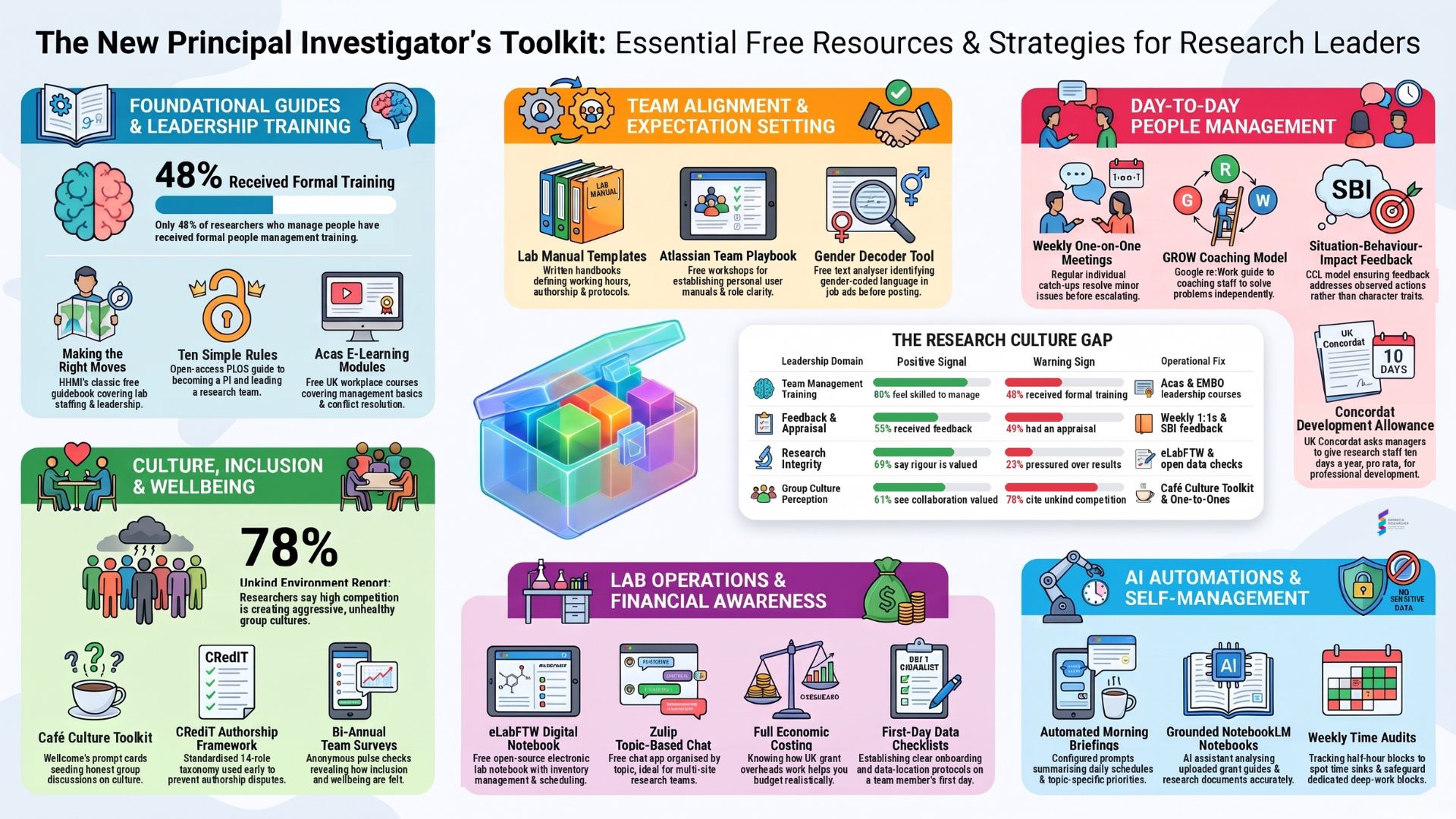
Common questions about free resources for new research leaders
Getting started as a research leader
What free resources are there for new principal investigators?
The most complete free guide is Making the Right Moves from HHMI and the Burroughs Wellcome Fund. Then add the PLOS Computational Biology article “Ten Simple Rules to becoming a principal investigator”. After that, try the free Acas e-learning, the OpenLearn course on leadership and the Faculty Factory eBooks. Our New PI’s Playbook collection has blogs and podcasts from researchers who have recently made the move.
Is there free management training for academics?
Yes. In the UK, Acas runs free online courses on managing people, managing conflict and recruitment, most taking about 30 minutes. The Open University’s free OpenLearn course on leadership and followership takes about 24 hours over eight weeks. Many universities also run free in-house courses for new managers and offer coaching, so ask HR or your organisational development team.
I have been promoted and now manage researchers, but I don’t run a lab. Is this guide for me?
Yes. Most of it is about managing people, which is the same whether your team works at a bench, in a clinic or at a computer. Only the sections on running a lab are written mainly for wet lab groups. Even there, the advice on data, storage and leaving checklists applies to any group.
Leading your team
What is a lab manual, and do I need one?
A lab manual sets out in writing how your group works: hours, communication, authorship, data, safety and what people can expect from you. It saves new starters from guessing and gives you something to point to when expectations are not being met. You do not need to write one from scratch, because many groups share theirs openly. Good examples are the Aly lab manual and the collection kept by Samuel Mehr.
How often should I have one-to-ones with my team?
Most management guides recommend a regular one-to-one with each person, weekly or fortnightly, kept short and rarely cancelled. Agree the timing with each person, since a new PhD student may need more time than an experienced postdoc. The Manager Tools podcast and Google’s re:Work guide both explain how to structure them.
How do I give difficult feedback to someone in my team?
Use the Situation-Behaviour-Impact model. Describe when and where it happened, the specific behaviour you saw and the effect it had. Then ask what the person was trying to do. Keep to things you observed rather than judgements about character, give the feedback soon after the event, and do it in private. Our feedback builder will help you prepare.
How do I manage people who used to be my peers?
Talk about the change openly with each person rather than pretending nothing has changed, and agree how you will work together now. Be consistent and fair, since others will watch how you treat former friends. Acas’s new manager training is designed partly for people promoted over their peers.
Your responsibilities as a manager
What does the Researcher Development Concordat expect of me as a manager?
Your employer may have signed the Concordat. If so, you are expected to allow your research staff at least ten days a year, pro rata, for development. You should also hold career development reviews with them and support their careers beyond academia as well as within it. Finally, you are expected to take part in leadership and management training yourself. The Concordat website has a short page for managers.
How can I avoid authorship disputes in my group?
Talk about authorship at the start of each project and write down what you agree, then revisit it as the work changes. Using the CRediT list of 14 contributor roles makes the conversation about who did what. Put your group’s authorship approach in your lab manual, so everyone knows the rules before they matter.
How do I support someone in my team who is struggling with their mental health?
Have a private conversation, listen, and ask what would help, then agree any changes to their work. You are not expected to be a counsellor. Instead, learn what your institution offers and point people to it. That might be occupational health, an employee assistance programme or mental health first aiders. The MHFA England Line Managers’ Resource is a free, practical guide.
Tools, time and hiring
What free software helps run a lab or research group?
eLabFTW is a free, open source lab notebook with inventory and equipment booking built in. Zulip offers free or heavily discounted plans to academic research groups for team chat. DMPonline is free for data management plans, and Rallly is a simple free scheduler for meetings with external collaborators. Check what your institution already provides before setting up anything new.
Can I use AI tools like ChatGPT or Claude to help run my group?
Yes, for routine work such as first drafts of a lab manual, meeting actions, plain-English summaries of policies and rehearsing difficult conversations. Start with the tools your university has approved, as many are free through your staff login, and check its policy before you connect an agent to your email or files. Keep anything about a named person’s performance, health or pay out of free public tools, and use your institution’s approved version instead. Check the facts before you rely on them. If you review grants, follow the funder’s rules: UKRI does not allow reviewers to put any part of an application into an AI tool.
How can I write a job advert that attracts a wider range of applicants?
A long list of essential criteria can read like a list of reasons not to apply, so cut it back to the skills someone will use in their first year. If you can offer part-time hours, flexible start times or help with visas, say so plainly. The free Gender Decoder will flag words such as “competitive” and “dominant” that can put some applicants off. Our guide to writing, auditing and fixing academic job descriptions covers the rest, from the person specification to how the role links to your university’s pay grades.
How should a new PI manage their time?
Most new PIs are surprised by how much of the week disappears into email and admin once they measure it. Even a rough record of one ordinary week gives you something to work from. After that, book your own writing time into the diary as though it were a meeting with your head of department. In the first year you will be asked onto committees, panels and projects, and it is worth saying no more often than feels comfortable. If you want to see where your hours go, try the week planner further down this page.
Books, podcasts and training
What books should a new PI read?
If you are setting up a lab, start with At the Helm by Kathy Barker and Lab Dynamics by Carl and Suzanne Cohen. On managing people, try The Making of a Manager by Julie Zhuo and Radical Candor by Kim Scott. The Fearless Organization by Amy Edmondson is the one to read on team culture. Making the Right Moves is free to download.
Are there podcasts for new research leaders?
Faculty Factory covers academic leadership and faculty development. Nature’s Starting up in science follows two new PIs over three years. Drs Confess, the ALBA Network’s From Postdoc to PI and Changing Academic Life are all worth a listen. For general management skills, try Manager Tools.
What is the EMBO Laboratory Leadership course?
A training course for life science group leaders and senior postdocs, run in person at several venues and online. It covers leadership, communication, feedback, conflict and recruitment. Fees vary by venue, and EMBO Young Investigators and Installation Grantees may be eligible for a fee waiver. Ask your institution whether it will pay.
What is a retrospective, and how can it help a research team?
A retrospective is a short meeting at the end of a piece of work. The team discusses what went well, what did not and what to change next time. Software teams use them routinely. In research, they work well after a grant submission, a paper or a big study. Atlassian has a free guide to running one.
We last checked the resources, prices and links in this guide in November 2026. They change often, so please check each one’s own website before relying on anything here. Dementia Researcher has no commercial relationship with any of the organisations or products listed. If you use something that deserves a place in this guide, let us know at dementiaresearcher@ucl.ac.uk.
 LSE Impact Blog
 Nature Careers Blog

 Dr Becky Carlyle