 Print This Post
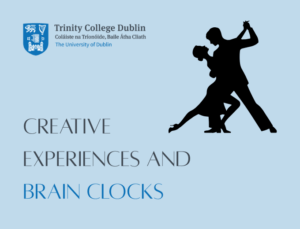 A new study published in Nature Communications suggests that engaging in creative pursuits — whether dance, music, visual arts, or even strategy video games — is associated with a measurable slowing of “brain aging.” In this work, a large international team used brain clocks (computed from EEG/MEG functional connectivity) and computational modelling to show that more creative experience corresponds to a delayed brain age across multiple domains.
The findings not only support the long-suspected connection between creative activity and brain health, but also begin to unpack possible mechanisms underlying this effect.
What is a “brain clock”?
Just as a biological clock can estimate a body’s “biological age” (versus chronological age), a brain clock is a model that estimates how “old” a brain looks or behaves, based on neural metrics. The difference between predicted brain age and chronological age is called the the brain age gap (BAG). A positive BAG suggests the brain appears older than the calendar age (accelerated aging), while a negative BAG suggests the brain looks younger — i.e. delayed aging.
Previous work has shown that various neurological and psychiatric conditions tend to show accelerated brain aging, and that lifestyle, disease, and environmental factors can modulate the BAG. What has been missing until now is rigorous evidence that creativity—or engagement in creative domains—can shift this brain clock in a protective direction.
How the study was conducted
The team assembled data from nearly 1,500 participants across multiple countries, using EEG and MEG recordings to build and test brain-age models. Nature
Training the brain clock.
- They used a subset of ~1,240 participants to train support vector machine (SVM) models, using source-localized functional connectivity (i.e. correlations in electrical activity between brain regions) in the 8–40 Hz band. Nature+1
- The model achieved reasonable performance (mean absolute error ~ 8.7 years, correlation r ≈ 0.74) in predicting chronological age. Nature
- From that, for each subject they calculated the BAG (predicted age minus actual).
Testing creativity / expertise.
- They recruited groups of experts vs matched non-experts across four domains: tango dancers, musicians, visual artists, and real-time strategy gamers (StarCraft II). Nature
- In a separate “learning” experiment, non-expert participants underwent a short training program in StarCraft II, with EEG tracked before and after. Nature
- The key measure was the change or difference in BAG between experts vs non-experts, or pre- vs post-training.
Key findings
Expert creative practitioners show delayed brain aging
Across all four domains, individuals with high expertise had more negative BAGs (i.e. biologically “younger” brains relative to their age) compared to matched non-experts. For example:
- Tango dancers: ΔBAG ≈ –5.5 years
- Musicians: ΔBAG ≈ –5.4 years
- Visual artists: ΔBAG ≈ –6.2 years
- Gamers: ΔBAG ≈ –5.4 years
Nature
These effects were statistically significant, and the magnitude of the effect tended to scale with degree of expertise: the more skilled participants had lower (more negative) BAGs. Nature+1
Short-term learning also shows effects, though smaller
In the video game training study, participants after training showed reductions in BAG (i.e. more negative) by about 3 years on average. Nature Additionally, participants whose performance improved more (measured via actions per minute, APM) also tended to show stronger BAG reductions. Nature
While this effect is more modest than the expertise differences, it indicates that even short-term creative learning may nudge the brain clock in a healthier direction.
Mechanisms: connectivity, efficiency, coupling
To move beyond correlation, the authors conducted graph-theoretic analyses and generative modeling to propose mechanistic links:
- Network efficiency: More negative BAGs correlated with higher local and global network efficiency — i.e. the brain’s networks were better organized for information flow and processing. Nature+1
- Global coupling: Using whole-brain modeling, they found that long-term creative expertise was associated with stronger biophysical coupling parameters, suggesting more integrated and well-coupled brain dynamics. Nature
- Hubs vulnerable to aging: The regions showing the greatest connectivity increases in creatives tended to overlap with brain hubs that are vulnerable to aging — particularly in frontoparietal networks involved in attention, motor control, coordination, and related creative processes. Nature
- Meta-analytic mapping (via Neurosynth) linked these connectivity changes to cognitive domains such as rhythm, movement, imagination, visual processing, attention, and coordination. Nature
In short, the data suggest that creative experiences may help reinforce or rewire brain networks in ways that resist age-related decline.
Dr. Agustin Ibanez, senior and corresponding author of the study, Professor in Brain Health at the Global Brain Health Institute and School of Medicine, Trinity College Dublin, and Director of the Latin American Brain Health Institute (BrainLat), Universidad Adolfo Ibañez, said:
“Creativity emerges as a powerful determinant of brain health, comparable to exercise or diet. Our results open new avenues for creativity-based interventions to protect the brain against aging and disease. Our study also showed that brain clocks can be used to monitor interventions aimed to improve brain health.”
Dr. Carlos Coronel, first author and Postdoctoral Fellow at the Global Brain Health Institute, Trinity College Dublin and Universidad Adolfo Ibáñez, said:
“One of our key takeaways is that you do not need to be an expert to benefit from creativity. Indeed, we found that learners gained from brief video game training sessions.”
Implications and caveats
This is a compelling demonstration that creativity (in diverse forms) is not just a flourish — it may have protective, measurable effects on neural aging. A few caveats to bear in mind:
-
Causality and directionality.
While the pre/post learning study hints at causality (creative training shifting BAG), it is modest in scale. The mayor effects in experts remain associative. It’s possible that people with inherently “younger” brains are more likely to pursue creative fields. -
Domain coverage.
The domains studied are broad but not comprehensive (e.g. writing, acting, dance forms beyond tango, literary and cinematic creativity). The authors note the need to test more modalities. Nature -
Model limitations.
EEG/MEG functional connectivity is only one lens into brain dynamics. The brain clock derived here has error (± ~8 years) and is subject to noise, electrode differences, and modeling assumptions. The authors also caution about volume conduction artifacts and sensor-density differences. Nature -
Effect sizes and scaling.
The effects in long-term experts are moderate-to-large, but in short-term learning modest. It remains to be seen how much “creative dosage” is needed to produce sustained effects, and whether such interventions can help prevent or slow neurological decline in aging or disease. -
Population and diversity.
The sample is international and diverse, which is a strength. Nevertheless, certain groups (e.g. gender distributions in gaming) were constrained by available data. The authors also controlled for age, sex, education, and geography, but other confounds (e.g. socioeconomic status, general cognitive activity) may still play a role. Nature
Despite these caveats, the study helps shift creativity from a “nice add-on” to a serious candidate for neuroscientific and public-health interest.
DOI

 Rahul Sidhu
 Dr Clíona Farrell
 Dr Jodi Watt