 Print This Post
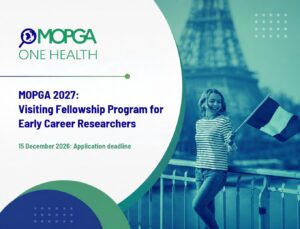 The French government’s Make Our Planet Great Again (MOPGA) programme is offering early career researchers a funded 12-month research stay in a French laboratory, working on the environment, climate change or health through a One Health lens. Applications for MOPGA 2027 are open until Tuesday 15 December 2026.
MOPGA began in 2018 and has become one of France’s flagship postdoctoral mobility schemes. This is its tenth call. It is funded by the French Ministry for Europe and Foreign Affairs, in partnership with the Ministry of Higher Education, Research and Space, and run by Campus France. The aim is to bring international researchers to France to strengthen the science feeding into the UN climate conferences (COPs).
Is it a fit for dementia research? Only for some projects, so read this bit before you start. Five research areas are eligible: Earth system sciences; climate change and sustainability sciences; energy transition; societal challenges linked to environmental issues; and human, animal and environmental health under the One Health approach. That last one is where brain health could come in, but the rules are strict. Projects focused only on medicine or human health, with no genuine environmental or animal health dimension, are not eligible. Work on how environmental exposures such as air pollution, extreme heat or a changing climate affect brain ageing and dementia risk could qualify, if it takes in the interactions between human health, animal health and ecosystems. Check the MOPGA research themes page before you approach a lab. Innovative approaches using advanced technologies get particular consideration.
What you get
Fellows receive a monthly allowance of €2,500 for 12 months, a €500 settling-in allowance, and health cover including health insurance, civil liability insurance and repatriation assistance. You’ll hold the status of French Government Scholarship holder, paid directly by Campus France, and sign a research stay agreement with your host institution.
A few things it doesn’t cover. International travel to France isn’t paid for, though your host lab may be able to help. Host labs get no funding from the programme, so research costs need to be agreed with them. The fellowship can’t be combined with a French employment contract or other individual funding from a French government body, and it isn’t renewable.
Who can apply
You need to have defended your PhD between December 2021 and December 2026 inclusive. The five-year window can be extended for maternity leave, by 18 months per child or the actual length of the leave, with supporting documents. You also need to:
- Hold any nationality except French
- Be applying in order to move to France for the research stay
- Not be living and working in France when you apply
- Not have held a MOPGA fellowship before
All disciplines are eligible, including the humanities and social sciences, as long as the project sits within the MOPGA themes. There is no MOPGA call for Master’s or PhD students.
How to apply
Finding a host lab is part of the application, so start there. You’ll need a scientific supervisor in France who will write a letter of support, co-signed by the lab director, confirming the lab can host your project. Campus France suggests the French research laboratory directories, its Research in France portal, or asking your own supervisors whether they have links with French labs. Have your project clearly defined before you get in touch.
Applications go through the Campus France SMApply platform, in English or French. The form asks for a project summary, background and motivation, objectives, methodology and timeline, relevance to MOPGA, and the international collaboration or impact the project would bring. Each section has a character limit. You’ll also need your CV and publications (four pages maximum), proof of your doctorate, your host supervisor’s CV, between one and three letters of recommendation, and a copy of your passport or ID. Download the application guide before you start.
Applications are assessed by scientific experts appointed by the French research ministry, then a scientific committee makes the final selection. Results are due in May to June 2027, and fellows start their stays between September and December 2027.
If this will be your first fellowship application, our guide to securing your first research fellowship is worth a read, and you’ll find more schemes in our funding calls listings.
Questions go to the MOPGA team at mopga@campusfrance.org. Full details are on the Campus France MOPGA 2027 page.
Apply by Tuesday 15 December 2026.





 Nature Careers Blog