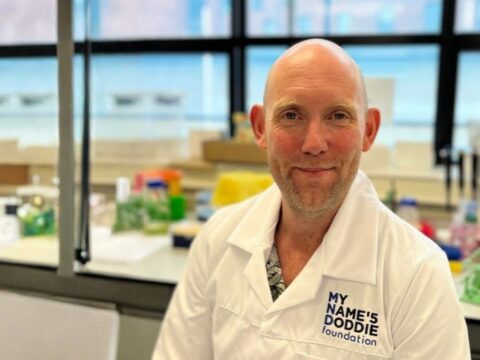
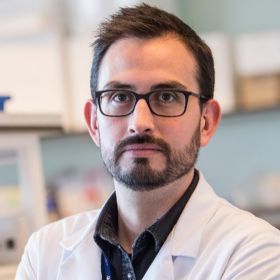
Professor Diego Gomez-Nicola
Name:
Professor Diego Gomez-Nicola
Job title:
Professor of Neuroimmunology
Place of work / study:
University of Southampton
Area of Research:
Microglia, Dementia, Neuroinflammation
How is your work funded:
MRC, Alzheimer’s Association
Tell us a little about yourself:
I obtained a degree in Biological Sciences (Neuroscience) by the Complutense University of Madrid, to start my PhD in Molecular Biology (Neurosciences) at the Autonoma University of Madrid, obtaining the doctorate in 2008. During my PhD at the Neural Plasticity Group (Cajal Institute, Madrid, Spain), I studied the role of Interleukin-15, a proinflammatory cytokine, in the control of glial reactivity and neuroinflammation. After my first postdoctoral stage at the National Hospital of Paraplegics (Toledo, Spain), studying the impact of neuroinflammation on adult neurogenesis, I joined, in 2010, the CNS Inflammation Group (University of Southampton, UK) as a postdoctoral fellow of the Spanish Ministry of Education and Science (MEC) and later as an EU Marie Curie fellow, under the supervision of Prof. Hugh Perry. My postdoctoral research focused on studying the regulation of cellular proliferation in prion disease, with a special focus on the innate immune response and adult neurogenesis.
In 2013, thanks to a New Investigator Grant of the MRC, I started my independent research group, supervising since then several research lines, including the regulation of microglial proliferation and activation during chronic neurodegeneration, the control of neurogenesis in neurodegenerative diseases or the design of novel viral strategies for the study of CNS function.
Over the years my research has been supported by UKRI and Charity funding, contributing seminal discoveries around the mechanisms governing microglial dynamics in health and disease, with a direct translational impetus. I am a firm believer in the model of early academic-industrial collaboration as a mechanism to maximise successful, and fast, translational research. I have contributed to, and/or provided leadership for, several public-private initiatives seeking to drive translational research in neurodegeneration. I was a member of the Wellcome Trust Neuroimmunology Consortium, a unique partnership to enable re-purposing clinical assets for Dementia, which translated into a clinical study testing a target my group led on. I led a multi-partner project of the Dementia Consortium, providing target validation for two candidate mechanisms in Dementia, as well as designing assays and new technology around these targets.
In 2019 I joined Eli Lilly as Head of Neuroimmunology to supervise the pre-clinical and clinical portfolio in neuroinflammation. At Lilly I designed and implemented the new strategy in neuroinflammation in AD and pain, including prioritisation of target discovery programmes, and supervised a portfolio of preclinical projects for targeting neuroinflammation in AD and pain, across the UK and US.
Now, as full-time Professor at the School of Biological Sciences, I lead a programme of research studying preclinical therapeutic targeting of neuroinflammation in Alzheimer’s disease, as well as basic mechanisms of development of microglia in rodents and humans. My ongoing interests also include the study of the diversity of the microglial population in development and ageing, with a special interest in the mechanisms governing cell turnover. I am Deputy Chair of the Neuroscience and Mental Health Board of the MRC, and serve as a member of multiple international committees and boards. More recently, I have become the Deputy Head (Research) of the School of Biological Sciences, overseeing the research activity in Biosciences.
More broadly, I am committed to growing and shaping the ED&I agenda. From 2017-2019 I was Chair of the BioSci ED&I Committee and Staff Engagement Champion, leading the implementation of the action plan of the Athena Silver Award. I also contributed to the University Athena Swan Self-Assessment team, recently securing an Institutional Silver Award. While at Lilly, I was the site representative on a cross-site EDI working group, tackling issues such as disparity in maternity leave or flexible working policies.
Tell us a fun fact about yourself:
I’m an avid road cyclist
Why did you choose to work in dementia?
Understanding this disease and finding cures for it are two of the biggest challenges in biomedical research
What single piece of advice would you give to an early-career researcher?
Follow your passion for science, and always follow the data
Favourite film of all time?
Lord of the rings
Favourite ways to unplug and unwind?
Cycling, playing with my kids
 Alzheimer's Association