 Print This Post
Rahul
Today, I have the pleasure of being joined by Prisha Sharma, who works as an Assistant Psychologist in a Neurobehaviour Unit. Prisha and I have both worked in neurological research, but our experiences have taken us in different directions. While my background has been exclusively in preclinical research, Prisha has moved from research to patient-facing clinical work.
There are several discussion points and valuable learning opportunities from this blog that I was particularly keen to explore with Prisha:
- I wanted to explore what changes when you move from studying disease through experiments to seeing its effects on people and their everyday lives.
- What prompted her transition?
- What are the similarities and differences between research and clinical work?
- Were there any surprises along the way?
- How do my preclinical research and Prisha’s clinical work overlap?
- Most importantly, what might someone considering either of our pathways find useful to know?
To start, I wanted to hear more about Prisha’s journey and what led her from neuroscience research towards clinical neuropsychology. Prisha, what has your journey looked like so far, and what led you to where you are today?
Prisha
Thank you, Rahul. I started my journey in Neuroscience when I moved from Hong Kong to Manchester at the age of 18 and studied Neuroscience for my undergraduate degree at the University of Manchester. During my time in Manchester, I did research on folic acid and its awareness in ethnic minorities and worked as a research assistant during the summer. One summer, I worked at the University of Hong Kong as a research assistant, specifically working with preclinical dementia models and assessing their hippocampal function after optogenetic experiments. I then progressed to doing a Master’s in Neuropsychology at the University of Bristol and worked part-time as a special needs teaching assistant while studying, which was my first insight into helping people outside the lab. During my Master’s, I had the privilege of being an Honorary Assistant Psychologist at Oxford University Hospitals and got experience doing research and shadowing cognitive assessments for people with Parkinson’s Disease. My research project for my master’s degree was about the neuropsychological outcomes of deep brain stimulation with Parkinson’s. This more clinical experience made me realise that I much prefer working in clinical settings and with real people rather than researching alone in a lab.
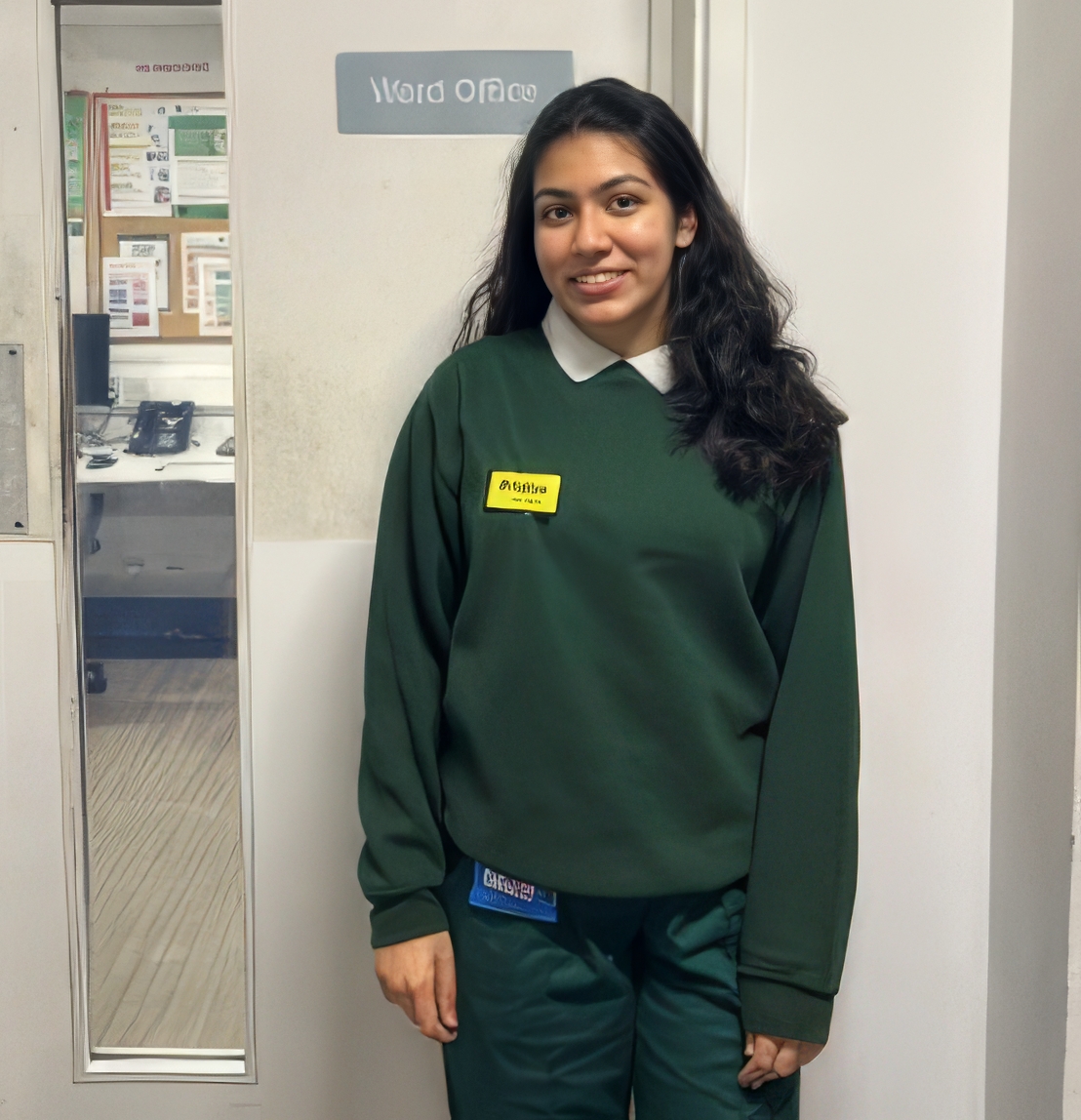
Prisha working as an Occupational Therapy Assistant at the Royal Hospital for Neuro-disability.
I then graduated and worked as a healthcare assistant in London at the Royal Hospital for Neuro-disability, and then became an occupational therapy assistant at the same hospital. I now work as an Assistant Psychologist in Liverpool, to support people with acquired brain injuries, traumatic brain injuries, and related neurodegenerative diseases like dementia. Hopefully one day I’ll pursue the doctorate in clinical psychology and qualify, to then become a Neuropsychologist. It has been quite the journey and to answer your question about what led me here, I’d say the passion and drive to support people and help provide a better life for people with neurological conditions, and of course the support of my loved ones. Qualifying as a psychologist is a long and demanding journey that requires considerable patience, dedication, and resilience. It also requires maintaining a curious and open mind to explore the wide range of psychological and neurological conditions, understanding the various forms of intervention available, and, most importantly, developing the skills needed to effectively manage a crisis.
Rahul
From your experiences, it is clear you have comprehensively experienced both sides of that journey, studying neurodegenerative disease from a research perspective, but also working directly with people living with these neurological conditions. My next question is: What has surprised you most about moving from research in the lab to patient-facing clinical work? Has working directly with patients changed the way you think about the diseases you were previously studying from a research perspective?
Prisha
During university and my time in the lab, I didn’t realise the depth and intensity of these neurological conditions, such as dementia, until I witnessed them when I started working with different clinical populations. I got to see the real debilitating symptoms of neurodegeneration first hand, which I only previously read about in papers and textbooks.
Learning and researching about neurological conditions, in my opinion, does not give you a full picture of what the disease and condition entails unless you’ve seen it for yourself.
Therefore, seeing how these real patients suffer with these diseases is what surprised me the most when I left lab research and moved into clinical work.
What I also realised is that there is so much research out there, but ultimately to implement these new therapeutic techniques and machinery, it all comes down to funding. I remember when I started as a healthcare assistant in a brain injury ward, I thought of all the fancy techniques that I learned in university that could help these patients. But, essentially these treatments that are crafted from the lab, are extremely costly. Patients who are funded by an external body and not receiving private treatment, won’t receive these fancy treatments. While learning about it in university was a great way to know what’s out there; at the end of the day, you need to trace back to the original methods of therapy and treatment. Rahul, what specifically draws you towards the lab and not clinical?
Rahul
For me personally, I love being in the lab and having the opportunity to discover something that is not yet known. I believe there is something incredibly exciting about going into work each day without knowing exactly what the results will show, and then having the chance to piece together what those findings might mean.
I enjoy the process of finding a research gap, asking a question, designing an experiment to test it, and sometimes being surprised by the outcome.
My research into dementia has made this particularly meaningful for me. Trying to understand the complex mechanisms that contribute to diseases such as Alzheimer’s, and how changes in the brain can influence disease progression, keeps me constantly curious. Ultimately, the possibility that the work we do in the lab could contribute, even in a small way, to better treatments or one day finding a cure is what makes me so devoted and passionate about research. For me, that combination of curiosity, discovery and the potential to make a real difference is what keeps pulling me back to the lab and making those long exhausting experimental days worth it.
As someone who has only worked in preclinical research and not delved into clinical work, my next question to you, Prisha, is: What do you enjoy about clinical work that you didn’t get from being in the lab?
Prisha
You mentioned going to the lab and not knowing what the answer will be, and that is also exactly how I feel as an Assistant Psychologist in neurobehaviour. A full day can be carefully planned, but that can change in an instant. Someone may experience an unexpected mental health crisis, or several patients may display challenging behaviours at the same time, meaning planned tasks have to be put aside to respond to what is happening in front of you. This requires remaining calm, adaptable and responsive, while ensuring that the needs and safety of patients remain the priority. For example, individuals with neurological conditions are susceptible to emotional breakdowns, aggressive behaviour, and extreme mood swings, therefore you have to be very flexible with your plan day to day depending on the individuals.
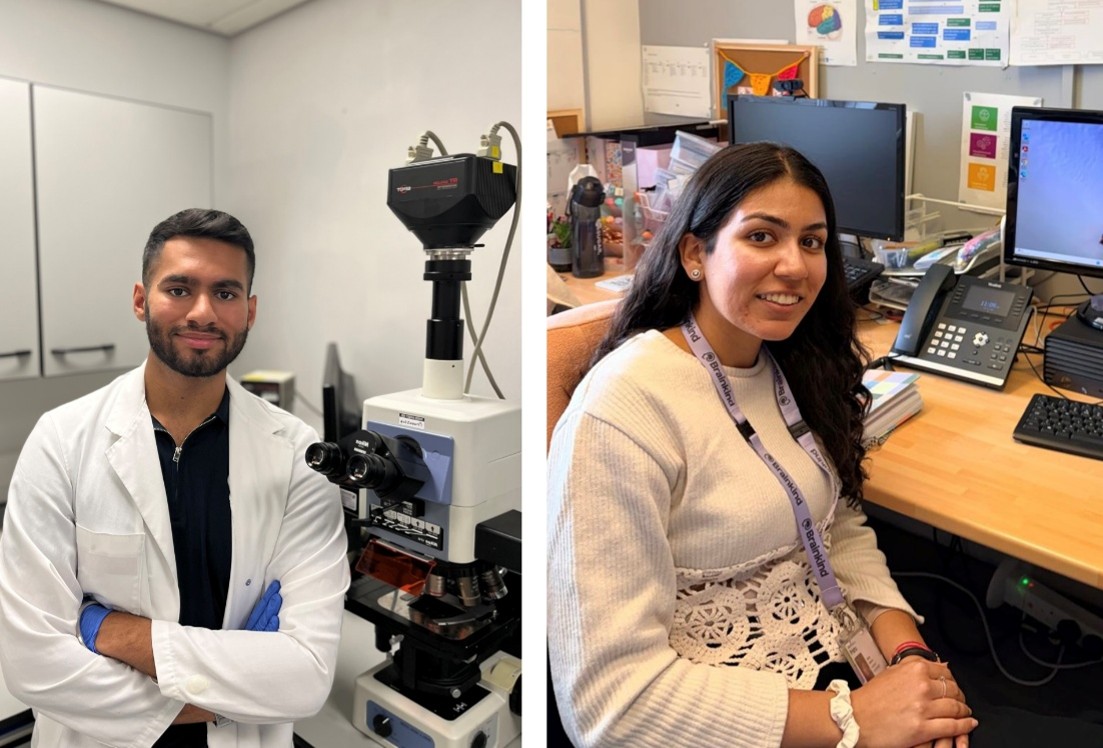
(Left) Rahul working in the lab as a preclinical scientist. (Right) Prisha at work as an assistant psychologist.
In the same way that you want to know what the root causes are for dementia and to find a cure, I want to know what causes all the challenging behaviours and how these behaviours can be supported, especially after a brain injury which adds more complexity to a human being. I really enjoy clinical work because firstly I’m a social and talkative person, so I like to chat to people and get their perspectives, ideas, and to observe their different behaviours. I enjoy clinical work because it’s practical and you can solve it either instantly, or during a short period of time, and you can really see the progress that is made. My personality is such that I want to fix things quickly, therefore research didn’t suit me because it’s a very long process to lead to one outcome, which may or may not show significance. When I receive a new admission, respond to a crisis, or when a patient comes to me with a problem, I immediately try to find ways to help or talk things through with them as soon as possible. Knowing that I have been able to make a difference, even in that moment, gives me a sense of peace and fulfilment.
Rahul
Another aspect we wanted to explore in this blog is the relationship between the two worlds of research and clinical. The question is: Do you see research and clinical work as separate paths, or do you think there is more overlap between them than people might realise?
I’ll answer this first from my perspective, which comes from a preclinical dementia research view. Although Prisha’s clinical work is focused on people with traumatic brain injuries and related neurological disorders, and my work focuses on preclinical dementia models, there is actually quite a bit of overlap in the underlying questions we are interested in. Both aspects involve understanding what happens when the brain is damaged or no longer functioning as it normally would, and how those changes affect processes like memory, attention, behaviour, decision-making, and day-to-day functioning. From my side, I encounter these questions through a preclinical aspect, as I’m interested in the biological mechanisms underlying neurological disease. I want to know what is happening at the level of cells, proteins, and pathways, and how this affects cognitive decline. So although the conditions we work with are different, there is a shared interest in understanding how changes in the brain translate into changes in cognition and behaviour. The difference is largely where we approach that question from. I now ask the same question to you, Prisha.
Prisha
That is a good point about the intersection of cognitive functions that we examine at our respective workplaces. You and I both look at memory and how we can help with cognition. The key difference in our work is how we approach it. You use preclinical models and lab experiments, whereas I perform paper-based cognitive assessments and practical interventions about improving their memory for humans with brain injuries. You investigate the cellular and biological mechanisms of cognitive domains to determine a cure for something, whereas I investigate the after-effects of a brain injury and how to maintain cognitive function afterwards, and poor memory and mild cognitive impairment are a massive cognitive deficit after a brain injury. Brain injuries are mostly irreversible so whilst I am not looking for a cure, I look at how to sustain and improve cognitive abilities.
The type of research you do, Rahul, plays an important role in helping clinicians develop an initial understanding of how heart disease and changes in the brain’s blood vessels affect Alzheimer’s disease. If I were to encounter a patient with Alzheimer’s disease and a history of heart disease, your research is something I would look back to and keep in mind when considering their symptoms and clinical presentation. It would also be interesting to see whether the findings from your work in experimental models translate into what we observe in humans. What makes your research particularly valuable is that it is not purely biological and has potential relevance to cognition, behaviour and, ultimately, clinical practice. Understanding the underlying pathology can help us better appreciate how these changes may manifest in patients, and your research contributes to building that bridge between lab findings and what we see in the clinic.
Rahul
That is a very good point, the key is in bridging the gap between preclinical work and clinical work. Finally, for someone interested in neuroscience or dementia research, but unsure whether they want to pursue a research or clinical career, what would you tell them to think about before choosing between the two? This is particularly relevant as you have worked in both domains.
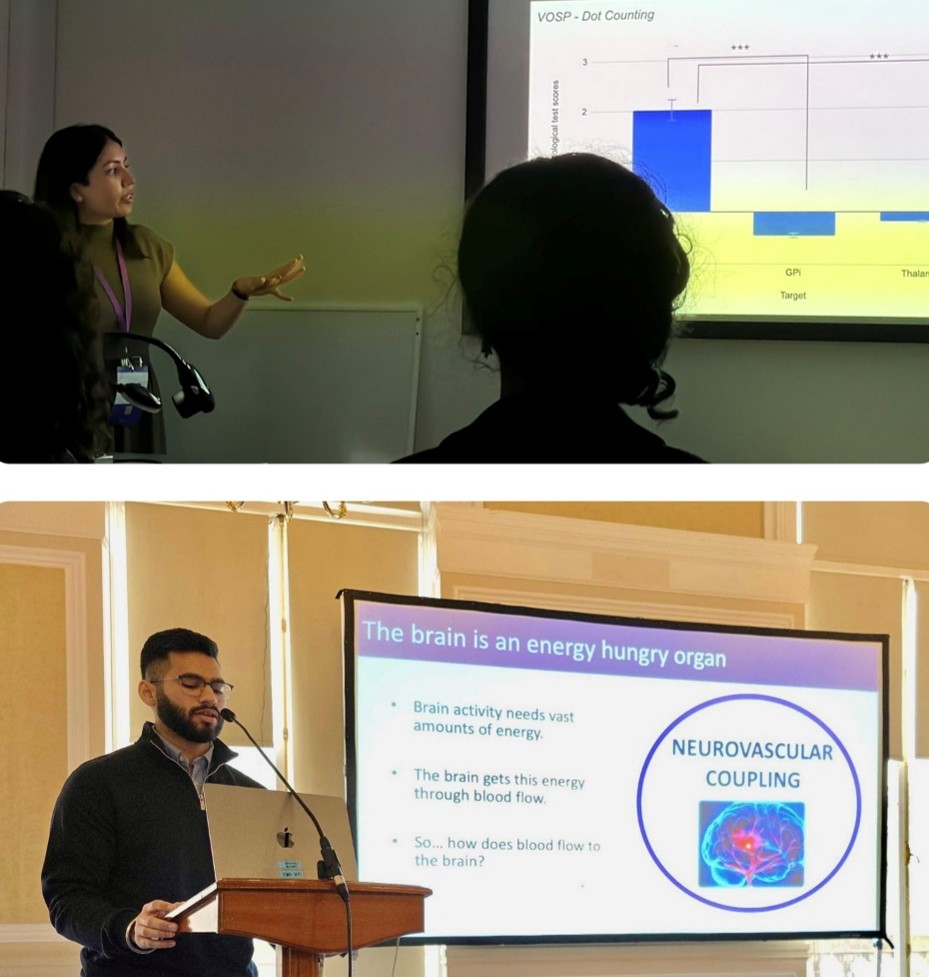
(Top) Prisha presenting her clinical research as an assistant psychologist. (Bottom) Rahul presenting his preclinical research.
Prisha
The first bit of advice I would say is to choose the pathway that is suitable for you and your personality. For me, I like working with people and learning how to make a difference practically and in the moment, so working in a lab for the entire day with all sorts of fancy equipment was not my calling. Working in a hospital or a clinical atmosphere was what I’ve always wanted. So getting experience in different environments is definitely helpful for you to learn which atmosphere is most suited for you because at the end of the day, it’s your career for the rest of your life. Also, just because you’re in clinical, it absolutely does not mean you cannot get involved with research. If you love both aspects, then balancing both research and clinical side-by-side is definitely possible. For example, you can work your day job in a hospital but also have additional research projects looking at different interventions, patient cohorts, and cognitive domains/diagnoses that you work with specifically. As a clinical healthcare worker, there are still opportunities to publish papers, present at conferences and network with fellow clinical workers for more opportunities.
Another aspect of choosing research or clinical is that for clinical, you need to have the patience, resilience, and professionalism to handle people’s challenging behaviours. Brain injuries involve people who can be aggressive, rude, violent, and lack insight that they have a brain injury. In these moments, you cannot be frightened and you need to know how to handle unexpected behaviours in the moment. For example, I’ve worked with patients who have been verbally abusive towards me, due to their level of disinhibition, but the key element about being a clinician is not to take offence to it.
In summary, I’d say it’s not only about your academic ability, but also how you can approach the job. Patients aren’t walking into the clinic hoping to be seen by a textbook. They are walking in hoping to feel safe and have a person to talk to. And safety isn’t something you earn by sounding knowledgeable, it’s something you earn by being present, being consistent, and being genuinely curious about their experience instead of eager to interpret it.
Rahul
Thank you for all your advice and insights Prisha, it was great to hear from someone who has experienced both preclinical and clinical settings. We have also learnt about two different perspectives in dementia care and research, from Prisha’s patient-facing view as an Assistant Psychologist, and from my preclinical, lab-based view. The key takeaway is that it is important to find the career path that is right for you. Both clinical and research settings can make a meaningful difference to patients, albeit in different ways.
It is also important to recognise that bridging the gap between preclinical research and clinical practice is not only possible, but very achievable.
The two fields can complement one another, with research helping to inform clinical understanding and clinical experiences helping to shape the questions we investigate in the lab.

Rahul Sidhu
Authors
Rahul Sidhu is a PhD student at The University of Sheffield, focusing on the effects of heart disease on dementia in preclinical models of Alzheimer’s disease. His research aims to uncover how cardiovascular health influences neurodegenerative conditions, potentially leading to novel therapeutic strategies.

Prisha Sharma
Prisha Sharma is an Assistant Psychologist at Brainkind, working in a neurobehavioural service that supports people with acquired and traumatic brain injuries. She studied Neuroscience at the University of Manchester and Applied Neuropsychology at the University of Bristol, and hopes to train on the Doctorate in Clinical Psychology and qualify as a Clinical Neuropsychologist.


 Dementia Researcher
 Rahul Sidhu


 Professor Louise Serpell