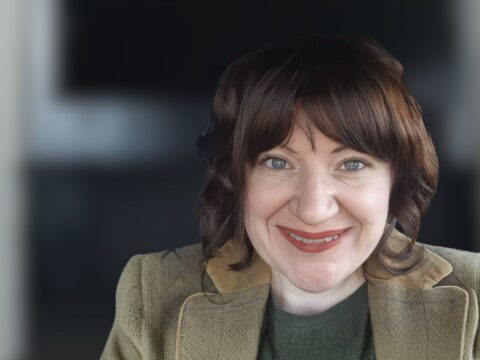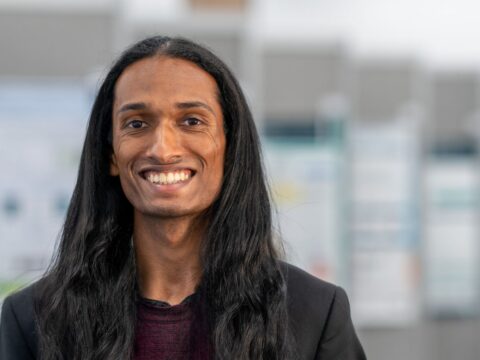

David Whiteside took a less conventional route into dementia research, beginning with a degree in mathematics and philosophy before retraining in medicine. An NIHR Academic Clinical Fellowship introduced protected opportunities for research during his clinical training, followed by a PhD at Cambridge and an NIHR Clinical Lectureship. Here he reflects on making space for research, the importance of mentors and the value of bringing clinical knowledge into academic work.
“Don’t be worried about contacting people whose ideas interest you and you want to work with”
A different starting point: mathematics and philosophy
I did not start out planning a conventional academic medicine career. My first degree was in mathematics and philosophy at the University of Oxford, from 2004 to 2008. After graduating, I took a year doing a variety of jobs, including an internship at the Royal College of Surgeons, running a Christmas card shop and working with the charity arm of Which! magazine. I then entered graduate-entry medicine at St George’s, University of London, in 2009.
The route might appear unusual, but the interests that led me into research were already there. I have long been fascinated by the mind and language: how they work, what happens when they change, and what that means for people living with neurological disease. I was also aware of how much remained unsolved clinically. I wanted to bring my interest in numbers and mathematics into work that could address a significant need.
Graduate-entry medicine took me through to 2013, and then I began junior medical training. In purely clinical work, I sometimes missed the mathematical side of my earlier studies. Rather than leaving medicine behind, I began to look for a way of combining those interests.
Making research part of clinical training
By the time I was in clinical training, I knew I wanted more opportunities to ask research questions as well as care for patients. From 2018 to 2020, I held an NIHR Academic Clinical Fellowship at the University of Cambridge, alongside work as an honorary neurology registrar.
For someone following a clinical training pathway, it can be difficult to see exactly how research fits alongside the demands of acquiring clinical experience. The fellowship was an important foundation because it created opportunities to develop that side of my career without treating medicine and research as two entirely separate choices.
One practical part of finding the right route was talking with mentors. Discussions with people who later became my PhD supervisors were central to identifying the opportunity and preparing to apply. The formal award matters, but so do the conversations that help you work out where it can take you and what sort of research you might be able to contribute.
Learning to ask questions as a researcher
I moved into a PhD in the Department of Clinical Neurosciences at Cambridge in 2020 and completed it in 2024. My PhD was funded by the Cambridge Centre for Parkinson-plus. That period gave me the opportunity to concentrate on questions about brain networks and neurodegenerative disease. It also let me reconnect with the data-focused side of science that had first interested me. I became increasingly drawn to the challenge of linking biological changes to the way symptoms emerge, and to understanding whether network-level measurements could reveal how diseases evolve over time.
An example of that work is a study I led with colleagues, published in Nature Communications in late 2023, which examined how synaptic changes shape the organisation of brain networks in frontotemporal dementia. We showed that alterations in synaptic function predict connectivity changes more accurately than conventional atrophy measures, and that these network shifts help explain how patients present clinically.
That connection between measurements and clinical questions is what interests me: not simply whether a scan or laboratory marker differs, but whether it can reveal how disease is unfolding and where the earliest measurable changes occur. The ability to quantify those early network and synaptic shifts matters because it opens the door to tracking disease before atrophy occurs, identifying meaningful inflection points, and ultimately supporting trials that intervene at the right moment.
Returning to the clinical pathway
In 2023, I returned to specialist registrar training in neurology in the East of England, where I trained until 2024. That move back into clinical training is an important part of my story because a clinical academic career is not always a straight line through university job titles. The clinical and research stages need to work together.
Looking back, I wish I had been more aware of how valuable clinical experience can be when applying for doctoral research. It is easy to focus on the methods and technical skills you need to learn. But understanding the practical problems that patients and services face is already a contribution: it can shape a question that is worth investigating.
Why an NIHR Clinical Lectureship matters
In 2024, I took up an NIHR Clinical Lectureship at Cambridge, which I expect to run until 2028. At this stage, the challenge is different from the one I faced before my PhD. I am now trying to develop greater independence as a researcher, while maintaining my clinical career.
The lectureship has been crucial because it provides protected research time and training opportunities. It is difficult to overstate the value of having room to think. Analysing a complicated dataset takes concentration; so does deciding whether an apparent pattern is really meaningful, comparing ideas with collaborators and recognising which questions will stand up to scrutiny. This has allowed me to gain new skills in genetics and omics, and to build collaborations that would not have been possible within standard clinical rotas.
I have been able to give data the attention it needs and think properly about the difficult questions in the field. That is particularly useful in dementia research, where the information available from a scan, a blood test or another biological measurement may each reveal a different part of the same process. The aim is to bring them together to make diagnosis and prediction earlier and more accurate.
Working towards better diagnosis and prediction
My current research combines imaging, blood-based biomarkers and multi-omic measurements to investigate pathology and prognosis in syndromes associated with frontotemporal lobar degeneration. These conditions can be difficult to identify and predict, and they do not all progress in the same way. The challenge is to understand what different measurements can tell us about the individual person, rather than simply describe averages across a group.
A further example of my published work is a study of the early and presymptomatic stages of semantic dementia, published in Brain in 2025. Using brain imaging and clinical information, our team examined signs that can appear before symptoms are recognised, including a series in which changes were evident several years before symptom onset. We used this approach to address a long-standing problem of why we see more people with atrophy on the left than the right, a difference we did not see when we looked at the population at large.
These research examples show why I am interested in data that connect biological change to clinical questions. A measurement only becomes useful if we understand its limits and can eventually use it to improve the timing, accuracy or meaning of information given to patients and families.
A grant to support the next stage
In 2026, I was awarded an Academy of Medical Sciences Starter Grant for Clinical Lecturers. The project had not yet started when I completed the questionnaire. This grant is separate from the NIHR Clinical Lectureship, but it sits within the same broader effort to establish an independent programme of research.
Career development is often discussed in terms of the next job title or the next successful funding application. For me, what matters is what those opportunities enable. Protected time, appropriate training, critical conversations and access to good collaborators make it possible to turn ideas into carefully tested research. The NIHR stages have created some of that space; the new grant provides another opportunity to develop the work.
What I would tell someone considering this route
First, do not be afraid to contact people you think could help. Research is built through conversations, and the person who might become a mentor or collaborator is not necessarily someone you already know.
Second, speak to as many people as you can about your plans, including people outside your immediate group. It is tempting to discuss an idea only with those who already understand it or agree with it. People from elsewhere can reveal assumptions, ask the questions you have missed and help you strengthen the project.
Third, take the protected research opportunities within the clinical academic pathway seriously. There is particular value in the post-CCT research time within an Academic Clinical Lectureship. It is a chance to build the skills, evidence and working relationships needed for research that continues beyond one appointment.
Above all, I would want another clinician to understand that their professional experience is an asset when moving into a PhD or research role. You are not starting from nothing. The insight you have gained from clinical training can help you recognise questions that are worth answering.
Three practical steps
- Contact a potential supervisor or mentor whose work interests you. Ask about their research and what experience would help someone follow a similar clinical academic route.
- Get external feedback on your idea. Speak to people from other teams or disciplines and ask where your proposed question is weakest.
- Map your next research stage alongside your clinical commitments. Find out what protected time, formal training and supervision an NIHR Academic Clinical Fellowship or Clinical Lectureship would actually offer.
What I wish I had known earlier
I wish I had known earlier how valuable you are as a clinician when applying to do a PhD. The expertise you bring from the clinical setting helps you identify important questions. That experience should be seen as part of the value you offer a research team, not something you have to put aside to become a researcher.
Useful links
- David’s research on early and presymptomatic semantic dementia
- What makes an NIHR doctoral fellowship application excellent?
- Choosing your mentors
- Browse funding calls on Dementia Researcher
- Join the Dementia Researcher Community
- Explore the Dementia Researcher Career Framework
 Nature Careers Blog
 Dr Yvonne Couch


 LSE Impact Blog