In brief
The 19th Clinical Trials on Alzheimer’s Disease conference (CTAD 2026) ran from 16 to 19 November 2026 in Boston. The week’s story was a field widening out beyond amyloid: tau-lowering drugs, oral tablets and treatments for psychosis all had their moment, while the approved antibodies brought longer-term and real-world data to a debate about how much they really help. Blood tests were in almost every session, and there were plenty of misses too, which are worth reading as closely as the wins.
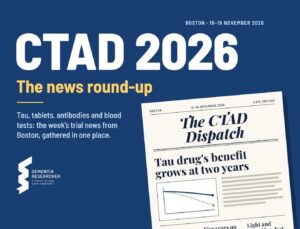 The Clinical Trials on Alzheimer’s Disease conference (CTAD) is the meeting where drug trial results are shared. Unlike the big multi-track conferences, everything happens in one ballroom, so the whole room hears the same data at the same time. CTAD 2026 was back in Boston, at the Marriott Copley Place, from 16 to 19 November, with every session also livestreamed.
Dementia Researcher wasn’t at CTAD 2026, so this isn’t a first-hand report. Instead, we’ve been through the news outlets, trade press, UK newspaper coverage, company announcements, charity responses and the final conference programme to see what we could find, and pulled the week’s news into one place. Where results come from a company press release rather than a peer-reviewed paper, we’ve said so. It’s worth keeping that in mind throughout: much of what is presented at CTAD is topline data, and the full picture often takes another year to arrive.
The big picture at CTAD 2026: looking beyond amyloid
Going into the meeting, BioSpace described CTAD 2026 as the point where the field begins to look past amyloid. The two approved antibodies, lecanemab (Leqembi) and donanemab (Kisunla), slow the disease rather than stop it, and both carry warnings about ARIA, the brain swelling and bleeding that can show up on scans. So companies are now testing drugs that work in other ways, against tau or through targets such as PDE5 and muscarinic receptors, often with the idea that they could one day be combined with the antibodies.
The antibodies still drew plenty of discussion. Questions about how much real benefit they bring to patients haven’t gone away, and Lon Schneider gave a talk on what the evidence says about whether they change the course of the disease. Alongside that, a meta-analysis looked at how often ARIA happens in everyday clinical practice, and Eisai and Biogen brought new long-term and real-world data, which we cover below.
Who was honoured, and who set the agenda
This year’s CTAD Lifetime Achievement Award went to Jeffrey Cummings of the University of Nevada, Las Vegas, recognised for his work on clinical trial methods, drug development frameworks and the annual Alzheimer’s drug pipeline reviews that many of us use as a reference. He followed it with the opening keynote, on new molecules in Phase 2b.
The other three keynotes give a good sense of where the field thinks it’s heading:
- Geoffrey Kerchner (Roche) on how diagnostics, therapies, trials and ideas about prevention need to evolve.
- Susan Landau (UC Berkeley) on bringing fluid, imaging and other biomarkers together.
- Allan Levey (Emory) on what proteomics can add to clinical trials, beyond amyloid and tau.
Early career researchers in the spotlight at CTAD 2026
Six early career researchers presented as CTAD 2026 Rising Stars, with support from the Alzheimer’s Association:
- Connor Dietz (University of British Columbia)
- Zahra Shirzadi (Massachusetts General Hospital and Harvard)
- Yuta Katsumi (Massachusetts General Hospital and Harvard)
- Dorothy MacFarlane (Adams Clinical)
- Dhruv Kapadia (Stanford)
- Casey Vanderlip (UC Irvine)
If you’re thinking about submitting to CTAD next year, the Rising Stars route is worth keeping in mind.
Tau: Biogen’s diranersen builds its case
The most talked-about result of the week came from Biogen and Ionis, who had a late-breaking symposium to themselves. Two-year data from the Phase 2 CELIA study of diranersen (BIIB080), an antisense drug that reduces the production of all forms of tau, showed the lowest dose (60 mg, twice a year) slowed decline on the CDR-SB by 38% at week 96, a 1.09-point difference. At week 76 that figure was 26%, so the gap appears to be widening over time.
The story got wide coverage in the UK. Reporting led by the Telegraph focused on a 54% difference on a test of memory and thinking, and said British patients are expected to be recruited for the next trial from the spring. UCL’s Professor Cath Mummery, a co-author, said patients were already asking her to take part. Alzheimer’s Research UK’s Susan Kohlhaas welcomed the pace of progress but pointed out that the first drugs to slow the disease are still not available on the NHS.
There are caveats, and analysts were quick to raise them:
- CELIA missed its primary dose-response endpoint back in May, and the medium and high doses did worse than the low dose. Nobody has yet explained that inverse dose response convincingly.
- The 96-week comparison is against participants originally assigned to placebo, some of whom had received diranersen by then, which BMO’s analysts called “imperfect”.
- Confusional states affected 14.8% of people on the 60 mg regimen, up from 13.1% at the July data cut.
- The drug is given by injection into the spine (intrathecally), which will matter for how widely it could be used.
Even so, the Alzheimer’s Drug Discovery Foundation described CELIA as the field’s first randomised evidence that lowering tau may slow cognitive decline, and noted that diranersen lowers tau without touching amyloid, which makes it a natural partner for the antibodies. Endpoints reports that a Phase 3 trial is planned.
Diranersen wasn’t the only tau-lowering approach on show:
- Arrowhead’s ARO-MAPT, an siRNA injected under the skin rather than into the spine, had its Phase 1 data presented by UCL’s Cath Mummery. In October the company reported mean reductions in tau of up to 73% at the highest dose, with dosing potentially every three months.
- Novartis’ NIO752, another tau antisense drug, presented an interim analysis.
- Merck set out the Phase 2 design for MK-2214, an antibody against tau phosphorylated at serine 413, in a trial that aims to enrol 340 people with early Alzheimer’s.
- Voyager’s VY7523, an antibody targeting the C-terminal region of tau, shared baseline characteristics from its Phase 1/2 study.
- Johnson & Johnson gave a whole symposium to what it learned from the failure of its anti-tau antibody posdinemab, with UCSF’s Gil Rabinovici among the speakers. It’s unusual, and welcome, to see a company present its failure in that much depth.
Oral treatments: AriBio and Priavoid
The meeting opened with topline Phase 3 results for AR1001, AriBio’s once-daily oral PDE5 inhibitor (mirodenafil), presented by Sharon Sha of Stanford. POLARIS-AD randomised 1,535 people with early Alzheimer’s to AR1001 or placebo for 52 weeks.
- In the prespecified group of 604 people not taking other Alzheimer’s medicines, AR1001 slowed decline on the CDR-SB by 0.44 points (AriBio puts this as 31%), meeting the trial’s primary objective in that group.
- In the full trial population, which included people on cholinesterase inhibitors or memantine, the difference was 0.11 points and not significant.
- The MMSE showed a nominally significant 0.7-point difference in the monotherapy group; ADAS-Cog13 trended the right way but did not reach significance.
- On safety, there was no ARIA, but more people stopped treatment because of side effects on AR1001 than on placebo (5.2% vs 1.7%), with diarrhoea, dizziness and falls more common.
AriBio plans to take the results to the FDA. The Guardian picked the story up, and Alzheimer’s Society’s Richard Oakley called the results an exciting sign while noting the drug seemed less effective in people already on symptomatic treatments, which needs more investigation.
Germany’s Priavoid presented topline Phase 2 data for PRI-002, an oral all-D-peptide designed to break up toxic amyloid oligomers. The PRImus-AD trial (304 people across six European countries) met its primary safety endpoint but missed its primary efficacy endpoint, CDR-SB at week 48. The headline number the company led with, a 35.9% slowing of decline on ADAS-Cog13 at week 72, was in the per-protocol population; in the broader mITT population it was 26.7% and not significant. Priavoid will present the full dataset in 2027 and is weighing a further study.
Other oral programmes on the poster boards included Alzheon’s valiltramiprosate (new blood biomarker analyses from the APOLLOE4 trial in people with two copies of APOE4), the design of Annovis’ Phase 3 DUET-AD trial of buntanetap, and Galimedix’s planned Phase 2a SAPHARY study of GAL-101.
Amyloid antibodies: the long view and the real world
Eisai and Biogen used CTAD 2026 to put five-year lecanemab data from the Clarity AD extension on the table. Compared with external natural history cohorts, the gap on the CDR-SB kept growing, reaching −2.05 points against ADNI and −2.54 against BioFINDER at five years. The relative risk of progressing to the next disease stage was 36% lower than in ADNI. ARIA-E was concentrated in the first year (13.5%) and fell to below 1.5% a year after that.
The usual cautions apply. Only 351 of the 1,795 people enrolled received five years of continuous treatment, and ADNI and BioFINDER are observational cohorts rather than randomised controls, so these comparisons can’t carry the weight of a placebo-controlled trial.
The real-world data got their own symposium. Three-year results from the LEADER study, covering 560 patients at 13 US sites, found:
- A 76% lower rate of progression to moderate or severe dementia compared with an ADNI-weighted control group.
- 77% of those rescanned had become amyloid-negative by around 18 months.
- 87.5% were still on treatment.
- No ARIA among the 64 patients who moved to the subcutaneous (under the skin) maintenance dose.
- ARIA-E in 6.6% of patients, close to the 6.3% in the ALZ-NET registry, with some differences between women and men.
A separate meta-analysis pooled around 5,000 patients from 16 cohorts in six countries and found lower ARIA rates than in the original trial (ARIA-E 4.0% vs 12.6%). The data are retrospective, with no placebo arm, so the comparisons are indirect.
A Clarity AD spinal fluid substudy looked at the one in five amyloid-positive participants who also had α-synuclein pathology. That group carried more amyloid and declined faster, and lecanemab appeared to work at least as well in them, though the analysis was exploratory and post hoc.
Donanemab was quieter, but Lilly and others brought real-world data on patients receiving donanemab with the modified (slower) dosing schedule designed to reduce ARIA, drawn from the ALZ-NET registry and the NeuroDiscovery AI database. A Japanese group presented two-year real-world trajectories comparing donanemab with lecanemab.
From Roche, the Brainshuttle team presented updated trontinemab data, including the first human imaging of where the drug goes in the brain. Roche’s working theory is that the transferrin-receptor shuttle takes the antibody into brain tissue in a way that spares vascular amyloid, which could explain the low ARIA rates seen so far. Reisa Sperling also presented the design of PrevenTRON, the Phase 3 prevention trial of trontinemab in people without symptoms, which has now started enrolling.
Psychosis and behaviour
Neuropsychiatric symptoms had a strong showing this year.
- BMS’ KarXT (Cobenfy), already approved for schizophrenia, gave the first look at its Phase 3 ADEPT programme in Alzheimer’s psychosis. In the open-label part of ADEPT-1 and the year-long ADEPT-3 extension, hallucination and delusion scores fell. But these data are uncontrolled, the trial’s main relapse endpoint wasn’t reported, and BioSpace reports that analysts at Truist felt the safety and discontinuation data left questions unanswered. The placebo-controlled readouts are expected in 2027.
- Acadia’s remlifanserin presented full Phase 2 RADIANT results. The trial narrowly missed its primary endpoint, but the 60 mg dose showed a consistent signal, larger in people with more severe psychosis. Acadia is pressing on with Phase 3 and has dropped the 30 mg dose.
- Lilly’s mevidalen, a dopamine D1 receptor modulator, missed its primary endpoint in the 304-person Phase 2 PRESENCE-ALZ trial, and Endpoints reports no further development is planned.
- Cannabinoids: the team behind the THC/CBD LiBBY trial, first reported at AAIC in July, ran a symposium on treating agitation in advanced dementia.
Devices: a miss for Spectris
Cognito Therapeutics’ pivotal HOPE trial of Spectris, a headset delivering 40 Hz light and sound at home, was the meeting’s first late-breaker. It missed its primary endpoint in 673 people with mild-to-moderate Alzheimer’s. In the prespecified mild subgroup, results favoured Spectris on all five efficacy measures, and Endpoints reports the company still plans to take the device to the FDA. Those subgroup findings are nominal and not adjusted for multiple comparisons, so they need confirming.
Prevention, inflammation and new approaches
Some of the most interesting work this year was earlier-stage, or outside the drug pipeline altogether.
Lifestyle and prevention
- SINGER, the first large Southeast Asian trial of a multidomain lifestyle programme, presented its two-year results on the opening afternoon. The trial randomised 1,218 older adults at increased dementia risk in Singapore.
- US POINTER reported on how its lifestyle programme affected cardiovascular risk alongside cognition, and Alireza Atri presented PROTECT-Cog, the Phase 3 trial combining lifestyle change with a GLP-1 drug.
- The FINGER team discussed metabolic and inflammatory burden and how it should shape the design of GLP-1 trials.
- A talk on shingles vaccination and dementia added to a growing body of natural experiment studies suggesting the vaccine may delay dementia.
- NewAmsterdam Pharma presented the design of SPINOZA, a 400-person Phase 2b trial of its cholesterol drug obicetrapib in people with preclinical Alzheimer’s, stratified by APOE genotype.
Inflammation and the immune system
- Roche launched TARBELA-AD, a Phase 2 trial of its oral NLRP3 inflammasome inhibitor RG6434, aiming to enrol around 450 people across 17 countries, alongside a symposium on the NLRP3 inflammasome.
- Vaccinex presented work linking its antibody pepinemab to a subset of astrocytes (Ast10) associated with cognitive decline, ahead of a larger Phase 2b trial.
- AC Immune‘s vaccine ACI-24, partnered with Takeda, has produced antibody responses at every dose with no ARIA-E across 74 patients, and a boosted version is now being tested.
Gene therapy, cell therapy and repurposed drugs
- First-in-human data on Wnt-activated stem cells delivered into the brain’s ventricles.
- FDG-PET findings from the AAV2-BDNF gene therapy trial at UC San Diego, which delivers a nerve growth factor into memory circuits.
- A Karolinska study of intermittent rapamycin in early Alzheimer’s, and results for LM11A-31 and MIB-626.
- CervoMed presented interim neflamapimod data in nonfluent variant primary progressive aphasia, a form of frontotemporal dementia, showing plasma NfL held stable over 24 weeks.
The Biotech Showcase, run this year with the ADDF, gave nine emerging companies a platform in front of investors and trialists, covering therapeutics, biomarkers, AI and neuromodulation.
Blood tests, digital tools and how trials are run
For many early career researchers, the most useful part of CTAD 2026 was the methods work rather than the headline drugs. Blood tests in particular were everywhere.
- p-tau217 in every form. Oral sessions compared brain-derived p-tau217 with 328 other plasma proteins, proposed a Unified pTau217 Score so results can be compared across assays, presented a CNS-selective p-tau217 test, and looked at how p-tau217 performs in people with very low amyloid. Lilly compared p-tau217 blood results with autopsy findings in people without cognitive symptoms, and Fujirebio’s Lumipulse test was assessed in cognitively unimpaired people.
- Do the tests work equally well for everyone? Several talks looked at differences between ethnic groups, including mismatches between p-tau217 and amyloid PET results, and amyloid and tau staging across groups.
- Platforms. Alamar Biosciences reported its NULISA platform featured in 46 presentations. Roche presented real-world and health economic data on its Elecsys pTau217 and pTau181 blood tests. Circular Genomics presented circular RNA blood biomarker data from nearly 2,400 people, though these are company figures not yet published.
- Screening for trials. The Alzheimer’s Clinical Trials Consortium showed how using plasma p-tau217 in screening for Cognition Therapeutics’ START study could reduce the burden on participants and sites.
- Digital tools. A symposium covered remote digital biomarkers, from prescreening to AI-assisted assessment, and Linus Health presented six posters on digital cognitive tests. A Cephalgo poster showed that a simple audio processing update can look like cognitive change in speech-based measures, in one dataset moving up to 32% of people between diagnostic groups. Anyone working with speech data in trials should read it.
- AI in trials. Randall Bateman spoke on using agentic AI in Alzheimer’s trials, one of several sessions on AI in trial operations.
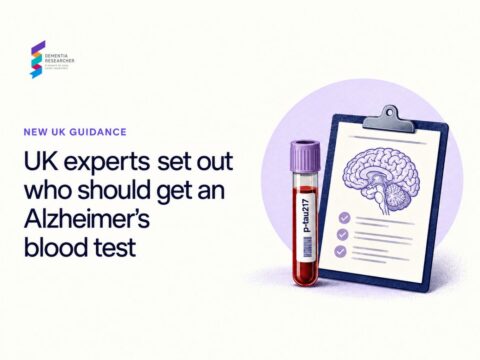
- Who takes part. Talks looked at sex differences in plasma p-tau217, amyloid and tau in the AHEAD 3-45 prevention study, at how well Black Americans are represented, and at Roche’s REACHED pilot to broaden trial recruitment. There’s a UK angle too, with expert guidance this autumn on who should get an Alzheimer’s blood test.
The CTAD 2026 misses at a glance
It’s easy to remember the hits, so here are the trials that didn’t meet their main goal:
- Lilly’s mevidalen (PRESENCE-ALZ, Phase 2), now discontinued
- Cognito’s Spectris device (HOPE, pivotal)
- Priavoid’s PRI-002 (PRImus-AD, Phase 2, primary efficacy endpoint)
- Acadia’s remlifanserin (RADIANT, Phase 2, narrowly)
- AriBio’s AR1001 in its full trial population (the monotherapy group met the primary objective)
Diranersen also missed its primary endpoint back in May, before the longer-term data reframed it. And in the run-up to the meeting, Acumen stopped developing its oligomer antibody sabirnetug after its Phase 2 trial missed in October.
What CTAD 2026 means
If you’re starting out in dementia research, the main thing to take from CTAD 2026 is that the treatment landscape is getting more crowded and more varied. Tau-lowering drugs now have randomised data behind them, oral drugs are reaching Phase 3, psychosis and agitation are attracting serious investment, gene and cell therapies are reaching patients, and blood tests are becoming routine in how trials are run. At the same time, the argument over how much the antibodies really help hasn’t gone away, and real-world data are now carrying much of it.
Much of what was presented this week is topline data from company releases. The full analyses, and the peer-reviewed papers, will tell us more. The organisers’ journal, the Journal of Prevention of Alzheimer’s Disease, usually publishes the CTAD abstracts and is worth watching over the coming months.
If you missed our coverage from the summer, our AAIC 2026 podcast highlights are a good companion to this round-up.
Were you at CTAD 2026?
As we said at the start, we weren’t in Boston this year, so this round-up is only as good as what made it into the news. If you were there, we’d love to hear from you. Perhaps you presented a poster or a talk, or heard something in the ballroom that the coverage missed. Leave a comment below and tell us what caught your eye, what we’ve missed, and what it means for early career researchers. Links to your poster, slides or paper are welcome too.
This round-up draws on the CTAD 2026 final programme and reporting from BioSpace, Endpoints News, Fierce Biotech, NeurologyLive, Psychiatric Times, pharmaphorum, Clinical Trials Arena, the Telegraph, the Guardian, LBC, the Alzheimer’s Drug Discovery Foundation, and company announcements from Eisai, Biogen, Roche, Lilly, AriBio, Priavoid, Acadia, Bristol Myers Squibb and others. Figures quoted from company press releases have not yet been peer reviewed.
 Nature Careers Blog
 NIHR



 Alzheimer's Association