 Print This Post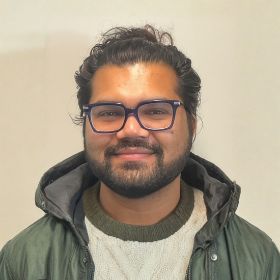
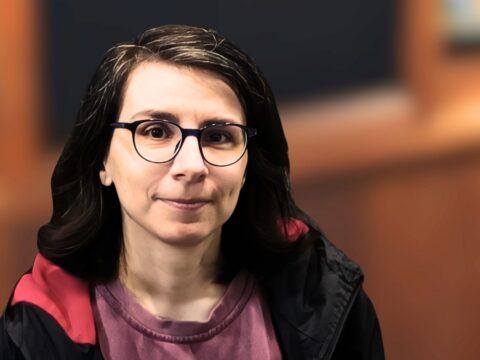
Dr Pulkit Khandelwal
Name:
Dr Pulkit Khandelwal
Job title:
Postdoctoral Research Fellow
Place of work / study:
Harvard Medical School and Massachusetts General Hospital
Area of Research:
My primary research focus is to develop computational methods to analyze high resolution postmortem brain MRI and link morphometry with histopathology to study both neurodevelopment and neurodegeneration in the human brain.
How is your work funded:
National Institutes of Health
Tell us a little about yourself:
I’m a postdoctoral research fellow at Harvard Medical School and Massachusetts General Hospital where I’m advised by Prof. Lilla Zollei as part of the Laboratories for Computational Neuroimaging at the Athinoula A. Martinos Center for Biomedical Imaging. Previously, I was a postdoc in the department of Radiology at the University of Pennsylvania where I also completed my PhD under the supervision of Prof. Paul Yushkevich within the Patch-lab. Before that, I completed MSc. in computer science in the Shape Analysis Group at McGill University where I was supervised by Prof. Kaleem Siddiqi and Prof. Louis Collins at the Montreal Neurological Institute. Even before that, I obtained a BTech in Electronics and Communication Engineering at VIT university, Vellore and completed my Bachelor’s thesis under the supervision of Dr. Steffen Bollmann at the University of Queensland, Australia.
Tell us a fun fact about yourself:
I attended nine schools until grade twelfth!
Why did you choose to work in dementia?
I chose to work in dementia because I was fascinated by the opportunity to study the human brain across multiple scales and imaging modalities. By bringing together in vivo MRI, high-resolution ex vivo postmortem MRI, and histology, we can map brain anatomy in remarkable detail and connect changes seen during life with the underlying tissue pathology. I was particularly drawn to the challenge of building computational tools that can align and analyze these very different types of data. This combination of detailed anatomy, brain mapping, and method development offers a powerful way to better understand how different forms of dementia affect the brain.
What single piece of advise would you give to an early-career researcher?
Read widely and understand the foundations of your field. Do not focus only on the latest papers; read the classic studies, trace how the major ideas and methods evolved, and revisit the basics until you understand them well. Books, including well-written popular science, can also provide valuable historical and broader perspectives that individual research papers often miss. Most importantly, remain curious and never hesitate to ask for help. Good research is built not only through independent thinking, but also through conversations with people who see the problem differently.
What book are you reading right now? Would you recommend it?
Mother Mary Comes to Me Book by Arundhati Roy
Favourite film of all time?
Seven Pounds
Favourite ways to unplug and unwind?
Getting lost in a good book, exploring independent bookstores and cozy coffee shops, listening to indie music, and taking long walks around a new neighborhood or by the water!
What’s the best decision you ever made?
Choosing to follow my curiosity, even when it meant moving across countries and disciplines.
What’s your favourite vacation spot?
The Himalayas
Do you collect anything?
Books from second-hand bookstores, vinyl records, postcards, stamps, and coffee bags from memorable cafés and my travels.