 Print This Post
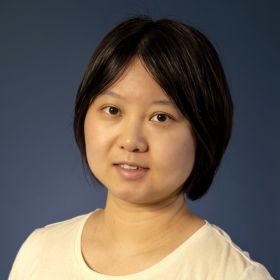
Dr You Lily Cheng
Name:
You (Lily) Cheng
Job title:
Instructor
Place of work / study:
McLean Hospital / Harvard Medical School
Area of Research:
My research uses computational methods and multimodal neuroimaging to understand why Alzheimer’s disease affects people differently, with a particular focus on neuropsychiatric symptoms, individual differences, and disease progression.
How is your work funded:
My research is supported by an Alzheimer’s Association Research Fellowship (AARFA), as well as funding from the National Institutes of Health and McLean Hospital/Harvard Medical School.
Tell us a little about yourself:
I am an Instructor in Psychiatry at Harvard Medical School and a researcher at McLean Hospital. My research focuses on understanding heterogeneity in Alzheimer’s disease and related dementias—why the disease manifests differently across people and across stages of progression. I use multimodal neuroimaging, computational modeling, and machine learning to study brain changes associated with neuropsychiatric symptoms, sex differences, and disease progression.
More broadly, I am interested in developing computational approaches that better capture the complexity and heterogeneity of brain aging and dementia, with the long-term goal of contributing to more precise and individualized approaches to understanding and treating these diseases.
Tell us a fun fact about yourself:
I have two cats, and I’m fascinated by the challenge of decoding their unique language—what they want, what they’re trying to tell me, and what might actually be going on in their heads.
Why did you choose to work in dementia?
I was drawn to dementia research because it brings together many of the things that fascinate me—cognition, the brain, computational methods, and enormous human heterogeneity. It’s a challenging problem that requires people from many disciplines to think together, which is exactly the kind of science I enjoy.
What single piece of advise would you give to an early-career researcher?
Don’t put yourself in a box. Stay curious across disciplines and methods, and give yourself room to try small ideas—you may discover new ways of doing science that you never expected.
What book are you reading right now? Would you recommend it?
I’ve just started The Laws of Thought: The Quest for a Mathematical Theory of the Mind by Tom Griffiths, and so far I’d recommend it. It’s fascinating to see how people have been trying—and often failing, then trying again—for centuries to formalize how the human mind works.
Favourite film of all time?
3 Idiots
Favourite ways to unplug and unwind?
Wandering around a museum, reading whatever book catches my interest, or painting with a good cup of coffee nearby.
What’s the best decision you ever made?
Choosing to work with people who gave me room to explore, learn new things, and grow into my own scientific direction.
What’s your favourite vacation spot?
Somewhere warm, by the beach, and not too crowded.
Do you collect anything?
Magnets