 Print This Post
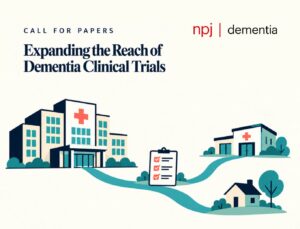 npj Dementia is putting together a Collection on how dementia clinical trials are designed, run and taken beyond the usual big academic centres, and it wants to hear from the people who actually do the work. Research coordinators, site staff and early career investigators are particularly encouraged to submit. The deadline is 20 December 2026.
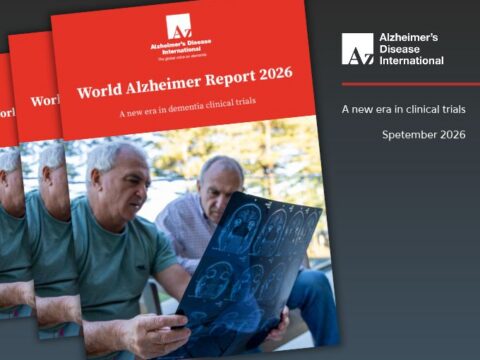
The Collection, Expanding the Reach of Dementia Clinical Trials: Innovations in Design and Lessons from the Field, is being promoted by ISTAART’s Clinical Trials Advancement and Methods Professional Interest Area (PIA). The starting point is a problem most of you will recognise: dementia trials have mostly been run in large, well-resourced, urban medical centres, so the people taking part don’t look much like the people living with dementia. That limits how far the findings travel. The editors want work on changing who takes part, where trials happen and how they’re designed, whether that means rural and community sites in high-income countries or research-emerging settings internationally. If you want a feel for the PIA’s thinking, have a listen to our ISTAART Relay Podcast with the Clinical Trials Advancement and Methods PIA, and the World Alzheimer Report 2026 findings on dementia clinical trials set out the bigger picture.
What’s in scope
Submissions are invited in three areas:
- Design innovation, including adaptive, platform, decentralised and hybrid trials, expanding and diversifying site networks, eligibility reform, and using plasma biomarkers and digital assessments to cut barriers to taking part and make screening more efficient
- Recruitment science, including community engagement models, adapted consent procedures, study partner approaches, and multilingual or culturally tailored protocols
- Practical trial experience, including case studies, implementation reports and lessons learned from trials run outside traditional research settings, such as non-academic sites, rural or underserved areas, and multi-country or multi-health-system collaborations
Work that links trial design to what happens on the ground is especially welcome. And here’s the bit worth underlining: the editors say reports of challenges and negative findings are as welcome as success stories. Plenty of hard-won lessons never make it into print because a trial didn’t go to plan, so this is a chance to change that. Our blog on when clinical trials fail makes the case for why that matters.
Why this one suits early career researchers
Most calls for papers are written with principal investigators in mind. This one explicitly asks for perspectives from site coordinators, community researchers, patient advocates and other stakeholders alongside PIs. If you’ve spent the last couple of years recruiting participants, adapting a protocol for a new site or working out why a consent process wasn’t landing, you have something the field needs to read. Our blogs on a day in the life of a clinical trial coordinator and recruiting participants for clinical trials are good examples of exactly the kind of knowledge that rarely gets written up.
What you can submit
- Original research articles
- Reviews
- Perspectives and commentaries
- Methods papers
- Case reports
A perspective or case report doesn’t need a new dataset, which makes it a realistic first-author paper if you’re earlier in your career. If it would be your first, Dr Clíona Farrell’s account of her first time through the publication process is an honest look at what to expect.
Before you submit
The Collection is edited by Dr Jorge J. Llibre-Guerra (Washington University School of Medicine, USA) and Dr Leonel T. Takada (University of São Paulo Medical School, Brazil). Papers go through the journal’s standard peer review.
npj Dementia is fully open access, so accepted papers carry an article processing charge, currently £1,890 / $2,590 / €2,190 plus any VAT. Before you rule it out on cost, ask your library whether your institution has a Springer Nature open access agreement that covers it, as many do. Springer Nature also offers waivers and discounts for corresponding authors in the lowest-income countries, and considers other requests case by case where there’s financial need. Any waiver request has to be made when you submit, not later. Details are on the journal’s open access fees and funding page.
Full details, including how to submit, are on the Collection page and its submission guidance. You can find out more about the PIA at alz.org/ClinTrialsPIA.
Submission deadline: 20 December 2026.
 Dementia Researcher