 Print This Post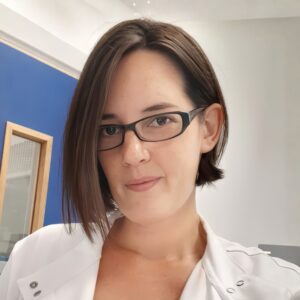
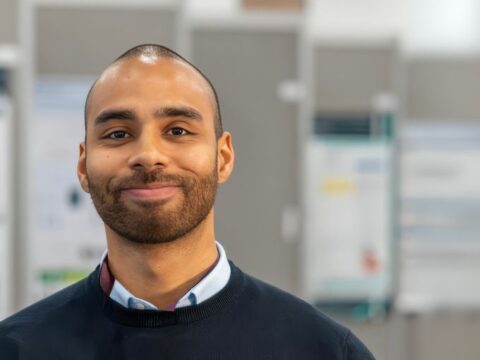
Anna Tierney combines technical research with a part-time PhD at the University of Manchester.
Anna’s career has taken her from NHS pathology and large-scale biomarker research back into academic science. She now combines a technical role with a self-funded, part-time PhD, using mass spectrometry to investigate the complement immune system in human disease, including dementia. Her story shows how laboratory expertise can support a return to academia, while highlighting the financial and career challenges of building research independence through a technical route.
“Sometimes changing how you reach a goal, rather than changing the goal itself, can open up opportunities that might otherwise remain out of reach.”
Finding a question of my own
My interest in research began during my BSc in Biochemistry and Genetics at the University of Nottingham, which I completed between 2005 and 2008. I particularly enjoyed practical laboratory science. A summer scholarship in my tutor’s laboratory gave me the opportunity to work on my own research project, generate results and interpret what they meant. By the end of my degree, I knew that scientific research was the career I wanted to pursue.
I had planned to move straight into a PhD, but my route took a different direction. From 2009 to 2014, I worked as a Medical Laboratory Associate Practitioner at University Hospitals of North Midlands NHS Trust. I analysed patient samples in an NHS biochemistry laboratory, troubleshot methods and equipment, and trained other staff.
Building experience beyond academia
In 2014, I joined UK Biobank as a Biomarker Specialist. Until 2017, I worked on large-scale biomarker measurement in samples from more than 500,000 participants, gaining experience in laboratory project and team management, method development and large-scale data analysis.
When that laboratory project finished and staff were made redundant, I reconsidered the research career I had wanted after my degree. I began applying for PhD positions, but received feedback that the long gap since my previous academic research experience would work against me. I realised that I needed to find a route back into academia first.
Returning through a technical role
I looked for entry-level technical roles at universities within travelling distance of home. My practical laboratory experience helped me secure a research technician position in proteomics at the University of Manchester in 2018. After almost ten years outside academia, I was accepting a more junior position and entering an unfamiliar area of research.
That move gave me the opportunity to rebuild my academic research experience and learn to study proteins using mass spectrometry. Between 2018 and 2021, I supported projects across several disease areas, including complement biology and Alzheimer’s disease, and trained students and researchers. Over time, I became more involved in experimental design and method development, and began developing my own research interests.
From 2021 to 2023, I worked as a Research Technician in Drug Discovery at Manchester, helping establish a DNA-encoded library screening facility for academic researchers. This broadened my experience of drug discovery and new laboratory techniques. In 2023, I returned to a proteomics technician role, developing targeted methods to study complement proteins through a Kidney Research UK-funded collaboration, alongside supporting and training other researchers.
Finding a different route to a PhD
Even after several years of research experience at Manchester, my applications for funded PhD positions were unsuccessful. I had to decide whether to keep applying or find another route. I was already part of a research group, had developed my own interests and had supervisors who supported the idea of a PhD alongside my technical role.
In 2022, I began a self-funded, part-time PhD. This was not the route I had originally imagined, but it allowed me to remain in a role and research environment I valued while working towards a long-standing goal. Progress looks different from that of a full-time student, and I have to balance my own research with the projects I am employed to support. My PhD Project Title is “Quantitative profiling of the complement system in human disease”, and I expect to submit my thesis by the end of August 2028.
The University of Manchester’s staff tuition fee remission scheme has been essential for me. I receive a 50% reduction in tuition fees; without that reduction, self-funding my PhD would not have been financially possible. Supportive supervisors, access to facilities and opportunities to develop my own ideas have also made a significant difference.
Connecting proteomics with dementia
Dementia was an important research area for my supervisor and the wider group, and I became involved in projects investigating biological changes associated with Alzheimer’s disease. When developing my PhD, we brought that experience together with my growing interest in complement biology.
The complement system is part of the immune system that helps protect us from infection and remove damaged cells. My research explores how it changes in human disease, including its potential role in dementia. I use mass spectrometry to develop ways of measuring both complement proteins and whether the system has been activated. I hope these methods will help researchers investigate complement as a potential biomarker or treatment target.
A working week across two roles
I split my week between my technical role and my PhD, spending around half my time on each. As a technician, I prepare and analyse samples, develop and run methods, troubleshoot experiments and train students and other researchers. My PhD involves laboratory work, method development and validation, data analysis, reading, writing and presenting. I also contribute to teaching and student support when opportunities arise.
Practical problem-solving has been fundamental throughout my career. Working with large numbers of samples taught me the importance of reliable, reproducible results. Research rarely works perfectly first time: patience, persistence and a willingness to change approach matter as much as knowing a technique. A result that looks simple can represent weeks or months of troubleshooting. When an experiment finally answers a question I have been working on for a long time, that effort feels particularly rewarding.
Skills and support beyond the laboratory
Training staff and students, collaborating across disciplines and institutions, and presenting research have taught me to explain ideas differently for different audiences. Managing competing experiments, priorities and deadlines has also become increasingly important as I balance employment and doctoral study.
My supervisors have encouraged me to take development opportunities, including the Institute of Technical Skills and Strategy’s Herschel Programme for Women in Technical Leadership, alongside technical and computational training. That support has helped me think beyond the needs of my immediate role.
I wish I had understood earlier that technical ability and hard work do not automatically lead to progression. Building relationships, attending conferences, discussing your work, seeking collaborations and helping people beyond your immediate group recognise your expertise are also essential.
Working towards independence
Fixed-term contracts make it difficult to plan ahead. Continued employment can depend on the next grant, and my ability to continue a self-funded PhD is closely linked to remaining employed. Technical staff can contribute substantial expertise, experimental design and interpretation, yet the route from research support into independence is not always clear.
Technical careers can develop through specialist expertise, facilities or project responsibility, laboratory management, training and collaboration. Opportunities to progress are not always straightforward. My own ambition after the PhD is a postdoctoral position or potentially a research fellowship, with the longer-term aim of leading a research group. These are competitive possibilities, not guaranteed next steps.
Three practical things to try
- Gain academic research experience through a paid technical or research role, a funded placement or an existing project, particularly if you have been away from academia.
- Explore the research questions that fascinate you. A PhD is a long commitment, and sustained interest helps when the work becomes difficult.
- Start building computational and data skills through free training in coding, statistics, R or Python. Even a basic foundation can be useful in laboratory research.
Further information