 Print This Post
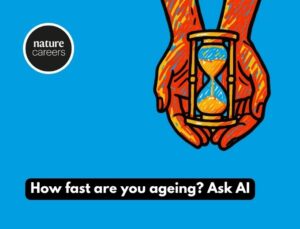 Understanding why people age — and how to slow that process down — is an obsession that has stretched across millennia, from mythic quests for immortality to modern science’s hunt for drugs that lengthen lifespan.
Now, that quest has entered the AI era.
A report1 published today in Cell unveils a bespoke artificial-intelligence system that aims to turbocharge longevity research. The system introduces large language models (LLMs) that the authors trained on ageing-biology data. It also includes a suite of 17 tasks that can serve as benchmarks to gauge how well these and other LLMs perform on ageing-related projects. Finally, it includes an interface that brings the models and other ageing-related research tools together with AI assistants called agents to aid analyses.
The authors used their benchmarks to evaluate both their specialist LLMs and much larger cutting-edge commercial models produced by companies including OpenAI and DeepSeek, that are trained on larger, more diverse data sets to handle a broad range of tasks. In many — although not all — of the tests, the LLMs tailored to ageing research outperformed the large LLMs.
“The paper makes a very important contribution to the longevity and ageing field,” says Marinka Zitnik, a computer scientist at Harvard Medical School in Boston, Massachusetts, who was not involved in the work. “It can inform the development of next-generation AI models.”
The work also tackles a key question for the field: how can researchers train AI tools to understand ageing when scientists have not yet defined the concept for themselves? “For certain disease areas, such as cancer, the AI tasks can be very crisply defined,” says Zitnik. “Ageing is a very different beast. It is hard to define.”
Clock collectors
Researchers have spent decades gathering data to define that beast. One result has been a slew of ‘clocks’ aimed at measuring biological ageing, or the rate at which a person’s body exhibits signs of ageing. Such clocks measure biological age by assessing characteristics such as facial features, protein levels, gene activity and brain scans, all with the goal of quantifying whether the effects of ageing are outpacing or lagging behind someone’s chronological age in years.
But even as the clocks increase in sophistication, researchers are still not certain how to interpret their results. Last week, a group of researchers reported2 that an experimental drug against a lung disease had lowered the biological age of recipients in a small clinical trial. The result was based on six different ageing clocks, yet researchers struggled to conclude whether the drug truly reversed the fundamental processes of ageing, or if it merely improved overall health.
It’s a conundrum that isn’t limited to that study. “Where does ageing end, or disease start?” asks Chiara Herzog, an epigeneticist at the University of Cambridge, UK. “How do you disentangle that? It’s not really clear.”
Researchers hope that AI can help to develop better clocks and identify new molecular hallmarks of ageing. But scientists also need new ways to gauge how well their AI tools are working, says Qian Di, a data scientist who studies public health at Tsinghua University in Beijing. “The central task now is to test how ‘smart’ the AI is,” he says.
Which AI deserves an A?
To assess that, Alex Zhavoronkov, the founder and chief executive of Insilico Medicine in Boston, and his collaborators on the Cell paper developed a series of tests for LLMs. The team developed 17 tasks that involved 5 types of data: clinical information, epigenetics, gene activity, protein abundance and genetic sequences. For example, one task asks an LLM to use clinical data from two people to determine which person is older. In another test, the LLMs used levels of certain proteins in a person’s blood to predict their age.
The team tested a total of 23 LLMs: 18 commercial systems called foundation models and 5 bespoke models that the authors had trained on ageing-related data. Performance on the benchmark tasks allowed the team to determine which models are best suited for which task.
Researchers are building similar benchmarks for AI tools in other fields, such as cancer research, says Zitnik, but ageing research presents a steeper challenge. Cancer research has a legacy of large databases, stuffed with data tied to concrete outcomes. “The biological ground truth can be defined in a very clean and clear manner,” she says. Researchers who study ageing do not have that luxury, and just defining those 17 tasks was an important contribution, Zitnik says.
The researchers also used one of their bespoke LLMs, together with the system they developed to interact with AI agents, to identify potential drug targets related to ageing. “What is really going to be quite exciting for me is seeing how we can use AI to learn about these latent spaces that we don’t know much about,” says Herzog.
As for biological ageing clocks, Zhavoronkov predicts that the field will gradually replace the current clocks, which tend to be simplistic tests based on observed correlations — for example, patterns of chemical groups attached to DNA that correlate with a person’s age. Instead, he expects to see an emergence of AI-powered analyses by commercial foundation models that are bolstered by explanations of an LLM’s reasoning. “We are going away from a classical, mechanical watch, to a smartwatch,” he says. “Wait a bit. In a couple of years, all the clocks will be done by foundation models.”
Shared from Nature Careers, for this and more great content visit doi: https://doi.org/10.1038/d41586-026-02913-7

 Nature Careers Blog
 Dementia Researcher