Print This Post
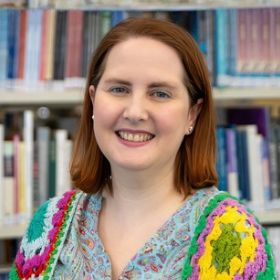
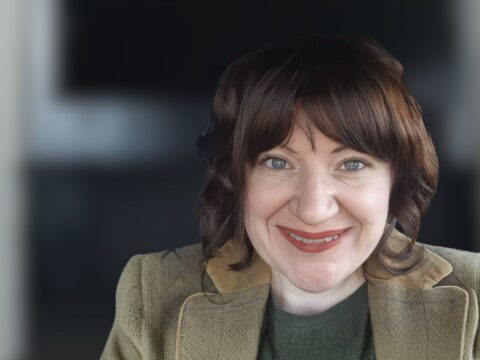
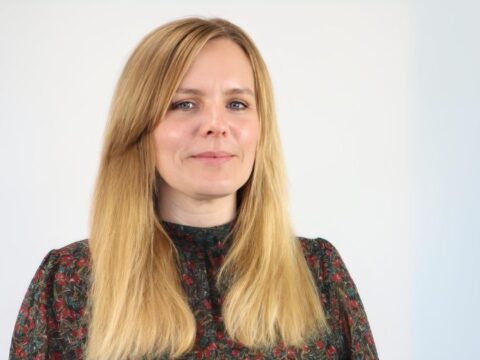
Dr Rachel McHendry
Rachel works at the meeting point of dementia research, public involvement, communication and impact. Her route into academia includes local government, welfare advice, schools, charity work, a distance-learning MA and a PhD begun at 40. She now helps researchers share work on dementia and employment in accessible and engaging ways.
“The PhD altered the confidence chemistry a bit. It is objective evidence of my capacity and capability.”
A portfolio career shaped by health and purpose
Before my PhD, I had what I called a portfolio career: four part-time jobs at the same time. I was a teaching assistant at a village primary school, clerk to the governors of another school, taught English online and worked for a charity in an advice role. Earlier roles included welfare benefits advice at Citizens Advice, working as a secondary-school cover supervisor and employment in local government.
My career involved a constant negotiation between my need for challenging, purposeful work and the limits imposed by chronic illness. Roles I could manage physically were often poorly paid, while better-paid posts commonly required full-time hours or extensive travel. The portfolio gave me variety, but it was financially difficult and physically demanding.
Helping people has always mattered to me. I have worked with children in schools, older people in a housing scheme and people seeking help at reception and advice desks. Those experiences taught me to communicate with different audiences, read a room and keep going when a situation was uncertain.
Education changed how I understood disability
I completed a work-based Foundation Degree in Business and Professional Administration at Kingston University in 2008, graduating with Merit, followed by a distance-learning Master of Arts in Disability Studies at the University of Leeds in 2010. The MA was a major turning point. I discovered not only that I loved learning, but that I was deeply interested in what I was studying.
Learning about the social model of disability changed how I understood my own identity as someone living with chronic illness. It gave me a more positive framework for experiences that had often been defined by welfare-benefit processes, difficult medical appointments and disappointment.
I did not realise until graduation that I had achieved a Distinction. That result mattered because it was something positive and permanent: evidence of what I could do that no one could take away.
Accepting uncertainty
When I was made redundant, I moved from London to Cumbria to be nearer my grandmother. It was what I wanted and what felt right, even though I knew there would be fewer professional opportunities. Had I remained in London, my career could have developed in other (arguably more exciting) directions, but I felt it was right for me to move on and move north!
I loved living in Cumbria, and in many ways it will always feel like home, even though the move meant frustrations with work. The decision solidified for me that trying is preferable to not trying and then regretting what could have been. It also showed me that I could relocate and begin again, which later made moving to Scotland for a PhD feel possible.
My grandmother’s experience of dementia provided a personal connection when I saw an opportunity to study work and dementia. The subject also brought together interests I had developed through Disability Studies: identity, employment and the effect disability can have on how people understand themselves and participate in working life.
Beginning a PhD at 40
When I first considered a PhD, the only person I told was my friend Lucy. Part of the attraction was pursuing a goal I doubted I could achieve, because proving myself wrong would be brilliant. Lucy did not laugh, and neither did anyone else.
I began the PhD at 40. The funding and structure allowed me to find a better balance between intellectual challenge and my health than the four-job portfolio had offered. I brought substantial life and professional experience into doctoral study, including the confidence that comes from holding your own in a room full of teenagers and multitasking different roles successfully. That proved useful in supervision meetings, the viva and later job interviews. My PhD at the University of the West of Scotland, funded by a UWS studentship and awarded in 2025, was titled “”Livin’ is a career, do you know what I mean?” Young-onset dementia and women’s career development”.
The PhD also refined my understanding of myself: what motivates me, what I need to work well and where my limits are. Completing it altered the “confidence chemistry”. It provided objective evidence of my capacity and capability, even when I did not always feel very doctory.
One practical difficulty was that the stipend covered three years while the PhD took four. I had tried to prepare for the funding ending, but it was still easy to interpret a longer timescale as personal failure. I now see the funding period and the time required to complete a PhD as two separate things. Taking four years was entirely acceptable.
From doctoral research to research impact
During the final year of my PhD, I became a Research Fellow on one of the first Working with Dementia Network Plus research projects, a role I held in 2025–2026. In February 2026, I moved into my current role as Impact Officer with the Network at the University of the West of Scotland. Both roles are funded through Working with Dementia Network Plus, supported by NIHR, ESRC and Alzheimer’s Society. My current contract runs until early 2029, for the duration of the Network’s funding.
My role is to help people know about research focused on dementia and employment. I support researchers to share their findings in ways that are accessible and engaging for different audiences, so useful knowledge can travel beyond an academic paper.
What an Impact Officer does
I work part time for 22 hours a week to balance work with my health needs. The shape of my week changes with the Network’s activities and the different research projects. At present, communication is a large part of my time: updating the website, developing social media content and creating outputs from research projects.
I also help support groups connected to the Network, including the Lived Experience Panel and Stakeholder Advisory Group. Relationship-building inside and outside academia is one of the parts I enjoy most. I meet people with valuable lived and professional experience and learn how research looks from their perspective.
Creativity is central to the role. I can help colleagues think about who needs to hear a finding, what might make it useful and which format will make it easier to understand. Several aspects of the job were new to me, and learning them through practice has been rewarding.
Flexible work should not depend on exception
The transition from PhD student to academic professional has been challenging. During doctoral study, I became used to rewriting and checking everything. In my job, I still sometimes need reassurance that I am doing the role well as I build on my professional skills beyond the PhD context. I am grateful for a supportive current team, including Professor Louise Ritchie, who was my PhD supervisor and is now our Network Lead, and the small core team at Working with Dementia Network Plus. My PhD peers also provided mutual encouragement that made doctoral study feel less isolating.
A wider concern is the continuing expectation of full-time work. It can exclude people who are well qualified and capable of doing a job but cannot work those hours. Organisations may describe themselves as flexible while still requiring office attendance or working patterns that create barriers. I know that finding equivalent flexibility may be difficult when my current contract ends.
I hope open and flexible working becomes standard rather than something someone must request as a reasonable adjustment. Research impact is an area in which academic and research teams need to invest more, so I also hope that more roles like mine will develop.
Three practical lessons
- Contact people you would like to work with. LinkedIn, personal emails, event lists and talent pools can all help you build a network before a vacancy appears.
- Use free courses and consider how your personal and professional experience could contribute to a role, even when your career has not followed a conventional academic route. You don’t have to tick all the boxes to be the best person for the role.
- Be honest about what you need to work well and achieve potential as your best self.