 Print This Post
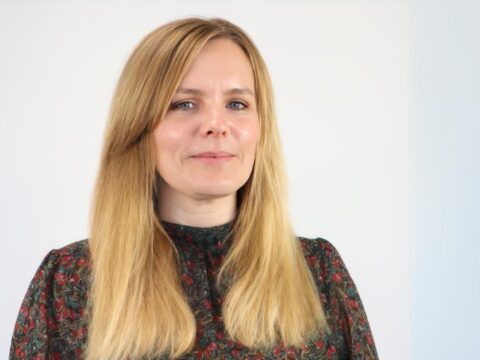
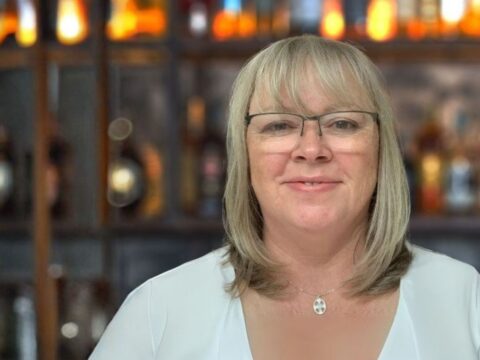
Dr Gillian Eaglestone, Research Fellow at the University of Greenwich. Photograph: University of Greenwich.
Gill is a qualitative dementia researcher whose career began in adult and community nursing before moving through clinical research, academic Research Assistant roles and a PhD. Her research explores how people living with dementia participate in everyday community life, with a focus on meaningful activities, social connections and inclusive communities.
“You are never too old to pursue a PhD—even when life, and menopause, might bring a few extra challenges”
A nursing career shaped around people and communities
I qualified as an adult nurse in 1994 and spent my first year on an acute medical ward. I then moved into community nursing, which I loved. Working in people’s homes taught me to listen, adapt quickly and deal with situations that did not follow a predictable plan.
My career also had to fit around family life. When I had my children I took several years away from full-time work. During that period, I continued working as a bank community nurse. When I was ready to return full time, I went back into community nursing.
A conversation with a nurse friend introduced me to research. She worked as a research nurse and mentioned that a vacancy was being advertised. I knew very little about research or the specialist field, but the role offered a new direction and working arrangements that fitted better with a young family than regular weekend shifts. I decided to apply.
Learning research through clinical trials
I became a research nurse in clinical renal research and stayed for several years. The work gave me a broad view of how research operates, from ethics and participant-facing work to laboratory processes such as handling samples. My nursing experience was useful because I was comfortable communicating with people, responding to uncertainty and working across professional boundaries.
Alongside my clinical research work at East Kent Hospitals University NHS Foundation Trust, where I worked as a Research Nurse from 2006 to 2014, I completed a BSc (Hons) in Health and Social Care at Canterbury Christ Church University in 2009, graduating with First Class honours. I completed an MSc in Interprofessional Health and Social Care at the same university in 2017, with Distinction. From 2014 to 2017, I worked as a Senior Research Nurse, including as Lead Research Nurse for the NIHR-funded UK multicentre eGFR-C study, managing a small research team. This brought greater responsibility and showed me how complex studies are coordinated across teams and settings.
Moving from clinical research into academia
After leaving the lead role, I pursued a range of voluntary work, including supporting older people. I also took several short-term Research Assistant roles in academia. I wanted to continue in research, but moving from clinical renal research into academic posts was more difficult than I expected.
I had substantial experience of delivering research, yet it did not map neatly onto what academic employers were looking for. Clinical trials had given me valuable knowledge of ethics, laboratory work, study delivery and working with participants, but I needed academic research experience that was more directly recognisable. Taking Research Assistant roles helped me establish myself in a new field and understand a different research culture.
There were times when returning to nursing was tempting. Nursing offered a clearer structure, better job security and more predictable pay than a series of short-term academic contracts. Moving forward meant accepting uncertainty while building a different kind of evidence about what I could contribute.
Starting a PhD later in my career
I studied for a PhD in Health Sciences at the University of Greenwich from 2021 to 2025, supported by the University of Greenwich Vice-Chancellor’s PhD Scholarship Scheme (VCS-FEHHS-02-21). My project was “Assessing the cost-effectiveness of non-pharmacological therapies for dementia in the community”. My award was ratified on 5 December 2025. Starting doctoral study later in life reinforced my belief that there is no age limit on becoming a researcher. It also brought challenges that are not always discussed openly, including navigating menopause alongside doctoral study.
Support from the NIHR Applied Research Collaboration Kent, Surrey and Sussex (ARC KSS) during my PhD was invaluable. It helped me grow my networks, learn new skills and share ideas with other researchers. I attended a doctoral training camp on bid writing, which has become particularly useful now that I am developing funding applications of my own.
Towards the end of my PhD, I moved into my current dementia research role. The route was not direct, but nursing, clinical trials, voluntary work, Research Assistant posts and doctoral training have all shaped how I work.
Research grounded in everyday life with dementia
Since August 2024, I have worked as a Research Fellow at the University of Greenwich, in the Institute for Lifecourse Development, Centre for Inequalities. I work four days a week on the ESRC-funded international project ENACT-Dem: Centring the lived experience of dementia within policy, practice and community development, with partners in Canada and Germany. The project runs from 1 March 2023 to 28 February 2027. My fixed-term contract is ending soon.
My research focuses on improving the lives of people living with dementia and those who support them. I am particularly interested in how meaningful activities, social connections and inclusive communities support people to exercise choice, pursue what matters to them and engage in their communities.
I work directly with people living with dementia, carers, community organisations and professionals. Qualitative and participatory approaches allow people affected by dementia to shape the questions, the research process and the outcomes. The aim is to produce practical evidence that can improve support, reduce inequalities in access and inform more inclusive services and communities.
Skills carried from nursing into research
People skills have been central throughout my career. Community nursing taught me to build trust quickly, communicate with people in very different circumstances and remain flexible when situations changed. Those skills matter in qualitative and participatory dementia research, where relationships are part of doing the work well.
My clinical research background also gives me a useful perspective on the whole research process. I have worked with ethics, clinical trials, participants and laboratory samples. Moving into academia required new methods and ways of writing, but the practical understanding I brought from research delivery remained valuable.
Working within an international, interdisciplinary team on my current project has helped me recognise the value I bring and how my nursing experience informs and strengthens our research. Support from my PhD supervisors and current manager has been important in developing my confidence and independence as a researcher.
Networking has been more useful than I once expected. I find that attending events and network meetings nearly always leads to something: a contact, a new way of thinking or an opportunity that was not obvious beforehand. The NIHR ARC network was especially important during my PhD.
Learning to write and seek funding
I have always enjoyed writing and looked forward to producing academic papers. Academic writing turned out to be very different from the writing I already knew, and it is something I am still learning. That is a useful reminder that enjoying a skill does not mean the professional version of it will be effortless.
Career development now means developing my own research funding applications and beginning to build greater independence. That is difficult as an early-career academic on a short-term contract. Developing an application takes time, yet future employment may depend on success in a highly competitive funding system.
The tension between ambition and security has not disappeared. I value the chance to shape dementia research, work with communities and generate evidence that can improve everyday life, but I also understand why a permanent nursing role can look attractive. For now, I am building networks, strengthening my writing and using each project to develop the experience needed for the next step.
Three practical lessons
- Attend events and network meetings, including those that do not look immediately relevant. A new contact or idea can change what becomes possible.
- Treat experience from another profession as an asset, but learn how to explain it in terms that a new field recognises.
- Do not assume you are too old for a PhD or a change of direction. Career development does not have to happen to a fixed timetable.
Find Gillian online